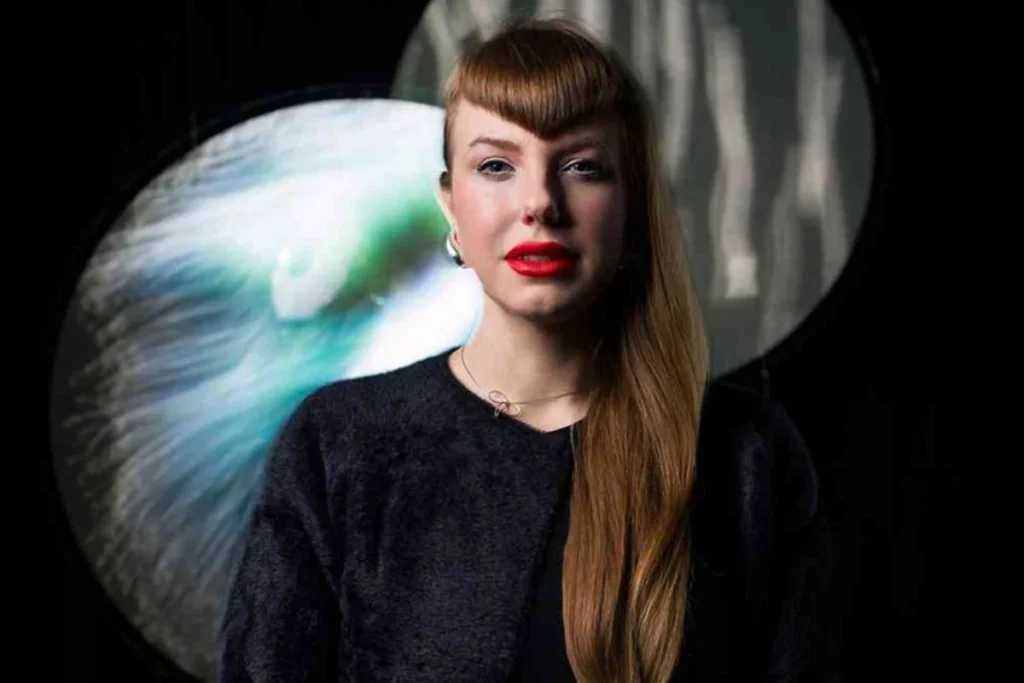
The MIT Kavli Institute for Astrophysics and Space Research (MKI) has officially announced the launch of a pioneering pilot artist-in-residence program, naming the internationally recognized ultra-contemporary artist Amy Karle as its inaugural resident for the 2026-27 academic year. This initiative marks a significant strategic expansion for one of the world’s premier astrophysical research centers, aiming to foster a deep, cross-disciplinary dialogue between the rigorous empirical world of space science and the evocative realm of contemporary art. By integrating Karle’s unique artistic lens into the laboratory and observatory environments, MKI seeks to translate complex scientific data and the philosophical implications of cosmic discovery into immersive experiences that resonate with the broader public.
A New Frontier for the MIT Kavli Institute
The MIT Kavli Institute for Astrophysics and Space Research stands as a cornerstone of global space exploration and theoretical physics. For over six decades, MKI has been at the forefront of developing the instrumentation that allows humanity to peer into the deepest reaches of the universe. The institute operates as a collaborative hub, drawing on the intellectual resources of MIT’s most prestigious departments, including Aeronautical and Astronautical Engineering; Earth, Atmospheric and Planetary Sciences; and Physics.
MKI’s history is inextricably linked with some of the most significant milestones in modern astronomy. From the development of X-ray detectors for the Chandra X-ray Observatory to leading the Transiting Exoplanet Survey Satellite (TESS) mission, the institute has consistently provided the technical and theoretical framework necessary for understanding black holes, dark matter, and the search for habitable worlds. However, the complexity of these topics often creates a barrier to public understanding. The launch of the artist-in-residence program is designed to dismantle these barriers, using art as a medium to convey the "felt experience" of discovery that often remains hidden behind equations and raw data.
The Selection of Amy Karle: An Intersection of Biology and Cosmos
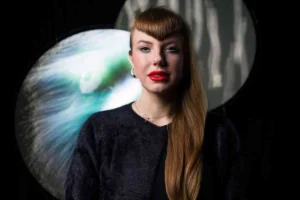
The appointment of Amy Karle as the inaugural resident follows an intensive selection process by an interdisciplinary committee comprising astronomers, museum curators, and art-science practitioners. Karle is a fitting choice for a program situated at the "limit of the known," as her body of work frequently explores how technology and science reshape the human condition.
Karle’s practice is often described as "ultra-contemporary," a term used to define artists whose work is deeply engaged with the technologies of the present and the immediate future. Her previous projects have utilized 3D bioprinting, artificial intelligence, and regenerative medicine to explore evolution and the fragility of life. By moving her focus from the microscopic scale of cells to the macroscopic scale of the cosmos, Karle intends to investigate how the signals captured by MKI’s instruments can be transformed into an "embodied understanding" of the universe.
The selection committee specifically highlighted Karle’s ability to remain grounded while pursuing ambitious, speculative concepts. Her proposal for the residency focuses on the themes of scientific observation, signals, and inference—the fundamental pillars of astrophysics. In an era where much of our understanding of the universe comes from "invisible" data, such as gravitational waves or infrared light, Karle’s mission is to make these abstract signals tangible.
Program Chronology and Residency Structure
The residency is structured as a multi-year engagement, moving from initial conceptualization to a final, large-scale public installation. This deliberate timeline ensures that the resulting artwork is not a superficial representation of science but a product of deep, sustained collaboration.
Phase I: Exploratory Period (Fall 2026)
The residency will commence in the fall of 2026 with a one-month intensive exploratory period at MIT’s campus in Cambridge, Massachusetts. During this time, Karle will be embedded within the MKI community, attending high-level seminars, participating in departmental classes, and engaging in one-on-one dialogues with faculty and research staff. This phase will culminate in a public presentation to the MKI community, where Karle will share her initial findings and conceptual directions.
Phase II: Development and Studio Work (2027)
Following the exploratory phase, the project will transition into a development cycle throughout 2027. Karle will balance her time between continued exchanges with MIT researchers and independent work at her studio in California. This period will focus on the technical challenges of the project, which may involve the use of advanced manufacturing, data visualization software, and experimental materials to mirror the instrumentation used at MKI.
Phase III: MASS MoCA Residency (March 2027)
A pivotal moment in the residency will occur in March 2027, when Karle and a cohort of scientific collaborators from MIT will relocate to the Studios at MASS MoCA (the Massachusetts Museum of Contemporary Art). Located in North Adams, Massachusetts, MASS MoCA is one of the largest centers for contemporary visual and performing arts in the United States. This residency-within-a-residency will allow the team to test large-scale prototypes and engage with a multidisciplinary cohort of 16 other international artists, providing a broader cultural context for the astrophysical research.
Phase IV: Public Debut (Early 2028)
The residency will conclude with the unveiling of an immersive, multimedia installation in early 2028. While the specific details of the installation remain under development, it is expected to utilize data-driven art to invite viewers into the "threshold" where scientific knowledge meets human perception. MKI is currently seeking museum and festival partners to host the installation for its 2028 world premiere and subsequent tour.
Supporting the Synergy of Art and Science
The residency is funded by the Kavli Foundation’s Kavli Innovation Fund. The foundation, which supports basic research in astrophysics, nanoscience, neuroscience, and theoretical physics, has increasingly recognized the importance of public engagement. The Kavli Innovation Fund specifically targets initiatives that "push boundaries" and develop new modes of communicating the wonder of scientific discovery.
Robert Simcoe, the Director of MKI and the Bruno B. Rossi Professor of Experimental Physics at MIT, emphasized that the program is not merely about outreach, but about challenging the scientists themselves. "Her approach is unlike anything we have previously experienced at MKI," Simcoe stated. "It presents many opportunities to challenge the way we, as scientists and engineers, think about our study of the universe."
This sentiment is echoed by Susan Cross, the Director of Curatorial Affairs at MASS MoCA, who noted the importance of creating spaces where scientists and artists can exchange knowledge without the constraints of their traditional environments. The collaboration between a leading technical institute (MIT), a major art museum (MASS MoCA), and a philanthropic foundation (Kavli) represents a robust model for modern "STEAM" (Science, Technology, Engineering, Art, and Math) initiatives.
Background: The Evolving Role of the Artist in Scientific Spaces
The MKI Artist-in-Residence program follows in the footsteps of several high-profile precedents that have proven the value of art-science collaborations. Institutions like CERN (the European Organization for Nuclear Research) and NASA have long maintained artist-in-residence programs, recognizing that artists can provide a narrative framework for discoveries that are otherwise too vast or too minute for the human mind to easily grasp.
In the case of MKI, the focus on "signals and inference" is particularly relevant. Modern astrophysics is increasingly a science of the "unseen." For instance, when MKI researchers study the atmosphere of an exoplanet, they are not looking at a photograph, but rather interpreting the dip in light as a planet passes its star and the specific wavelengths absorbed by gasses. This process of inference—building a reality from faint, distant signals—is a creative act as much as a mathematical one. Amy Karle’s history of working with "felt experience" and "embodied understanding" positions her to bridge the gap between the cold data of a spectrometer and the human sensation of looking at the stars.
Analysis of Implications for Science Communication
The launch of this program comes at a time when the scientific community is grappling with how to maintain public interest and trust in basic research. Traditional methods of science communication, such as press releases and documentary films, are increasingly being supplemented by experiential and "ultra-contemporary" art.
By creating an immersive installation, MKI and Karle are moving away from a "deficit model" of science communication—which assumes the public simply needs more facts—toward an "engagement model" that prioritizes emotional connection and shared wonder. If successful, the pilot program could serve as a blueprint for other specialized research institutes within MIT and beyond. It suggests that the future of scientific dissemination may lie in the "threshold" Karle describes: the point where the technical limits of our instruments meet the philosophical limits of our self-understanding.
About the Artist: Amy Karle’s Career Milestones
Amy Karle’s background provides a strong foundation for the rigors of an MIT residency. Her work has been exhibited at some of the world’s most prestigious institutions, including the Centre Pompidou, the Mori Art Museum, the Smithsonian, and the Victoria and Albert Museum. Notably, her work has already transcended terrestrial boundaries, with pieces included in lunar and space-based missions.
Karle’s accolades include being named one of the BBC’s 100 Most Inspiring and Influential Women. Her experience as an American Arts Incubator U.S. Department of State artist diplomat further underscores her ability to navigate complex institutional environments. Perhaps most tellingly, Karle’s professional journey began at a public observatory, where she first witnessed the "awe and understanding" that occurs when a person sees the rings of Saturn through a telescope for the first time. This foundational experience—the transition of a faint light signal into a profound human emotion—remains the driving force behind her collaboration with the MIT Kavli Institute.
As the residency progresses through its 2026-2027 timeline, the international scientific and artistic communities will be watching closely to see how Karle’s interpretation of MKI’s cutting-edge research reshapes the public’s perception of our place in the cosmos.