Researchers at The University of Texas at Austin have significantly revised a pivotal chapter in Oklahoma’s geological history, an advancement that carries profound implications for how scientists understand major planetary events and the very trajectory of life on Earth. The study, focusing on the enigmatic Ames impact structure buried deep beneath the Oklahoma plains, challenges long-held assumptions about its age and its connection to a significant extraterrestrial bombardment event, potentially recalibrating our understanding of ancient mass extinctions.
Unearthing the Ames Impact Structure: A Geological Enigma
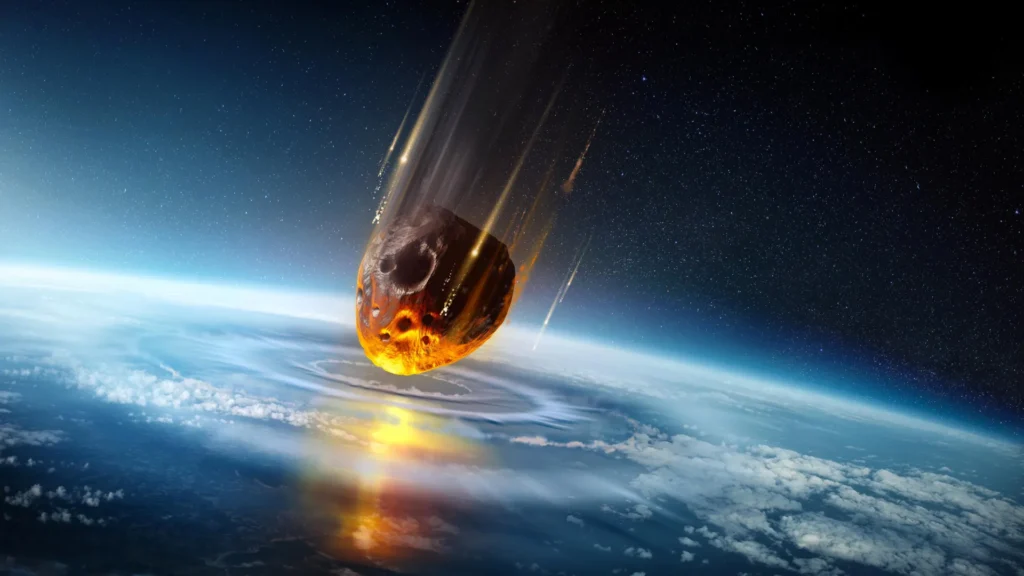
Beneath the unassuming landscape near Ames, Oklahoma, lies a vast subterranean scar, a testament to a cataclysmic cosmic collision. The Ames impact structure, stretching for miles underground, is now shielded by eons of accumulated sediment. Yet, its presence continues to exert a profound influence, not only on scientific inquiry but also on the region’s economic landscape, as the structure is a significant reservoir for oil and natural gas production. For decades, this geological marvel has been a focal point for scientists seeking to unravel Earth’s violent past.
A Once-Considered Pillar of the Ordovician Meteor Event
The prevailing scientific consensus for years firmly placed the Ames impact structure within the context of the Ordovician Meteor Event, a period of intense extraterrestrial bombardment that occurred approximately 467.5 million years ago. This event is characterized by a remarkable clustering of major meteor impact structures across North America, leading some researchers to hypothesize the existence of a colossal asteroid ring encircling Earth during the Middle Ordovician epoch. This theoretical ring, akin to Saturn’s majestic adornments, was thought to have been a temporary but impactful feature of our planet’s early solar system environment, seeding Earth with a barrage of cosmic debris. The Ames crater, with its apparent age, was considered a significant piece of evidence supporting this dramatic scenario, offering a tangible link to this ancient extraterrestrial onslaught and its potential influence on global geological processes.
A Paradigm Shift: The Ames Impact is Far Younger
However, the meticulous work undertaken by a team of geoscientists at The University of Texas at Austin has upended this established narrative. Through rigorous dating techniques applied to zircon crystals extracted from granite that was profoundly altered by the impact, the researchers have definitively demonstrated that the meteorite strike responsible for the Ames crater did not occur during the Ordovician period. Instead, their findings pinpoint the impact to approximately 370 million years ago, a much later era known as the Late Devonian. This re-dating places the Ames impact structure nearly 100 million years younger than previously believed, effectively severing its connection to the Ordovician Meteor Event and presenting a new puzzle for geochronologists.
"No matter what technique we used, it was coming back to this younger signal," stated lead author Elizabeth Catlos, an associate professor in UT’s Department of Earth and Planetary Sciences. This consistent divergence from the expected Ordovician age underscores the robustness of the new findings. The research was formally published in July in the esteemed journal Meteoritics & Planetary Science, marking a significant contribution to the field of planetary science and impact crater research.
The Flaws in the Older Dating: Biological Clues Reinterpreted
The scientific community’s previous understanding of the Ames impact’s age was largely predicated on indirect evidence derived from fossil discoveries. Within the rock layers associated with the crater, paleontologists had identified the presence of conodonts, the fossilized teeth of ancient, eel-like marine organisms. These particular conodont fossils were indicative of life forms that thrived during the Ordovician period, leading to the logical, yet ultimately flawed, conclusion that the impact must have occurred during that same era.
Professor Catlos elaborated on the limitations of this prior methodology, explaining that the conodont teeth found at the site were likely already ancient by the time the asteroid struck. The immense energy of the impact would have churned and mixed the surrounding geological strata, effectively incorporating older fossilized material into the newly formed impact breccia. This process, known as incorporation or reworking, is a common phenomenon in impact structures and can lead to misinterpretations of the impact event’s timing if not carefully considered. The fossils, while preserved, were essentially relics from a much earlier time, offering a misleading temporal anchor. The zircon dating, in stark contrast, provides a direct geochemical fingerprint of the impact event itself, offering a far more reliable chronological marker.
The Devonian Connection: A Link to a Devastating Extinction
The revised age of the Ames impact structure has profound implications for its potential role in one of Earth’s most significant extinction events. Its new dating places it in close temporal proximity to the Frasnian-Famennian mass extinction, a catastrophic period that transpired approximately 372 million years ago. This devastating event, often referred to as the "Late Devonian extinction," led to the demise of a substantial proportion of marine life on Earth, fundamentally altering the course of oceanic biodiversity. The coincidence in timing suggests that the Ames impact may have played a role, either as a direct trigger or a contributing factor, in exacerbating the environmental pressures that led to this mass extinction.
The Unwavering Accuracy of Zircon Dating
The precision offered by zircon U-Pb (uranium-lead) dating is hailed by scientists as one of the most accurate methods available for establishing timelines of events deep within Earth’s geological past. Danny Stockli, Dean of the Jackson School of Geosciences and a co-author of the study, emphasized the critical role of these microscopic crystals. Zircon, a remarkably durable mineral, possesses the unique ability to incorporate uranium into its crystalline structure as it forms. Uranium then decays into lead at a predictable and constant rate, allowing scientists to calculate the time elapsed since the zircon crystal’s formation.
Beyond their chronological significance, zircon crystals are also invaluable for their ability to record the extreme physical conditions experienced during an impact event. The immense pressures and temperatures generated by a meteorite strike can cause zircon to recrystallize in distinctive patterns, creating microscopic structural anomalies. These subtle changes, often invisible to the naked eye, can be visualized and analyzed using advanced imaging techniques.
Verifying the Impact’s Signature: Advanced Imaging Techniques
To ensure that the observed recrystallization within the zircon crystals was indeed a direct consequence of the Ames meteorite impact and not some other geological process, the research team collaborated with NASA. They employed sophisticated imaging technologies, including cathodoluminescence (CL) and electron backscatter diffraction (EBSD). Cathodoluminescence reveals variations in the luminescence of minerals under electron bombardment, highlighting structural differences. Electron backscatter diffraction, on the other hand, maps the crystallographic orientation within the zircon, allowing researchers to identify shock-induced deformation and recrystallization. These techniques provided irrefutable evidence that the zircons had indeed experienced the cataclysmic forces of the impact, confirming their role as reliable witnesses to the ancient collision.
"These small crystals allow us to go back in time and learn about the major changes to Earth’s ancient landscapes," Stockli remarked, highlighting the power of microanalysis in geological research. He expressed a strong desire to apply similar methodologies to other impact sites across the continent, aiming to construct a more comprehensive and accurate chronological framework for these monumental extraterrestrial events.
Broader Implications: Understanding Mass Extinctions and Cosmic Influences
The revised dating of the Ames impact structure offers a crucial new piece in the complex puzzle of mass extinctions and the forces that shape life on Earth. Establishing precise timelines for such catastrophic events is paramount for understanding the planet’s dynamic history and the intricate interplay of internal and external factors that have driven evolutionary change.
A fundamental question in paleontology and geology revolves around the primary drivers of mass extinction events. Were they predominantly triggered by external cosmic forces, such as meteor impacts, or by internal terrestrial processes, like massive volcanic eruptions? The Ames impact’s recalibration offers a compelling argument for the influence of extraterrestrial events on Earth’s biological crises.
"With this research, we’re basically taking a major pawn out of the Ordovician Meteor Event and dumping it into the Frasnian-Famennian event, and saying, ‘This is where this impact belongs,’" Catlos explained, vividly illustrating the shift in understanding. This repositioning suggests that the Ordovician Meteor Event, while significant, may not have been as broadly impactful as previously theorized, or at least its impact structures were misinterpreted. Conversely, the Late Devonian period, and specifically the Frasnian-Famennian extinction, may have been influenced by a more localized but still potent impact event.
Honoring the Legacy of Dedicated Researchers
The successful completion of this groundbreaking research is also a poignant tribute to the dedicated scientists who initiated and contributed to the project, some of whom are no longer with us. The project was originally conceived and driven by Andrew Parisi, a former graduate student at the Jackson School of Geosciences who graduated in 2018. Parisi traveled to Oklahoma to secure the Ames rock core from the Oklahoma Geological Survey, meticulously extracted the crucial zircon crystals, and played a foundational role in determining their ages. Tragically, Parisi passed away before the publication of the research, leaving behind a legacy of scientific inquiry. Michael Brookfield, an affiliated researcher at the school, also passed away before the paper could be published, underscoring the collaborative and often arduous nature of scientific discovery.
The research also benefited from the invaluable contributions of Research Professor Sean Gulick and Professor Emeritus Mark Cloos, both esteemed members of the Jackson School of Geosciences, who provided their expertise and guidance throughout the project. Their collective efforts have not only refined our understanding of a specific geological event but have also advanced the broader scientific endeavor to comprehend Earth’s tumultuous past and its potential future. The implications of this research extend beyond academic circles, offering valuable insights for resource exploration by providing a more accurate geological framework for the region’s oil and gas reserves.
Future Directions: Expanding the Chronological Map
The success of the Ames impact study highlights the immense potential of employing advanced dating techniques and sophisticated imaging technologies to unravel the mysteries of other impact structures. Scientists anticipate that applying similar methodologies to other craters across the North American continent could lead to a more accurate and nuanced understanding of the timing and significance of major extraterrestrial events throughout Earth’s history. This ongoing work promises to continually refine our knowledge of planetary evolution, the drivers of mass extinctions, and the intricate dance between Earth and the cosmos that has shaped life as we know it.