The author’s nostalgic reminiscence of luxury hotel pools and the conspicuous display of high-end timepieces paints a vivid picture of a bygone era, where the "pool watch" was not just an accessory but a statement of affluence and status. This personal reflection offers a unique lens through which to examine the evolving landscape of luxury watch culture and its intersection with leisure and social signaling.
The Golden Age of Overt Display
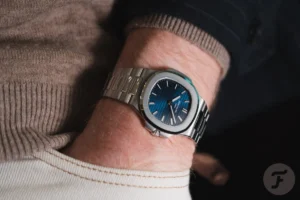
Almousa vividly recalls childhood memories of opulent hotel lobbies and poolside scenes, describing a world where luxury watches were openly and unapologetically showcased. The author’s description of "fat cats soaked in Speedos and Day-Dates, shapely concubines hanging from their elbows" and Russian playboys flaunting Hublot Big Bangs, alongside young Khaleeji princes in Royal Oak Offshores and older patrons in Patek Philippe Nautiluses, evokes a specific time and place. This was an era, as the author notes, characterized by "gilt, glam, and excess," where "no Apple watches; no beaters" were to be seen, and certainly no ironic or stealth wealth. It was a period of "shiny, high-grade metal all around," a stark contrast to contemporary trends.
This period, roughly spanning the late 20th and early 21st centuries, was marked by a significant boom in global luxury markets, particularly in emerging economic powerhouses and established affluent centers. Cities like Dubai, a frequent backdrop for such displays, became synonymous with unchecked wealth and the conspicuous consumption of luxury goods. The watches mentioned—Rolex Day-Dates and Speedmasters, Hublot Big Bangs, Audemars Piguet Royal Oak Offshores, and Patek Philippe Nautiluses—were, and largely remain, aspirational symbols of success. Their prevalence around hotel pools was a testament to the owners’ confidence and the societal acceptance of overt displays of wealth.
The Shifting Sands of Watch Ownership and Appreciation
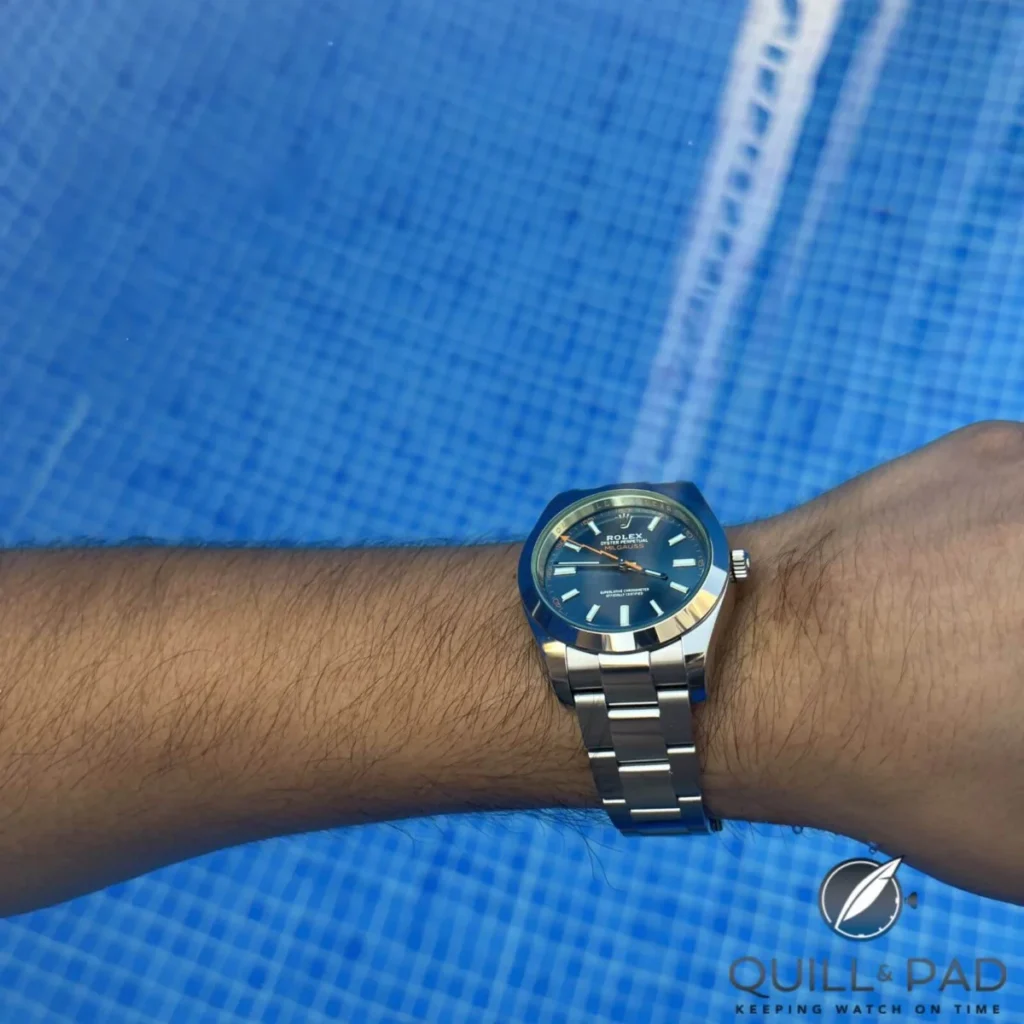
The author’s personal journey with watch ownership provides a narrative arc, moving from a youthful aspiration to owning multiple timepieces. The Z Blue Rolex Milgauss, once a coveted acquisition, now represents a point of contention for Almousa. The critique centers on its dimensions – "too big and too thick" for his 16-centimeter wrist, leading to a feeling of self-consciousness and an awkward "flap" when worn. This observation resonates with a broader trend in horology towards more ergonomically designed watches, especially for those with slimmer wrists. While the Milgauss was originally designed for the rigors of scientific environments, its aesthetic and wearability in casual, luxurious settings are now being re-evaluated by its owner.
The author’s disappointment extends to the perceived underperformance of the Milgauss’s value compared to its "brethren." Purchased for over $7,000 in 2019, its market value hasn’t necessarily outpaced other luxury watches, adding another layer of dissatisfaction. This economic aspect is crucial in the high-end watch market, where investment potential often intertwines with aesthetic and functional appeal. The author’s feeling of wearing the watch "without any ‘sprezzatura’ and mostly under the cuff, lest I attract stabby thieves" highlights the shift from overt pride to a more guarded approach to displaying luxury, particularly in urban environments perceived as less secure.
The Poolside Revelation: A Reimagined Relationship
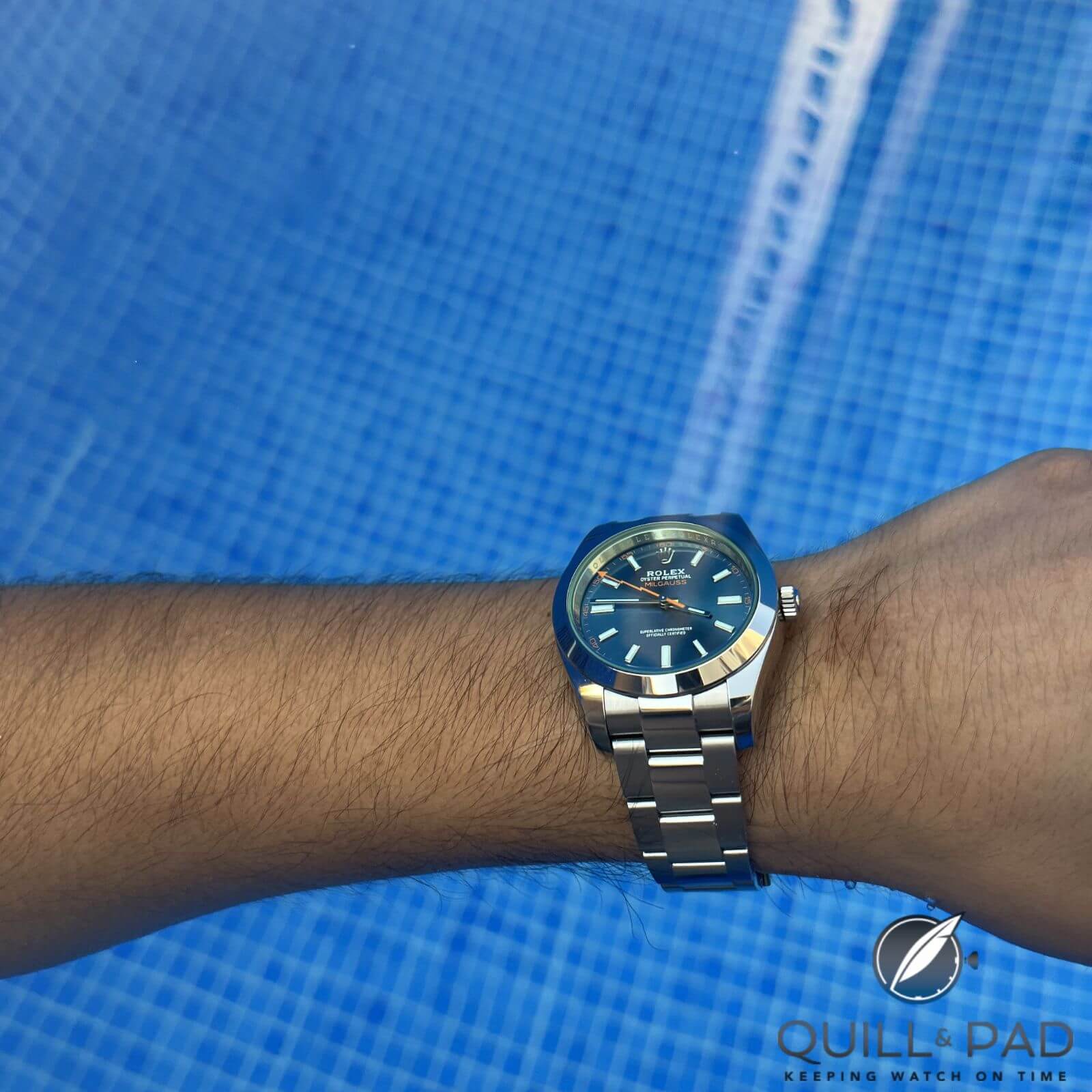
The narrative takes a significant turn when Almousa finds himself by the pool at the Four Seasons, a setting that becomes the catalyst for a renewed appreciation of his Z Blue Milgauss. The act of immersing himself in the water, the relaxed environment, and the sensory details—warm sunlight, swaying palms, and a curated soundtrack (whether imagined or real)—transform the experience. It is in this relaxed state, free from the pressures of everyday life and the anxieties of urban display, that the watch begins to shine, quite literally.
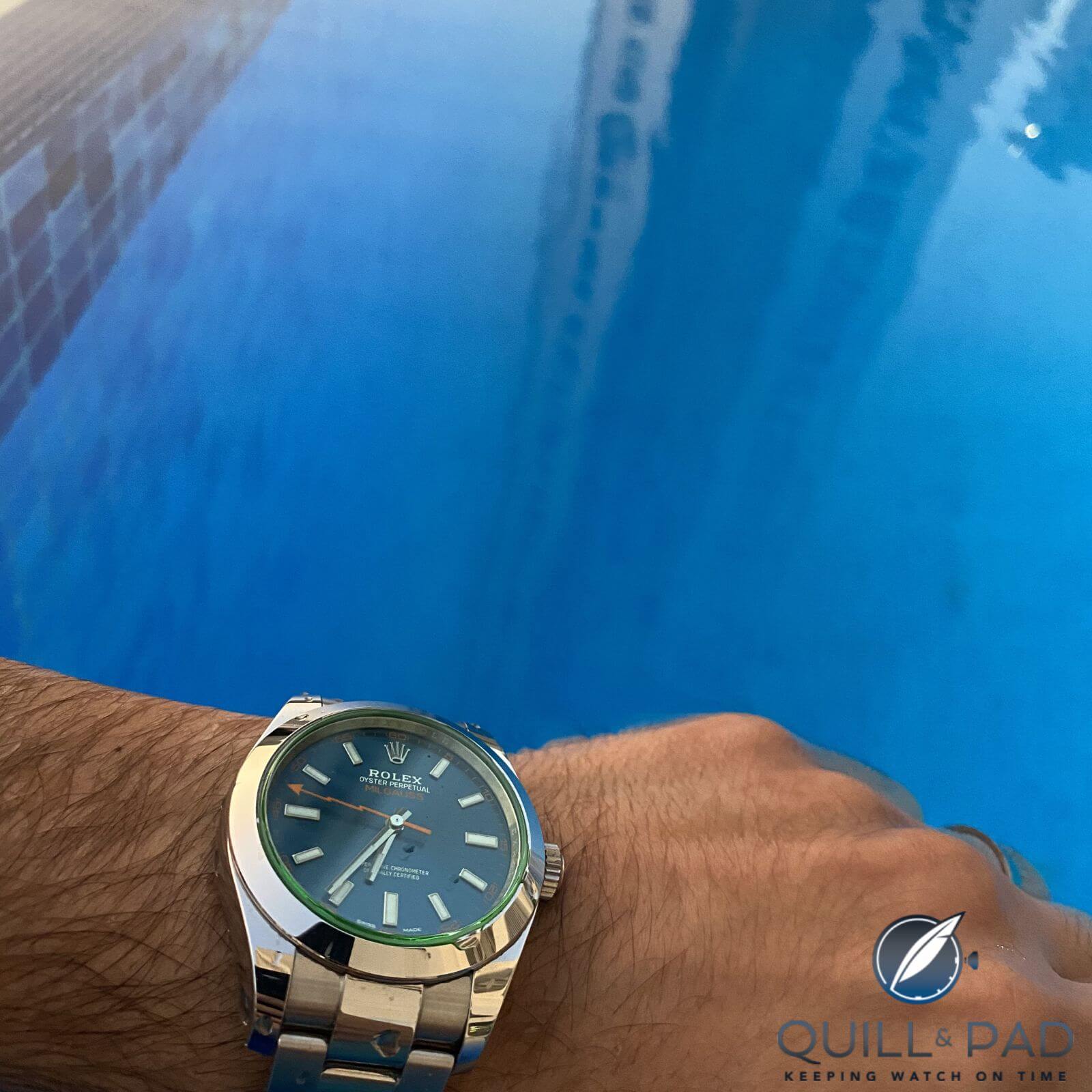
The author’s description of the light catching the green crystal and the iridescent blue dial is poetic. He likens the visual spectacle to a "vivid plume of jade and aquamarine bursting from the center of the dial," a "radioactive halo," and a "prism-lit disc" shifting with metallic blues. This is where the watch’s unique design elements, often subdued in artificial light or against formal attire, come to life. The "bright-orange seconds hand shaped like a lightning bolt" adds a dynamic contrast. Crucially, the water itself seems to ameliorate the watch’s perceived flaws: "The scratches that scar its case fade away when wet."
This experience leads to a profound realization: the Z Blue Milgauss, despite its original scientific purpose, finds its "natural habitat" not in a laboratory, but by the pool. The author argues that the concept of a watch’s "natural habitat" is often a misleading one, citing examples like the Breitling Cosmonaut or Omega Speedmaster Moonwatch. These watches, designed for specific environments (space, aviation), often look their best in more aspirational or even incongruous settings. The Timberland boots meant for construction sites looking best on a rapper, or a peacock appearing most striking on a manicured lawn, serve as analogies for this phenomenon.
The "Pool Watch" as a Social and Aesthetic Statement
Almousa posits that the hotel pool is a unique social arena where specific types of watches thrive. It’s a space for "status symbols and statement pieces," where "glitzy icons" and "bees’ knees" timepieces are expected. This is not a venue for obscure horological novelties or understated "sleeper" watches. Instead, the author advocates for "starter-kit luxury," "old school staples," and watches that embody a certain "Beef Wellington in watch form"—a decadent, classic, and widely recognized indulgence.
The author lists examples that fit this criteria: Royal Oak Offshore and Vacheron Constantin Overseas models, pre-Kern Breitling B01 Chronomats, yellow gold Speedmaster Moonwatches (if water-resistant), Rolex Daytonas (in yellow gold), and most Rolex sports models, particularly two-tone "bluesies." High-end pieces like Richard Mille and Hublot Big Bangs also qualify, with the latter being presented as a more accessible alternative. Patek Philippe Nautilus and Aquanaut models are also included, with a pragmatic observation: watches that might attract unwanted attention in cities like London or Paris are precisely the kind that can be enjoyed at a secure hotel pool.
This perspective challenges the traditional notion of "tool watches" being solely confined to their intended functional environments. Instead, Almousa suggests that the pool, as a space of leisure and relaxed social interaction, offers a perfect stage for watches that are both visually striking and capable of handling occasional immersion. The security of a hotel room safe further mitigates concerns about theft, allowing owners to enjoy their timepieces without the constant vigilance required in public spaces.
The Evolving Landscape of Luxury Display
The article implicitly touches upon the evolution of luxury watch marketing and consumer behavior. While the author’s childhood memories recall an era of overt, almost ostentatious, display, contemporary luxury often leans towards more subtle or "stealth wealth" approaches. However, the hotel pool, as depicted by Almousa, remains a space where overt luxury is not only tolerated but expected. This is a niche environment where a certain level of "give the people what they want" influences the choice of timepiece.
The author’s disdain for "unimaginative eye-rollers" like Apple Watches in this context is telling. The hotel pool is not about tracking fitness metrics; it’s about participating in a visual dialogue of affluence and taste. The mention of specific brands and models—Parmigiani, Czapek, Bremont, Carl F. Bucherer, Sinn—as mood-killers highlights a curated appreciation for what is considered appropriate for this particular setting. The implied message is that while these brands might possess significant horological merit, they do not align with the flamboyant, crowd-pleasing aesthetic of the "pool watch" scene.
Conclusion: The Enduring Allure of the Poolside Statement
Tamim Almousa’s reflection on the "pool watch" is more than a personal anecdote; it’s a commentary on the cultural significance of luxury timepieces and how their perception and utility can be dramatically altered by context. The Z Blue Rolex Milgauss, initially a source of dissatisfaction due to its fit and perceived value, finds redemption in the sun-drenched, chlorinated waters of a luxury hotel pool. This realization underscores the idea that a watch’s true appeal can sometimes lie not in its original design intent or its market performance, but in the joy and confidence it brings to its wearer in specific, often unexpected, environments. The hotel pool, in this narrative, emerges as a stage for horological indulgence, where the splash of water revitalizes not only the watch but also the wearer’s appreciation for it.