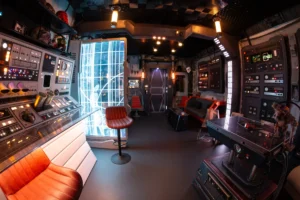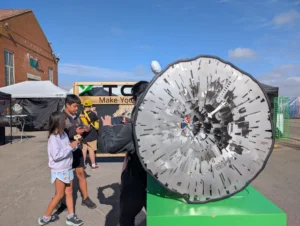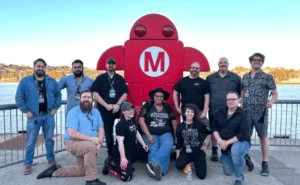
The evolution of light-emitting diode (LED) technology has transitioned from simple indicator lights in the mid-20th century to the primary medium for contemporary interactive art. At Maker Faire Bay Area 2026, held at the historic Mare Island shipyard from September 25th through 27th, this technological trajectory is on full display within the "Dark Room." Located in the sprawling Building 101, the Dark Room serves as a dedicated environment where the absence of ambient light allows for the sophisticated exploration of luminescence, generative artificial intelligence, and multisensory hardware integration.
Makers have historically occupied the vanguard of technological application, and the 2026 showcase highlights a significant shift toward "agentic" systems—installations that do not merely display pre-programmed patterns but respond and evolve based on environmental stimuli and user input. The event underscores how the maker movement has matured from basic circuitry into a sophisticated intersection of computer science, mechanical engineering, and fine art.
The Integration of Generative AI and Visual Coding
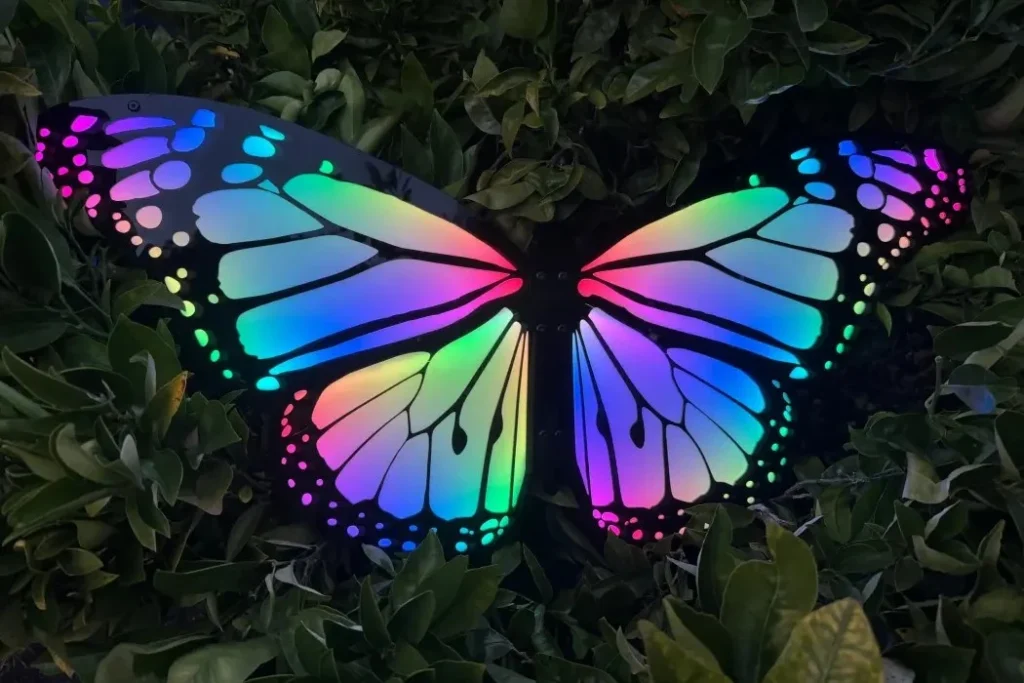
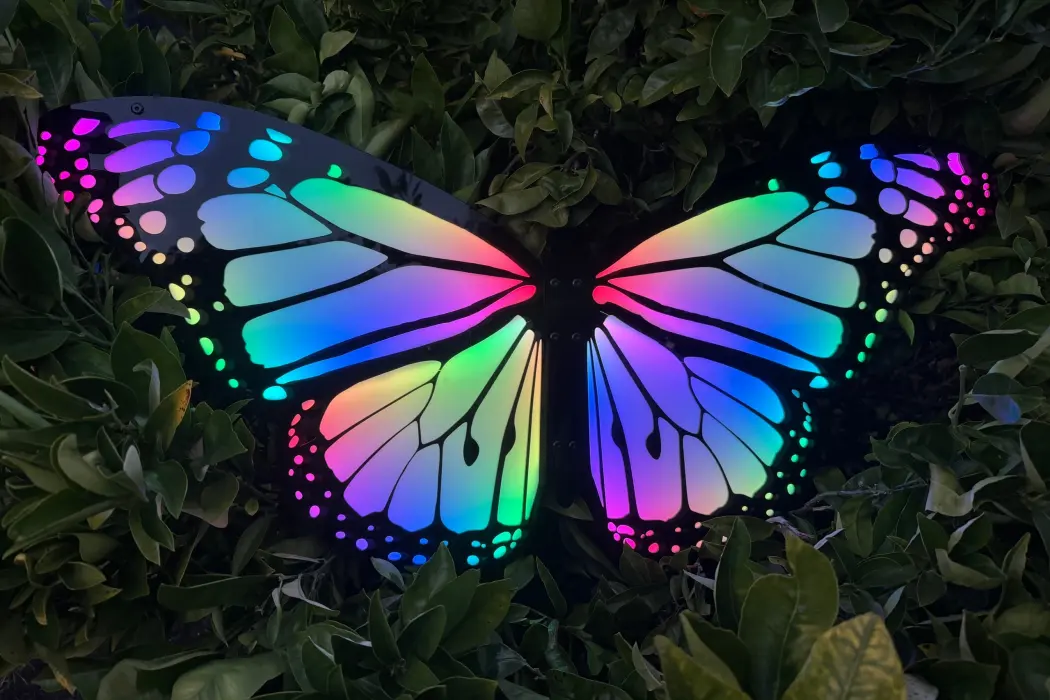
A primary highlight of the 2026 Dark Room is Lepidoptera Imaginaria, an interactive light sculpture developed by Grant Patterson. Patterson, a Stanford-trained computer scientist with a background in Internet of Things (IoT) systems, has utilized 570 full-color LEDs to create a piece inspired by the endangered migratory monarch butterfly. The installation represents a milestone in the "no-code" movement within the arts. By speaking into a vintage microphone, participants trigger a Large Language Model (LLM) that generates software code in real-time. This code is immediately executed to produce unique light patterns, effectively making the concept of "code slop"—the rapid, AI-generated iteration of software—visible to the naked eye.

Technical analysts note that Lepidoptera Imaginaria raises poignant questions regarding the transparency of modern technology. Because the underlying code is generated and executed instantly without being displayed to the user, the piece illustrates a growing trend in black-box engineering: the ability to create complex outputs without the creator fully understanding the mechanics of the process. This "instant software" paradigm is a recurring theme throughout the 2026 faire, signaling a shift in how makers approach problem-solving in the age of generative AI.
Another exhibit pushing the boundaries of AI is the agentic VJ system presented by Vrch.io. This art-tech studio, founded by a computational artist and an AI engineer, focuses on "latent space" as a creative medium. Their system translates sound, gesture, and emotional cues into immersive spatial experiences. By utilizing generative AI to bridge the gap between human emotion and digital output, Vrch.io demonstrates how spatial computing is moving beyond headsets and into shared physical environments.

Multisensory Hardware and Auditory Synchronization
The 2026 Dark Room features a significant increase in exhibits that utilize custom Printed Circuit Boards (PCBs) designed specifically for audio-visual synchronization. These devices allow for the seamless integration of MIDI inputs and audio signals with high-density LED arrays.
A notable example is Night Canopy, a room-sized musical instrument created by Jenia Varavva, a Bay Area software engineer and DJ. The installation consists of hanging fluorescent strands that glow under ultraviolet (UV) light. When participants touch or brush against the strands, the system triggers loops and short soundscapes, effectively turning the act of movement into a collaborative musical performance. The technical architecture relies on capacitive sensing and low-latency audio processing to ensure that the visual and auditory responses are perceived as instantaneous by the participants.

Similarly, the Morphoresonator—a nine-foot-tall chandelier—combines high-tech generative music systems with "low-tech" hand-sculpted materials. Created from cellophane and packing tape, the sculpture functions as a live resonator. It captures ambient sounds, such as clapping or humming, and feeds them into a generative engine that plays the sound back with digital alterations while shifting the internal lighting. This interplay between organic materials and digital processing highlights the maker ethos of repurposing everyday items through advanced technological intervention.
The Dynamandala installation further explores this relationship. As a participatory light and sound environment, it utilizes a custom sculptural controller and real-time 3D technology to transform audience input into evolving geometric patterns. The project emphasizes the role of sensory immersion in creating shared experiences, a core objective of the 2026 Maker Faire.

The Science of Optics and Theoretical Geometry
Beyond AI and audio-sync, the Dark Room also serves as a laboratory for the physics of light. The Penrose Tile Wall utilizes aperiodic tiling—a mathematical concept discovered by Roger Penrose in the 1970s—to create complex, non-repeating visual structures. By illuminating these tiles with programmed LEDs, makers bridge the gap between theoretical geometry and aesthetic design.
The installation Luxtriplicata, created by Swedish artist Johan Fredrik Källman, focuses on the fundamental principles of optics. The piece features a rotatable plate embedded with glass prisms. When a beam of white light strikes these prisms, participants can manipulate the rotation to observe refraction, reflection, and chromatic dispersion. Källman’s work is intended to be pedagogical, offering a hands-on method for visitors to understand the science of the visible spectrum.

In the realm of theatrical application, Sydney Parcell’s Chromolume demonstrates how maker-built light art is being integrated into professional performing arts. Originally designed for a production of Sunday in the Park with George at Berkeley’s Shotgun Players Theater, the piece is fully controllable via DMX (Digital Multiplex), the industry-standard protocol for lighting control. The ability for sound and light designers to manipulate the spinning sculpture in real-time during a performance illustrates the professional-grade reliability now expected of maker-built systems.
Regional Contributions and the Portland Delegation
Maker Faire Bay Area 2026 has seen an influx of talent from the Pacific Northwest, specifically a delegation of artists from Portland, Oregon, known for its vibrant winter light festivals. The creative partnership "Twisty Maurice," comprising Misty Post and Therese Gietler, brought several sophisticated pieces to Mare Island.

- Oscillara: An interactive console that allows users to influence a larger illuminated structure through hand movements, utilizing proximity sensors to create real-time ripples of light.
- Samyra Drift: A four-foot-tall octopus constructed from LEDs and meticulously folded paper. This piece highlights the "chromatophore" effect, mimicking the color-changing skin of cephalopods through thousands of individual paper components and sequenced LEDs.
The presence of these regional artists indicates the strengthening of a West Coast "light art corridor," where makers share technical knowledge regarding weatherproofing, power management, and transportable large-scale installations.
Large-Scale Mobile Art and the Burning Man Influence
The influence of the Burning Man festival is evident in the Dark Room’s large-scale mobile exhibits. These "art cars" represent the pinnacle of maker engineering, requiring robust power systems, animatronics, and structural integrity.

Sepia Lux, a 35-foot-long animatronic inflatable cuttlefish, serves as a centerpiece of the mobile exhibits. The installation uses custom-formed High-Density Polyethylene (HDPE) paneling and a complex internal lighting rig. Accompanying the cuttlefish is Flash the Tortoise, a similarly illuminated mobile sculpture. Both exhibits are interactive; the lights can be "played" via an integrated piano or drum set, allowing the audience to control the visual output of a massive, moving vehicle.
Analysis of Economic and Cultural Implications
The concentration of high-tech exhibits at Maker Faire Bay Area 2026 reflects broader economic trends in the San Francisco Bay Area. As hardware prototyping becomes more accessible through 3D printing and affordable PCB fabrication, the barrier to entry for creating sophisticated electronic art has lowered. This has led to an explosion of "art-tech" startups and independent studios that contribute to the local creative economy.

Furthermore, the event’s location on Mare Island—a former naval shipyard—provides a symbolic backdrop for the transition from traditional heavy industry to the digital and creative "making" of the 21st century. The Dark Room, in particular, acts as an informal educational hub, inspiring the next generation of engineers and artists through direct engagement with complex systems.
Industry observers note that the integration of DMX protocols and LLMs into these hobbyist projects indicates a narrowing gap between amateur making and professional engineering. The techniques displayed at Maker Faire are increasingly being adopted in commercial architecture, urban planning, and public art installations, suggesting that the "Dark Room" of today is a preview of the illuminated cities of tomorrow.

Conclusion
Maker Faire Bay Area 2026 continues to serve as the premier venue for demonstrating the creative potential of emerging technologies. By providing a dedicated space for light-based art, the Dark Room allows for a focused examination of how LEDs, AI, and interactive hardware are reshaping human perception and social interaction. As the event concludes on September 27th, the legacy of these installations will likely persist in the form of new technical standards and inspired creative pursuits within the global maker community. For those seeking to witness the intersection of code, light, and sound, Building 101 on Mare Island remains an essential destination.