The 2024 iteration of the event highlights a significant shift in the maker landscape, where traditional craftsmanship increasingly intersects with advanced technologies like Edge AI, desktop laser fabrication, and open-source real-time operating systems. The participation of "Anchor" and "Coalshed" partners ensures that the Faire remains a hands-on laboratory rather than a static exhibition, fostering an environment where attendees of all ages can engage directly with the tools of the future.
The Evolution of the Maker Movement and Corporate Synergy
Since its inception in 2006, Maker Faire has served as a critical node for the "Maker Movement," a subculture representing a technology-based extension of DIY culture. What began as a gathering of hobbyists has transformed into a multi-billion-dollar industry encompassing 3D printing, robotics, and micro-electronics. This growth is inextricably linked to the support of corporate partners who view the Maker Faire not as a traditional trade show, but as a testing ground for innovation and community feedback.
The importance of these partnerships is reflected in the event’s logistics and programming. The transition to Mare Island—a former naval shipyard—provides a sprawling, industrial backdrop that mirrors the grit and ambition of the makers themselves. To sustain an event of this scale, the organizers rely on companies that share a commitment to open-source principles and STEM (Science, Technology, Engineering, and Mathematics) education.

Arduino: Powering the Next Generation of Edge Computing
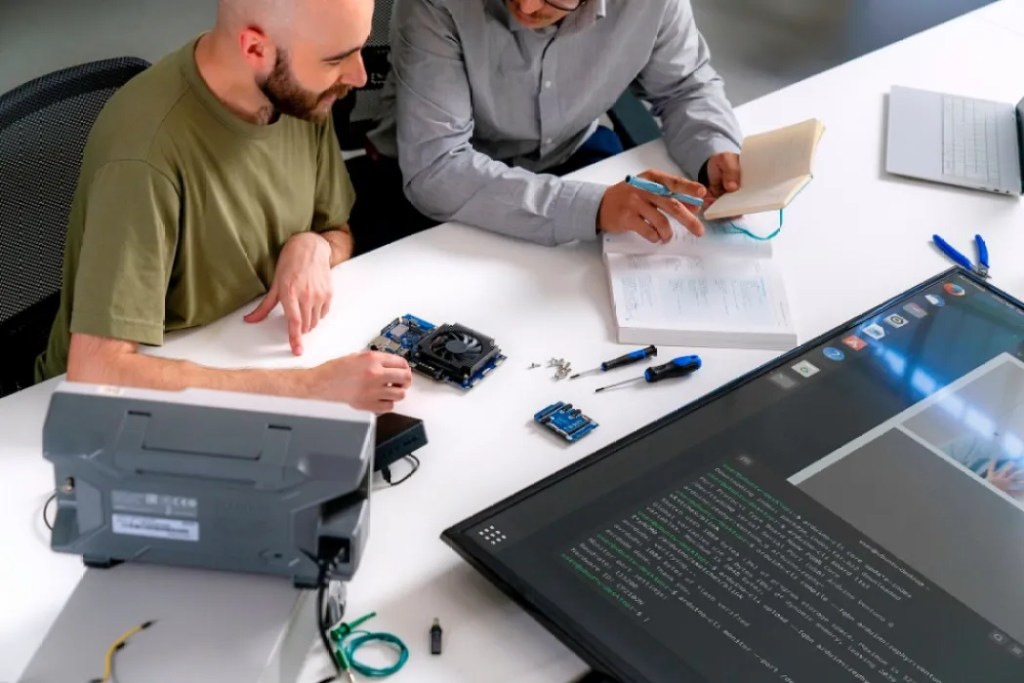
Arduino, a cornerstone of the maker world, continues to lead the democratization of electronics. At Maker Faire Bay Area, the company showcased its latest advancements in micro-controller technology, specifically targeting the burgeoning field of Edge AI. The introduction of the Arduino UNO Q and the Arduino VENTUNO Q dual-brain boards represents a significant leap forward for hobbyists and professional engineers alike. These boards allow for high-performance computing at the "edge"—meaning data is processed locally on the device rather than in the cloud—enabling faster response times for robotics and IoT (Internet of Things) applications.
Massimo Banzi, co-founder of Arduino, provided a keynote address detailing a year of development with the UNO Q. His presentation offered a transparent look at the platform’s capabilities, showcasing projects ranging from open-source musical instruments to smart home security systems. Banzi’s involvement underscores the company’s philosophy: providing versatile tools that scale from simple educational experiments to complex industrial prototypes. According to industry data, the global micro-controller market is projected to reach over $30 billion by 2030, with Arduino-compatible devices remaining a primary entry point for new developers.
xTool and the Accessibility of Desktop Fabrication
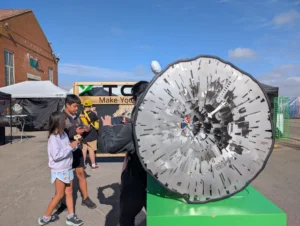
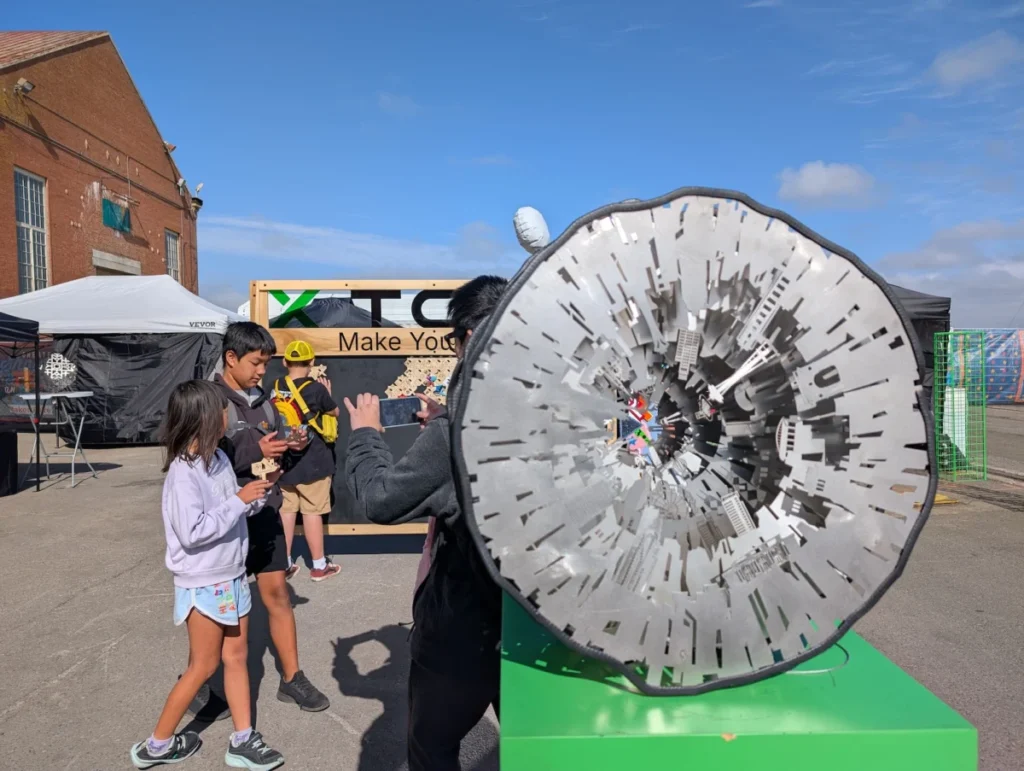
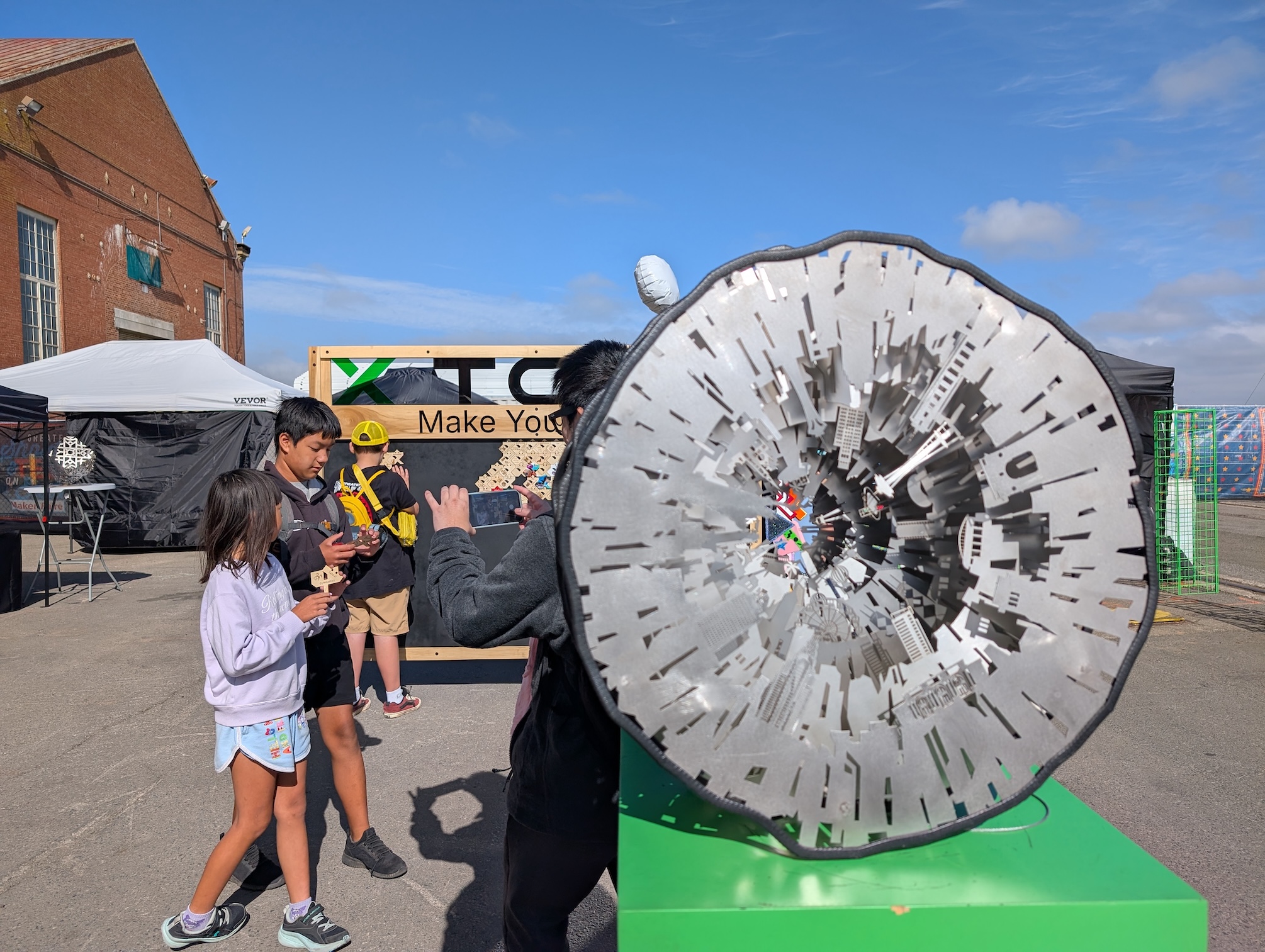
As Maker Faire celebrates nearly two decades of influence, xTool marks its sixth year as a leader in the desktop laser cutting and engraving market. The company’s presence at the Faire focused on "Milestones in the Making," a celebratory campaign that invited the community to reflect on their creative journeys. The centerpiece of their exhibit was a "Wall of Milestones & Memories," a tessellated mosaic composed of tiles engraved by visitors using xTool’s latest machines.
The rise of companies like xTool has fundamentally changed the economics of fabrication. Previously, professional-grade laser cutters were restricted to industrial facilities due to their cost and complexity. Today, intuitive software and compact hardware allow makers to execute precision designs in wood, acrylic, and metal from a home workshop. This shift is reflected in the growth of the global laser cutting machine market, which is expanding at a compound annual growth rate (CAGR) of approximately 5.8%. Beyond the hardware, xTool partner and educator John Burns highlighted the pedagogical value of these tools, sharing a case study on how maker-centric education builds resilience and design-thinking skills in youth.

OpenAI and the Integration of Generative Intelligence
The integration of Artificial Intelligence into the maker space was a primary theme of the event, led by OpenAI. While AI is often discussed in the context of software and automation, makers are increasingly viewing Large Language Models (LLMs) as creative collaborators. OpenAI’s "Shared Spark" experiment at the Faire’s Foundry allowed participants to contribute ideas for a "living mural." Using ChatGPT’s image generation capabilities, these ideas were visualized and merged into a collective work of art.
This collaboration highlights a broader trend: "vibe coding" and AI-assisted design. By using AI as a co-pilot, makers can bridge the gap between a conceptual idea and the technical code required to execute it. This is particularly relevant in the development of "Edge AI" devices, where LLMs are integrated into hardware to provide natural language processing in offline environments. The presence of OpenAI at Maker Faire signals a shift where AI is treated as a foundational tool, similar to a soldering iron or a 3D printer, rather than a separate digital silo.

Microchip Technology and the Industrial Backbone
While hobbyist tools often steal the spotlight, the infrastructure of the maker movement relies on industrial-grade semiconductors. Microchip Technology returned to the Faire to demonstrate the practical applications of their silicon in the "real world." Their exhibit featured retro arcade games, balancing robots, and a robotic claw machine, all powered by Microchip’s micro-controllers.
A key focus for Microchip this year was the promotion of Zephyr®, an open-source real-time operating system (RTOS) backed by the Linux Foundation. As embedded systems become more complex, the need for a standardized, secure, and scalable operating system has become paramount. Microchip’s Bob Martin, known in the community as the "Wizard of Make," and Ross Satchell presented on the rapid evolution of engineering workflows. They introduced the PyKit Explorer, a new development platform based on CircuitPython, designed to simplify the transition from beginner-level coding to professional embedded development. This initiative is crucial for the semiconductor industry, which faces a growing demand for engineers skilled in both hardware and open-source software ecosystems.

STEM Engagement through CrunchLabs and HOTO
Education remains a core pillar of the Maker Faire, and partners like CrunchLabs and HOTO are at the forefront of youth engagement. CrunchLabs, founded by former NASA engineer and YouTuber Mark Rober, focuses on "thinking like an engineer." Their booth featured the Build Box and Hack Pack series, encouraging children to solve physics-based challenges, such as the Disc Launcher competition. By gamifying the engineering process, CrunchLabs addresses the critical need for early-childhood STEM engagement, a sector that has seen increased investment as nations seek to bolster their future technical workforces.
Similarly, HOTO (Home Tools) showcased its SNAPBLOQ™ series, a modular system of compact desktop tools. By focusing on aesthetics and ergonomics, HOTO aims to make the "maker lifestyle" more accessible to those who may be intimidated by traditional industrial tools. Their hands-on station allowed visitors to craft and take home small projects, reinforcing the "learning by doing" ethos that defines the Faire.

Broader Impact and Economic Implications
The involvement of these "Very Important Partners" reflects a strategic alignment between corporate interests and the grassroots maker community. For companies like Microchip and Arduino, Maker Faire is an essential venue for developer relations and talent acquisition. For xTool and HOTO, it is a direct-to-consumer marketing platform that builds brand loyalty through experiential engagement.
The economic impact of the maker movement is substantial. Beyond the ticket sales and local tourism generated by the event at Mare Island, the "Maker Economy" fuels a vast ecosystem of tool manufacturers, component suppliers, and educational content creators. By providing the resources for this weekend of "A-HA" moments, sponsors are effectively investing in the R&D of the next generation. The projects seen at Maker Faire today—whether they are AI-integrated robots or sustainably manufactured furniture—often serve as the prototypes for the startups of tomorrow.

Chronology and Future Outlook
The success of the Bay Area event serves as a template for the hundreds of licensed Maker Faires held globally each year. As the event concludes its current run, the focus shifts to how these partnerships will evolve in the face of rapid technological change. The timeline of the movement shows a clear trajectory: from the "desktop publishing" revolution of the early 2000s to the "desktop manufacturing" revolution of the 2010s, and now the "AI-augmented creation" era of the 2020s.
The partners behind Maker Faire Bay Area have demonstrated that the future of innovation is not top-down, but collaborative. By providing "real tools and real trust," as noted by educator John Burns, these organizations ensure that the maker movement remains a vital force in global culture and industry. As the community looks toward the 20th anniversary of the Maker Faire, the role of these sponsors will only become more critical in navigating the complexities of a hardware-centric, AI-enhanced world.