
The landscape of computing education in England currently stands at a significant crossroads, characterized by a paradoxical trend: while digital technology becomes increasingly central to global industry and daily life, formal student enrollment in high-level computer science qualifications has seen a recent downturn. According to the latest figures for the 2025 academic cycle, entries for GCSE Computer Science fell by 4.7%, dropping from 93,980 to 89,610. Similarly, A-level entries experienced a 2.4% decline, moving from 19,475 to 19,010. This trend arrives despite a decade of significant investment in technology access, free learning resources, and enhanced teacher training provided by organizations such as the Raspberry Pi Foundation.
To address this gap and ensure the next generation is prepared for an AI-driven economy, educational leaders are increasingly turning to low-barrier, high-engagement initiatives like the UK Bebras Challenge and the Raspberry Pi Foundation Coding Challenge. These programs are designed to demystify computing, shifting the focus from abstract academic requirements to creative, collaborative problem-solving. As the UK faces a projected demand for nearly 900,000 additional professionals in priority occupations by 2030, the success of these extracurricular frameworks has become a matter of national economic importance.
The Evolution of Computing Education in England: A Brief Chronology
The current state of computing in English schools is the result of a decade-long transition that began with a radical curriculum overhaul. Understanding this timeline is essential to contextualizing the current "inflection point" cited by educators.
- 2014: The UK government replaced the traditional Information and Communication Technology (ICT) curriculum with a more rigorous Computing curriculum, emphasizing computer science principles, programming, and computational thinking.
- 2018: The establishment of the National Centre for Computing Education (NCCE), backed by government funding, aimed to upskill thousands of teachers and provide a structured "Teach Computing" curriculum.
- 2020–2023: The COVID-19 pandemic accelerated the distribution of hardware, such as Raspberry Pi devices and laptops, to disadvantaged students, narrowing the digital divide in terms of physical access.
- 2024: Participation in the UK Bebras Challenge reached 467,000 students, signaling a growing interest in logic-based puzzles over traditional coding.
- 2025: Official data revealed a slump in GCSE and A-level entries. However, Bebras participation surged to 562,924 students, contributing over 1 million hours of cumulative learning.
- 2026: The Raspberry Pi Foundation Coding Challenge saw its participation grow to 85,389 students, up from 83,096 the previous year, demonstrating a sustained appetite for practical programming outside the formal exam structure.
The Workforce Gap and the Skills England 2025 Assessment
The urgency of revitalizing interest in computing is underscored by the Skills England 2025 assessment of priority skills. The report estimates that by 2030, the demand for roles in priority occupations will grow by approximately 0.9 million. Within this figure, the need for an additional 87,000 programmers and software development professionals is highlighted as a critical requirement across seven major industry sectors, including healthcare, finance, and manufacturing.
For the UK to remain competitive in a global market increasingly defined by Artificial Intelligence and automated systems, the workforce must possess more than just basic digital literacy. Educators argue that the broader skills developed through computing—logical reasoning, decomposition of complex problems, and resilience—are transferable assets that benefit students regardless of their eventual career path. This philosophy is encapsulated by Mitchel Resnick, Professor of Learning Research at the MIT Media Lab, who notes that students are "not just learning to code, they are coding to learn."
The UK Bebras Challenge: Building Computational Thinking
The UK Bebras Challenge has emerged as a cornerstone of the primary and secondary computing experience. Unlike traditional coding competitions that require knowledge of specific syntax (such as Python or C++), Bebras focuses on "computational thinking." Tasks are presented as interactive puzzles that require students to use abstraction and pattern recognition.
Johanna Watkins, Head of Computer Science at Highcliffe School, has integrated the Bebras Challenge into her curriculum for several years. She highlights the accessibility of the platform as its primary strength. "Due to the on-screen reader, the ability to add extra time for SEND (Special Educational Needs and Disabilities) students, and differentiated challenges, everyone can access the competition," Watkins noted.
One of the most significant impacts of the Bebras Challenge is its ability to identify "hidden" talent. Watkins shared a case study of a Year 9 student with a reading age significantly below their chronological age. Despite struggling with traditional literacy-heavy subjects, the student achieved a Merit in the Bebras Challenge, showcasing exceptional logical reasoning. This success boosted the student’s confidence to the point where they chose Computer Science as a GCSE option and set their sights on a career in software development. This suggests that the decline in GCSE entries may not be due to a lack of aptitude among students, but rather a barrier to entry created by traditional assessment methods.
The Raspberry Pi Foundation Coding Challenge: From Theory to Practice
While Bebras builds the mental framework for computing, the Raspberry Pi Foundation Coding Challenge provides the practical application. Launched to bridge the gap between thinking and doing, the challenge encourages students to write actual code to solve increasingly complex problems.
Isobel Culmer, a Teacher of Computer Science at Barton Peveril School, observed that the Coding Challenge fills a void left by more "elite" competitions like the British Informatics Olympiad. "Most competitions are for the elite only… only about 20 of our 340 students can attempt them," Culmer explained. "The Coding Challenge is exactly what we were looking for—a competition where everyone could take part and achieve good results."
The 2026 data shows that the Coding Challenge is successfully scaling, with over 85,000 participants. Educators report that the competitive element—combined with the satisfaction of seeing code execute correctly—fosters a level of resilience that is difficult to replicate in a standard classroom setting. Students frequently continue to work on the problems long after the official challenge window has closed, demonstrating a high level of engagement that formal curricula often struggle to maintain.
Implications for Social Mobility and Educational Policy
The divergence between falling exam entries and rising participation in extracurricular challenges suggests a need for a re-evaluation of how computing is marketed and taught in schools. Analysis of the current landscape reveals several key implications:
- Lowering the Barrier to Entry: The success of Bebras indicates that students are highly capable of computational thinking when it is presented in an accessible, gamified format. This suggests that the "branding" of Computer Science as an elite or overly difficult subject may be deterring potential learners.
- Addressing the Gender and Diversity Gap: By making these challenges part of the standard school week rather than optional after-school clubs, teachers like Watkins and Culmer are ensuring that girls and students from underrepresented backgrounds are exposed to computing. This is vital for diversifying the talent pipeline for the 87,000 new programming roles needed by 2030.
- Teacher Retention and Resource Management: The administrative ease of these challenges is a critical factor for their success. With teacher workloads at an all-time high, the provision of "ready-made" engaging content allows educators to deliver high-quality computing education without extensive preparation time.
- Long-term Economic Resilience: The Skills England report emphasizes that computing skills are a priority across seven industry sectors. This means that computing education is no longer just for the "tech sector" but is a fundamental requirement for the modern economy.
Analysis of Future Outlook
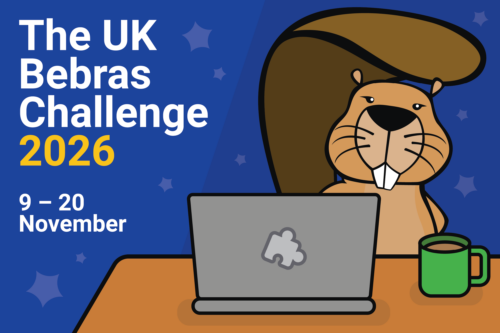
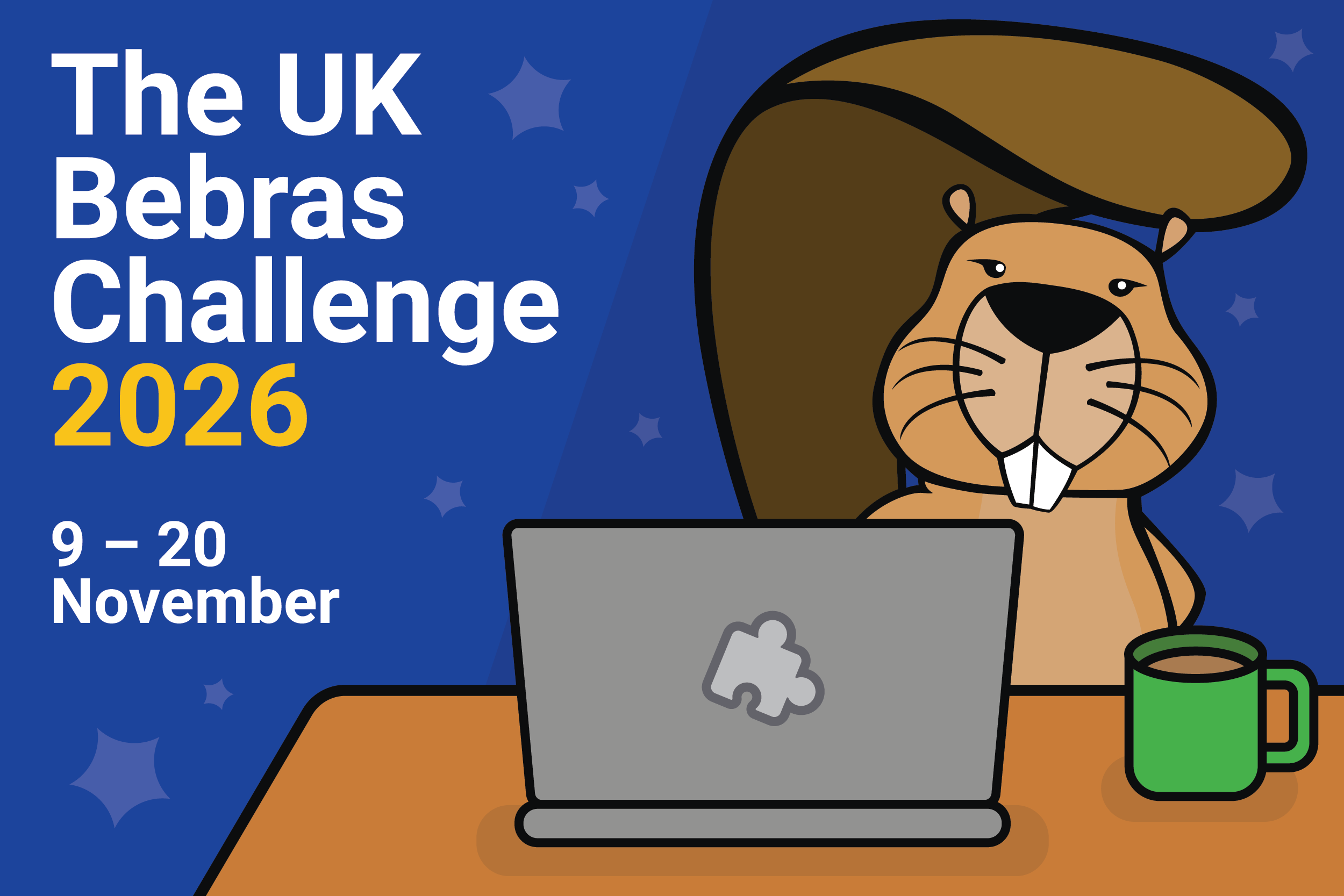
As England prepares for the next UK Bebras Challenge in November 2026, the focus for policymakers and educational charities will likely shift toward sustaining the momentum found in these challenges and translating it into formal qualifications. The Raspberry Pi Foundation and its partners are increasingly focusing on "coding to learn," emphasizing that the logic used to debug a program is the same logic needed to solve complex social and economic problems.
However, the 4.7% drop in GCSE entries remains a concern that cannot be ignored. Experts suggest that while challenges provide a "spark," the transition to the rigors of the GCSE syllabus needs more support. This may involve further refining the curriculum to better reflect the creative and collaborative nature of modern software development, rather than focusing solely on exam-based theory.

In conclusion, while the formal statistics for Computer Science entries present a challenge, the grassroots data from the Bebras and Coding Challenges offer a more optimistic view. With over half a million students actively engaging in computational learning, the raw talent exists within the UK school system. The task for the coming years will be to ensure that this initial interest is nurtured into a professional pathway, filling the 87,000-person gap in the workforce and securing England’s place in the digital future.
How to Participate
Schools looking to reverse the trend of declining engagement are encouraged to register for the upcoming UK Bebras Challenge. Registration for the November 2026 event is currently open at bebras.uk. These initiatives offer a proven, low-cost method for schools to identify talent, build student confidence, and provide the practical problem-solving skills that the 2030 labor market will demand.