The Raspberry Pi Computing Education Research Centre has announced the commencement of a landmark research initiative aimed at reshaping how lower secondary students in England, Scotland, and Wales engage with the ethical and environmental complexities of artificial intelligence. This ambitious study seeks to bridge a critical gap in the current computing curriculum by moving beyond technical proficiency to foster a deeper, more critical understanding of AI’s societal footprint. By recruiting active computing teachers to co-design and implement new pedagogical frameworks, the Centre aims to equip the next generation with the tools necessary to navigate a world increasingly governed by automated systems and large-scale data processing.
The Growing Necessity of AI Literacy in Modern Education
The launch of this study comes at a time when artificial intelligence has transitioned from a niche technological field into a ubiquitous element of daily life for young people. According to recent data from Ofcom’s "Children and Parents: Media Use and Attitudes" report, over 50% of children aged 8 to 17 in the United Kingdom are now regular users of generative AI tools. Despite this high level of adoption, educators and researchers have expressed concern that "use" does not equate to "understanding." While young people are adept at interacting with AI interfaces, their ability to critically evaluate the ethical implications, data provenance, and environmental costs of these technologies remains underdeveloped.
The Raspberry Pi Computing Education Research Centre, a joint venture between the Raspberry Pi Foundation and the University of Cambridge, is positioning this study as a direct response to these educational needs. The initiative focuses specifically on the 11-to-14 age bracket—encompassing Years 7 through 9 in England and Wales, and S1 through S3 in Scotland—a developmental stage where students begin to form more complex ethical reasoning and social awareness.
Theoretical Framework: The UNESCO Principles and Identified Gaps
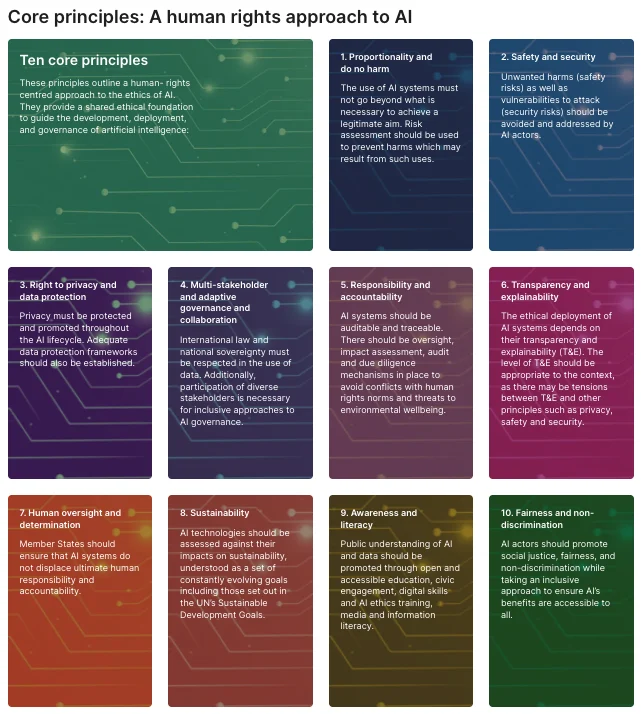
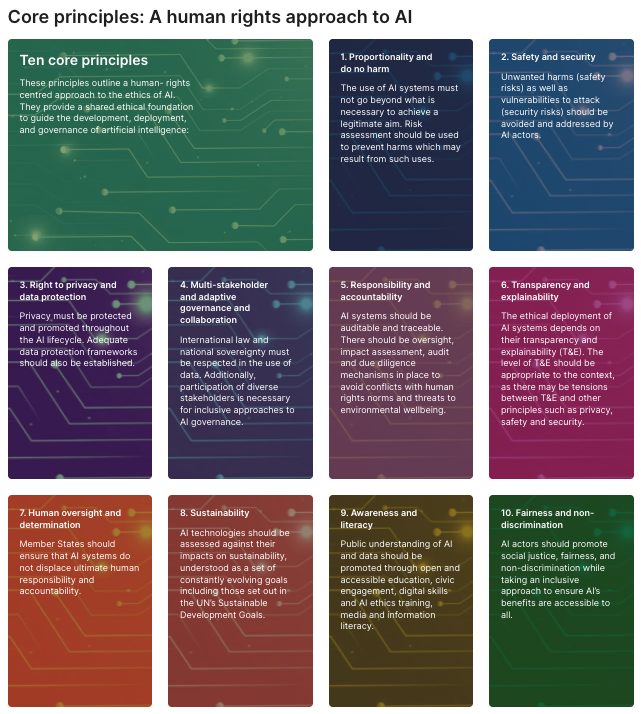
To ensure the study is grounded in global standards, the research team is utilizing the 10 principles established in UNESCO’s Recommendation on the Ethics of Artificial Intelligence. This framework provides a comprehensive lens through which AI can be evaluated, covering:
- Proportionality and Do No Harm
- Safety and Security
- Right to Privacy and Data Protection
- Multi-stakeholder and Adaptive Governance and Collaboration
- Responsibility and Accountability
- Transparency and Explainability
- Human Oversight and Determination
- Awareness and Literacy
- Fairness and Non-discrimination
- Sustainability
Prior to the launch of this new study, the Centre conducted an extensive scoping literature review to assess how these principles are currently addressed in lower secondary education. The findings, which have been accepted for publication at the upcoming Frontiers in Education conference in October, revealed a significant imbalance in current teaching practices.

The review found that while concepts such as "fairness" and "privacy" are frequently addressed—often through lessons on algorithmic bias and data security—other vital areas are almost entirely neglected. Specifically, the principles of "proportionality" and "governance" are rarely featured in classroom discussions. Most strikingly, the research highlighted a profound lack of focus on "sustainability." Out of all the educational interventions analyzed, only one directly addressed the environmental impact of the physical infrastructure required to sustain AI systems.
Addressing the Environmental Cost of the Digital Frontier
A core pillar of the new Raspberry Pi study is the integration of sustainability into AI education. As AI models grow in complexity, their environmental footprint has become a subject of intense scientific and political debate. Research indicates that training a single large-scale AI model can consume as much electricity as 100 average American homes use in a year. Furthermore, the water required to cool data centers housing these systems is a growing concern in the context of global water scarcity.
By introducing these "real-world" examples into the classroom, the study aims to move students away from the perception of AI as a "cloud-based" or ethereal entity and toward an understanding of it as a resource-intensive physical infrastructure. Teachers participating in the study will work to develop lessons that challenge students to consider the trade-offs between technological convenience and ecological preservation, fostering a more holistic form of digital citizenship.
Methodology: A Collaborative Design-Based Research Approach
The study distinguishes itself through its use of "design-based research" (DBR), a methodology that emphasizes the collaboration between researchers and practitioners. Rather than providing teachers with a pre-packaged curriculum, the Raspberry Pi Computing Education Research Centre is inviting educators to be co-creators of the learning materials.
The project timeline and involvement structure are organized into several key phases:
- Recruitment and Selection: The Centre is currently seeking computing teachers from across England, Scotland, and Wales who work with the target age group (11–14).
- Collaborative Workshops: Selected participants will attend two in-person workshops held in Cambridge. During these sessions, teachers will collaborate with university researchers to design a unit of work that integrates the UNESCO principles with practical computing pedagogy.
- Classroom Implementation: Following the workshops, teachers will deliver the co-designed unit to their students. This phase is crucial for testing the "real-world" applicability of the materials across different school settings and demographics.
- Evaluation and Data Collection: Throughout the teaching process, researchers will collect data via surveys, interviews, and classroom observations. This feedback loop is designed to identify what works, what challenges arise, and how students’ perceptions of AI change as a result of the intervention.
To ensure that the study is accessible to a diverse range of schools, the Centre has committed to providing financial support where necessary. This includes covering the costs of travel, accommodation for the Cambridge workshops, and "supply cover" to allow teachers to step away from their regular duties to participate in the research.

Supporting Data and the Broader Educational Landscape
The urgency of this research is underscored by the broader technological landscape in the UK. The UK government has frequently articulated its ambition to become a "global AI superpower," a goal that requires not only a skilled technical workforce but also an AI-literate citizenry.
However, the rapid pace of AI development has often outstripped the ability of formal curricula to adapt. While the National Curriculum in England emphasizes "computational thinking" and "programming," the ethical and societal implications of specific technologies like Large Language Models (LLMs) are often left to the discretion of individual schools or teachers.
By focusing on the 11-to-14 age range, the Raspberry Pi Centre is targeting a pivotal moment in the educational pipeline. This is the period before students choose their GCSE or National 5 subjects, making it the final opportunity to provide a foundational understanding of AI ethics to the entire student population, not just those who choose to specialize in Computer Science.
Reactions and Expected Implications
While official statements from the Department for Education (DfE) regarding this specific study are pending, the initiative aligns with the DfE’s broader "Generative AI in Education" call for evidence, which highlighted both the potential benefits and the risks of AI in schools. Educational experts suggest that collaborative projects like this one are essential for building teacher confidence. Many computing teachers feel under-equipped to lead discussions on complex ethical topics like "governance" or "proportionality," areas that traditionally fall more within the realm of philosophy or social studies than technical computing.
The findings of the study are expected to have a significant impact on how computing is taught across the UK. By providing evidence-based strategies and peer-reviewed resources, the Raspberry Pi Computing Education Research Centre hopes to create a blueprint for AI ethics education that can be scaled nationally and internationally.
Furthermore, the focus on sustainability is likely to resonate with the current generation of students, who have shown high levels of engagement with climate change and environmental activism. Linking the digital world with environmental stewardship provides a powerful hook for student engagement, making the computing curriculum feel more relevant to their personal values and the global challenges they will inherit.
How to Participate
The Raspberry Pi Computing Education Research Centre is actively encouraging interested teachers to register their interest. The study represents a unique opportunity for professional development, allowing educators to engage with cutting-edge research and influence the future of the national computing curriculum.
Teachers of Years 7–9 (England and Wales) or S1–S3 (Scotland) can apply through the official project portal. Inquiries regarding the methodology, logistics, or the scoping review can be directed to Katharine Childs, a leading researcher on the project, at the Raspberry Pi Foundation.
As AI continues to evolve at an exponential rate, the results of this study will provide vital insights into whether collaborative, ethics-focused education can empower young people to not just use AI, but to shape its future in a way that is fair, accountable, and sustainable.