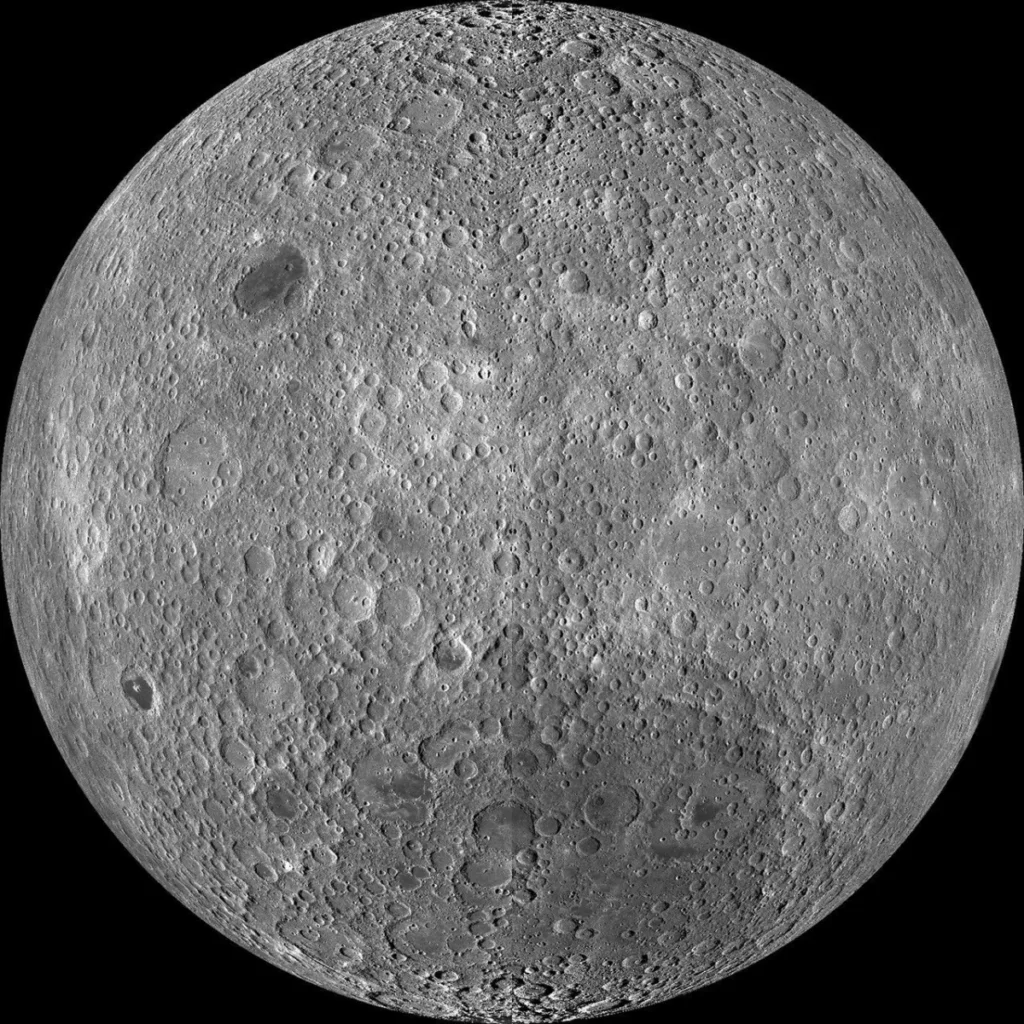
Each day, the Astronomy Picture of the Day (APOD) program offers a captivating glimpse into the cosmos, presenting a unique image or photograph of our universe, accompanied by an insightful explanation from a professional astronomer. Today’s featured image, a stunning mosaic of the Moon’s farside captured by NASA’s Lunar Reconnaissance Orbiter (LRO), unveils a landscape dramatically different from the familiar face we see from Earth. This detailed visual, a testament to decades of lunar exploration, prompts a deeper understanding of our celestial neighbor’s complex geological history and the ongoing scientific endeavors to unravel its mysteries.
Unveiling the Unseen: A New Perspective on the Lunar Farside
The image presented today is not merely a pretty picture; it is a scientific document of immense value, composed from over 15,000 individual images acquired by the LRO’s Wide Angle Camera (WAC) between November 2009 and February 2011. This ambitious undertaking resulted in a global mosaic of the Moon, with the highest resolution versions revealing surface features as small as 100 meters per pixel. The particular section showcased is centered on the Moon’s farside, the hemisphere that perpetually remains hidden from Earth’s direct view due to a phenomenon known as synchronous rotation, or tidal locking.
The Enigma of Tidal Locking
Tidal locking is a gravitational phenomenon where an astronomical body, in this case, the Moon, orbits a parent body, Earth, at the same rate it rotates on its own axis. This celestial dance ensures that the same side of the Moon—the nearside—is always facing us. While this has been a source of fascination and mythology for millennia, it also means that the farside remained largely unseen and unstudied until the advent of space exploration. Early missions, such as the Soviet Luna 3 in 1959, provided the first grainy images of this hidden hemisphere, sparking intense scientific curiosity.
A Stark Contrast: Farside vs. Nearside
Upon close examination of the LRO mosaic, a striking visual disparity emerges. The farside of the Moon, as depicted in this high-resolution image, appears rough, battered, and far more heavily cratered than its nearside counterpart. This is a stark contrast to the relatively smoother, darker plains that dominate the lunar nearside. These dark plains are known as lunar maria (singular: mare), vast basaltic basaltic flood plains formed by ancient volcanic activity. The absence of extensive maria on the farside is one of its most significant geological distinctions.
The Scientific Explanation: A Thicker Crust
The differing appearances of the lunar nearside and farside are not accidental; they are rooted in fundamental differences in their geological evolution, primarily attributed to the thickness of the lunar crust. Professional astronomers and planetary geologists widely agree that the farside crust is significantly thicker than that of the nearside.
Implications of a Thicker Crust
This difference in crustal thickness has profound implications for volcanic activity. Molten material, or magma, originates from the Moon’s interior. On the nearside, where the crust is thinner, this magma could more easily breach the surface, erupting and flowing across the landscape to form the expansive maria. These eruptions, occurring billions of years ago, would have filled ancient impact basins, creating the dark, smooth terrains we observe.
Conversely, on the farside, the thicker crust presented a formidable barrier. The intense pressure required for magma to penetrate this thicker layer would have been much greater, making widespread volcanic resurfacing far less likely. As a result, the farside’s surface has remained largely unaltered by extensive volcanic flows, preserving a more ancient and heavily impacted record of the Moon’s bombardment history. The numerous impact craters, ranging in size from small depressions to vast, multi-ring basins, tell a story of a solar system that was once a much more violent place, with celestial bodies frequently colliding with planetary surfaces.

The Lunar Reconnaissance Orbiter (LRO) Mission: A New Era of Lunar Science
The LRO mission, launched by NASA in June 2009, has been instrumental in revolutionizing our understanding of the Moon. Equipped with a suite of advanced scientific instruments, including the Wide Angle Camera (WAC) and the Lunar Orbiter Laser Altimeter (LOLA), LRO has been systematically mapping the lunar surface with unprecedented detail and accuracy.
Timeline of LRO’s Contribution
- June 18, 2009: LRO is launched from Cape Canaveral, Florida.
- June 23, 2009: LRO enters lunar orbit.
- November 2009 – February 2011: The period during which the data for the global mosaic, including the farside image, was acquired.
- Ongoing: LRO continues its mission, providing valuable data for lunar science, resource assessment, and future exploration planning.
The WAC, with its broad field of view, was crucial in capturing the vast swathes of the lunar surface necessary for creating global mosaics. The high resolution achieved by the WAC, particularly in the detailed versions of the mosaic, allows scientists to study the morphology of craters, identify geological features, and even detect variations in mineral composition across the lunar surface.
Supporting Data and Analysis
The global mosaic created by LRO is not just a visual representation; it’s a dataset that supports numerous scientific studies. For instance, the detailed topography provided by LRO’s instruments has allowed for more accurate modeling of the Moon’s internal structure and thermal history. The distribution and characteristics of craters on the farside, as clearly visible in the APOD image, are essential for dating lunar terrains and understanding the flux of impactors throughout the solar system’s history.
Analysis of the LRO data has also shed light on the distribution of water ice, particularly in permanently shadowed regions near the lunar poles. While not directly evident in this mosaic of the farside, the mission’s broader findings have significant implications for future lunar bases and the potential for in-situ resource utilization.
Broader Impact and Implications: Preparing for Future Exploration
The detailed mapping of the lunar farside by missions like LRO has far-reaching implications, extending beyond purely scientific curiosity. As humanity sets its sights on returning to the Moon and establishing a sustainable presence, understanding the entire lunar surface becomes paramount.
Strategic Importance of the Farside
The farside, with its distinct geological features and potential for unique scientific observations, represents an important frontier for exploration. For example, the farside offers a radio-quiet environment, shielded from Earth’s pervasive radio noise. This makes it an ideal location for radio astronomy observatories, which could provide unparalleled views of the early universe without terrestrial interference. The far side is also home to some of the largest impact basins, such as the South Pole-Aitken basin, a target of significant scientific interest due to its potential to reveal deep lunar mantle materials.
International Collaboration and Future Missions
The data provided by LRO contributes to a global effort to understand the Moon. Many nations and private entities are involved in lunar exploration, and the comprehensive datasets from missions like LRO serve as a foundation for collaborative research and future mission planning. Agencies like the European Space Agency (ESA) and the China National Space Administration (CNSA) have also conducted their own lunar missions, contributing to a richer, more complete picture of our closest celestial neighbor. The insights gained from studying the farside’s geology also inform the selection of landing sites for future robotic and crewed missions, aiming for scientifically rich locations and areas with potential resources.
A Continuing Journey of Discovery
The Astronomy Picture of the Day program, through images like this detailed mosaic of the lunar farside, serves as a powerful reminder of the vastness and complexity of the universe and humanity’s ongoing quest to explore it. The image, a product of sophisticated technology and dedicated scientific inquiry, bridges the gap between the familiar and the unknown, inviting us to contemplate the unseen landscapes of our own celestial companion. As LRO continues its mission and future exploration endeavors unfold, our understanding of the Moon, and indeed the solar system, will undoubtedly continue to deepen, revealing more of its ancient secrets and inspiring new generations of scientists and explorers. The rough, battered surface of the Moon’s farside, once a mystery hidden from our view, is now becoming a familiar terrain, albeit one that tells a story of a different, yet equally fascinating, lunar past.