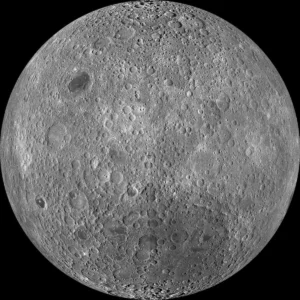
In 2022, a pivotal announcement from NASA and the U.S. Department of Energy signaled a significant shift in the future of space exploration and energy. A selection of study contracts were awarded for the development of nuclear reactors capable of generating power for extended periods, potentially exceeding a decade, on the lunar surface. This strategic investment underscored the burgeoning role that nuclear energy was poised to play in the agencies’ ambitious long-term objectives, most notably NASA’s recently unveiled plans for a sustained lunar presence and the establishment of a Moon Base.
Against this backdrop of official governmental foresight, a dynamic young company, Zeno Power, emerged with a bold vision. Founded by Vanderbilt University students Tyler Bernstein and Jonathan Segal, Zeno Power was already deeply immersed in harnessing the potential of nuclear power, not just for the Moon, but as a sustainable and robust energy solution for the demanding environments of deep-sea vessels and the vast expanse of deep space. Their focus was on compact, reliable power sources that could overcome the inherent limitations of conventional energy technologies in these challenging domains.
By 2023, Zeno Power had garnered significant attention and crucial funding from NASA. The Seattle-area company secured a substantial $15 million NASA Tipping Point contract. This award was specifically earmarked for the development of a radioisotope Stirling electric generator, a sophisticated device designed to provide reliable electrical power for lunar landers and surface systems. This marked a critical step in translating their innovative concepts into tangible hardware for extraterrestrial applications.
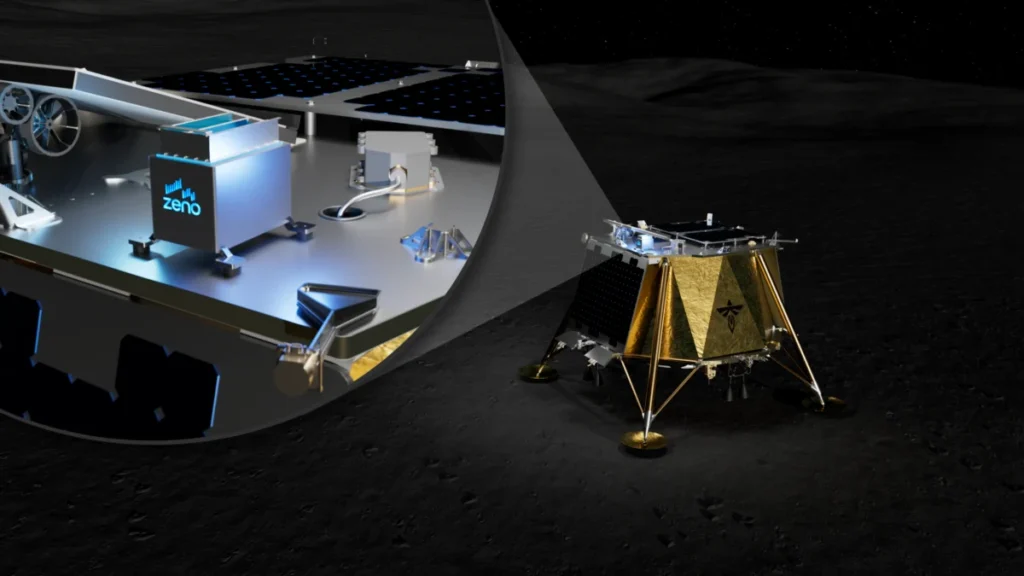
Adding another layer to their ambitious lunar roadmap, Zeno Power announced in the preceding month plans to deploy a radioisotope heater unit aboard a Firefly Aerospace lander. This component, often referred to as a "survive the night" package, is not designed to generate electricity but to provide essential heat. This is a critical capability for lunar missions, especially during the prolonged periods of darkness that characterize the lunar night, which can last for approximately two Earth weeks. The Firefly Aerospace lander carrying this technology is slated for a lunar touchdown no earlier than 2028, offering an early demonstration of Zeno Power’s thermal management solutions.
In an exclusive conversation, Zeno Power CEO Tyler Bernstein shared insights into the company’s strategic approach, the current regulatory landscape, and the underlying drivers behind the renewed global interest in space nuclear power. His perspectives offer a compelling glimpse into the future of off-world energy infrastructure.
The Mechanics of Zeno Power’s Innovation and Lunar Suitability
"The genesis of Zeno Power," Bernstein explained, "stems from a fundamental belief that we are entering an era of heightened competition, particularly in strategically important regions like the Arctic seabed and the vast frontiers of deep space. In these environments, the challenge of providing a consistent and reliable energy supply is immense."
He elaborated on the limitations of existing technologies in these contexts. "On the seabed, solar power is simply non-viable. Batteries, while useful for short durations, have a limited lifespan and capacity, making them impractical for sustained operations. Similarly, on the Moon, the absence of pre-existing infrastructure presents a significant hurdle. The lunar surface experiences cycles of approximately two weeks of sunlight followed by two weeks of darkness. This stark diurnal variation makes solar power and battery storage alone insufficient for continuous operations, which is why many previous lunar landing attempts have been limited to the duration of the lunar day. This is precisely where we saw the potential for compact nuclear power sources to become foundational elements for future space exploration."
Bernstein was keen to clarify the nature of their technology. "It’s important to understand that we are not developing traditional nuclear reactors, meaning there is no fission process and no uranium involved. Instead, we are essentially building ‘nuclear batteries.’ These are compact units, comparable in size to a microwave oven or even smaller. They utilize radioisotopes – materials that naturally decay over time, releasing heat for decades. Our innovation lies in efficiently converting this decay heat into usable electricity."
He emphasized that this is not entirely novel technology. "NASA has a long and successful history of employing radioisotope thermoelectric generators (RTGs) on its deep space spacecraft, proving the efficacy of this approach. Our contribution is to industrialize this proven technology, optimize its production, and scale it for mass deployment using readily available fuel forms." This industrialization and scaling are key to making such power sources economically viable and practical for large-scale lunar endeavors.
A Resurgence of Interest in Nuclear Power
The conversation then turned to the broader resurgence of interest in nuclear energy as a fuel source. Bernstein noted, "Following the Apollo era and the conclusion of the Cold War, the public and political discourse around nuclear power experienced a significant decline. However, we are now witnessing a remarkable renaissance in nuclear energy. This resurgence is characterized by substantial investments across various sectors, from the development of microreactors for military bases to the deployment of small modular reactors (SMRs) for data centers and other critical infrastructure."
This renewed focus on nuclear energy is driven by a confluence of factors. "Nuclear power is making a powerful comeback," Bernstein stated. "There’s a demonstrably friendlier political and public environment for nuclear technologies today. This is bolstered by multiple tailwinds, including the critical need for energy resiliency in the face of global disruptions and the urgent imperative to decarbonize our energy sector. Nuclear power offers a carbon-free, reliable baseload power solution that is increasingly attractive."
He directly linked this trend to NASA’s strategic direction. "This renewed interest is also intrinsically tied to initiatives like NASA Administrator Bill Nelson’s centralized plan for a Moon Base. Furthermore, there is a personal conviction from key figures, including former NASA Administrator Jared Isaacman, who has expressed his belief that nuclear power is instrumental to the success of ambitious space exploration endeavors and the sustainment of large-scale infrastructure on the Moon."
Zeno Power’s Product Portfolio for Diverse Mission Needs
Bernstein detailed Zeno Power’s product offerings, tailored to address specific mission requirements. "To combat the extreme cold temperatures experienced on the lunar surface, particularly during the lunar night, we have developed the radioisotope heater unit. This is the technology we announced will be flown to the Moon in 2028 aboard a Firefly Aerospace lander. Our other key product is the radioisotope Stirling generator. This generator is currently in advanced development, supported by the NASA Tipping Point award. Its purpose is to provide continuous electrical power, enabling 24/7, year-round operations on the lunar surface, which is essential for establishing a sustained human presence and for powering complex scientific instruments and equipment."
NASA’s Tipping Point awards, as noted by the agency, are designed to "foster the development of commercial space capabilities." These awards are strategically deployed when an investment from NASA will "significantly mature the technology" and facilitate its "bringing the technology to market." This mechanism is crucial for de-risking nascent space technologies and accelerating their commercial viability.
Bernstein further elaborated on the development of the Stirling generator, highlighting its lineage. "For decades, NASA has maintained a program focused on funding Stirling generators. Historically, these systems have utilized Plutonium-238, a rare and expensive isotope. NASA’s investment in Stirling engines was aimed at improving their efficiency. We are actively collaborating with NASA Glenn Research Center, which has a rich history of research in this area, along with industry partners who have been developing this technology for years. Our goal is to achieve a test flight of our generator in the near future."
The Strategic Choice of Americium-241 Fuel
A critical aspect of Zeno Power’s strategy lies in its choice of nuclear fuel. Bernstein shed light on this crucial detail: "For our space systems, we are utilizing an isotope called Americium-241. This isotope possesses several characteristics that make it highly attractive, mirroring some of the benefits of Plutonium-238. Crucially, it is an alpha emitter. Alpha particles have a very short range, traveling only a few centimeters. This property makes the fuel requirements relatively minimal and ensures a high degree of thermal efficiency within a confined space, while also contributing to safety considerations in a controlled environment."
The safety and efficiency of alpha emitters are well-established. They are radioactive materials that shed alpha particles, which are essentially helium nuclei consisting of two protons and two neutrons. Their short travel distance means they can be easily shielded, making them suitable for applications where containment is paramount.
Beyond its physical properties, the accessibility of Americium-241 presents a significant advantage. "Compared to Plutonium-238, Americium-241 has a more readily available supply chain," Bernstein stated. "It can be separated and recovered from nuclear waste streams. This means we are, in essence, recycling nuclear waste material to power our future endeavors on the Moon. This circular economy approach to nuclear materials is both environmentally conscious and economically beneficial."
While the supply chain for Americium-241 is still maturing, Zeno Power is making substantial investments to ensure its robustness. "We are heavily investing in developing and securing this supply chain," Bernstein confirmed. "Our aim is to meet the projected demand for hundreds of these generators required for a comprehensive Moon Base. The availability of Americium-241 allows us to scale our production in a way that would be significantly more challenging with Plutonium-238." The long half-life of Americium-241, exceeding 430 years, ensures that these power sources can reliably operate for the extended durations required for lunar colonization and exploration.
Navigating the Regulatory Landscape
The path to deploying nuclear technology in space is, understandably, complex and involves significant regulatory oversight. Bernstein outlined Zeno Power’s proactive approach to this challenge. "We are actively engaged with the Federal Aviation Administration (FAA), NASA, and all relevant regulatory bodies to ensure that our launches are conducted safely and in full compliance with all regulations. Our engagement extends to Capitol Hill, where we are working closely with members of Congress and various White House stakeholders. Our objective is to help stimulate the industry through opportunities for funding, streamlining regulations, and advocating for legislative language that encourages NASA to integrate nuclear power into its missions by specific target dates."
The bipartisan support for space nuclear power is a significant factor in this advocacy. "There is a strong, bipartisan consensus regarding the importance of space nuclear power," Bernstein asserted. This sentiment is reflected in legislative efforts, such as the NASA Reauthorization Act. The House version of the latest NASA Reauthorization Act, for instance, includes a specific amendment that recognizes "space nuclear systems as a key enabling technology for deep space human and robotic missions." This legislative backing provides a crucial framework for the continued development and deployment of these critical technologies.
Broader Implications for Space Exploration and Beyond
The advancements championed by Zeno Power and supported by NASA and the Department of Energy carry profound implications for the future of space exploration. The ability to generate reliable, long-duration power on the lunar surface is not merely a convenience; it is an absolute necessity for establishing a sustained human presence, conducting in-depth scientific research, and developing extraterrestrial resources.
The development of compact, efficient radioisotope power systems opens up new possibilities for robotic exploration missions to the outer planets, icy moons like Europa and Enceladus, and even interstellar space. These missions, often requiring decades of operation far from the Sun, are currently limited by the lifespan and power output of traditional RTGs. Zeno Power’s approach, particularly with the scalability offered by Americium-241, could revolutionize these endeavors.
Furthermore, the expertise and technologies developed for space applications often find terrestrial benefits. The drive for compact, efficient, and resilient power sources for space could spur innovation in terrestrial nuclear power, particularly in remote or off-grid applications. The recycling of nuclear waste, as demonstrated by Zeno Power’s use of Americium-241, also holds promise for more sustainable nuclear fuel cycles on Earth.
The renewed focus on space nuclear power, spearheaded by organizations like Zeno Power and supported by government agencies, marks a critical juncture. It signifies a transition from short-term lunar visits to a sustained, long-term presence, not just on the Moon, but potentially throughout the solar system. The challenges are significant, encompassing technological development, regulatory navigation, and public perception, but the potential rewards – the expansion of human knowledge, the establishment of a multi-planetary future, and the advancement of critical energy technologies – are immense. Zeno Power’s work represents a vital step in illuminating the path forward.