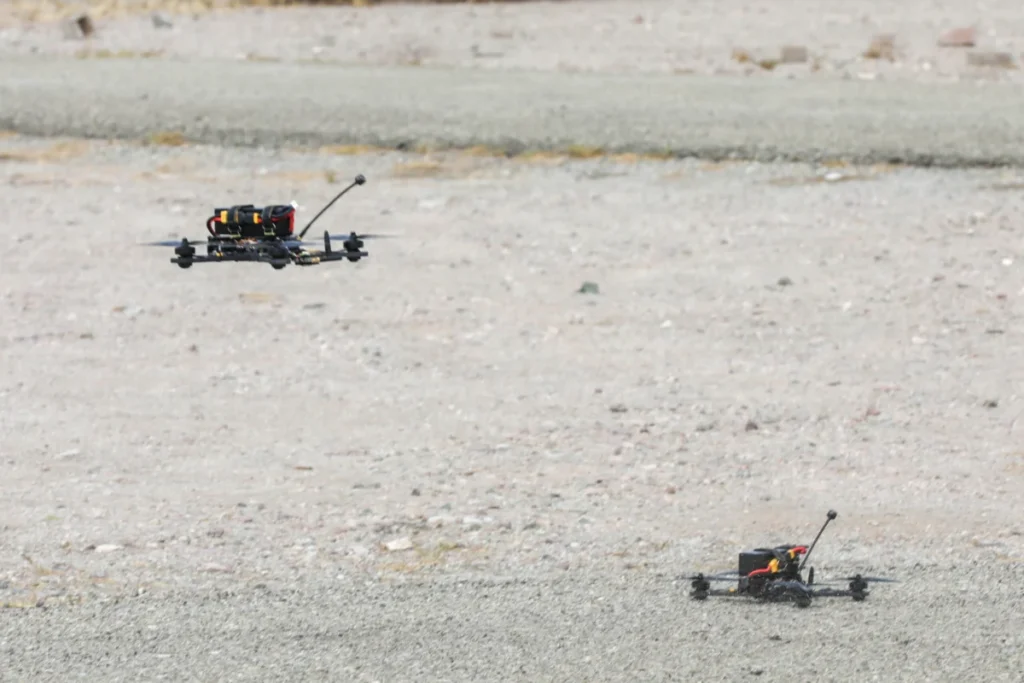
WASHINGTON, D.C. – The Department of Defense has established a new initiative, codenamed Task Force Easy, dedicated to the rapid development and integration of small, attritable unmanned systems, including one-way attack drones, first-person-view (FPV) drones, and small uncrewed ground vehicles. Announced publicly for the first time during the Association of the United States Army’s annual conference, this focused effort signals a significant acceleration in the Pentagon’s approach to leveraging increasingly accessible and adaptable robotic technologies on the modern battlefield.
Colonel Michael Penn, the commander of Task Force Easy, detailed the unit’s mandate, explaining its genesis within the broader Defense Autonomous Warfare Group (DAWG), which has since transitioned into the Joint Task Force Autonomous Warfare. “We’re focused on initially first-person-view, one-way attack, and how to rapidly iterate on that and make that capability better,” Colonel Penn stated during his address at the conference. He further elaborated on the task force’s multifaceted mission, which includes establishing a dedicated drone team. This team will concentrate on developing and disseminating the latest tactics, techniques, and procedures (TTPs), standardizing training, and providing crucial support to Combat Training Centers (CTCs) in their new equipment training and combat evaluations of these emerging systems.
The creation of Task Force Easy directly addresses a perceived gap in the Pentagon’s previous autonomous warfare efforts. Colonel Penn clarified that DAWG was primarily oriented towards larger, more complex autonomous systems. “We are very much focused on small unmanned air systems and unmanned ground vehicles, so that piece that wasn’t covered previously,” he explained to reporters following his presentation. This distinction highlights a strategic pivot towards the proliferation of smaller, more agile, and potentially more expendable robotic platforms that can be fielded in greater numbers and adapted quickly to evolving battlefield needs.
Genesis of Task Force Easy and its Strategic Context
The establishment of Task Force Easy over the summer marks a critical juncture in the U.S. military’s ongoing adaptation to the changing nature of warfare. The proliferation of low-cost, commercially available unmanned systems, particularly evident in recent conflicts, has underscored their tactical and strategic significance. The ability of even rudimentary drone technology to conduct reconnaissance, provide targeting information, and deliver payloads has presented both opportunities and challenges for established military doctrines.
Task Force Easy’s inception follows closely on the heels of a broader organizational shift within the Department of Defense aimed at centralizing and streamlining the development of autonomous capabilities. In late September, the Pentagon announced its intention to establish an Autonomous Warfare Command. This overarching command structure is designed to consolidate efforts, foster interoperability, and accelerate the integration of autonomous systems across all branches of the U.S. armed forces. Task Force Easy, as a focused operational unit, will likely fall under or work in close coordination with this new command, translating high-level strategic objectives into tangible battlefield capabilities.
The Defense Autonomous Warfare Group, the precursor to the Joint Task Force Autonomous Warfare, played a foundational role in exploring the potential of autonomous systems. However, its focus, as indicated by Colonel Penn, was on larger platforms. The decision to spin off Task Force Easy signifies a recognition that the development and deployment of smaller, swarm-capable, or individual-use unmanned systems require a distinct and agile approach. These smaller systems often leverage commercial off-the-shelf components, enabling rapid prototyping and iterative improvements, a process that Task Force Easy is designed to expedite.
Focus on Small, Expendable, and Adaptable Systems
The core mission of Task Force Easy revolves around the rapid iteration and enhancement of two primary categories of small unmanned systems: one-way attack drones and first-person-view (FPV) drones.
One-Way Attack Drones: These systems are designed for a single mission, typically involving the delivery of a payload to a target. Their attritable nature means they are not intended for recovery, which simplifies their design and reduces cost. This allows for their deployment in larger numbers, creating saturation effects or enabling persistent standoff attacks against a variety of targets, from personnel and light vehicles to critical infrastructure. The focus here is on affordability, ease of deployment, and the ability to overwhelm enemy defenses through sheer volume.
First-Person-View (FPV) Drones: FPV drones, often controlled by pilots wearing immersive goggles, offer unparalleled agility and maneuverability. Their ability to navigate complex terrain and tight spaces makes them ideal for close-quarters reconnaissance, target identification, and even precision strikes. The rapid development in FPV drone technology, driven by the hobbyist market, has provided a rich foundation for military applications. Task Force Easy’s emphasis on FPV systems suggests a focus on enhancing their operational range, payload capacity, and integration with battlefield networks for real-time intelligence sharing.
Small Uncrewed Ground Vehicles (UGVs): Complementing the aerial capabilities, Task Force Easy is also tasked with developing small uncrewed ground vehicles. These UGVs can perform a range of missions, including reconnaissance, logistics support, mine detection and clearance, and potentially even direct combat roles. Their ability to operate in environments inaccessible to aerial drones, such as urban canyons or underground facilities, makes them a crucial component of a comprehensive unmanned systems strategy.
Colonel Penn indicated that Task Force Easy will employ a competitive structure, mirroring successful approaches used in previous DAWG initiatives. This competitive model is expected to foster innovation by encouraging multiple vendors and internal teams to develop and propose solutions, with the most effective and cost-efficient options being selected for further development and fielding. This approach not only accelerates the pace of innovation but also ensures that the military is acquiring the best available technologies at a competitive price point. The task force anticipates kicking off these competitive efforts in the near future, potentially within the next month.
The Role of Training and Tactics, Techniques, and Procedures (TTPs)
Beyond technological development, Task Force Easy is placing a significant emphasis on the human element of unmanned systems integration. Colonel Penn highlighted the task force’s commitment to establishing a dedicated drone team focused on training and the development of TTPs. This recognizes that even the most advanced technology is ineffective without skilled operators and well-defined operational procedures.
Enhancing Battlefield Proficiency
The drone team’s responsibilities will include:
- Developing Latest TTPs: The rapidly evolving landscape of unmanned systems requires continuous adaptation of battlefield tactics. The team will be at the forefront of identifying and codifying best practices for operating, employing, and countering various types of drones and UGVs.
- Standard Development: Establishing standardized operating procedures, communication protocols, and integration frameworks is crucial for ensuring interoperability between different systems and units. This will facilitate seamless deployment and reduce the cognitive burden on operators.
- Assisting Combat Training Centers (CTCs): The task force will play a vital role in supporting the training exercises conducted at Army CTCs, such as the National Training Center (NTC) and the Joint Readiness Training Center (JRTC). This includes integrating new drone and UGV systems into realistic combat scenarios, allowing units to train with and against these capabilities under simulated combat conditions.
- New Equipment Training: Providing specialized training for soldiers on the operation and maintenance of newly acquired unmanned systems is paramount. Task Force Easy will ensure that units are adequately prepared to employ these technologies effectively from the outset.
- Combat Evaluations: The task force will also be involved in the combat evaluation of this equipment. This means assessing the performance of drones and UGVs in realistic, albeit simulated, combat environments to identify strengths, weaknesses, and areas for improvement before widespread fielding.
This comprehensive approach to training and TTP development underscores the understanding that successful integration of unmanned systems is not solely a technological challenge but also a doctrinal and human-capital one. The ability to rapidly learn, adapt, and disseminate best practices will be as critical as the development of the hardware itself.
Broader Implications and Future Outlook
The establishment of Task Force Easy and the broader push towards an Autonomous Warfare Command signal a strategic recalibration within the U.S. military. The lessons learned from recent conflicts, where adversaries have effectively employed inexpensive and ubiquitous drone technology, have clearly influenced this direction. The focus on small, attritable systems suggests a move towards a more distributed, networked, and resilient force architecture.
The "Democratization" of Warfare and its Countermeasures
The proliferation of drone technology has, in many ways, democratized aspects of warfare, empowering smaller actors and even individuals with capabilities previously exclusive to state militaries. The U.S. military’s investment in similar technologies, particularly in their more sophisticated and integrated forms, is a strategic response to this evolving landscape. By developing its own advanced small unmanned systems and the TTPs to employ them effectively, the Pentagon aims to maintain a technological and tactical edge.
The emphasis on one-way attack drones and FPV systems also reflects a pragmatic approach to attrition warfare. In high-intensity conflicts, the ability to replace losses quickly and at a lower cost is a significant advantage. These systems are designed to be expendable, allowing commanders to employ them with a degree of risk tolerance that would be unacceptable for more expensive and irreplaceable assets.
Interoperability and Joint Operations
The transition of DAWG to the Joint Task Force Autonomous Warfare, and the concurrent establishment of Task Force Easy, points towards a future where autonomous systems are seamlessly integrated across different services. This will require robust interoperability standards and joint training protocols to ensure that Army, Navy, Air Force, and Marine Corps units can operate their unmanned systems in a coordinated manner.
The development of a dedicated drone team for training and TTPs at the CTCs is a crucial step in this direction. By exposing all branches to the same advanced unmanned systems and operational concepts during their training cycles, the DoD can foster a common understanding and a shared operational lexicon.
The Competitive Imperative
Colonel Penn’s mention of a competitive structure for Task Force Easy’s efforts is a critical insight into the Pentagon’s strategy. This approach leverages the dynamism of the defense industrial base and the innovation inherent in the commercial technology sector. By creating a competitive environment, the DoD can:
- Accelerate Innovation: Multiple teams and companies vying for contracts will naturally push the boundaries of what is possible.
- Ensure Cost-Effectiveness: Competition drives down prices and encourages the development of more affordable solutions.
- Foster Adaptability: A diverse range of developmental approaches increases the likelihood of creating systems that can be adapted to a wide array of missions and threats.
The expectation that these competitive efforts will commence within the next month signals a high degree of urgency within the Pentagon. This rapid pace of action indicates that the DoD views the development and fielding of advanced small unmanned systems not as a long-term research project, but as an immediate operational necessity. The success of Task Force Easy will be measured not only by the technological advancements it achieves but also by its ability to translate those advancements into deployable capabilities that enhance the warfighting effectiveness of U.S. forces in an increasingly complex and technologically driven global security environment. The coming months will be critical in observing the initial outputs of this vital new initiative.