The additive manufacturing (AM) sector is experiencing a significant upswing in business activity, marked by a series of strategic acquisitions, crucial partnerships, and substantial investments aimed at bolstering production capabilities. Recent developments highlight a global trend toward consolidation and expansion, particularly in specialized material production and high-value application sectors such as aerospace and defense.
Osprey Transitions to Independent Entity Following Mimir Acquisition
A pivotal move in the metal powder segment of the AM industry is the completion of Mimir’s acquisition of Osprey, a prominent metal powder producer, from Sandvik. This transaction, finalized on October 1st, marks Osprey’s transition from a subsidiary of the Swedish industrial conglomerate Sandvik to an independently operated company under the ownership of Swedish investment firm Mimir. The initial announcement of this deal dates back to May, signaling a carefully planned transition. Osprey, with its deep-rooted expertise in gas atomization and a comprehensive portfolio of over 2,000 powder grades across more than 400 alloys, is poised for renewed growth. The company’s materials are integral to a wide array of advanced manufacturing processes, including additive manufacturing, metal injection molding, and hot isostatic pressing, serving critical industries like aerospace, defense, medical, energy, and general industrial manufacturing.
Osprey operates state-of-the-art production facilities located in Neath, Wales, and Sandviken, Sweden. The Sandviken facility, established in 2019, is particularly noteworthy for its specialization in high-performance titanium and nickel-based alloy powders, holding stringent aerospace and medical quality certifications. This strategic positioning allows Osprey to cater to the most demanding applications where material integrity and performance are paramount.
Mimir has articulated a clear vision for Osprey’s future, which includes significant investments in the development of new alloys, advancement of product lines, and expansion into international markets, with a specific focus on the additive manufacturing sector. This strategic direction suggests a commitment to leveraging Osprey’s established capabilities and expanding its market reach in a rapidly evolving industry. For existing Osprey customers, assurances have been provided that contracts, production lines, and product specifications will remain consistent during this transitional period, aiming to minimize disruption and maintain continuity of service.

The acquisition was not solely driven by Mimir; it also involved strategic co-investment from other financial entities. NAXS, another Swedish investment company, disclosed on October 5th that it had contributed SEK 5 million (approximately $500,040) to the deal, underscoring a broader investor confidence in Osprey’s potential. MonteCap is also participating as a co-investor. While the total purchase price for Osprey has not been publicly disclosed, the successful divestment from Sandvik and the subsequent acquisition by Mimir signify a strategic realignment for both entities. For Sandvik, this move represents a divestment from a specific segment of the AM market, potentially allowing them to refocus resources on other areas of their extensive industrial portfolio. For Osprey, independence offers the agility and strategic focus to pursue growth opportunities unhindered by the broader corporate objectives of its former parent company.
The implications of Osprey’s independence are significant for the metal AM powder market. With dedicated investment and a clear strategic focus, Osprey is expected to accelerate innovation in powder metallurgy, potentially introducing novel alloys and enhancing existing material properties to meet the increasingly complex demands of advanced manufacturing. This could translate into improved performance, greater design freedom, and cost efficiencies for end-users in critical sectors.
Graphy Secures Substantial Supply Agreement in Dental 3D Printing Market
In the dynamic field of dental 3D printing, South Korean company Graphy has announced a significant supply agreement valued at approximately KRW 2 billion (roughly $1.5 million) with MegaGen Implant, a leading dental implant manufacturer. This agreement, finalized in early October, encompasses the supply of Graphy’s Tera Harz E-Namel resin, a specialized photopolymer material, alongside Graphy’s 3D printers and post-processing equipment. The partnership is strategically designed to leverage MegaGen Implant’s extensive established network within the global dental industry, thereby expanding Graphy’s commercial footprint.
Graphy has carved a niche for itself by developing advanced photopolymer materials tailored for orthodontic and restorative dentistry applications. Its collaboration with MegaGen Implant, a company renowned for its dental implants and related products supplied to clinics and laboratories worldwide, represents a synergistic alliance. This deal allows Graphy to gain direct access to a broad customer base, facilitating the adoption of its innovative materials and printing solutions in clinical and laboratory settings.
This substantial supply agreement follows closely on the heels of Graphy’s strategic investment in Ray, another South Korean company specializing in dental imaging. Graphy acquired a 26.14% stake in Ray, further solidifying its presence in the dental technology ecosystem. Discussions are reportedly underway between Graphy and Ray for a separate annual supply agreement concerning Ray’s imaging systems. While this arrangement is not yet finalized, the combined impact of the MegaGen agreement and the Ray investment positions Graphy as a comprehensive provider across the dental imaging, materials, and 3D printing equipment spectrum. This integrated approach is likely to enhance patient care through more streamlined and technologically advanced dental workflows, from diagnostics to treatment planning and execution.
The implications of this deal for the dental AM market are far-reaching. It underscores the growing integration of 3D printing technologies in dental practices, moving beyond prototyping to direct patient care applications. The demand for high-quality, biocompatible materials and reliable printing hardware is expected to rise, and Graphy’s strategic moves position it to be a key player in meeting this demand. Furthermore, the consolidation of imaging, materials, and printing capabilities through such partnerships can lead to more efficient and cost-effective dental solutions for practitioners and patients alike.
Australian Companies Forge Alliance to Boost Defense and Aerospace AM Capabilities
In Australia, technology supplier AXT has entered into a strategic agreement with Stärke Advanced Manufacturing Group (Stärke-AMG) aimed at developing scalable polymer additive manufacturing capacity within South Australia. This collaboration is specifically targeting high-growth sectors including defense, aerospace, autonomous systems, and other advanced industrial applications. The partnership represents a concerted effort to enhance Australia’s domestic manufacturing capabilities in critical strategic industries.
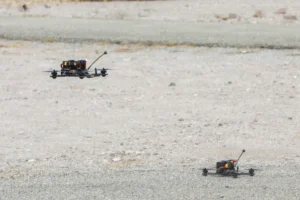
As part of this alliance, AXT will be installing a Stratasys H350 3D printer, which utilizes Selective Absorption Fusion (SAF) technology, at Stärke-AMG’s Adelaide-based facility. This advanced system is designed to support the production of components made from nylon and polypropylene, with initial applications focusing on the development of prototypes for small drones. Beyond immediate production needs, the companies also plan to explore the utilization of recycled SAF materials and the development of specialized FDM (Fused Deposition Modeling) materials tailored for defense applications. This forward-looking approach highlights a commitment to sustainability and the creation of purpose-built solutions for demanding environments.
This new venture builds upon Stärke-AMG’s existing expertise in metal additive manufacturing. Earlier in the year, the company significantly expanded its metal AM capacity by integrating three Renishaw AM400 systems, a move facilitated through a partnership with Flinders University. Stärke-AMG also possesses valuable experience in supporting Australian defense programs, having contributed to naval and uncrewed aircraft projects. The integration of polymer AM capabilities through the partnership with AXT diversifies Stärke-AMG’s manufacturing portfolio, enabling it to offer a broader range of solutions to its clients.
The strategic intent behind this alliance is to pursue commercial customers, secure defense program contracts, and explore opportunities for grant-funded projects. While no specific government funding has been announced for the immediate installation of the Stratasys H350, the initiative aligns with national objectives to bolster sovereign manufacturing capabilities. For Stärke-AMG, the agreement represents a significant step in its evolution as a comprehensive advanced manufacturing hub, adding polymer production to its established strengths in metal 3D printing and conventional machining. This dual capability is crucial for industries that require a diverse range of materials and manufacturing processes to meet complex design and performance requirements.

The implications for the Australian defense and aerospace sectors are substantial. The increased domestic capacity for producing critical components using advanced AM technologies can reduce reliance on international supply chains, enhance responsiveness, and foster innovation. The ability to rapidly prototype and manufacture complex parts from both metal and polymer materials offers a significant competitive advantage and strengthens national security by ensuring a more resilient industrial base.
AFD Systems Enhances Certified Aerospace AM Production with Stratasys Investment
In the United Kingdom, AFD Systems has significantly bolstered its capabilities in the production of certified polymer aerospace components with the acquisition of a Stratasys F900 3D printer. This strategic investment, announced on October 6th, is designed to expand the company’s capacity to deliver high-quality, flight-worthy parts for the aerospace and defense industries. AFD Systems specializes in providing comprehensive engineering, design, certification, and manufacturing services tailored to these demanding sectors.
This substantial investment in advanced AM hardware follows a significant regulatory milestone for AFD Systems. Earlier in the year, the company achieved Part 21G Production Organisation Approval from the UK Civil Aviation Authority. Notably, AFD Systems became the first UK business to receive this specific approval for polymer additive manufacturing within the aviation sector. This certification is a critical enabler, empowering AFD Systems to manufacture components directly from approved design data and to issue them with the necessary airworthiness documentation, a fundamental requirement for flight safety.
The Stratasys F900 printer boasts an impressive build volume of approximately 914 x 610 x 914 mm, making it suitable for producing larger components that were previously beyond the scope of AFD Systems’ in-house capabilities. The machine supports the use of high-performance materials, including ULTEM and Antero PEKK, which are renowned for their exceptional mechanical properties, thermal resistance, and chemical inertness, making them ideal for demanding aerospace applications. AFD Systems intends to leverage this new capability for the production of larger flightworthy components, advanced manufacturing tooling, and low-volume production runs of specialized aerospace parts.
With the crucial regulatory approval already secured, the addition of the Stratasys F900 allows AFD Systems to bring a greater proportion of its certified component manufacturing in-house. This not only enhances control over the production process and quality assurance but also improves lead times and cost efficiencies. The ability to produce larger, certified polymer parts internally marks a significant advancement for the company, enabling it to better serve the evolving needs of its aerospace and defense clientele. The implications for the UK’s aerospace manufacturing sector are positive, as it strengthens the domestic supply chain for critical components and supports the adoption of advanced AM technologies in a highly regulated industry. This investment underscores a growing trend of specialized AM service providers acquiring advanced hardware to meet stringent certification requirements and expand their service offerings.