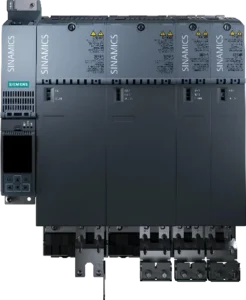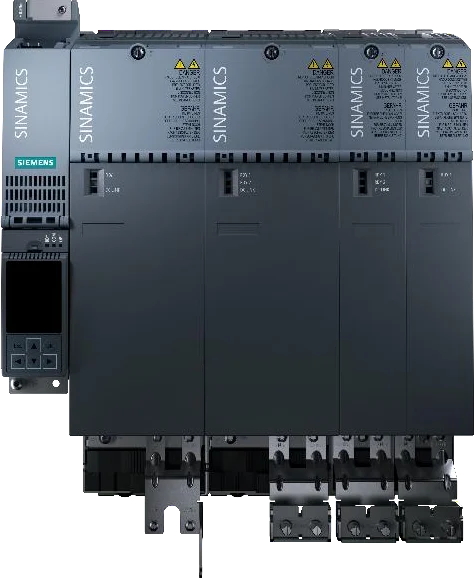
Siemens, a global technology powerhouse, has officially introduced the Sinamics S220 drive system, a sophisticated solution engineered to meet the evolving demands of industrial applications. Built upon the robust and proven architecture of the Sinamics S120 platform, the S220 represents a significant leap forward in motion control technology, integrating advanced capabilities for simulation, analysis, and seamless connectivity within digital workflows. This new system, which notably includes the innovative CU320-3 control unit, is strategically positioned within the expansive Siemens Xcelerator portfolio, underscoring the company’s commitment to driving digital transformation across industries. Its introduction is poised to enhance system performance, optimize production environments, and provide manufacturers with unprecedented levels of control, efficiency, and resilience in an increasingly interconnected industrial landscape.
Background and Strategic Context: Siemens’ Leadership in Industrial Automation
Siemens has long been a foundational pillar in the industrial automation sector, with a legacy spanning decades in developing cutting-edge technologies that power factories, infrastructure, and critical processes worldwide. The company’s Sinamics family of drive systems has consistently set industry benchmarks for performance, reliability, and innovation. The launch of the Sinamics S220 is not merely an incremental update but a strategic response to the paradigm shift occurring within global manufacturing, often referred to as Industry 4.0. This era is characterized by the convergence of operational technology (OT) and information technology (IT), demanding highly integrated, intelligent, and flexible automation solutions.
The Xcelerator portfolio, under which the Sinamics S220 falls, is Siemens’ holistic digital business platform designed to accelerate digital transformation. It encompasses a comprehensive suite of software, services, and an open ecosystem of partners, enabling companies to create comprehensive digital twins of their products, production processes, and performance. By integrating the Sinamics S220 into Xcelerator, Siemens ensures that the drive system is not just a hardware component but a data-rich, digitally-enabled asset that contributes to a complete lifecycle management approach, from design and simulation to operation and maintenance. This strategic alignment underscores Siemens’ vision for a future where physical and digital worlds seamlessly merge to unlock new levels of efficiency and innovation.
The Multi-axis Control Unit CU320-3: The Brain of the Sinamics S220
At the core of the Sinamics S220 system lies the newly developed CU320-3 control unit, an engineering marvel designed for high-performance multi-axis applications. This advanced control unit boasts the capability to operate an impressive 12 axes from a single unit, a feature that significantly enhances integration density in complex multi-axis drive systems. This level of consolidation not only simplifies system architecture and reduces wiring complexity but also contributes to a smaller physical footprint, a crucial advantage in space-constrained industrial environments.
The CU320-3 is equipped with a powerful built-in multicore processor, providing substantial computing capacity. This processing power is critical for executing complex motion control algorithms, managing real-time data streams, and handling the intricate calculations required for precise and dynamic machine movements. The unit’s Drive-Cliq-Express interface further elevates its capabilities, supporting high-speed data transfer at 1 Gbit/s. This rapid data exchange is essential for maintaining synchronized operation across multiple axes, enabling quick diagnostics, and facilitating the high-frequency data logging necessary for advanced analytics and predictive maintenance applications.
A standout innovation within the CU320-3 is its test pulse method, which utilizes three voltage sensors per axis to enable advanced sensorless control. This technology is engineered to approach the performance levels typically associated with encoder-based systems, offering a significant advantage by reducing hardware complexity and associated costs. By minimizing the need for physical encoders, the S220 enhances system robustness, especially in harsh industrial conditions where encoders might be susceptible to wear or damage. Furthermore, this sensorless approach contributes to improved energy efficiency, aligning with broader industry goals for sustainable manufacturing. The ability to achieve near-encoder precision without the physical component marks a significant step towards more resilient and cost-effective drive solutions.
Digitalization and Streamlined Engineering Workflow
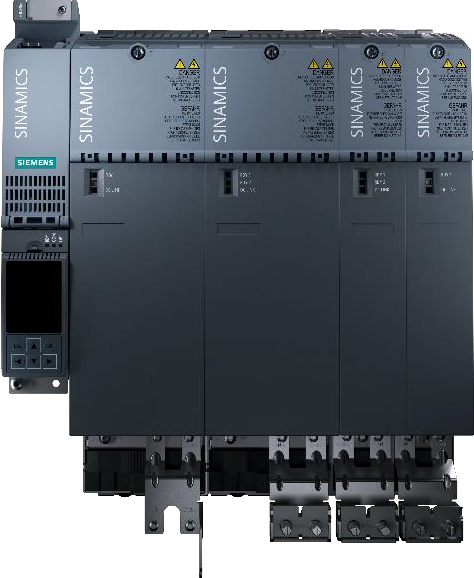
The Sinamics S220 has been meticulously developed with the digital industrial environment in mind, positioning it as a cornerstone for Industry 4.0 applications. Its robust field data capabilities enable comprehensive data collection, transforming raw operational data into actionable insights for process optimization, quality control, and resource management. The integration of the X128 interface further amplifies its digital prowess, facilitating high-frequency data transmission that is indispensable for sophisticated functions such as predictive maintenance. By continuously monitoring operational parameters and detecting anomalies in real-time, manufacturers can proactively schedule maintenance, prevent costly breakdowns, and extend the lifespan of critical machinery.
A key aspect of the S220’s digital integration is its seamless compatibility with the Siemens TIA Portal (Totally Integrated Automation Portal). The TIA Portal serves as a unified engineering framework that consolidates various automation tasks, from PLC programming to HMI design and drive configuration. This integration simplifies the engineering process, allowing for a consistent and efficient workflow. Moreover, the S220 supports virtual commissioning through DriveSim Designer, a powerful simulation tool. Virtual commissioning allows engineers to test and optimize machine designs and control programs in a simulated environment before physical hardware is even installed. This capability drastically reduces commissioning times, mitigates risks, lowers development costs, and accelerates time-to-market for new machines and production lines.
Siemens has also introduced new assistants and an undo function within the engineering environment, specifically designed to simplify complex tasks and enhance user experience. These features reduce the learning curve for engineers, minimize the potential for errors, and accelerate the overall development cycle. For enhanced accessibility and control, the Smart Drive Interface (SDI) is available, either as a compact panel directly on the CU320-3 or as a remote version, SDI Pro, offering a larger display and an integrated web server. This provides flexible options for local diagnostics and parameterization. Additionally, a Smart WiFi adapter offers convenient remote access, enabling operators and service personnel to monitor and adjust drive parameters from a distance, which is particularly beneficial for geographically dispersed installations or applications in hard-to-reach areas.
Unparalleled Flexibility and Scalability for Diverse Applications
The Sinamics S220 drive system is engineered to offer exceptional flexibility and scalability, making it suitable for a wide array of industrial applications across various sectors, including machine tools, packaging, printing, robotics, and material handling. At its launch, Siemens is offering air-cooled motor modules in both book-size and chassis formats, catering to systems operating on 3AC 380 to 480 V, a common industrial voltage range. The current ratings span an impressive spectrum, from 3 A (corresponding to 1.1 kW) up to 1,518 A (representing 900 kW). This broad power range ensures that the S220 can be deployed in applications ranging from precision low-power movements to heavy-duty, high-power machinery. Furthermore, the system’s modular design allows for expansion through up to eight parallel connections, enabling users to scale capacity as their application requirements grow or change, offering future-proofing for investments.
For power supply, the S220 integrates regenerative active infeeds, ranging from 210 kW to 921 kW. The "regenerative" capability is a crucial feature that allows the drive system to feed braking energy back into the power grid rather than dissipating it as heat. This not only significantly improves energy efficiency and reduces operational costs but also minimizes the thermal load on control cabinets, contributing to a cooler and more stable operating environment. Like the motor modules, these active infeeds can also be scaled through parallel connection, providing robust and adaptable power solutions.
In a move to simplify inventory management and enhance operational flexibility, Siemens is also introducing air-cooled universal modules. These innovative modules can operate interchangeably as either motor modules or active line modules. This versatility means that just six distinct devices cover the entire functional and performance range of the S220, drastically reducing the number of spare parts that need to be stocked. This streamlined approach minimizes downtime associated with parts procurement and simplifies maintenance operations, allowing businesses to adapt quickly to changing application requirements or unforeseen operational needs.
Robust Safety and Enhanced Cybersecurity Architecture
Recognizing the paramount importance of operational safety and data security in modern industrial environments, the Sinamics S220 incorporates an updated and highly sophisticated safety architecture. A notable improvement is the reduction of the safety cycle time from 12 ms to a mere 4 ms. This significantly faster response time in safety-related functions ensures that in the event of an emergency or detected hazard, the system can react almost instantaneously, thereby enhancing protection for personnel, machinery, and production assets. The system also features automatic background tests, which continuously monitor safety functions without interrupting operation, ensuring ongoing compliance and reliability. Furthermore, offline-parameterizable safety functions simplify engineering tasks, allowing safety configurations to be set up and verified without needing direct access to the operational machine, which streamlines commissioning and reduces potential for errors.
The S220 holds a Safety Integrity Level (SIL) 3 certification for all operating states, a testament to its robust design and adherence to stringent international safety standards (such as IEC 61508 and ISO 13849). SIL 3 signifies a high level of risk reduction, making the S220 suitable for demanding applications where safety failures could have severe consequences. Beyond functional safety, Siemens has placed a strong emphasis on cybersecurity. The drive system was developed using a secure development process based on IEC 62443-4-1, the international standard for secure development lifecycles for industrial automation and control systems.
Integrated security functions within the S220 include robust user and access control mechanisms, ensuring that only authorized personnel can interact with the system. All drive data is encrypted, safeguarding sensitive operational parameters and intellectual property from unauthorized interception. Furthermore, integrity and authentication checks are performed for firmware and configuration data, preventing tampering and ensuring that the system operates with legitimate and uncompromised software. These comprehensive security measures, when combined with other machine-level protections, significantly improve the S220’s resilience against the escalating threat of cyberattacks targeting operational technology (OT) environments, protecting critical infrastructure from disruption and data breaches.
Commitment to Sustainability and Environmental Performance
In an era where environmental responsibility and sustainable practices are increasingly critical for industrial operations, Siemens has designed the Sinamics S220 to combine compact design with strong environmental performance considerations. The system’s smaller footprint translates directly into reduced space requirements on the factory floor, which not only optimizes facility layout but can also lead to lower construction and operational costs associated with building heating, cooling, and lighting. This compact design is a key contributor to resource efficiency.
Beyond physical space, the S220 integrates seamlessly with Industrial Edge applications, allowing users to capture and visualize real-time energy consumption and CO2 emissions. This granular level of data empowers manufacturers to gain a clear understanding of their environmental impact, identify areas for improvement, and implement strategies to reduce their carbon footprint. The ability to monitor and manage energy usage effectively is crucial for achieving corporate sustainability goals and complying with increasingly stringent environmental regulations.
Further demonstrating its commitment to transparency and environmental stewardship, the Sinamics S220 comes with an ISO 14021-certified environmental product declaration (EPD). An EPD is a comprehensive, independently verified document that transparently communicates the environmental performance of a product throughout its entire lifecycle, from raw material extraction and manufacturing to use phase and end-of-life. The ISO 14021 certification ensures that these environmental claims are credible, comparable, and based on robust scientific methodology. This commitment to documented environmental performance provides customers with the assurance that they are investing in a product that aligns with their own sustainability objectives and contributes to a greener industrial future.
Debut at Automate 2026 and Broader Market Implications
The Sinamics S220 drive system is scheduled to make its public debut at the highly anticipated Automate trade show in Chicago, running from June 22-25, 2026. Siemens will showcase the system at Booth 1214, offering attendees a firsthand look at its capabilities and an opportunity to engage with Siemens experts. This debut represents a significant milestone in the product’s journey, marking its availability to a global audience of industrial professionals and potential customers.
Industry analysts anticipate that the Sinamics S220 will have a substantial impact on the industrial drives market. Its blend of high performance, advanced digitalization features, robust safety, and comprehensive cybersecurity positions it as a highly competitive offering. The focus on integrating the S220 into the Siemens Xcelerator portfolio reinforces the company’s strategy to provide end-to-end digital solutions, offering a distinct advantage over competitors who may offer more fragmented approaches. This integrated strategy is expected to resonate strongly with manufacturers seeking to accelerate their Industry 4.0 initiatives and achieve greater operational transparency and efficiency.
For end-users, the implications are profound. The S220 promises reduced total cost of ownership through enhanced energy efficiency, simplified maintenance, and extended equipment lifespan. The accelerated engineering and commissioning times, facilitated by TIA Portal integration and virtual commissioning, mean faster time-to-market for new products and increased agility in responding to market demands. Furthermore, the enhanced safety and cybersecurity features will contribute to more secure and reliable operations, mitigating risks and protecting valuable assets. As industries worldwide continue their digital transformation journey, the Sinamics S220 is poised to become a key enabler, setting new benchmarks for intelligent motion control and driving the evolution of smart manufacturing.