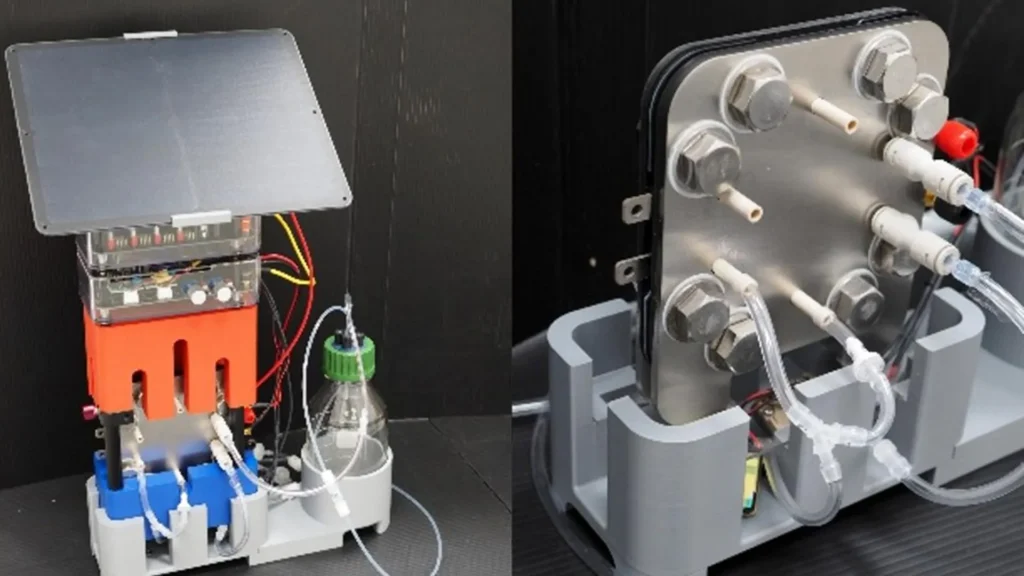
The significant advancement, born from the integration of a self-regulating chemical component directly into the electrolyzer, heralds a potential paradigm shift in the pursuit of sustainable energy solutions by markedly reducing both system complexity and associated costs. This innovation emerges at a critical juncture in global efforts to decarbonize energy systems and harness renewable resources more efficiently, positioning Osaka Metropolitan University at the forefront of solar fuel research.
The Promise of Artificial Photosynthesis: Mimicking Nature’s Efficiency
Artificial photosynthesis systems aim to replicate the fundamental process by which plants convert sunlight, water, and carbon dioxide into energy-rich organic compounds. This biomimicry holds immense promise for addressing the dual challenges of energy security and climate change. By transforming ubiquitous inputs—sunlight, water, and atmospheric CO2—into storable chemical fuels, artificial photosynthesis offers a pathway to renewable energy that is not constrained by the intermittent nature of solar radiation or the limitations of grid infrastructure. One particularly promising product of these systems is formic acid, a versatile chemical that can function as a direct fuel source, a hydrogen carrier, or a chemical feedstock for various industrial applications. Its relatively high energy density and ease of handling make it an attractive candidate for future energy storage and utilization.
The global energy landscape is undergoing a rapid transition towards renewable sources. According to the International Energy Agency (IEA), renewables are set to account for over 90% of global electricity expansion over the next five years, with solar PV leading the charge. However, the inherent variability of solar and wind power necessitates robust energy storage solutions to ensure grid stability and continuous supply. Current battery technologies, while advancing rapidly, face challenges related to cost, material availability, and environmental impact. Chemical energy storage, particularly in the form of solar fuels, offers a compelling alternative, capable of storing energy for longer durations and at higher densities than many electrochemical battery systems.
Overcoming Intermittency: The MPPT Challenge in Solar Fuel Production
At the core of most artificial photosynthesis systems designed for solar fuel production lies the electrolyzer. This device is responsible for converting electrical energy—typically supplied by solar photovoltaic (PV) cells—into chemical energy, which is then stored in the bonds of molecules like formic acid. The efficiency of this conversion process is paramount to the economic viability and widespread adoption of solar fuel technologies.
A major hurdle in the practical implementation of solar-powered electrolyzers is maintaining optimal operational efficiency despite the constantly changing intensity of sunlight throughout the day. Factors such as cloud cover, time of day, and seasonal variations cause fluctuations in the power output of solar cells. To mitigate this, many advanced artificial photosynthesis systems incorporate Maximum Power Point Tracking (MPPT). MPPT is a sophisticated control strategy that continuously adjusts the voltage and current drawn from solar cells, ensuring they operate at their "maximum power point" – the specific operating condition where they deliver the highest possible electrical power output. Without effective MPPT, solar cells would often operate sub-optimally, leading to reduced fuel production and wasted energy.
Conventionally, MPPT setups rely on a combination of electronic components, including power converters (DC-DC converters), microcontrollers, and often, battery banks. These batteries serve multiple purposes: smoothing out power fluctuations, providing a stable voltage supply to the electrolyzer, and buffering excess energy. While undeniably effective in stabilizing energy flow and maximizing solar cell efficiency, these external components introduce significant drawbacks. The addition of batteries and complex electronics substantially increases the overall system cost, not only due to the capital expenditure for the components themselves but also the associated maintenance, cooling requirements, and eventual replacement costs. Furthermore, these components add layers of complexity to the system design, installation, and operation, requiring specialized expertise and increasing potential points of failure. This complexity has historically hindered the scalability and widespread deployment of artificial photosynthesis systems, particularly in decentralized or off-grid applications where simplicity and robustness are highly valued.
Osaka Metropolitan University’s Novel Approach: An Integrated Self-Regulation
Recognizing these limitations, a dedicated research team at the Research Center for Artificial Photosynthesis at Osaka Metropolitan University embarked on a mission to fundamentally redesign the core components of these systems. Led by Associate Professor Yasuo Matsubara and Professor Yutaka Amao, the team collaborated with Iida Group Holdings Co., Ltd, a prominent Japanese conglomerate with interests in housing and renewable energy, to develop a more integrated and cost-effective solution. Their groundbreaking approach involved moving beyond external electronic controls and embedding the MPPT functionality directly within the electrolyzer itself.
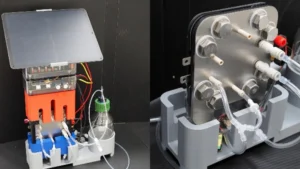
The key to their innovation lies in the development of a specially designed solid electrolyte, engineered and built directly into the electrolyzer device. This novel material possesses unique thermal and electrical properties that allow the electrolyzer to automatically adjust its electrical characteristics in response to environmental changes, specifically varying sunlight intensity. This inherent self-regulation eliminates the need for external battery-based control systems, power converters, or complex electronic circuitry that typically perform the MPPT function.
"As sunlight increases, the electrolyzer naturally heats up. The system is designed so that this warming causes the electrical resistance to drop, allowing electricity to flow more freely," Professor Amao explained. This intrinsic feedback mechanism ensures that the electrolyzer dynamically adapts its load characteristics to match the optimal power output of the solar cells, even as incident solar radiation fluctuates. "This makes the system automatically adjust its electrical behavior, effectively performing the MPPT function without any external intervention," he added. This elegant solution simplifies the overall system architecture, reduces the bill of materials, and enhances the system’s inherent robustness.
Engineering Simplicity: How the Self-Regulating Electrolyzer Works
The operational principle of Osaka Metropolitan University’s self-regulating electrolyzer is rooted in a clever exploitation of material science. The solid electrolyte material exhibits a negative temperature coefficient of resistance (NTCR), meaning its electrical resistance decreases as its temperature increases. This property is crucial for the self-regulation mechanism.
When sunlight intensity increases, the solar cells generate more power. This increased power input to the electrolyzer leads to a rise in its internal temperature due to resistive heating (Joule heating). As the electrolyzer heats up, the resistance of its specially formulated solid electrolyte decreases. A lower resistance allows more current to flow through the electrolyzer for a given voltage, effectively enabling it to draw more power from the solar cells. Conversely, when sunlight intensity decreases, the power input drops, the electrolyzer cools down, its resistance increases, and it draws less power, preventing over-current or inefficient operation. This creates a natural, passive feedback loop that aligns the electrolyzer’s power consumption with the maximum power available from the solar cells.
"This self-regulating behavior helps keep fuel production more stable throughout the day and automates the system, while reducing dependence on batteries and costly external components," Professor Amao emphasized. The elimination of batteries is particularly impactful, as batteries represent a significant portion of the capital cost and maintenance burden in many renewable energy systems. By removing this component, the researchers have paved the way for more economically viable and environmentally friendly solar fuel production.
Real-World Validation and Future Prospects: From Lab to Expo
To demonstrate the practical efficacy of their innovation, the research team subjected the self-regulating artificial photosynthesis system to rigorous testing under actual outdoor conditions. The results were highly encouraging: the system consistently produced formic acid from water and CO2, maintaining stable fuel production even as natural sunlight levels fluctuated throughout the day. This real-world validation is crucial for demonstrating the technology’s readiness for scale-up and commercial application, moving beyond controlled laboratory environments.
The confidence in their technology was further bolstered by its early public showcase. "We were confident that it would be successful, as we previously showcased this research at the ‘Joint Pavilion Iida Group × Osaka Metropolitan University’ exhibition as part of the Osaka Kansai Expo 2025," Professor Matsubara recounted. This pre-emptive public presentation at a high-profile international event underscores the maturity and robustness of the system. The demonstration at the expo was not merely theoretical; the system successfully generated enough formic acid to power a miniature diorama within the pavilion. This tangible application provided a compelling visual testament to its potential, illustrating its capability to serve as an efficient artificial photosynthesis system that could potentially be used to charge various applications, including those within residential settings. The successful powering of a diorama, while small-scale, signifies a critical step towards demonstrating the technology’s ability to convert sunlight into usable energy for everyday applications.
The findings of this pioneering research were formally published in EES Solar, a respected journal in the field of energy and environmental science, lending further scientific credibility and allowing for peer review and dissemination within the global research community.
Collaboration and Industry Engagement: Accelerating Innovation
The collaboration between Osaka Metropolitan University and Iida Group Holdings Co., Ltd. exemplifies a crucial model for accelerating scientific discovery into practical application. Academic institutions often drive fundamental research and proof-of-concept innovations, while industrial partners bring expertise in engineering, manufacturing, market understanding, and commercialization. Iida Group Holdings’ involvement likely provided not only financial support but also practical insights into scalability, material sourcing, and potential market integration, particularly given their background in housing and renewable energy solutions. Such partnerships are vital for bridging the gap between laboratory breakthroughs and real-world deployment, ensuring that cutting-edge research translates into tangible benefits for society.
Broader Implications for Renewable Energy and Carbon Utilization
The development of a self-regulating, battery-free artificial photosynthesis system carries profound implications across several critical sectors.
1. Decentralized Energy Production: By significantly reducing complexity and cost, this technology could accelerate the adoption of decentralized solar fuel production, especially in remote areas or developing regions where grid infrastructure is limited and access to reliable, affordable energy is a major challenge. Small-scale, modular units could be deployed to produce fuel for local consumption, reducing reliance on fossil fuels and strengthening energy independence.
2. Grid Stability and Energy Storage: While solar fuels primarily serve as chemical energy storage, their efficient production helps mitigate the intermittency of solar power, indirectly contributing to grid stability by making renewable energy more predictable and dispatchable. The ability to store solar energy as a liquid fuel like formic acid offers a distinct advantage over battery storage for long-term or seasonal energy storage, as chemical fuels do not suffer from self-discharge over extended periods.
3. Carbon Capture and Utilization (CCU): A critical aspect of artificial photosynthesis is its potential for carbon dioxide utilization. By converting CO2 into valuable fuels and chemicals, these systems offer a pathway to both mitigate greenhouse gas emissions and create economic value from waste carbon. The Osaka Metropolitan University system’s efficiency and simplified design could make CO2 conversion more economically attractive, fostering growth in the nascent CCU industry. According to the Global CCS Institute, while current CCU capacity is limited, projections indicate significant growth driven by industrial decarbonization efforts and the demand for sustainable products.
4. Economic Competitiveness of Solar Fuels: The reduction in system complexity and the elimination of expensive battery components directly translate into lower capital and operational costs for solar fuel production. This enhanced economic competitiveness is crucial for solar fuels to compete with traditional fossil fuels and accelerate their market penetration. Lower costs could unlock new applications and expand the addressable market for these sustainable alternatives.
5. Material Efficiency and Environmental Footprint: By reducing the number of components, particularly batteries, the system also reduces its overall material footprint. This can lead to a more sustainable manufacturing process, lower demand for critical raw materials often used in batteries (e.g., lithium, cobalt), and a simpler end-of-life recycling process, aligning with circular economy principles.
The Global Drive for Sustainable Solutions
The urgency for innovations like the Osaka Metropolitan University’s self-regulating electrolyzer is underscored by global climate targets and increasing energy demand. The Paris Agreement aims to limit global warming to well below 2, preferably to 1.5 degrees Celsius, compared to pre-industrial levels. Achieving this requires unprecedented shifts in energy production and consumption patterns, with a strong emphasis on renewables and carbon reduction technologies. Solar fuels, by offering a storable, transportable, and carbon-neutral (or carbon-negative, if direct air capture CO2 is used) energy carrier, represent a vital component of a comprehensive decarbonization strategy.
Nations worldwide are investing heavily in renewable energy research and development. Governments and private entities are pouring billions into advancing solar, wind, geothermal, and bioenergy technologies, alongside next-generation solutions like artificial photosynthesis. The market for hydrogen and hydrogen carriers, including formic acid, is projected to grow substantially as industries seek cleaner alternatives to fossil fuels. Formic acid, in particular, offers advantages in storage and transportation compared to gaseous hydrogen, making it an attractive option for various applications, from fuel cells to chemical synthesis.
Looking Ahead: The Path to Commercialization
While the scientific breakthrough is significant, the journey from laboratory success to widespread commercialization often involves several stages. Further research and development will likely focus on optimizing the long-term durability and stability of the solid electrolyte, scaling up production processes, and integrating the system with larger solar arrays for industrial-scale fuel generation. Economic modeling and lifecycle assessments will also be critical to fully evaluate the environmental and financial benefits of the technology compared to existing and emerging energy solutions.
The initial success at the Osaka Kansai Expo 2025 provides a strong public endorsement and signals a clear intent for future deployment. The partnership with Iida Group Holdings Co., Ltd, suggests a strategic pathway towards integrating this technology into real-world applications, potentially within the housing sector for localized energy generation or broader industrial use. As the world continues its urgent transition towards a sustainable energy future, innovations like the self-regulating artificial photosynthesis system from Osaka Metropolitan University offer a beacon of hope, demonstrating that ingenious engineering and scientific collaboration can unlock new possibilities for clean, efficient, and affordable energy for all.