Quantum computing, a field brimming with revolutionary potential, has long been hampered by a fundamental paradox: its immense power is unlocked only under conditions of extreme fragility and formidable operational complexity. For decades, the cutting edge of quantum research has been synonymous with super-cooled environments, often requiring temperatures mere fractions of a degree above absolute zero – a chilling -459 degrees Fahrenheit. These cryogenic conditions are essential to preserve the delicate quantum states of qubits, the foundational units of quantum information, safeguarding them from the environmental noise that causes decoherence, the quantum equivalent of data loss. This requirement has rendered quantum computers notoriously difficult, prohibitively expensive, and physically massive, limiting their deployment primarily to specialized laboratories and high-budget research institutions. The logistical and energy demands of maintaining such ultracold states present a monumental barrier to widespread adoption and practical application, effectively confining quantum breakthroughs to the realm of theoretical promise rather than pervasive utility.
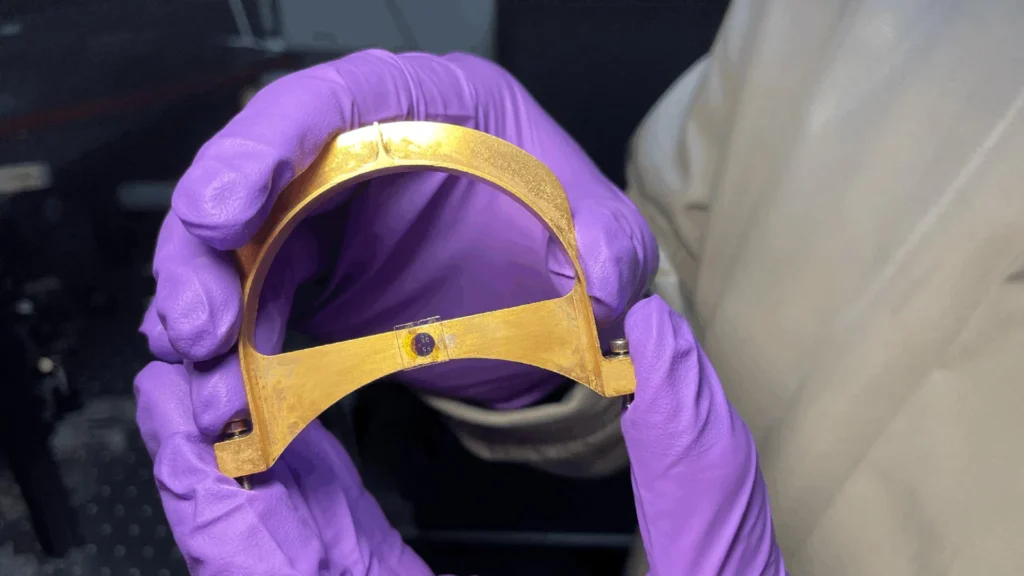
Now, a significant leap forward has emerged from Stanford University, where a team of researchers has engineered a nanoscale optical device that shatters this long-standing paradigm. This innovative device functions robustly at room temperature, seamlessly linking the quantum properties of light and electrons. This pivotal advance represents a profound step toward mitigating the formidable infrastructure requirements that have historically plagued quantum development. By demonstrating stable quantum entanglement and control without the need for extreme refrigeration, the Stanford breakthrough holds the potential to dramatically reduce the size, cost, and energy footprint of quantum technologies, thereby paving a more practical and accessible path for the transmission of quantum information over long distances and the eventual integration of quantum capabilities into everyday systems.
The Quantum Conundrum: A Cold Reality Check
To fully appreciate the significance of this development, it’s crucial to understand the inherent challenges in the quantum realm. Quantum mechanics operates on principles vastly different from classical physics, allowing for phenomena like superposition (where a qubit can be both 0 and 1 simultaneously) and entanglement (where two or more qubits become inextricably linked, regardless of distance). These properties are the bedrock of quantum computing’s power, enabling computations that are intractable for even the most powerful classical supercomputers. However, these quantum states are incredibly delicate. Any interaction with the environment – even minute thermal vibrations – can cause them to "decohere," collapsing into a classical state and destroying the quantum information.
To counteract decoherence, current leading quantum computing platforms, such as superconducting qubits, demand specialized refrigeration systems, including dilution refrigerators, which cool components to temperatures colder than deep space. These systems are massive, complex, and consume significant energy. For instance, IBM’s quantum computers, while powerful, occupy large rooms and require continuous cryogenic cooling. Other platforms, like trapped ions or neutral atoms, also face stringent environmental controls, even if not always requiring temperatures quite as low, still necessitating highly controlled vacuum chambers and intricate laser systems. The cost of these setups, both in terms of initial investment (often millions of dollars) and ongoing operational expenses, has been a major impediment to the broader development of a quantum internet or distributed quantum networks. The vision of a quantum device that can function under ambient conditions, akin to the silicon chips powering modern electronics, has long been the holy grail for researchers seeking to democratize quantum technology.
Stanford’s Breakthrough: A Nanoscale Solution at Ambient Temperatures
The Stanford team’s innovation directly addresses this fundamental challenge. At its core, the new device facilitates entanglement between photons, the fundamental particles of light, and electrons, the carriers of electrical charge. This quantum connection is not merely a scientific curiosity; it is widely regarded as an indispensable prerequisite for the architecture of future quantum communication systems. "The material in question is not really new, but the way we use it is," explains Jennifer Dionne, a professor of materials science and engineering at Stanford and the senior author of the study, which was published in Nature Communications. Her statement underscores that the breakthrough lies not in the discovery of novel raw materials, but in the ingenious engineering and application of existing ones. "It provides a very versatile, stable spin connection between electrons and photons that is the theoretical basis of quantum communication. Typically, however, the electrons lose their spin too quickly to be useful." This last point highlights the core problem they’ve overcome: maintaining the quantum state, specifically the electron’s spin, long enough to be useful for information transfer.
The ability to operate at room temperature fundamentally distinguishes this device from most contemporary quantum platforms. It means that the intricate and costly infrastructure associated with cryogenic cooling could potentially be replaced by far simpler, more compact, and energy-efficient designs. This drastic reduction in operational overhead and physical footprint could unlock a new era of quantum research and development, moving it beyond specialized labs and into more conventional settings, accelerating the pace of discovery and application.
Unpacking the Device: Molybdenum Diselenide and Twisted Light
The device itself is a marvel of nanoscale engineering, combining a thin, precisely patterned layer of molybdenum diselenide (MoSe2) with a nanopatterned silicon substrate. Molybdenum diselenide belongs to a fascinating class of materials known as transition metal dichalcogenides (TMDCs), which have garnered significant attention in condensed matter physics and materials science due to their extraordinary optical and quantum properties. These two-dimensional materials, often just a few atoms thick, exhibit strong light-matter interaction and unique electronic band structures, making them ideal candidates for quantum applications. The Stanford team specifically collaborated with Stanford researchers Fang Liu and Tony Heinz, who are renowned specialists in these advanced materials, leveraging their deep expertise in TMDC synthesis and characterization.
The ingenuity of the device, however, extends beyond the material choice to its architectural design. The silicon nanostructures integrated into the device play a pivotal role, serving as the engine for generating what the researchers describe as "twisted light." Feng Pan, a postdoctoral scholar in Dionne’s lab and the paper’s first author, elaborates on this critical mechanism: "The Silicon nanostructures enable what we call ‘twisted light.’ The photons spin in a corkscrew fashion, but more importantly, we can use these spinning photons to impart spin on electrons that are the heart of quantum computing."
The concept of "twisted light" refers to photons carrying orbital angular momentum (OAM), where the light wavefront spirals as it propagates. This OAM, or spin, can then be transferred to electrons, a process known as spin-orbit coupling. This precise manipulation of photons is achieved through the meticulously crafted silicon nanostructures. These structures are incredibly small, as Dionne points out, "about the size of the wavelength of visible light," making them imperceptible to the naked eye. Their diminutive scale is precisely what allows for such fine-grained control over light. "But they help us manipulate photons very precisely to make them spin – to twist them – in a specific direction, for example, up or down," Dionne adds. This ability to precisely control and transfer spin from photons to electrons, and crucially, to maintain that electron spin long enough for it to be useful, is the linchpin of the entire breakthrough. It provides a robust and stable mechanism for creating and manipulating qubits at ambient conditions, a feat previously deemed impractical outside of extreme cryogenic environments.
The Mechanics of Entanglement: Forging Quantum Links
The core function of this novel device lies in its capacity to create entanglement between photons and electron spins, thereby forming qubits – the fundamental building blocks of quantum information systems. In conventional computing, information is encoded as bits, which exist in one of two definite states: 0 or 1. Quantum technologies, however, leverage the exotic phenomena of quantum mechanics to process and transmit information in fundamentally new ways. Qubits, unlike classical bits, can exist in a superposition of states (being both 0 and 1 simultaneously) and can be entangled, meaning their fates are inextricably linked even when separated by vast distances. These properties enable quantum computers to perform certain computations exponentially faster than classical computers and to facilitate inherently secure communication channels.
One of the most formidable challenges in the development of practical quantum technologies has been the maintenance of these stable quantum states. The phenomenon of decoherence, where fragile quantum information is lost due to interaction with the environment, is the primary antagonist. In many existing quantum systems, extreme cooling to near absolute zero is the chosen strategy to minimize environmental interference and prolong the coherence time of qubits. By operating at room temperature, the Stanford device circumvents this monumental obstacle. It provides a pathway to maintain quantum coherence without the energy-intensive and logistically complex cryogenic infrastructure. This makes the new compact design not only relatively inexpensive but also far more practical compared to the behemoth systems currently in use.
Implications for Quantum Communication and Beyond
The immediate and profound implication of this room-temperature quantum device is its potential to revolutionize quantum communication. Secure communication is a prime beneficiary. Quantum key distribution (QKD), for instance, offers theoretically unbreakable encryption based on the laws of quantum mechanics. However, current QKD systems are limited by distance due to photon loss and the need for quantum repeaters, which themselves often face cooling challenges. A room-temperature device capable of maintaining stable photon-electron entanglement could serve as a more practical building block for quantum repeaters and nodes in a future quantum internet, extending the reach and robustness of quantum-secured networks.
Beyond communication, the technology’s impact could ripple across numerous emerging applications:
- Advanced Sensing: Quantum sensors, which leverage quantum properties like superposition and entanglement, can achieve unprecedented levels of precision in fields ranging from medical imaging to navigation and geophysical exploration. Room-temperature operation would make these sensors more portable and deployable.
- High-Performance Computing: While direct quantum computing on this platform is a longer-term goal, the ability to control electron spins and link them to photons is a foundational step. It could inspire new architectures for quantum processors that are less reliant on extreme environments.
- Artificial Intelligence: Quantum machine learning algorithms have the potential to process vast datasets more efficiently, accelerating breakthroughs in AI. More accessible quantum hardware could democratize access to these powerful computational tools.
- Materials Science and Drug Discovery: Simulating complex molecular interactions, a task that quickly overwhelms classical computers, is a natural fit for quantum computers. Room-temperature quantum devices could accelerate the discovery of new materials and pharmaceuticals.
The compact and relatively inexpensive nature of the device, if further developed and scaled, positions it as a strong candidate for transitioning quantum technologies from theoretical marvels to tangible, commercially viable products.
The Broader Landscape of Quantum Technologies
This Stanford breakthrough enters a global race among nations and corporations vying for quantum supremacy. Governments worldwide are investing billions in quantum research, recognizing its strategic importance for national security, economic competitiveness, and scientific advancement. Companies like IBM, Google, Microsoft, and Amazon are pouring resources into developing quantum hardware and software, each pursuing different qubit technologies (superconducting, trapped ions, topological, photonic, etc.). While significant progress has been made, particularly in increasing the number of qubits and improving coherence times, the fundamental challenge of scaling these complex systems while maintaining quantum integrity remains.
The Stanford team’s approach, focusing on solid-state materials and room-temperature operation, represents a distinct and highly promising pathway. While other room-temperature quantum technologies exist, such as those based on nitrogen-vacancy centers in diamond, the Stanford device’s integration of TMDCs and tailored silicon nanostructures offers a unique combination of strong light-matter interaction and robust spin control. This positions it as a strong contender in the diverse landscape of quantum hardware development, potentially offering a more manufacturable and integrable solution compared to some alternative approaches.
The Road Ahead: Scaling and Integration
The researchers are not resting on their laurels. The next phase of their work involves continuing to refine the device’s performance. This includes exploring an even broader range of TMDC materials and various material combinations, seeking to identify configurations that could yield superior performance characteristics, such as longer coherence times or enhanced entanglement efficiency. They are also probing whether these solid-state, room-temperature systems might unveil entirely new quantum capabilities that are currently unattainable with existing cryogenic platforms.
A more ambitious, longer-term objective is the seamless integration of devices like this into expansive quantum networks. Achieving this grand vision will necessitate substantial advancements in a suite of supporting technologies. These include the development of more efficient and stable light sources, high-speed modulators for encoding information, ultra-sensitive detectors for reading quantum states, and robust interconnects for linking disparate quantum components. The journey from a laboratory prototype to a fully integrated network is complex, requiring interdisciplinary collaboration across physics, materials science, electrical engineering, and computer science.
Ultimately, the overarching aspiration of the quantum community is to miniaturize quantum components to such an extent that they can be incorporated into everyday electronics, much like how classical transistors paved the way for the digital revolution. While such a future remains many years, perhaps even decades, away, the work emerging from Stanford University represents a monumental stride toward making quantum technology not just a scientific marvel, but a practical, accessible, and pervasive force in the technological landscape. "If we can do that, maybe someday we could do quantum computing in a cell phone," Pan envisions with an optimistic smile, acknowledging the immense journey ahead. "But that’s a 10-plus-year plan." This blend of scientific rigor and visionary ambition encapsulates the spirit driving quantum research forward, pushing the boundaries of what is technologically feasible and bringing closer the promise of a quantum-enabled future.