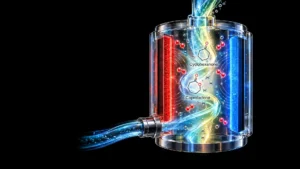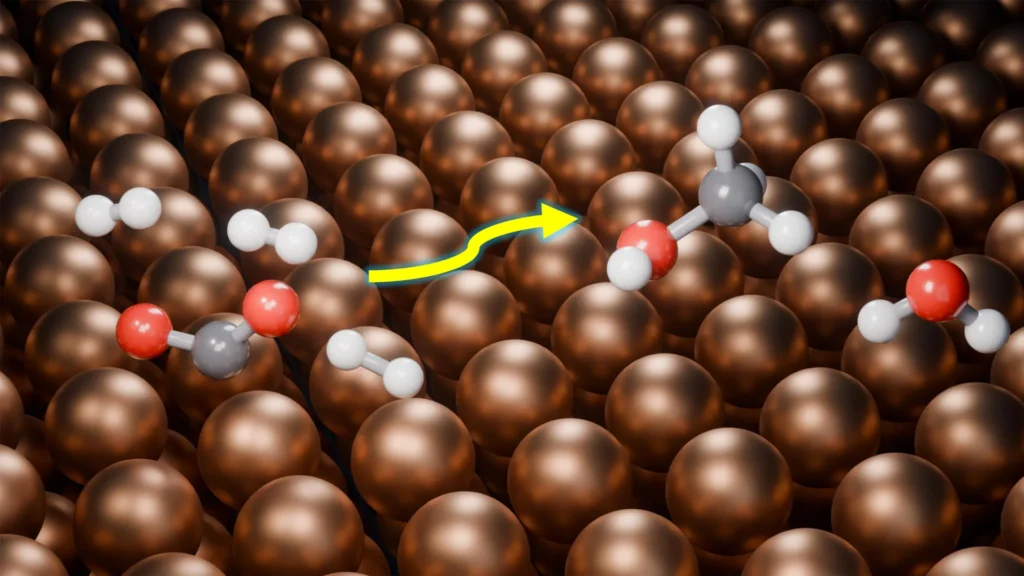
Researchers at the Indian Institute of Science (IISc) have achieved a significant breakthrough in the field of sustainable chemistry by identifying thousands of previously overlooked chemical reactions that could revolutionize how carbon dioxide (CO2) is converted into valuable fuels and industrial chemicals. By integrating advanced machine learning algorithms with high-fidelity quantum mechanical simulations, the research team discovered a network of 9,389 individual reactions occurring on the surface of a copper catalyst—a scale nearly 60 times larger than what traditional models typically account for.
The study, published in the prestigious journal Nature Communications, addresses a critical bottleneck in the global effort to mitigate climate change: the inefficiency of current carbon capture and utilization (CCU) technologies. By providing a more granular and accurate map of chemical pathways, the IISc findings offer a blueprint for designing next-generation catalysts that can transform greenhouse gases into methanol, a versatile liquid fuel and chemical feedstock, with unprecedented efficiency.
The Challenge of Carbon Dioxide Hydrogenation
As global atmospheric CO2 levels continue to rise, the scientific community has intensified its focus on carbon hydrogenation. This process involves reacting CO2 with hydrogen (H2) in the presence of a solid catalyst to produce liquid fuels like methanol. Methanol is particularly prized because it can be easily transported, stored, and used as a direct replacement for fossil fuels or as a building block for plastics and pharmaceutical products.
However, the chemistry occurring on the surface of a catalyst is notoriously complex. When CO2 and H2 molecules land on a catalyst—in this case, copper—they break apart and recombine in a series of intermediate steps. Understanding these steps is essential for optimizing the process. Historically, researchers have relied on "intuition-based" modeling, where they manually select a few dozen reactions they believe are the most important.
"We began with a worry familiar to anyone who does mechanistic modeling: How do you know that your reaction network has not omitted the one step that matters?" explained Anand Mohan Verma, the study’s first author. Verma, who conducted the research as a CV Raman Postdoctoral Fellow at IISc and is now an Assistant Professor at the Motilal Nehru National Institute of Technology (MNNIT) Allahabad, noted that the standard practice of simplifying these networks often leads to significant inaccuracies in predicting reaction outcomes.
Bridging Quantum Mechanics and Artificial Intelligence
To solve the problem of missing data, the IISc team, led by Associate Professor Ananth Govind Rajan of the Department of Chemical Engineering, turned to a hybrid computational approach. They started with Density Functional Theory (DFT), a quantum mechanical modeling method used to calculate the electronic structure of molecules. While highly accurate, DFT is computationally expensive and slow, making it impossible to simulate thousands of potential reactions manually.
The researchers used DFT to build a foundational database of 152 chemical reactions. They then leveraged this data to train machine learning models. These AI models were capable of rapidly estimating the energy barriers—the "hurdles" that chemicals must clear to transform—for a much wider array of potential reactions.
By employing automated computational tools to explore every possible transformation among 105 different chemical species on the catalyst surface, the team expanded their scope from the initial 152 reactions to a staggering 9,389. This comprehensive "reaction network" allowed the researchers to see the "big picture" of CO2 conversion for the first time.
Correcting Decades of Underestimation
The implications of this expanded network were immediately apparent when the team compared their results to traditional models. When using the smaller, 152-reaction network, the simulation incorrectly identified formic acid as the primary product of the reaction. Furthermore, the limited model predicted a CO2 conversion rate that was far lower than what is observed in real-world laboratory experiments.
"When we modeled the process using the 152 reactions considered initially, the network wrongly predicted formic acid, not methanol, as the major product, and underestimated how much CO2 gets converted," said Ananth Govind Rajan.
However, once the 9,389-reaction network was applied, the results shifted dramatically. The new model correctly identified methanol and carbon monoxide as the dominant products, aligning perfectly with experimental data. More strikingly, the expanded model predicted that CO2 conversion occurs approximately 40 times faster than previously thought. This discrepancy highlights how traditional "simplified" chemistry has been significantly undercounting the potential efficiency of copper catalysts.
A Paradigm Shift in Hydrogen Chemistry
Perhaps the most surprising discovery within the massive reaction network involves the behavior of hydrogen. For decades, a fundamental tenet of catalytic chemistry—the Horiuti-Polanyi mechanism—suggested that hydrogen molecules (H2) must first split into individual hydrogen atoms on the catalyst surface before they can react with other molecules.
The IISc study challenges this long-standing assumption. The data revealed a pathway where hydrogen can be transferred to oxygen-containing intermediate compounds as an intact H2 molecule, rather than as separate atoms. This direct transfer is energetically more favorable in several key steps of the methanol synthesis process.
"The idea that hydrogen can transfer as an intact molecule, without first splitting into atoms, runs against what most of us were taught," said co-author Shivam Chaturvedi, a PhD student at IISc. "This surfaced only because the network was large enough to allow for it, and the observation held up when we went back and computed those steps explicitly."
This finding suggests that future catalyst research should focus on materials that interact more strongly with molecular hydrogen (H2) rather than just atomic hydrogen. Such a shift in focus could lead to the development of catalysts that are specifically engineered to exploit this newly discovered pathway, further accelerating the production of green methanol.
Collaborative Validation and Industrial Relevance
To ensure the theoretical findings held up under real-world conditions, the IISc team collaborated with industrial and international partners. Experimental validation was provided by G. Valavarasu and Santhosh Kotni at the Green Research and Development Centre of Hindustan Petroleum Corporation Limited (HPCL). Additional validation was conducted by Amol Amrute and his team at the Agency for Science, Technology, and Research (A*STAR) in Singapore.
The inclusion of Professor Ambedkar Dukkipati from the IISc Department of Computer Science and Automation ensured that the machine learning components of the study met the highest standards of data science. This interdisciplinary collaboration between chemical engineers, computer scientists, and industrial researchers underscores the complexity of modern energy challenges.
The involvement of HPCL is particularly noteworthy, as India seeks to achieve its "Methanol Economy" goals. The Indian government has been actively promoting methanol as a way to reduce oil imports and lower carbon emissions. Discoveries that improve the efficiency of CO2-to-methanol conversion are of direct strategic interest to the nation’s energy sector.
Broader Implications for Green Technology
While the current study focused on CO2 hydrogenation on copper, the computational framework developed by the IISc team is highly versatile. The combination of quantum mechanics, AI-driven energy estimation, and automated reaction identification can be applied to a wide range of industrial chemical processes.
Potential applications include:
- Nitrogen Reduction: Improving the Haber-Bosch process to produce ammonia for fertilizers more efficiently and with a lower carbon footprint.
- Water Splitting: Enhancing the production of "green hydrogen" from water using renewable energy.
- Alternative Catalysts: Testing the efficiency of silver, gold, or alloy-based catalysts for various chemical transformations.
- Pollutant Degradation: Identifying pathways to break down complex industrial pollutants into harmless substances.
By revealing the "hidden" chemical steps that simpler models miss, this technique provides scientists with a high-definition view of the molecular world. It moves the field of catalysis away from trial-and-error experimentation toward a more predictive, data-driven science.
Toward a Sustainable Chemical Industry
The research arrives at a time when the chemical industry is under immense pressure to decarbonize. Traditionally, chemical manufacturing is one of the most energy-intensive sectors of the global economy. By turning CO2 from a waste product into a valuable resource, the IISc breakthrough supports the transition toward a circular carbon economy.
As the world seeks to reach net-zero emissions by mid-century, the ability to accurately predict and optimize chemical reactions at this scale will be indispensable. The discovery of the molecular hydrogen pathway and the 40-fold increase in predicted conversion rates provide a renewed sense of optimism that the technical hurdles to large-scale carbon utilization can be overcome.
The IISc researchers believe that their work is just the beginning. With the database of nearly 10,000 reactions now available, other scientists can build upon this knowledge to fine-tune catalytic surfaces at the atomic level. This "big data" approach to chemistry may finally provide the tools needed to turn the tide against global warming, one molecular reaction at a time.