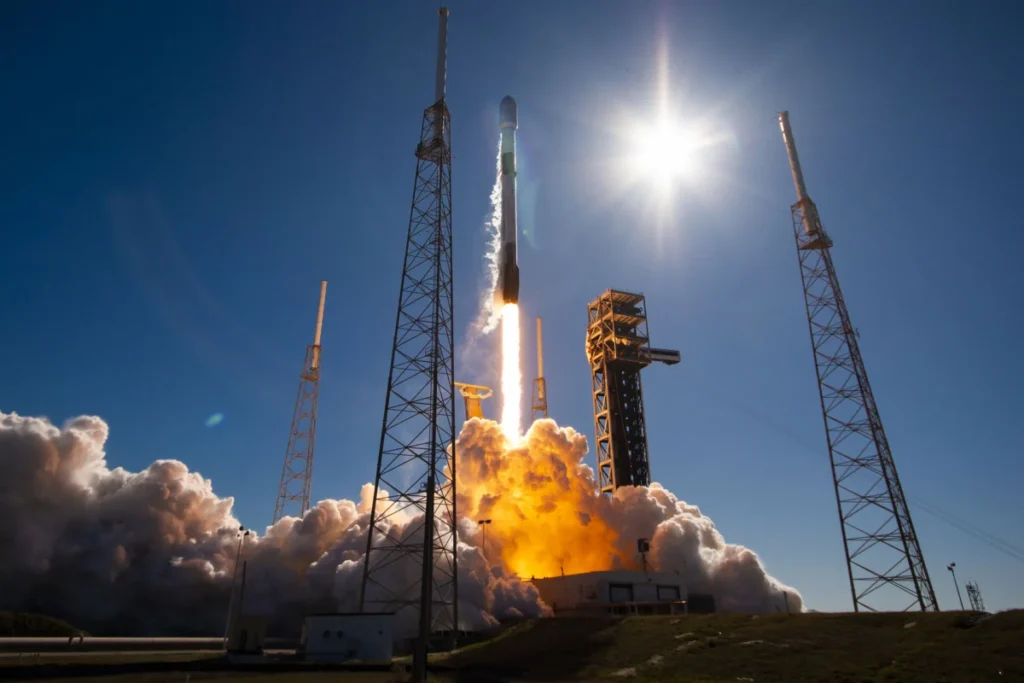
A cutting-edge technology demonstration CubeSat, developed through the European Space Agency’s (ESA) General Support Technology Programme (GSTP) in collaboration with Danish company GOMSpace, successfully launched yesterday evening, October 1, 2026. The CubeSat, named GOMX-5, embarked on its journey into orbit aboard SpaceX’s Falcon 9 rocket as part of the Transporter-18 mission. This launch marks a significant step forward in ESA’s commitment to fostering innovation in space technology, particularly in areas critical for the long-term sustainability of space operations.
Mission Objectives and Technological Innovations
GOMX-5 is an In-Orbit Demonstration mission, designed to rigorously test and validate several novel technologies that have never before been deployed in the space environment. The primary and most urgent objective of the mission is to commission a new, highly responsive propulsion system within a stringent 48-hour window following launch. This rapid commissioning is paramount for enabling the satellite to execute collision avoidance maneuvers, a capability directly aligned with ESA’s recently enacted stringent space debris mitigation policy.
The increasing congestion of Earth’s orbit presents a growing threat to operational satellites and future space missions. The accumulation of space debris, ranging from defunct satellites to fragments from orbital collisions, poses a significant risk. ESA’s proactive approach through initiatives like the GOMX program underscores the agency’s dedication to ensuring the long-term safety and accessibility of space. By demonstrating advanced collision avoidance capabilities, GOMX-5 aims to contribute directly to the reduction of potential new space debris and the overall management of the orbital environment.
To achieve the rapid commissioning of the propulsion system, GOMSpace engineers have engineered a largely automated platform commissioning procedure. This innovative approach aims to drastically shorten the time between the satellite’s deployment from the launch vehicle and the full operational readiness of its critical subsystems. The success of this automated procedure will be closely monitored by the GOMX-5 operations team, who will be eagerly awaiting confirmation of the spacecraft’s health and functionality before proceeding with the final checks required to enable the activation of the onboard electrical propulsion system, should it be needed.
David Palma, the ESA Technical Officer overseeing the GOMX-5 mission, highlighted the demanding nature of the initial phase of operations. "The operations team will have a challenging Launch and Early Operations phase, checking that these early automated operations worked successfully and that the platform is commissioned as quickly as possible. This requires a lot of focus and preparation," Palma stated. He further elaborated on the subsequent stages of the mission: "Then over the coming weeks we’ll learn how these new technologies, such as the new antennas, radios and on-board computers, are performing and hopefully in a few months we can conclude the technology demonstration mission with success.”
Beyond its critical role in space debris mitigation, GOMX-5 is also equipped to showcase other groundbreaking technologies. These include a tracking solar panel, a design mirroring the one used on ESA’s Hera mission’s Juventas CubeSat, and a sophisticated maritime awareness payload.
Maritime Domain Awareness Payload
The maritime awareness payload on GOMX-5 is designed to enhance the monitoring of maritime activities, particularly in remote oceanic regions where conventional tracking systems may struggle to provide comprehensive coverage. Accurate monitoring of sea traffic is crucial for a multitude of reasons, including maritime security, search and rescue operations, and the enforcement of environmental regulations. The GOMX-5 payload, featuring an array of antennas and radios operating across a broad frequency spectrum, is intended to demonstrate a reference capability for maritime domain awareness. This demonstration could pave the way for more robust and widespread maritime surveillance systems, offering improved situational awareness for global maritime authorities and stakeholders.
A Legacy of Technology Demonstration CubeSats
GOMX-5 represents the latest iteration in a successful lineage of technology demonstration CubeSats developed by GOMSpace under ESA’s GSTP program. This collaborative effort has consistently pushed the boundaries of small satellite technology. Previous missions, such as GOMX-4B and GOMX-3, have laid the groundwork for the advancements seen in GOMX-5. GOMX-3, in particular, holds the distinction of being ESA’s very first technology CubeSat to fly, marking an early commitment to the potential of miniaturized space platforms for innovation.
The GOMX-5 mission falls under Element 3 of the GSTP program, focusing on "Fly" applications, which emphasizes the practical testing and validation of new technologies in the actual space environment. Upon the successful demonstration and validation of its onboard payloads, the ESA GSTP activity will formally conclude, with the full operational control and management of GOMX-5 being handed over to GOMSpace for the remainder of its mission lifecycle.
Launch Context and Future Implications
The Transporter-18 mission, aboard which GOMX-5 was launched, is a dedicated smallsat rideshare mission, underscoring the growing trend of cost-effective access to space for a multitude of payloads. GOMX-5 shares its journey with an impressive 129 other payloads, a testament to the efficiency and growing capability of rideshare missions, which often include a significant number of other CubeSats. The launch window for Transporter-18 opened at 20:17 CEST, with the SpaceX Falcon 9 successfully lifting off shortly thereafter, carrying its diverse cargo of scientific and technological payloads into orbit.
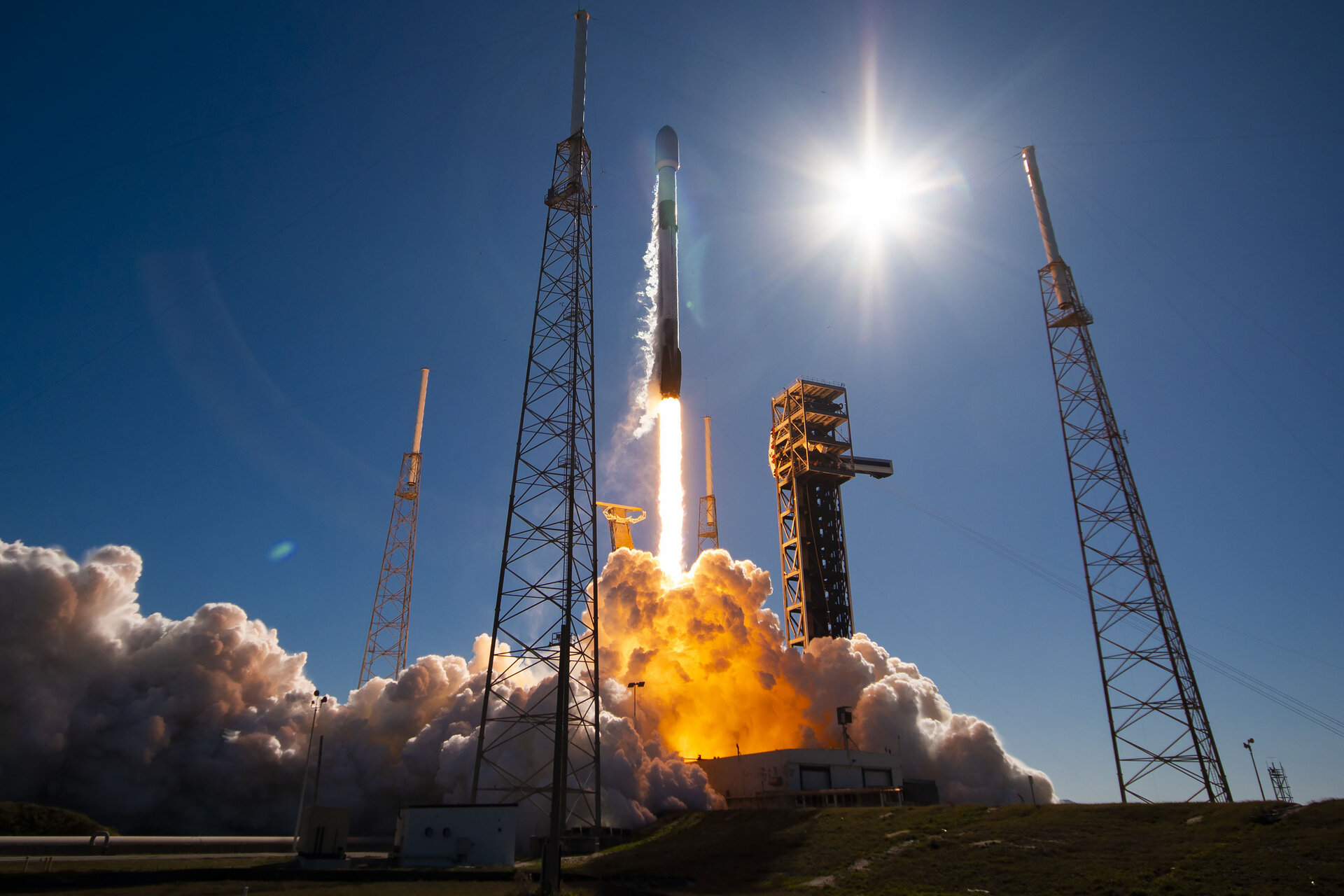
The successful deployment and subsequent commissioning of GOMX-5, particularly its propulsion system, will have significant implications for future space missions. The ability to rapidly respond to potential collision threats is not merely a policy requirement but a fundamental necessity for maintaining the long-term viability of space as a domain for scientific research, economic activity, and exploration. The automated commissioning procedures developed for GOMX-5 could serve as a blueprint for future small satellite missions, reducing operational overhead and accelerating the deployment of crucial capabilities.
Furthermore, the demonstration of advanced maritime awareness technology could lead to enhanced capabilities for monitoring global shipping lanes and improving the safety and security of maritime operations. As the world’s oceans become increasingly vital for global trade and resource management, precise and reliable monitoring systems are indispensable.
The GOMX-5 mission, born from a collaborative vision between ESA and GOMSpace, exemplifies the power of partnerships in driving technological advancement. Its success will not only validate cutting-edge technologies but also contribute to a safer and more sustainable future for space exploration and utilization. The coming weeks and months will be crucial for assessing the performance of GOMX-5’s novel systems, with the hope that the mission will conclude as a resounding success, paving the way for even more ambitious technological endeavors in the final frontier.
Supporting Data and Background
The General Support Technology Programme (GSTP) is ESA’s primary initiative for developing and demonstrating new space technologies that have the potential to enhance the performance, reliability, and cost-effectiveness of future European space missions. Element 3, under which GOMX-5 is developed, specifically focuses on technologies destined for flight applications, bridging the gap between laboratory development and real-world space deployment.
GOMSpace, a Danish company, has established itself as a leader in the design, development, and manufacturing of small satellites, particularly CubeSats. Their expertise has been instrumental in realizing ESA’s vision for rapid and cost-effective technology demonstration missions. The company’s portfolio of GOMX satellites has consistently pushed the envelope of what is achievable with miniaturized space platforms.
The Falcon 9 rocket, developed by SpaceX, has become a workhorse for launching a wide array of payloads, from large communication satellites to numerous small satellites on rideshare missions. The Transporter program specifically caters to the growing demand for dedicated smallsat launch services, offering a reliable and recurring pathway to orbit for smaller payloads.
The date of the launch, October 1, 2026, is significant as it falls within a period of heightened awareness and regulatory development concerning space debris. ESA’s updated space debris mitigation policy, which emphasizes proactive measures to prevent the creation of new debris and the de-orbiting of defunct satellites, came into effect in recent years, making missions like GOMX-5 particularly timely and relevant.
The number of views and likes associated with the original article (837 views, 22 likes) suggests a moderate level of initial interest, indicative of a niche audience within the space technology and engineering community. However, the implications of the GOMX-5 mission extend far beyond this initial readership, impacting the broader landscape of space sustainability and maritime monitoring.
Broader Impact and Future Outlook
The success of GOMX-5 could serve as a powerful catalyst for further investment and development in automated space operations and advanced propulsion systems for small satellites. As the cost of launching payloads continues to decrease, the number of small satellites in orbit is expected to grow exponentially. Consequently, the need for robust debris mitigation strategies and autonomous capabilities will become even more critical.
The maritime awareness payload’s potential impact is also substantial. Improved tracking and monitoring of vessels could enhance global maritime security, aid in environmental protection efforts, and streamline logistics and supply chains. The demonstration of a broadband frequency spectrum coverage by GOMX-5 suggests a potential for a more comprehensive and integrated approach to maritime surveillance.
In conclusion, the launch of GOMX-5 represents a significant milestone in ESA’s ongoing efforts to advance space technology and promote the responsible use of outer space. The mission’s focus on collision avoidance, coupled with its demonstration of innovative maritime monitoring capabilities, positions it as a crucial step towards a safer and more sustainable future in orbit and a more informed future for our oceans. The rigorous testing and validation of these new technologies on GOMX-5 will undoubtedly inform and influence the design and deployment of future generations of spacecraft, reinforcing Europe’s position at the forefront of space innovation.