In a significant advancement for the field of chemical upcycling, a multidisciplinary team of scientists at the Department of Energy’s Oak Ridge National Laboratory (ORNL) has unveiled a novel method for converting polyethylene—the most ubiquitous plastic in the world—into liquid fuels such as gasoline and diesel. This breakthrough, recently detailed in the Journal of the American Chemical Society, utilizes a molten salt catalyst system that operates at temperatures significantly lower than traditional methods, potentially offering a more energy-efficient and economically viable pathway for managing the global plastic waste crisis. By leveraging the unique properties of aluminum chloride-based molten salts, the researchers have demonstrated a process that bypasses the need for expensive noble-metal catalysts and high-pressure hydrogen, addressing several of the most persistent hurdles in plastic-to-fuel technology.
The Global Polyethylene Challenge and the Need for Upcycling
Polyethylene (PE) is the backbone of modern consumer convenience, found in everything from single-use shopping bags and food packaging to industrial piping and white plastic cutting boards. Because of its simple molecular structure—consisting of long chains of carbon and hydrogen atoms—it is incredibly durable and resistant to natural degradation. Consequently, it represents a massive portion of the plastic waste that accumulates in landfills and oceans. Current recycling efforts primarily rely on mechanical recycling, which often results in "downcycling," where the plastic is repurposed into lower-quality products that eventually become waste themselves.
The ORNL study addresses the urgent need for "chemical upcycling," a process that breaks down polymers into their original chemical building blocks or transforms them into higher-value products. While the concept of converting plastic to fuel is not new, previous industrial approaches have been hindered by extreme energy requirements. Traditional pyrolysis, for instance, requires heating plastic to temperatures between 450 and 500 degrees Celsius to crack the molecular bonds. These high-heat processes often result in a wide, unselective range of products, including gases and low-value chars, requiring extensive post-processing. The ORNL method, by contrast, achieves high yields of gasoline-like hydrocarbons at temperatures below 200 degrees Celsius—roughly the temperature of a standard kitchen oven—marking a paradigm shift in the efficiency of polymer degradation.
Technical Breakthrough: The Role of Molten Salts as Dual-Purpose Media
The cornerstone of the ORNL discovery is the use of molten salts, specifically those containing aluminum chloride, which serve a dual role as both the reaction medium and the catalyst. In most chemical reactions, a solvent is required to dissolve the reactants, and a separate catalyst is added to lower the activation energy of the reaction. In this system, the molten salt acts as a liquid environment that facilitates the breakdown of the plastic while simultaneously providing the active chemical sites needed to trigger the transformation.
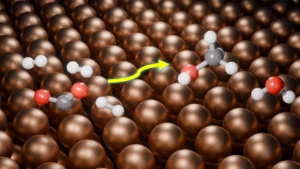
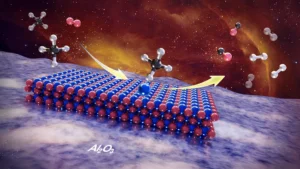
"We converted polymer waste to value-added fuels by using commercially available inorganic salts as the reaction media to provide the catalytic sites," explained Zhenzhen Yang, an ORNL staff scientist and co-corresponding author of the study. The team’s research revealed that charged aluminum atoms within the salt bind with other atoms to create highly acidic catalytic sites. These sites are potent enough to attack the exceptionally stable carbon-carbon bonds in the polyethylene chains, splitting them into smaller hydrocarbon fragments that constitute liquid fuels.
A notable feature of this process is its selectivity. Through a series of experiments involving isotopic labeling and neutron scattering, the researchers discovered that the architecture of the starting plastic influences the final product. Simpler, linear polymer chains typically yielded gasoline-range compounds, while more complex, branched chains tended to produce diesel-like fuels. This level of control allows for the potential "tuning" of the process to meet specific market demands for different types of fuel.
A Legacy of Innovation: From Nuclear Reactors to Polymer Chemistry
The application of molten salts at ORNL is rooted in a deep historical context. During the 1960s, the laboratory gained international recognition for its Molten Salt Reactor Experiment (MSRE), which proved that molten fluoride salts could serve as both a nuclear fuel carrier and a coolant. This decades-long expertise in the behavior, stability, and handling of inorganic salts provided the foundational knowledge necessary for Sheng Dai, an ORNL Corporate Fellow, to propose their use in polymer chemistry.
"The ORNL system solves two fundamental issues," Dai noted. "One, for a stable system, the process can be radically easier to scale up. Two, the previous system needed an initiator to kick off catalytic reactions. However, the ORNL system does not need one." By removing the requirement for chemical initiators—substances used to start a reaction—and operating at lower temperatures, the researchers have simplified the chemical engineering required for potential industrial adoption.
The project was managed by Tomonori Saito, who contributed specialized expertise in polymer science. According to Saito, the goal was not just to create a fuel, but to understand the fundamental science of how these stable polymers can be manipulated. "We’re trying to understand fundamental science that will lead to discoveries and new economic opportunities," he said.
Tracking the Transformation: Advanced Analytical Techniques
To prove how the aluminum chloride sites were interacting with the plastic, the team utilized some of the most advanced scientific facilities in the United States. This "atom-by-atom" tracking was essential to confirm the reaction mechanism and the efficiency of the catalyst.
- Neutron Scattering at the Spallation Neutron Source (SNS): Researchers used the VISION beamline at ORNL’s SNS to monitor the hydrogen atoms within the polymer. Because neutrons are highly sensitive to light elements like hydrogen and its isotope, deuterium, the team could observe how the polymer chains were breaking and reforming.
- Soft X-ray Spectroscopy at the Advanced Light Source (ALS): Zhenzhen Yang traveled to Lawrence Berkeley National Laboratory to use the ALS. By hitting the reaction mixture with soft X-rays, the team could see the electronic changes in the aluminum atoms. They observed a shift in the "aluminum edge," indicating the formation of electron-rich intermediates. This provided direct evidence that the aluminum was actively coordinating with the plastic to facilitate the chemical split.
- Nuclear Magnetic Resonance (NMR) and Computer Simulations: At the University of Tennessee, Knoxville (UTK) and ORNL’s Center for Nanophase Materials Sciences, researchers used NMR and quantum chemistry simulations to study the energy changes and the formation of positively charged carbon ions (carbocations). These simulations helped visualize how the long chains were chopped into fuel-sized molecules.
The collaborative effort included contributions from various specialists, including Liqi Qiu, a postdoctoral researcher at UTK who performed the bulk of the laboratory experiments. The study achieved a gasoline yield of approximately 60 percent, a remarkably high figure for a process operating under such mild conditions without the use of external hydrogen gas—a common and expensive requirement in traditional hydrocracking.
Economic and Industrial Implications
The implications of this research for the U.S. industrial sector are multifaceted. By utilizing "commercially available" and "very cheap" aluminum salts, the ORNL method significantly lowers the barrier to entry for chemical recycling. Traditional catalytic cracking often requires noble metals like platinum or palladium, which are subject to price volatility and supply chain constraints. By contrast, aluminum is abundant and inexpensive.
Furthermore, the absence of organic solvents reduces the environmental footprint and complexity of the process. In typical chemical recycling, separating the final product from the solvent can be energy-intensive. In the ORNL system, the fuel products naturally separate from the molten salt medium, potentially allowing for a continuous flow process in an industrial setting.
"Polymer source material is abundantly available from consumer waste, and our catalyst system is very cheap," Qiu stated. "This advance may be promising for industry." If successfully scaled, this technology could contribute to U.S. energy security by providing a domestic source of transportation fuel derived entirely from waste materials, thereby reducing the reliance on crude oil and decreasing the carbon footprint associated with plastic disposal.
Addressing Remaining Challenges: Stability and Scalability
Despite the promising results, the researchers acknowledge that hurdles remain before the technology can be commercialized. The primary challenge is the hygroscopic nature of the aluminum-based molten salts. Because these salts readily absorb moisture from the air, their stability can be compromised over time. In a laboratory setting, this can be managed by working in controlled environments, but in a large-scale industrial facility processing tons of plastic waste, moisture management will be critical.
Future research at ORNL will focus on "confining" the molten salts. The team is investigating the use of halogens or carbon-based materials to encapsulate the salts, which could make them more stable and easier to recover and reuse. Improving the durability of the catalyst system will be the next step toward a pilot-scale demonstration.
A New Frontier for the Circular Economy
The work at Oak Ridge National Laboratory represents a significant step toward a circular economy, where "waste" is no longer a terminal state but a feedstock for the next generation of products. By transforming one of the world’s most problematic pollutants into a high-demand commodity like fuel, the ORNL team is bridging the gap between environmental stewardship and industrial utility.
The research was primarily supported by the DOE Office of Science’s Materials Sciences and Engineering Division, with additional support from the Chemical Sciences, Geosciences, and Biosciences Division. By utilizing the unique capabilities of national user facilities, the researchers have provided a blueprint for how fundamental atomic science can solve global-scale environmental problems. As the world continues to grapple with the 400 million tons of plastic produced annually, innovations like the ORNL molten salt process offer a glimpse of a future where plastic waste is seen not as a burden, but as a valuable energy resource.