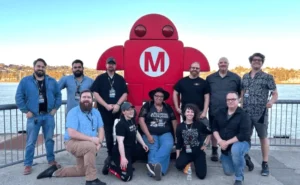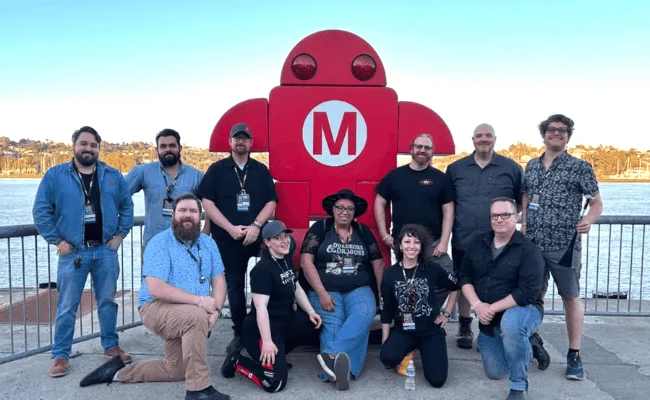
In a significant presentation at Maker Faire Bay Area 2025, animatronics designer Jesse Velez provided an unprecedented look into the intricate process behind crafting one of the most memorable and beloved sci-fi props in recent television history: the fully wireless, portable animatronic hand known as "Thing" from Netflix’s hit series "Wednesday." Velez and his dedicated team successfully engineered a sophisticated robotic marvel capable of mirroring human movements in real time, a feat that allowed "Thing" to transcend the screen and engage with audiences and the cast of "Wednesday" at live red carpet events across the globe, from Los Angeles and New York to Seoul, Istanbul, and London. This revelation at the Maker Faire not only highlights the innovative spirit of practical effects but also underscores a growing appreciation for tactile spectacle in an increasingly digital entertainment landscape.
The Phenomenon of ‘Wednesday’ and the Legacy of ‘Thing’
The Netflix series "Wednesday," a spin-off of "The Addams Family" universe, captivated global audiences upon its release, quickly becoming one of the streaming platform’s most-watched English-language series debuts. Its dark humor, compelling mystery, and stylish aesthetic resonated with both long-time fans of the Addams Family and a new generation of viewers. Central to the show’s charm and its connection to its macabre roots was the character of "Thing," the disembodied, sentient hand serving as Wednesday Addams’ loyal companion and confidante.
"Thing" has been an iconic fixture of the Addams Family since Charles Addams’ original cartoons, later brought to life in various television series and films. Traditionally portrayed through a combination of clever camera angles, prosthetics, and occasionally, human actors contorting themselves, the challenge for the "Wednesday" production was to create a "Thing" that felt more alive, autonomous, and capable of genuine interaction. The decision to employ a sophisticated animatronic for live promotional events was a strategic move to bridge the gap between the on-screen magic and real-world fan engagement, providing an authentic and unforgettable experience. This commitment to practical effects for a character so intrinsically linked to the Addams Family’s eccentric charm was a testament to the production’s dedication to authenticity.
From Concept to Global Icon: The Genesis of an Animatronic Marvel
Jesse Velez’s journey to bring "Thing" to life as a real-time interactive animatronic began, as many great innovations do, with a seemingly simple yet profoundly challenging prototype: a hand that could walk. This initial concept served as the foundational blueprint, testing the feasibility of mobility, balance, and basic articulation. The early stages involved extensive experimentation with various mechanisms, power sources, and control methodologies. The primary objective was not merely to create a static prop but an agile, expressive entity that could convincingly mimic the nuances of a living, sentient hand.
The technical hurdles were substantial. Achieving lifelike movement in a compact, self-contained unit required pioneering approaches to miniaturization, power efficiency, and wireless communication. Velez and his team, known for their expertise at Raptor House FX, embarked on a meticulous design process, iterating through multiple versions to refine the mechanical structure, optimize joint articulation, and ensure robust operation under diverse conditions. Their approach was deeply rooted in the "maker" philosophy—creatively integrating off-the-shelf components with custom-fabricated parts to achieve a seamless, functional design. This iterative development, moving from a proof-of-concept walking hand to a fully performing, interactive animatronic, laid the groundwork for "Thing’s" eventual global success.
Engineering the Impossible: The Wireless, Real-Time Animatronic Hand
The core of "Thing’s" advanced capabilities lies in its sophisticated blend of robotics, wireless technology, and real-time control systems. Velez detailed how the team engineered a fully wireless and portable animatronic, designed to be operated by a performer who could control its movements instantaneously. This real-time control was paramount, allowing "Thing" to improvise spontaneously with actors and fans, reacting to its environment and conversations with a level of naturalness previously difficult to achieve with pre-programmed animatronics.
While specific proprietary details remain closely guarded, Velez outlined the general breakdown of "ingredients" that made the live-performing animatronic hand a reality:
- Advanced Servomechanisms: High-torque, miniature servos were crucial for articulating each digit and joint, providing the fine motor control necessary for expressive gestures and realistic locomotion. These servos had to be powerful enough for movement yet small enough to fit within the confines of a human-sized hand.
- Integrated Microcontrollers and Processors: A compact, high-performance microcontroller unit served as the brain of "Thing," processing input from the performer and translating it into precise servo commands. This required custom programming to ensure minimal latency and fluid movement.
- Wireless Communication Protocol: A robust, low-latency wireless system was implemented to transmit control signals from the performer’s input device (likely a glove-based system or similar motion capture interface) to the animatronic hand. Reliability was key, especially for live events where signal interference could disrupt performances.
- Miniaturized Power Management: A custom battery solution was developed to provide sufficient power for extended operational periods while maintaining a lightweight and compact form factor. Efficient power distribution and consumption were critical to avoid frequent recharges during demanding promotional tours.
- Lightweight and Durable Materials: The chassis and external shell of "Thing" were constructed from a combination of 3D-printed components, custom-molded plastics, and potentially carbon fiber elements. This ensured both structural integrity for travel and performance, as well as an authentic appearance.
- Sensory Input Systems: To achieve real-time mirroring of human movements, the performer’s control system likely incorporated a network of sensors (e.g., flex sensors, accelerometers, gyroscopes) to capture the nuances of their hand and finger movements, transmitting this data wirelessly to "Thing."
- Artistic Finishing: Beyond the mechanical and electronic wizardry, significant effort went into the aesthetic details, including realistic skin textures, paintwork, and subtle weathering to match "Thing’s" on-screen appearance.
Velez emphasized his philosophy of "creatively hacking together off-the-shelf and purpose-built components." This approach is characteristic of the maker community, where ingenuity often involves repurposing existing technologies and customizing them for novel applications. For "Thing," this meant selecting commercially available microcontrollers, modifying hobby-grade servos for industrial reliability, and designing bespoke mechanical linkages and enclosures to house everything seamlessly. The result was an animatronic that not only performed its functions flawlessly but also maintained the visual integrity of the beloved character.

The Global Impact: ‘Thing’ on the Red Carpet
The culmination of Velez’s team’s work was "Thing’s" starring role in the global promotional tour for "Wednesday." The animatronic traveled across continents, making memorable appearances in Los Angeles, New York, Seoul, Istanbul, and London. These events were far more than standard premieres; they became interactive spectacles where "Thing" actively engaged with the "Wednesday" cast, journalists, and legions of eager fans.
On the red carpets, "Thing" was often seen scuttling across shoulders, playfully interacting with actors like Jenna Ortega (Wednesday Addams), giving high-fives to delighted fans, or even posing for selfies. The real-time control allowed the performer to respond dynamically to the environment, making each interaction unique and authentic. This live engagement generated immense social media buzz and traditional media coverage, amplifying the show’s reach and fostering a deeper connection with its audience. The presence of a tangible, interactive "Thing" transcended mere marketing; it became an extension of the show’s universe, allowing fans to experience a piece of the magic firsthand. This direct interaction provided an emotional resonance that purely digital promotional content, such as CGI trailers or social media posts, simply could not replicate. The spectacle of "Thing" moving independently and expressively underscored the magic of practical effects, demonstrating its enduring power to captivate and surprise.
The Future is Tactile: A Resurgence of Practical Effects
Jesse Velez’s work on "Thing" is more than just a behind-the-scenes anecdote; it serves as a powerful testament to a burgeoning movement that prioritizes tangible spectacle in entertainment. In an era increasingly dominated by Computer-Generated Imagery (CGI), the visceral thrill of encountering something real, complex, and seemingly alive right in front of you holds a unique and potent appeal. The debate between practical effects and CGI has long been a fixture in filmmaking, with each offering distinct advantages. While CGI provides limitless creative freedom and cost-effectiveness for certain scenes, practical effects often deliver a sense of weight, texture, and physical presence that resonates deeply with audiences and performers alike.
The success of "Thing" at live events highlights several key implications:

- Authenticity and Immersion: Practical animatronics create a physical presence that enhances immersion, both for the actors interacting with them and for the audience witnessing them. This tangible realism contributes significantly to the suspension of disbelief.
- Fan Engagement: Interactive props like "Thing" offer unparalleled opportunities for fan engagement, transforming passive viewing into active participation and creating memorable, shareable experiences.
- The Maker Movement’s Influence: Velez’s "creative hacking" approach embodies the spirit of the global maker movement, demonstrating how ingenuity, resourcefulness, and a blend of traditional craftsmanship with modern technology can push the boundaries of creative engineering. Maker Faires, like the one where Velez presented, are crucial platforms for sharing such innovations and inspiring the next generation of creators.
- Industry Trends: There is a discernible trend in Hollywood and television towards re-embracing practical effects for specific applications, recognizing their unique value in complementing CGI. Productions are increasingly seeking a harmonious blend of both techniques to achieve optimal results. The global market for animatronics, while niche, is projected to see steady growth, driven by demand from theme parks, museums, and increasingly, live entertainment and film production.
Jesse Velez and the Craft of Bringing Dreams to Life
Jesse Velez, through his work with Raptor House FX, has established himself as a leading figure in the practical effects and animatronics community. His projects consistently showcase a profound understanding of mechanical engineering, electronics, and artistic design, all channeled towards the singular goal of bringing fantastical concepts into tangible reality. His philosophy, as demonstrated with "Thing," emphasizes problem-solving through innovative engineering and a willingness to blend diverse technologies.
His presentation at Maker Faire Bay Area 2025 served not only as a technical deep dive but also as an inspirational call to action for aspiring makers and engineers. It highlighted that the relentless creativity, meticulous attention to detail, and iterative problem-solving involved in practical effects are fundamental skills that bridge the gap between imagination and invention. The intricate ballet of servos, lines of code, and carefully sculpted materials ultimately results in experiences that resonate emotionally and visually with audiences worldwide.
The success of "Thing" on its global tour and the detailed insights shared by Jesse Velez at Maker Faire Bay Area 2025 reinforce the enduring power of practical effects in an increasingly digital world. It underscores that while technology continues to advance, the human desire for tangible, interactive experiences remains strong. As Velez’s work so brilliantly demonstrates, the future of entertainment is not just about digital illusion, but also about the tactile magic that brings our wildest sci-fi dreams to life, one servo and line of code at a time. This blend of art and engineering promises a vibrant future for practical effects, continuing to surprise and delight audiences with real, complex, and alive creations.