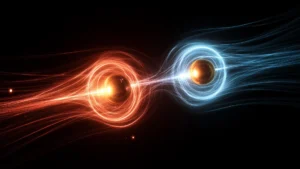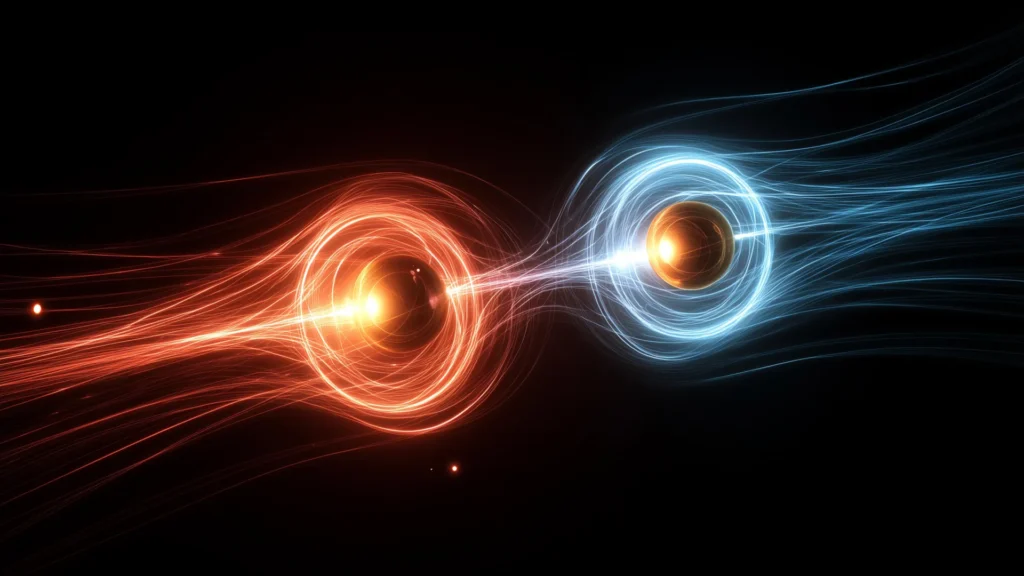
Physicists at Emory University have achieved a significant breakthrough, employing a sophisticated machine learning approach to illuminate previously unseen details about how particles interact within complex systems. Their groundbreaking work specifically targets non-reciprocal forces – a fascinating class of interactions where the influence one particle exerts on another is distinct from the influence it receives in return. This innovative methodology has not only yielded high-precision insights but has also demonstrated that artificial intelligence can transcend its traditional roles of data analysis and prediction, emerging as a potent tool for the discovery of entirely new physical laws.
The pivotal findings, meticulously detailed in the prestigious scientific journal Proceedings of the National Academy of Sciences (PNAS), represent the culmination of an intensive interdisciplinary collaboration. The team, comprising both experimental and theoretical physicists at Emory, successfully integrated a bespoke neural network with empirical data gleaned from experiments involving dusty plasma. This synergy allowed them to challenge and refine long-held theoretical assumptions, providing a clearer, more accurate description of these elusive forces.
A New Paradigm for Scientific Discovery: AI as a Lawmaker
The core of this research lies in its audacious proposition: that AI can do more than merely process information; it can actively contribute to the fundamental understanding of the universe. Justin Burton, an Emory professor of experimental physics and a senior co-author of the paper, emphasized this paradigm shift. "We showed that we can use AI to discover new physics," Burton stated, underscoring the profound implications of their work. He further clarified that their AI method is far from a "black box" – a common concern in AI applications – explaining that the team possesses a clear understanding of its operational mechanisms and rationale. Crucially, the framework developed is described as universal, suggesting its potential applicability across a multitude of other many-body systems, thereby paving new avenues for scientific exploration.
Ilya Nemenman, an Emory professor of theoretical physics and the other co-senior author, echoed this sentiment, highlighting the unprecedented level of detail now accessible. "We can describe these forces with an accuracy of more than 99%," Nemenman reported, a remarkable feat given the inherent complexities of non-reciprocal interactions. More intriguingly, he noted, "What’s even more interesting is that we show that some common theoretical assumptions about these forces are not quite accurate. We’re able to correct these inaccuracies because we can now see what’s occurring in such exquisite detail." This ability to challenge and refine established theories, rather than merely confirm them, marks a significant leap in the utility of AI for fundamental science.
Unraveling the Mysteries of Dusty Plasma: The Fourth State of Matter
The research centered on dusty plasma, a system often referred to as the "fourth state of matter." While gases, liquids, and solids are familiar, plasma represents an ionized gas where electrons and ions move freely, endowing the substance with unique properties such as electrical conductivity. This state of matter is ubiquitous, constituting approximately 99.9% of the visible universe, manifesting in phenomena ranging from the solar wind emanating from the Sun to the dramatic electrical discharges of lightning strikes on Earth.
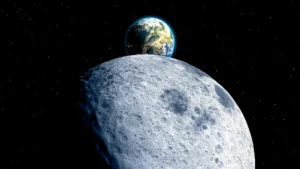
Dusty plasma introduces an additional layer of complexity: it contains extra charged dust particles interacting within the ionized gas. This particular form of plasma is found in diverse environments across the cosmos, from the majestic rings of Saturn to Earth’s ionosphere. Closer to home, its effects are palpable; on the Moon, the weak gravitational pull allows charged dust to hover above the surface, leading to astronauts’ suits becoming covered in lunar regolith, as Burton explained. On Earth, dusty plasma can even arise during natural disasters like wildfires, where soot particles become charged within smoke plumes. These charged particles can significantly disrupt radio signals, complicating vital communication efforts for firefighters and emergency responders.
The choice of dusty plasma as a research subject was strategic. While complex enough to exhibit many-body interactions akin to those found in living systems, it offers a more controlled and experimentally tractable environment for testing novel theoretical and computational approaches. Nemenman, whose theoretical biophysics research often delves into the collective motion of cells within the human body – such as the metastatic spread of cancer – recognized this advantage. "Compared to living systems, dusty plasma offers a simpler environment for testing new ideas. This made it an ideal case for exploring whether AI could uncover new physical principles," he elaborated.
Precision Experimentation: Tracking Particle Motion in 3D
The experimental foundation for this study was laid in Justin Burton’s laboratory, where researchers meticulously recreate and study dusty plasma and similar materials under controlled conditions. The setup involves suspending minuscule plastic particles within a plasma-filled vacuum chamber, designed to simulate more intricate natural systems. By carefully adjusting parameters such as gas pressure, the team can mimic real-world conditions and observe how these particles respond to various forces in their environment.
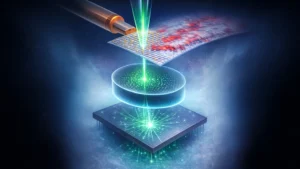
For this specific project, Burton and Wentao Yu, who was an Emory PhD student at the time and is now a postdoctoral fellow at the California Institute of Technology, developed an advanced tomographic imaging method. This technique allowed for the capture of the three-dimensional (3D) motion of particles with unprecedented accuracy. A laser sheet is systematically moved through the chamber, while a high-speed camera records a series of images. These individual snapshots are then computationally combined to reconstruct the precise positions of dozens of particles over time, enabling researchers to track their intricate movements in exquisite detail. This high-resolution data was crucial for training the subsequent AI model.
The Algorithmic Breakthrough: Designing a Neural Network for Discovery
The creation of an AI model capable of discerning new physical laws presented a unique set of challenges, particularly given the nature of exploratory scientific research. Unlike many AI applications that thrive on vast datasets, the quest to probe fundamentally new physics inherently means working with limited experimental data. "When you’re probing something new, you don’t have a lot of data to train AI," Nemenman explained. "That meant we would have to design a neural network that could be trained with a small amount of data and still learn something new." This constraint necessitated a departure from standard AI architectures and a focus on models capable of generalization from sparse information.
The development process was characterized by intense interdisciplinary collaboration and iterative refinement. The team dedicated over a year to weekly meetings, engaging in a rigorous "back-and-forth" discussion to perfect the neural network’s design. This sustained dialogue between experimental and theoretical physicists was vital. "We needed to structure the network to follow the necessary rules while still allowing it to explore and infer unknown physics," Burton noted, highlighting the delicate balance required between incorporating existing physical principles and allowing for the discovery of new ones. Nemenman added, "Once we came up with the correct structure of the network to train, it turned out to be fairly simple," underscoring that the complexity lay in the conceptual design rather than the final implementation.
The resulting AI model was ingeniously designed to deconstruct particle motion into three primary influences: drag forces dependent on velocity, broader environmental forces such as gravity, and the intricate forces acting between individual particles. This structured approach allowed the AI to focus its learning on the inter-particle forces, which were the primary target of the investigation for non-reciprocal dynamics. Co-author Eslam Abdelaleem, also an Emory graduate student during the project and now a postdoctoral fellow at Georgia Tech, contributed significantly to the development and analysis of the data and model.
Challenging Established Paradigms: Surprising Results and New Insights
Upon successful training using the 3D particle trajectories, the AI model demonstrated a remarkable capability to capture complex interactions, including the notoriously difficult-to-measure asymmetrical forces between particles. The researchers drew an illustrative analogy to two boats navigating a lake: each boat generates waves that affect the other, but depending on their relative positions, these waves can push or pull the boats differently, resulting in a non-reciprocal interaction.
In the context of dusty plasma, the AI’s analysis revealed a precise and novel approximation for a previously anticipated phenomenon: "In a dusty plasma, we described how a leading particle attracts the trailing particle, but the trailing particle always repels the leading one," Nemenman explained. This specific non-reciprocal interaction, while theorized by some, had lacked a precise, experimentally validated description until now.
Beyond confirming anticipated behaviors, the AI model directly challenged and corrected several long-standing theoretical assumptions. One prominent idea posited that a particle’s electric charge would increase in direct proportion to its size. The new findings, however, demonstrated a more nuanced relationship: while larger particles do indeed carry more charge, this relationship is considerably more complex, influenced by dynamic factors such as plasma density and temperature. This correction fundamentally alters the understanding of charge distribution in dusty plasmas.
Another entrenched assumption held that forces between particles would decrease exponentially with distance, and that this decay rate would be independent of particle size. The AI model, however, unveiled a critical detail: particle size does significantly affect how quickly these forces weaken with increasing distance. This revelation necessitates a re-evaluation of how inter-particle forces are modeled in such systems. The team rigorously confirmed these groundbreaking conclusions through additional, targeted experiments, solidifying the validity of the AI’s discoveries.
Broader Implications: A Universal Tool for Complex Systems
The physics-based neural network developed by the Emory team is not only powerful but also remarkably accessible, designed to run efficiently on a standard desktop computer. This accessibility is a crucial factor in its potential for widespread adoption across various scientific disciplines. The researchers firmly believe that this framework offers a flexible and robust tool for studying a vast array of many-body systems.
The applications extend far beyond the realm of plasma physics. Such complex systems are prevalent in diverse fields, ranging from industrial materials like paints and inks, where particle interactions dictate material properties, to biological systems involving groups of living cells. Understanding collective motion and interaction is paramount in areas like developmental biology, immunology, and oncology. Nemenman himself is set to share this innovative methodology globally, as he will soon be teaching at the Konstanz School of Collective Behavior in Germany. There, scientists investigate collective phenomena across scales, from the synchronized movements of bird flocks to the dynamics of human crowds. "I’ll be teaching students from all over the world how to use AI to infer the physics of collective motion — not within a dusty plasma but within a living system," he announced, highlighting the direct translational potential of their work.
The Evolving Role of AI and the Enduring Need for Human Ingenuity
This project serves as a compelling testament to the evolving role of artificial intelligence in scientific discovery. Vyacheslav (Slava) Lukin, program director for the NSF Plasma Physics program, aptly summarized its significance: "This project serves as a great example of an interdisciplinary collaboration where the development of new knowledge in plasma physics and AI may lead to further advances in the study of living systems. The dynamics of these complex systems is dominated by collective interactions that emerging AI techniques may help us to better describe, recognize, understand and even control."
Yet, even with these profound advances in AI capabilities, the researchers are quick to emphasize that human expertise, critical thinking, and intuition remain absolutely essential. Scientists must meticulously design the models, carefully curate the input data, and, perhaps most importantly, interpret the results within the broader context of scientific understanding. The AI acts as a powerful assistant, capable of discerning patterns and relationships that might elude human observation, but it is the human mind that provides the overarching scientific direction and validates the discoveries. "It takes critical thinking to develop and use AI tools in ways that make real advances in science, technology and the humanities," Burton asserted.
The research was primarily supported by a substantial grant from the National Science Foundation, a testament to its foundational importance, with additional crucial funding provided by the Simons Foundation, which often supports high-risk, high-reward basic science research.
Looking ahead, the team remains profoundly optimistic about the future prospects of AI-driven scientific exploration. Burton encapsulated this forward-looking vision with an evocative analogy: "I think of it like the Star Trek motto, to boldly go where no one has before. Used properly, AI can open doors to whole new realms to explore." This sentiment encapsulates the essence of their achievement: not just a technical triumph, but a philosophical redefinition of the partnership between human intellect and artificial intelligence in the relentless pursuit of knowledge.