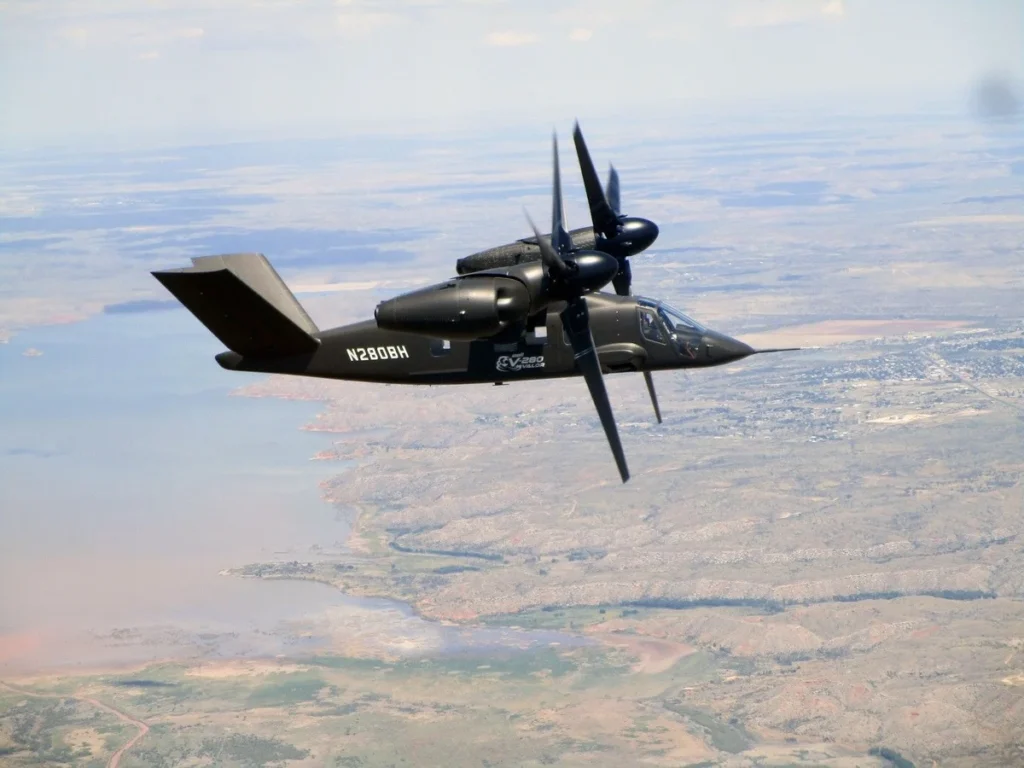
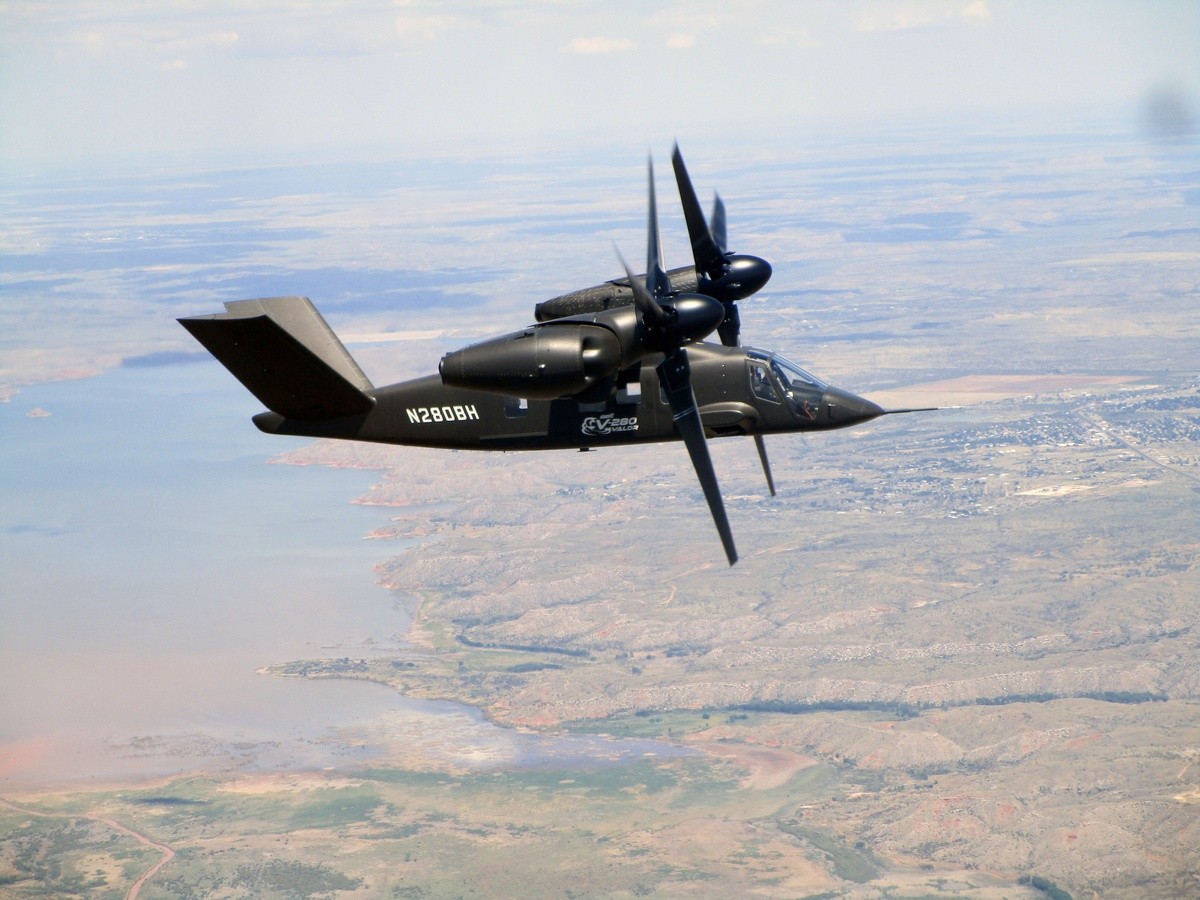
WASHINGTON, D.C. – Rolls-Royce is on the cusp of delivering two crucial flight test engines to Bell Textron within the next few months, marking a significant milestone for the U.S. Army’s ambitious Future Long-Range Assault Aircraft (FLRAA) program. These engines will power Bell’s prototype of the next-generation tiltrotor aircraft, a platform poised to redefine vertical lift capabilities for the U.S. military.
Scott Ames, the Rolls-Royce executive spearheading the FLRAA engine program, expressed confidence in the project’s progress. "We’ve got one of those [engines] ready to go to the test stand as soon as we’re done with the next phase of development testing, so it’s sitting in the hallway, ready to fire up," Ames stated. The second flight test engine is currently undergoing retrofitting and is expected to follow shortly thereafter. These updates were shared on the sidelines of the Association of the U.S. Army’s (AUSA) annual conference, a key gathering for defense industry leaders and military officials.
A Decades-Long Pursuit of Superior Vertical Lift
The FLRAA program represents the culmination of decades of U.S. Army research and development into advanced vertical lift capabilities, aiming to replace aging helicopter fleets with a more versatile and capable platform. The need for such an aircraft became increasingly apparent during conflicts in the Middle East, where existing helicopters faced limitations in range, speed, and payload capacity. The FLRAA is envisioned as a transformative asset, capable of rapidly deploying troops and equipment deep into contested areas, performing reconnaissance, and conducting casualty evacuation with unprecedented efficiency.
Bell Textron’s selection of Rolls-Royce as its engine provider in 2019 underscored the critical role of advanced propulsion in achieving the FLRAA’s ambitious performance goals. The Army officially awarded Bell Textron a substantial $1.3 billion contract for its aircraft in 2022. This aircraft was later designated the MV-75 Cheyenne II, a name evoking the storied legacy of Army aviation. While Ames declined to disclose the specific value of Rolls-Royce’s contract or the projected number of engines to be produced, the commitment to delivering these specialized flight test units highlights the deep integration between the two companies.
Evolving Timelines and Programmatic Shifts
The FLRAA program has experienced some shifts in its projected timeline. In 2024, the Army had indicated that the first prototype flight would occur in 2026, with initial fielding anticipated by 2030. However, a service spokesperson confirmed that the first flight is no longer expected this year. The Army is currently undertaking a "comprehensive schedule risk assessment to establish a realistic, budget-aligned timeline." This recalibration is not uncommon in complex, cutting-edge defense acquisition programs, where technological challenges and evolving requirements can necessitate adjustments.
Despite potential timeline adjustments, progress on the Bell Textron prototype remains robust. A spokesperson for Bell Textron shared that the company has made significant strides over the past year. "We have completed critical structures for the test aircraft – including the nacelle and wing – and the fuselage is nearing completion," the spokesperson stated. "Also, we are actively validating and integrating software at our Weapon Systems Integration Lab (WSIL). This work will continue into next year." This parallel development of airframe and integrated systems is crucial for demonstrating the aircraft’s overall readiness.
The Heart of the Cheyenne II: The AE1107 Turboshaft Engine
The FLRAA design specifications call for two Rolls-Royce AE1107 turboshaft engines. This engine family shares a common core with the engines powering the V-22 Osprey, a testament to the proven technology being leveraged. However, the AE1107 for the FLRAA incorporates a different rotor integration approach and a newly developed Rolls-Royce electronic engine controller, known as the Full Authority Digital Engine Control (FADEC) unit.
The FADEC is a critical component, representing a leap forward in engine management and control. "The FADEC has a lot of cyber resilient stuff built into it," Ames emphasized. This focus on cybersecurity is paramount in modern military platforms, where digital systems are increasingly interconnected and vulnerable to sophisticated threats. Although considered an integral part of the engine system, the FADEC will be strategically located elsewhere within the helicopter, allowing for optimized integration and protection.
The development and testing of the FADEC hardware and software are proceeding in tandem with the first developmental AE1107 engine at Rolls-Royce’s facility in Indianapolis. This integrated approach ensures that the engine and its control system are harmonized for optimal performance and reliability.
Rigorous Testing and Future Capabilities
The next phase of engine testing is scheduled to commence shortly, with the objective of gathering additional performance data for analysis by both Rolls-Royce and Bell Textron. This data will be instrumental in refining the engine’s operational parameters and ensuring it meets the demanding requirements of the FLRAA mission. Furthermore, Rolls-Royce plans to subject a developmental engine to altitude testing at a specialized facility in West Lafayette, Indiana, at a future date. Altitude testing is crucial for understanding engine performance in the varied atmospheric conditions the aircraft will encounter.
The flight test engines will undergo a distinct testing regimen, described by Ames as a "pass off test." This rigorous evaluation is designed to confirm that the engine design "meets everything we’re asking it to do," validating its readiness for integration into the flight prototype and subsequent operational evaluations.
Beyond the core engine, Rolls-Royce is also developing a novel infrared suppressor. This component, designed to be fitted behind the engine, will significantly reduce the aircraft’s heat signature, a critical factor for survivability in contested airspace. Ames confirmed that these infrared suppressors "are nearing completion for the prototype aircraft," further highlighting the comprehensive approach to the FLRAA’s development.
The company’s commitment to the program is further evidenced by its ongoing production of other flight test engines. "We have already started building other flight test engines," Ames stated. "We have several in our shop right now that are undergoing assembly." This proactive manufacturing ensures a steady supply of engines for ongoing testing and potential future production needs.
Broader Implications for Army Aviation
The successful development and fielding of the FLRAA, powered by Rolls-Royce’s advanced engines, will have profound implications for the U.S. Army. The MV-75 Cheyenne II is expected to offer a significant leap in speed, range, and payload compared to current helicopters, enabling more agile and responsive force projection. Its tiltrotor design allows for vertical takeoff and landing like a helicopter, while also providing the speed and efficiency of a fixed-wing aircraft during forward flight. This dual capability is a game-changer for operational flexibility.
The FLRAA is part of a broader Army Aviation Modernization effort, which includes the Future Attack Reconnaissance Aircraft (FARA) program, aimed at revitalizing the service’s aerial capabilities. The success of both FLRAA and FARA will be critical in maintaining the U.S. Army’s technological edge and ensuring its ability to meet evolving global security challenges. The collaboration between industry leaders like Bell Textron and Rolls-Royce is a cornerstone of this ambitious modernization drive, promising to deliver a new generation of vertical lift aircraft that will shape the future of military aviation for decades to come.