In 2017, a moment of profound hope unfolded on the stage of MIT’s packed Kresge Auditorium. A man named Michael, living with the debilitating effects of Parkinson’s disease, stepped forward to perform a simple yet challenging task: drawing a spiral. This common diagnostic test for neurological conditions like Parkinson’s quickly revealed the severity of his tremors, making the exercise difficult and poignant for the assembled audience. What followed was not just a demonstration of technology, but a vivid testament to the power of human ingenuity and compassion.
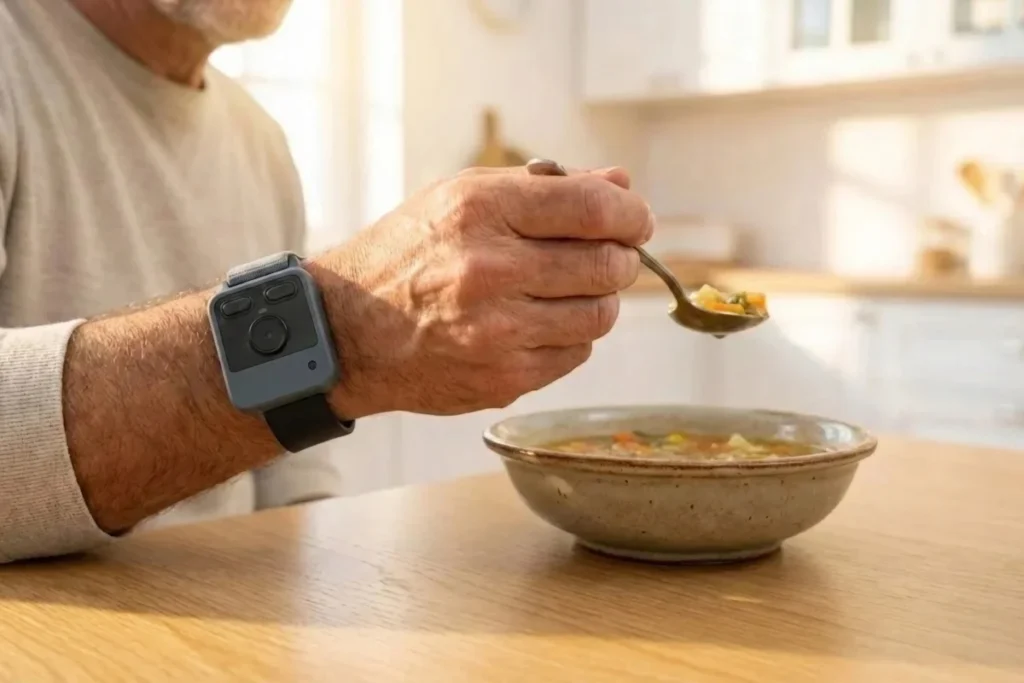
Michael then affixed a novel wristband device, the culmination of a semester-long project by a team of MIT students enrolled in 2.009 (Product Engineering Processes), who were presenting their prototype that evening. With a press of a button, the device emitted a subtle vibration, initiating a cascade of signals up his wrist and into his brain. The transformation was immediate and dramatic: Michael’s tremors visibly subsided, enabling him to complete the spiral with remarkable precision. The auditorium erupted in a roaring ovation, a collective acknowledgment of a potential breakthrough. "When this device is turned on, I feel like I used to feel when I didn’t have Parkinson’s disease," Michael shared with the emotional crowd, adding, "It’s an amazing, amazing feeling."
The overwhelming success of the demonstration sparked an immediate wave of interest. Classmates, faculty, and attendees approached the student team, eager to know where they could purchase the device for family and friends struggling with tremors. The students, while thrilled by the reception, had to temper expectations, explaining that only one prototype existed "for the time being." This single, impactful event set in motion a near decade-long journey, transforming a classroom project into a commercial medical device company poised to make a significant impact on millions of lives.
From Academic Spark to Entrepreneurial Flame: The Genesis of Encora Therapeutics
The journey from a promising student project to an FDA-cleared medical device is rarely linear, often fraught with technical hurdles, financial constraints, and regulatory complexities. For the MIT team, this odyssey began by strategically leveraging the Institute’s robust entrepreneurial ecosystem. Resources such as MIT Sandbox, which provides seed funding and mentorship for student ventures; MIT FUSE, an accelerator program designed to help student teams transition into startups; and the MIT Venture Mentoring Service (VMS), offering experienced guidance, proved instrumental in nurturing the nascent idea.
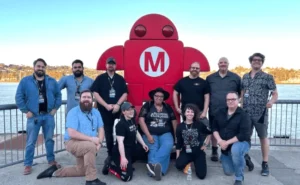
The pivotal 2.009 course, "Product Engineering Processes," is renowned at MIT for challenging students to design, develop, and prototype innovative products within a single semester. It emphasizes hands-on learning, teamwork, and problem-solving, often pushing students beyond their perceived capabilities. It was in this dynamic environment that the core team – Daniel Carballo ’18, SM ’20, Allison Davanzo ’18, and Kyle Pina ’18 – all seniors at the time, first converged.
The semester kicked off with a brainstorming session involving groups of approximately 17 students, tasked with generating dozens of potential product ideas. Daniel Carballo, drawing inspiration from his robotics classes focused on neural control of movement, proposed a wearable device utilizing mechanical vibration to send signals to the brain and reduce tremors. His initial vision was to assist patients with Parkinson’s disease. "It was one of hundreds of throwaway ideas," Carballo humbly recalled, explaining, "The initial concept was inspired by classes I had taken in robotics around neural control of movement. I had a preliminary understanding of how an electromechanical device might interact with the body’s control systems and feedback loops that control movement to relieve pathological control of movement."
Remarkably, after an exhaustive process of winnowing down a lengthy list of concepts, Carballo’s "far-fetched" idea was chosen by a resounding 16-1 vote – with Carballo himself casting the sole dissenting vote due to his skepticism about its feasibility within a single semester. "I tried to explain to the team that this was so far-fetched that there was no way, in one semester, we would be able to make anything," Carballo recounted. "Thankfully, I got outvoted."
For much of the semester, Carballo’s initial pessimism seemed justified as the team consistently lagged behind others at various class milestones. The breakthrough came in the critical week before final presentations when they met Michael. His severe hand tremors, a consequence of early-onset Parkinson’s, had profoundly impacted his life. A home renovator by trade, Michael’s condition had progressed to the point where even simple tasks like turning a screwdriver, using a drill, or completing paperwork had become insurmountable. His independence had eroded, leaving him reliant on his wife and daughter not only for managing his business but also for daily activities.
At this juncture, the 2.009 team had developed a crude but functional prototype: "a foamcore box with a Raspberry Pi chip and some wires coming out," as Carballo described it. This device was designed to vibrate, providing mechanical feedback to the brain. When Michael donned the device and activated it, his tremors dramatically decreased. "It was like a light switch turned on and his tremors stopped," Carballo vividly described. The emotional impact was palpable; Michael’s wife and daughter, witnessing his newfound control, began to cry. A week later, Michael generously agreed to replicate this powerful demonstration on stage for the final presentations, forever etching the team’s commitment.
The presentation, coupled with the immediate outpouring of interest from individuals seeking the device for their loved ones, galvanized the team. "It showed us there were a lot of people with this problem that could really benefit from this," Carballo stated. "A subset of the team became possessed. It would have been such a shame to know this could exist and to have it never leave the classroom."
The Scientific Foundation: Understanding Tremor and Neuromodulation
The human brain is an intricate network, and movement disorders like Parkinson’s disease and Essential Tremor (ET) arise from disruptions in its delicate balance. Scientists currently understand that tremors are caused by malfunctioning signals within specific brain regions responsible for interpreting sensory input and coordinating motor control. These regions, particularly the basal ganglia and cerebellum, rely on neurotransmitters to send precise signals. In conditions causing tremor, deficiencies or imbalances in these neurotransmitters lead to "pulsed signaling" in the brain, manifesting as the involuntary, rhythmic muscle contractions that define tremors.
Essential Tremor, while distinct from Parkinson’s disease, shares commonalities in its manifestation. Affecting an estimated 10 million Americans, it is one of the most common neurological disorders, often characterized by involuntary, rhythmic shaking, predominantly in the hands, but also affecting the head, voice, legs, and trunk. Unlike Parkinson’s, which also presents with bradykinesia (slowness of movement) and rigidity, ET’s primary symptom is tremor, often worsening with intentional movement. The impact on daily life is profound, ranging from difficulty eating, drinking, writing, or dressing, leading to significant social embarrassment and reduced quality of life. Current treatment options for ET include medications like beta-blockers and anti-seizure drugs, which often come with side effects and varying degrees of efficacy. More invasive options include deep brain stimulation (DBS) surgery or focused ultrasound thalamotomy, both of which involve significant risks and are reserved for severe cases.
Encora’s device offers a non-invasive alternative to these established treatments. Rather than drilling holes in the skull to implant electrodes, as in DBS, or using high-intensity ultrasound, Encora’s wrist-worn product targets the same brain regions through mechanical vibrations applied at the wrist. "We’re applying mechanical stimulus, basically vibration, to stretch receptors in the wrist, which tell your body where it is in space," Carballo explained. These stretch receptors, known as proprioceptors, are critical for our sense of body position and movement. "The stimulation causes the receptors to activate and send a patterned signal to peripheral nerves of the wrist, that then carry the signal to the peripheral nervous system and into the central nervous system, to the same regions of the brain targeted by surgery." This process, known as neuromodulation, essentially "retrains" or "recalibrates" the faulty neural pathways, restoring more controlled movement.
The Long Road to Commercialization and Regulatory Approval
Following the inspiring 2.009 demonstration, a subset of the team committed to commercializing the technology. This dedication led to the formal establishment of Encora Therapeutics as a company in 2020. The initial focus remained on Parkinson’s disease, leading to their first clinical trial in 2022, involving 20 Parkinson’s patients in collaboration with MassGeneral Brigham. However, subsequent research and market analysis led to a strategic pivot. The team identified a greater unmet need within the Essential Tremor community. "It was a greater unmet need," Carballo affirmed. "There are a lot of drugs being developed for Parkinson’s disease, but essential tremor hasn’t experienced that same innovation." This realization guided Encora to prioritize ET for its initial commercial launch.
The path to FDA clearance for a medical device is rigorous and demanding, often spanning several years and millions of dollars in investment. It requires meticulous documentation, extensive testing, and compelling clinical evidence of safety and efficacy. Encora embarked on numerous hardware iterations, refining the design, miniaturizing components, and optimizing the vibrational patterns to achieve maximal therapeutic benefit. This iterative process is crucial in medical device development, ensuring reliability, user-friendliness, and robust performance.
In 2023, Encora conducted a 59-person trial where patients used the device at home, mirroring real-world conditions. This was followed by a randomized controlled trial in 2024, involving 47 patients living with Essential Tremor. In both trials, an impressive "more than 70 percent of patients experienced meaningful improvement," a testament to the device’s efficacy. The data from these trials demonstrated not only the safety of the device but also its significant clinical benefit, providing the crucial evidence required for regulatory submission.
This extensive work culminated in a major milestone in February 2024, nine years after Michael’s brave demonstration: the FDA granted Encora’s device 510(k) clearance. This clearance signifies that the device is substantially equivalent to a legally marketed predicate device and can be safely and effectively used to help adults with Essential Tremor. For the team, this was a moment of immense gratification. "It’s been a long and difficult – very difficult – journey, but also very rewarding, especially when we get feedback from patients," stated Daniel Carballo. "We hear stories from patients about how they’ve struggled with their condition and how much they benefit from this. It reminds us why we keep going."
Transforming Lives: Patient Impact and Future Vision
The impact of Encora’s device on patients has been described as life-changing. Many users report experiencing rapid benefits, enabling them to perform tasks they had been unable to accomplish for years. From simply holding a cup of coffee without spilling, signing their name legibly, or enjoying a meal with dignity, these seemingly small achievements represent monumental shifts in their quality of life and independence. "We see some patients using the device 12, 14 hours a day," Carballo noted, highlighting the profound reliance and benefit users derive from the technology.
The availability of a non-invasive, drug-free solution for Essential Tremor has significant implications for both patients and the healthcare system. It offers an alternative to pharmacological treatments that may have undesirable side effects and to surgical interventions that carry inherent risks. By empowering patients to regain control over their movements, the device can reduce the psychological burden of living with a chronic tremor, alleviate social isolation, and potentially lower long-term healthcare costs associated with managing severe disability. Patient advocacy groups, such as the International Essential Tremor Foundation, are likely to welcome such innovations, recognizing their potential to dramatically improve the lives of their constituents.
Currently, Encora Therapeutics is focused on establishing a national sales force and working diligently to secure insurance coverage, which is a critical step in making the device accessible to a broader patient population. As the company scales up production, the product will finally become available to qualified patients across the country, fulfilling the promise made that evening in 2017.
Looking ahead, Encora harbors ambitious plans. While the initial focus is on Essential Tremor, the company aims to fulfill its original mission of helping mitigate tremors in patients with Parkinson’s disease. Carballo is optimistic about the broader applicability of their neuromodulation approach. "There is a surprisingly long list of diseases that this could work for," he suggested, seeing the technology as a versatile platform. "The most obvious are neurological movement disorders, but the bigger picture of wearable neuromodulation is a rapidly growing field that has seen therapeutic benefit across a broad range of diseases. We see this as a platform technology."
This vision underscores the profound potential of wearable neuromodulation. The success of Encora Therapeutics is not merely a story of a medical device company; it is a compelling narrative of how academic innovation, fueled by empathy and perseverance, can translate into tangible solutions that profoundly improve human lives. It exemplifies MIT’s enduring legacy of "mens et manus" – mind and hand – in service of the world.