Artificial intelligence (AI) has rapidly become an indispensable tool across numerous scientific disciplines, and cosmology is no exception. Already playing a major role in helping cosmologists decipher the universe’s mysteries, new research now suggests that a specific machine learning technique, known as transfer learning, holds immense promise for dramatically accelerating and reducing the cost of the search for new physics. However, the study, published in the Journal of Cosmology and Astroparticle Physics (JCAP), also brought to light a significant and surprising caveat: AI systems, much like humans, can become so entrenched in what they have already learned that they struggle to recognize truly novel phenomena, a challenge dubbed "negative transfer." This dual discovery underscores both the transformative potential and the inherent complexities of deploying sophisticated AI in the frontier of scientific discovery.
The Standard Model of Cosmology and Its Unanswered Questions
For decades, the standard cosmological model, known as Lambda-Cold Dark Matter (ΛCDM), has served as the bedrock of our understanding of the universe. This model successfully explains a vast array of large-scale cosmic features, including the accelerating expansion of the universe, the distribution of galaxies and galaxy clusters, and the faint afterglow of the Big Bang—the Cosmic Microwave Background (CMB). Its predictive power has been repeatedly validated by numerous observations from instruments like the WMAP and Planck satellites. However, despite its remarkable successes, scientists widely acknowledge that ΛCDM is not the ultimate answer. It leaves fundamental questions unanswered, such as the nature of dark energy, which drives the universe’s accelerated expansion, and dark matter, an invisible substance that accounts for roughly 27% of the universe’s mass and provides the gravitational scaffolding for cosmic structures.
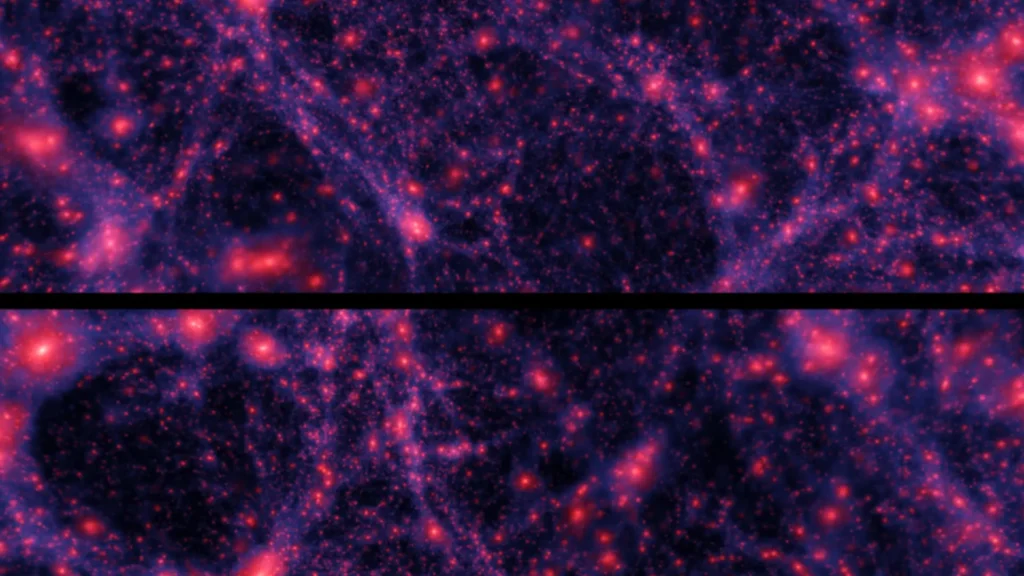
Furthermore, recent high-precision astronomical observations have begun to reveal subtle discrepancies and tensions that could point towards physics beyond ΛCDM. For instance, there is a persistent "Hubble tension," a significant disagreement between the expansion rate of the universe measured from the local universe and that inferred from the early universe’s CMB. Other puzzles include anomalies in the distribution of matter on large scales, potential variations in fundamental constants, and the elusive mass of neutrinos, which, while tiny, could subtly influence cosmic evolution. Exploring these profound possibilities requires researchers to delve into hypothetical extensions of ΛCDM, investigating the effects of massive neutrinos, modified theories of gravity, or evolving dark energy models. Each of these explorations necessitates the generation of enormous numbers of intricate computer simulations, each representing a virtual universe constructed under different physical assumptions. These simulations are not merely theoretical exercises; they are crucial for predicting observable signatures that can then be compared with actual astronomical data.
The Computational Bottleneck in Cosmological Research
The process of generating these high-fidelity cosmological simulations is extraordinarily resource-intensive. A single state-of-the-art simulation, modeling the gravitational evolution of billions of particles over billions of years, can take weeks or even months to run on supercomputers, consuming vast amounts of computational power and electricity. Researchers typically need to run hundreds or thousands of such simulations to thoroughly explore the parameter space of a given theory, making the search for new physics an exceptionally expensive and time-consuming endeavor. This computational bottleneck significantly limits the number of alternative cosmological models that can be practically investigated, potentially delaying breakthroughs and preventing the exploration of promising avenues of research. The sheer scale of data expected from next-generation telescopes and surveys—such as the Euclid mission, the Vera C. Rubin Observatory, the Roman Space Telescope, and the Square Kilometre Array (SKA)—will further exacerbate this challenge, producing petabytes of data that will require sophisticated and efficient analysis techniques.
Transfer Learning: A Shortcut to Efficiency
It is against this backdrop that the research team, led by first author Veena Krishnaraj, an undergraduate student at Princeton University, and co-authored by Adrian Bayer, a cosmologist at the Flatiron Institute and Princeton University, investigated whether transfer learning could offer a more efficient pathway. Transfer learning is a machine learning paradigm where an AI system applies knowledge gained from one task to another, related task. Instead of training a neural network from scratch on the most complex and computationally costly simulations of new physics, the team first trained it on a vast dataset of simpler, less expensive simulations based solely on the well-established ΛCDM model. This initial training phase, referred to as pretraining, allowed the AI to develop a foundational understanding of the universe’s fundamental dynamics and large-scale structure as described by the standard model.
"It’s basically a shortcut," explains Adrian Bayer. "Usually people train the AI directly on the most computationally expensive simulations. What we do instead is first use simpler and less expensive ΛCDM simulations to give the AI an idea of what’s happening, and only afterward move to the more complex models." Bayer draws an analogy to human learning: "You first read a basic book to get an idea of the knowledge, and then move to the really complicated book." According to Krishnaraj, this phased strategy prevents the AI from having to "digest everything at once," allowing it to build a robust internal representation of cosmic phenomena before tackling the subtleties of new physics. The results of this approach were compelling: in some cases, transfer learning reduced the number of expensive simulations required by more than a factor of ten, representing a significant saving in computational resources and research time. This efficiency gain could dramatically accelerate the pace of discovery, allowing cosmologists to explore a much wider range of theoretical models and parameters than previously feasible.
The Unforeseen Challenge: Negative Transfer
While the efficiency gains were striking, the study also unveiled a less obvious but critical challenge: the phenomenon of "negative transfer." This issue arises when prior knowledge, instead of being helpful, actually hinders the learning process for a new task. Continuing Bayer’s analogy, imagine a medical student who has extensively studied common diseases. When encountering a rare disease that presents symptoms remarkably similar to a prevalent condition, their existing knowledge, while generally beneficial, might inadvertently lead them to an incorrect diagnosis.
The same problem can manifest in AI systems. In cosmological simulations, the observational signatures of certain new physics theories can closely resemble patterns that the AI has already associated with the standard ΛCDM model. When this occurs, the pretrained neural network may interpret unfamiliar information through the lens of what it already knows, making it significantly harder to correctly identify genuinely new effects. This is particularly problematic in cosmology due to what scientists call "physical degeneracies" – situations where different underlying physical processes can produce very similar observable outcomes.
The researchers observed this negative transfer effect while studying simulations that included massive neutrinos. Neutrinos, though nearly massless, are abundant particles that can collectively influence the formation of large-scale structure in the universe. Specifically, some of the observational signatures linked to neutrino mass closely resemble changes associated with an existing ΛCDM parameter called σ8 (sigma-eight), which quantifies how strongly matter clusters together throughout the universe. A higher σ8 value indicates more pronounced clustering, while massive neutrinos tend to suppress structure formation on smaller scales. Because the effects of neutrino mass and changes in σ8 can produce similar patterns in cosmological data, the pretrained neural network initially struggled to distinguish between the two. "The negative transfer is not random. It is driven by underlying physical degeneracies in the model," notes Krishnaraj, emphasizing that this is a fundamental challenge rooted in the physics itself, not merely an algorithmic flaw. "So this is something we need to be aware of and try to mitigate."
Implications for Future Cosmology and AI Development
The findings of this study, detailed in the paper "Transfer Learning Beyond the Standard Model" by Veena Krishnaraj, Adrian E. Bayer, Christian Kragh Jespersen, and Peter Melchior, now available in JSTAT, highlight both the profound benefits and inherent limitations of applying advanced AI concepts to fundamental physics. These approaches are broadly similar in spirit to the techniques behind modern generative AI systems and large language models, which also leverage vast amounts of pre-existing data to learn general representations before fine-tuning for specific tasks. The research underscores that while pretraining can dramatically speed up inference and exploration, it "may also hinder learning new physics" if not carefully managed.
The immediate next step for the team is to apply this transfer learning framework not just to theoretical simulations, but to real astronomical observations from ongoing and upcoming cosmological surveys. This transition will introduce new layers of complexity, including observational noise, instrumental biases, and incomplete data, which will further test the robustness of the AI models.
Mitigating Negative Transfer and Ensuring Robust Discovery
Addressing negative transfer will be crucial for the effective deployment of AI in scientific discovery. Potential mitigation strategies include:
- Diverse Training Data: Ensuring that the fine-tuning phase includes a sufficiently diverse set of simulations that specifically target regions of parameter space where degeneracies are known to occur.
- AI Interpretability: Developing AI models that can explain why they make certain classifications or predictions, rather than simply providing an answer. This "explainable AI" (XAI) could help researchers understand when the AI is confused by degeneracies.
- Hybrid Approaches: Combining AI-driven analysis with traditional statistical methods and human expert oversight. AI can efficiently sift through vast datasets and identify potential anomalies, but human scientists must ultimately interpret these findings and design experiments to disentangle degenerate effects.
- Adversarial Training: Training AI models to be more robust against misleading patterns by exposing them to deliberately confusing or "adversarial" examples during training.
- Uncertainty Quantification: Ensuring that AI models provide not just a prediction, but also an estimate of their confidence in that prediction, especially in ambiguous cases.
Broader Impact and the Evolving Landscape of Scientific Discovery
This research holds implications far beyond cosmology. As AI becomes more integrated into all branches of science, similar challenges are likely to emerge. Whether it’s drug discovery, materials science, or climate modeling, the power of AI to accelerate research is undeniable, but so is the risk that its learned biases or prior assumptions could blind us to truly novel insights.
The findings serve as a vital reminder that AI is a powerful tool, but it is precisely that—a tool. It enhances human capabilities but does not replace the critical thinking, skepticism, and ingenuity inherent to the scientific method. The future of cosmological discovery will likely be a synergistic dance between sophisticated AI algorithms that can process unprecedented volumes of data and explore vast theoretical landscapes, and human scientists who can critically evaluate AI outputs, question its assumptions, and ultimately make the conceptual leaps required to uncover the universe’s deepest secrets. As humanity stands on the cusp of an era of unparalleled astronomical data, transfer learning offers a promising pathway to navigate this deluge, but only if we remain acutely aware of its potential to obscure the very "new physics" we seek to discover.