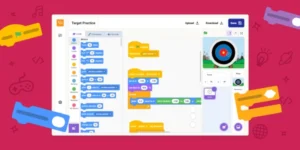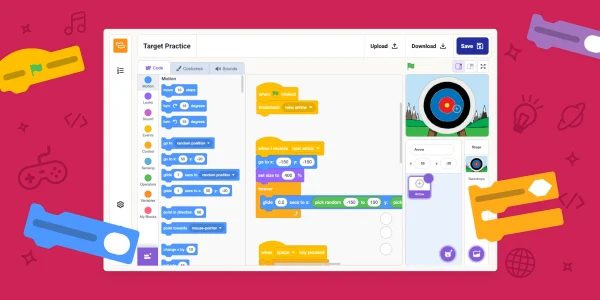
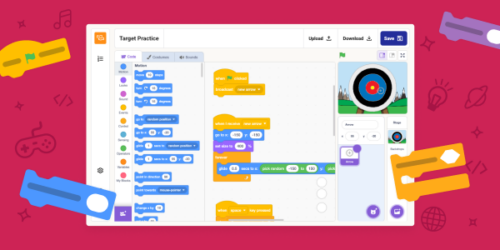
The Raspberry Pi Foundation has announced a significant expansion of its digital learning ecosystem with the introduction of a new Blocks editor to its Code Classroom platform. Formerly known as the Code Editor for Education, the rebranded Code Classroom is a free, web-based tool designed to facilitate the teaching and learning of computing and programming in a safe and accessible environment. This latest update integrates a block-based programming interface built upon the open-source Scratch editor, providing a seamless transition for young learners as they progress from visual logic to text-based coding within a single, unified environment.
The introduction of the Blocks editor represents a strategic pivot for the Foundation, aiming to address the pedagogical "on-ramp" for students who are new to computer science. By incorporating a familiar drag-and-drop interface into a platform that already supports professional-grade languages like Python, HTML, and CSS, Code Classroom now offers a comprehensive "all-in-one" solution for primary and secondary education. This move is expected to bolster the platform’s adoption among the more than 4,500 schools worldwide that already utilize the Foundation’s tools for curriculum delivery.
The Evolution of Code Classroom: A Chronological Overview
The development of Code Classroom reflects a decade-long effort by the Raspberry Pi Foundation to democratize technology education. While the Foundation initially gained global fame for its low-cost hardware, it has increasingly focused on the software and curricular infrastructure necessary to make that hardware effective in a classroom setting.
The platform’s journey began with the "Code Editor for Education," a browser-based tool designed to remove the technical barriers associated with teaching Python and web development. Traditionally, setting up coding environments in a school setting required local software installations, complex IDE (Integrated Development Environment) configurations, and significant oversight from IT departments. The Foundation sought to eliminate these hurdles by moving the entire experience to the cloud.
In late 2023 and early 2024, feedback from educators highlighted a growing need for a more integrated experience. Teachers reported that while their students were comfortable with Scratch—a block-based language developed by MIT—the transition to text-based Python was often jarring. In response, the Foundation began the process of rebranding the tool to Code Classroom and developing a Blocks editor that mirrored the Scratch experience but lived within the same ecosystem as their text-based editors. The current rollout marks the culmination of this development cycle, providing a tiered learning path from visual logic to professional syntax.
Technical Infrastructure and Classroom Integration
One of the primary value propositions of Code Classroom is its "zero-install" architecture. Because the tool runs entirely within a web browser, it is compatible with a wide range of hardware, including low-specification laptops, Chromebooks, and, of course, Raspberry Pi computers. This accessibility is crucial for schools in low-resource environments or those with restrictive IT policies that prevent the installation of third-party software.
A critical component of this update is the integration with Google Classroom. This feature allows educators to import existing class rosters with a few clicks, streamlining the administrative burden of managing student accounts. Through Google Single Sign-On (SSO), students can access their projects securely without needing to manage additional passwords. This integration is designed to maximize instructional time, allowing teachers to focus on pedagogy rather than technical troubleshooting.
The platform now supports three distinct learning modalities:
- Blocks: Based on the Scratch open-source editor, allowing for creative, logic-based programming through drag-and-drop elements.
- Web Development: Enabling students to build and preview websites using HTML and CSS.
- Python: Providing a simplified text-based environment for learning one of the world’s most popular professional programming languages.
Supporting Data and the Global Landscape of CS Education
The expansion of Code Classroom comes at a time when computer science (CS) education is seeing unprecedented growth, yet significant gaps in access remain. According to data from the 2023 State of Computer Science Education report, while the percentage of high schools offering CS has increased, rural and high-poverty schools are still less likely to provide these opportunities.
By offering a free, browser-based tool, the Raspberry Pi Foundation is directly targeting these equity gaps. Internal data from the Foundation indicates that over 4,500 schools are currently active on the platform. With the addition of the Blocks editor, this number is projected to grow as the tool becomes applicable to younger age groups (Primary/Elementary levels) who were previously using standalone versions of Scratch.
Furthermore, the choice of Python as the primary text-based language is backed by industry trends. Python currently ranks as one of the top three most used programming languages globally according to the TIOBE Index. By bridging the gap between Scratch blocks and Python, Code Classroom provides a direct pathway from classroom learning to career readiness.
Reactions from the Educational Community
The initial response to the Blocks editor from the global teaching community has been overwhelmingly positive, with educators citing the "unified platform" as a game-changer for curriculum planning.
In the United Kingdom, where computer science is a mandatory part of the national curriculum, teachers have praised the platform’s ability to host multiple languages. One computer science teacher noted that having Scratch-style blocks alongside Python, HTML, and CSS in one platform is "enormously transformative," as it prevents the fragmentation of student work across different websites and logins.
The impact is equally significant in emerging markets. Bartholomew Owuor, a computer science teacher at Cathsam School in Kenya, highlighted how the tool has allowed him to expand his reach. "When the coding blocks were introduced, I was able to widen my scope and to include so many learners from different ages," Owuor stated. In regions where hardware resources may be shared among many students, the ability for a single tool to serve a 7-year-old learning logic and a 16-year-old learning web design is a major logistical advantage.
Brief Analysis of Implications
The release of the Blocks editor within Code Classroom signals a broader trend in educational technology: the move toward "Platformization." By creating an ecosystem that covers the entire K-12 (or equivalent) spectrum, the Raspberry Pi Foundation is positioning itself as the central hub for digital literacy.
From a pedagogical standpoint, this unified approach addresses "cognitive load theory." When students have to learn a new interface every time they move to a new language, their mental energy is split between learning the tool and learning the concepts. By keeping the interface consistent, Code Classroom allows students to focus on the underlying logic of programming.
Furthermore, the decision to use the open-source Scratch editor rather than building a proprietary block system is significant. It ensures that the millions of students already familiar with Scratch can migrate to Code Classroom with zero learning curve, while also contributing to the broader open-source educational community.
Broader Impact and Future Outlook
The update to Code Classroom is also being integrated into the "Experience CS" initiative, a broader framework designed to provide structured pathways for computer science education. This ensures that the tool is not just a sandbox for coding, but a structured environment supported by high-quality lesson plans and assessment tools.
Looking ahead, the Raspberry Pi Foundation’s strategy appears focused on lowering the "floor" of entry for coding while raising the "ceiling" of what can be accomplished. As artificial intelligence and automation continue to reshape the global economy, the Foundation’s emphasis on providing free, high-quality tools for digital literacy is more than an educational mission; it is an economic necessity.
By consolidating Blocks, Python, and Web Development into a single, browser-based, Google-integrated platform, Code Classroom is setting a new standard for how computer science is delivered in schools. It removes the friction of IT management, respects the pedagogical needs of different age groups, and ensures that whether a student is in London or Nairobi, they have access to the same high-quality tools to build their digital future. The Foundation has confirmed that Code Classroom will continue to receive updates based on teacher feedback, ensuring the platform evolves alongside the rapidly changing technological landscape.