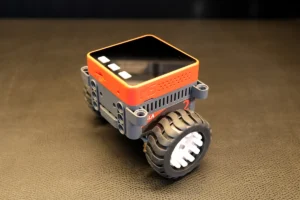
The landscape of global innovation is experiencing an unprecedented surge, with breakthroughs spanning diverse sectors from advanced transportation and sustainable energy to quantum computing and fundamental scientific discoveries. This dynamic period is characterized by both groundbreaking, disruptive advancements and the quiet, incremental improvements that collectively drive progress. Engineering, technology, and scientific research are continually pushing boundaries, transforming theoretical concepts into tangible realities that address long-standing problems and open new frontiers. The journey from initial idea to practical deployment is often intricate and unpredictable, marked by rigorous testing, adaptation to real-world constraints, and the collaborative efforts of researchers, engineers, and institutions worldwide.
Redefining Transportation and Mobility
Recent advancements in transportation highlight a blend of audacious engineering feats and critical safety innovations. One remarkable achievement comes from the realm of personal mobility, where a specially adapted motorcycle skimmed across water, setting a new Guinness World Record with an impressive 25-mile river journey. This feat, which captivated enthusiasts and engineers alike, showcases the potential of hydrofoiling technology to transcend traditional vehicle limitations. Hydrofoiling involves using foils beneath the hull to lift the vehicle out of the water, significantly reducing drag and allowing for higher speeds and smoother rides. While seemingly a novelty, such demonstrations contribute to the development of more efficient and versatile amphibious vehicles, potentially impacting marine leisure, surveillance, and rescue operations. The engineering challenges involved in maintaining stability, propulsion, and rider control at high speeds over water are substantial, making this record a testament to innovative design and daring execution.
In the rapidly evolving domain of autonomous systems, US engineers are developing technology to help NASA detect drone failures using sound. This innovation promises to enhance the safety and reliability of unmanned aerial vehicles (UAVs), which are increasingly deployed in critical applications ranging from infrastructure inspection to scientific exploration. By analyzing acoustic signatures, engineers can identify subtle changes in motor or propeller performance that indicate impending mechanical failure. This proactive diagnostic capability is vital for missions where drone reliability is paramount, such as NASA’s planetary exploration efforts or commercial package delivery services. The project underscores a shift towards predictive maintenance strategies for complex machinery, leveraging advanced sensor technology and AI-driven acoustic analysis to prevent catastrophic failures before they occur, thereby improving operational uptime and reducing risks.
The electric vehicle (EV) sector, particularly in China, continues to lead in range and battery technology. Several Chinese manufacturers have recently demonstrated remarkable progress, with models achieving unprecedented distances on a single charge. The Xpeng Mona L05 electric crossover, for instance, drove an astounding 742 miles without needing to recharge, pushing the boundaries of what is currently achievable for consumer EVs. This extraordinary range was complemented by announcements of new in-house 96kWh batteries achieving a 504-mile range and the Nio Firefly model boosting energy density by 43% within the same battery size. These breakthroughs are not merely incremental; they represent significant strides in battery chemistry, energy density, and thermal management systems. The extended range addresses a primary concern for potential EV buyers – range anxiety – while increased energy density allows for more compact battery packs, freeing up interior space and reducing vehicle weight. The intense competition among Chinese EV makers is driving rapid innovation, forcing global industry players to accelerate their own research and development in battery technology and charging infrastructure. These advancements are critical for the broader adoption of electric vehicles and the transition to sustainable transportation systems worldwide.
Pioneering Sustainable Infrastructure and Energy Solutions
Global efforts to address climate change and enhance infrastructure are yielding innovative solutions, many of which leverage advanced engineering and renewable technologies. China is set to build the world’s first 74,000-ton self-propelled floating research ‘island’, a colossal marine platform designed for extensive scientific exploration. This ambitious project, resembling a mobile offshore laboratory, will provide unparalleled capabilities for oceanographic research, climate monitoring, and marine resource assessment in remote or challenging environments. Its self-propelled nature grants it flexibility, allowing researchers to deploy to specific areas of interest for extended periods, far beyond the capabilities of conventional research vessels. Such platforms signify a new era in marine science, enabling deeper insights into ocean ecosystems, climate patterns, and potential deep-sea resources.
In the energy sector, five 600 MW hydrogen-ready floating power stations are slated for major conversion, marking a pivotal step towards a hydrogen-based energy future. These floating power plants offer flexibility in deployment, able to be positioned where energy demand is highest or where renewable hydrogen sources are abundant. The conversion to hydrogen readiness underscores a global commitment to decarbonization, as hydrogen, when produced from renewable sources (green hydrogen), offers a clean-burning fuel alternative. This initiative reflects the growing confidence in hydrogen as a viable energy carrier and its potential to diversify energy portfolios, particularly for coastal communities or regions with limited land-based infrastructure.
The critical challenge of carbon emissions is being met with intensified efforts in carbon capture and storage. Underground carbon storage has hit a record 43.6 million tons, with the US leading the global charge. This milestone highlights the increasing scale and effectiveness of Carbon Capture, Utilization, and Storage (CCUS) technologies in mitigating industrial emissions. Geological sequestration involves injecting captured CO2 into deep underground rock formations, where it remains permanently stored. The growth in stored tonnage indicates maturing technology and greater investment in CCUS projects, which are considered essential for achieving net-zero emissions targets, especially for hard-to-abate industrial sectors. While debates continue regarding the long-term efficacy and cost-effectiveness of CCUS, this record demonstrates significant progress in scaling up these vital climate solutions.
Mega-infrastructure projects continue to push the boundaries of civil engineering. In China, two 220-ton smart cranes are instrumental in building the main towers for the Lugu Lake Grand Bridge. These sophisticated tower cranes, developed by companies like Zoomlion, integrate advanced automation and intelligent control systems, enabling precise lifting and placement of massive structural components. The construction of such large-scale bridges in challenging terrains demands not only immense lifting capacity but also unparalleled accuracy and safety, which smart crane technology provides. This exemplifies how digitalization and robotics are transforming heavy construction, making complex projects more efficient, safer, and faster to complete.
Advancements in nuclear energy are also contributing to a cleaner, more resilient power grid. A US defense-backed electricity-producing microreactor has cleared a key regulatory checkpoint, signaling a significant step towards the deployment of small modular reactors (SMRs) and microreactors. These compact nuclear power sources offer numerous advantages, including enhanced safety features, reduced construction times, and the ability to provide reliable, carbon-free electricity to remote areas, military bases, or disaster-stricken regions. The regulatory approval process is often a major hurdle for novel nuclear technologies, so this milestone is critical for accelerating the development and commercialization of next-generation nuclear energy solutions that can augment national energy security and climate goals.
Complementing advancements in EV batteries, sodium-ion batteries without active cooling aim to cut grid storage costs by 20%. Sodium-ion technology is emerging as a promising alternative to lithium-ion for large-scale energy storage, primarily due to the abundance and lower cost of sodium. The elimination of active cooling systems further reduces complexity and cost, making these batteries more economically viable for grid-scale applications where space and temperature control can be challenging. While their energy density might not yet match lithium-ion for all applications, their cost-effectiveness and improved safety profiles make them highly attractive for stationary energy storage, supporting renewable energy integration and grid stability. This innovation reflects a broader trend in battery research: exploring diverse chemistries to optimize performance and cost for specific applications.
Breakthroughs in Materials Science, Computing, and Space

Innovation is also making significant inroads in materials science, computing, and the exploration of space. Atomic-6’s space armor has made its orbital debut, capable of stopping debris traveling at 16,000 mph. This cutting-edge material represents a crucial development for safeguarding satellites and spacecraft from the growing threat of orbital debris, which can cause catastrophic damage at hyper-velocities. The successful deployment of this advanced armor could extend the operational lifespan of expensive space assets, enhance crew safety for human spaceflight missions, and contribute to the long-term sustainability of space operations. Such materials are the result of intensive research into lightweight, high-strength composites designed to withstand extreme impacts in the vacuum of space.
On Earth, an ancient secret has inspired a 3D-printed clay wall that cools air by nearly 12.5°F. This ingenious architectural innovation leverages the principles of evaporative cooling, a technique used for millennia in arid climates, by integrating it with modern additive manufacturing. The porous structure of the 3D-printed clay wall allows water to slowly evaporate, drawing heat from the surrounding air and naturally lowering indoor temperatures. This passive cooling system offers a sustainable and energy-efficient alternative to conventional air conditioning, particularly relevant in an era of increasing global temperatures and energy consumption. It exemplifies how biomimicry and historical wisdom can be combined with contemporary technology to create environmentally friendly solutions for urban living.
In the realm of quantum computing, a significant step forward involves quantum memory storing qubits as sound inside a sapphire crystal. This intricate scientific achievement tackles one of the fundamental challenges in quantum computing: maintaining the coherence of qubits (the basic units of quantum information) for longer durations. Storing qubits as acoustic vibrations within a highly stable sapphire crystal offers a novel approach to build robust and scalable quantum memory, essential for the development of fault-tolerant quantum computers. This research pushes the boundaries of materials science and quantum mechanics, potentially paving the way for more powerful and reliable quantum processors that could revolutionize fields like medicine, materials discovery, and cryptography.
Furthermore, slow-moving light is helping a tiny silicon chip hit 200 Gb/s for AI data centers. This advancement in optical interconnect technology is critical for handling the massive data volumes generated by artificial intelligence workloads. By manipulating light to travel slower within silicon photonic circuits, engineers can achieve higher data transfer rates with greater energy efficiency than traditional electronic connections. The integration of such high-speed, low-power optical modulators into silicon chips is essential for the future of AI data centers, where bandwidth and energy consumption are primary concerns. This innovation demonstrates the ongoing convergence of photonics and electronics to meet the escalating demands of modern computing infrastructure.
Unraveling Scientific Mysteries and Advancing Health
Beyond technological applications, fundamental scientific inquiry continues to reveal astonishing insights into the universe and the natural world. The seemingly impossible notion of a black hole splitting in two has been explored, with physics uncovering a loophole. While general relativity typically describes black holes as singularities that consume matter, theoretical physicists have investigated exotic scenarios where extreme conditions, such as interactions within certain cosmological models or near ultra-dense objects, might allow for a form of black hole fragmentation or dynamic instability. Such theoretical explorations, though highly speculative, push the boundaries of our understanding of gravity and spacetime, inviting new avenues for research into the most extreme objects in the cosmos.
Closer to home, scientists have uncovered deadly ant wars along California’s 600-mile supercolony, with 15 million dead in six months. This astonishing ecological discovery highlights the fierce territorial conflicts within vast ant supercolonies, particularly the invasive Argentine ant species. The scale of mortality provides critical data for understanding interspecies competition, population dynamics, and the ecological impact of invasive species. Such studies are vital for developing strategies to manage pest populations and protect native biodiversity. The sheer number of casualties underscores the relentless struggle for resources and dominance within the insect world, offering a microcosm of broader ecological battles.
In the medical field, scientists are uncovering how insect-killing bacteria could lead to new antibiotics. As antibiotic resistance poses an escalating global health crisis, the search for novel antimicrobial compounds is more urgent than ever. Researchers have identified unique bacteria, often found in insects, that produce potent antibiotic substances to combat competing microorganisms. Investigating these natural defense mechanisms could yield new classes of antibiotics effective against drug-resistant pathogens, offering a glimmer of hope in the fight against superbugs. This research highlights the vast, untapped potential of biodiversity as a source for new pharmaceuticals and underscores the importance of fundamental biological exploration.
However, not all scientific discoveries bring good news. A recent study suggests that US drinking water may contain double the reported levels of harmful ‘forever chemicals’ (PFAS). Per- and polyfluoroalkyl substances (PFAS) are a group of synthetic chemicals found in numerous industrial and consumer products, known for their persistence in the environment and potential adverse health effects. The revelation of higher contamination levels than previously understood raises serious public health concerns, necessitating more robust monitoring, stricter regulatory standards, and accelerated efforts to develop effective remediation technologies. This issue underscores the long-term environmental and health consequences of industrial pollutants and the ongoing challenge of ensuring safe drinking water for communities.
Defense and Security Innovations
In the defense sector, technological advancements continue to bolster national security. An upgraded F-110 warship has been equipped with 64 missile launch cells, quadrupling its capacity. This significant enhancement in firepower and versatility increases the warship’s ability to engage multiple threats simultaneously and carry a wider array of missile types, from anti-ship to anti-air and land-attack munitions. Such upgrades reflect a strategic focus on modernizing naval fleets to counter evolving geopolitical challenges and maintain maritime dominance. The integration of advanced combat systems and increased missile capacity transforms these vessels into formidable assets, capable of projecting power and ensuring naval deterrence.
The Evolving Landscape of Innovation
These diverse breakthroughs collectively illustrate that innovation is far from a linear process. As noted by experts, progress often comes in small, unglamorous steps—incremental improvements, process changes, or unexpected combinations of old technologies. The water-riding motorcycle, while seemingly a singular achievement, builds upon decades of hydrodynamics. The cooling clay wall ingeniously merges ancient wisdom with 3D printing. Each advancement, whether a monumental scientific discovery like the theoretical black hole splitting or a practical engineering solution like acoustic drone diagnostics, faces rigorous scrutiny and real-world constraints: cost, scalability, regulatory hurdles, supply chain complexities, and integration with existing systems.
Many brilliant ideas never make it past the prototype stage, not because they are inherently flawed, but because they struggle to navigate these friction points. The successful innovations highlighted here are those that have demonstrated viability under such pressures. They are the product of sustained investment in research and development, collaborative ecosystems involving universities, industry, and government, and an unwavering focus on turning ambitious concepts into functional, impactful realities. The future of technology, health, robotics, and AI will continue to be shaped by this complex, iterative, and often messy journey of innovation, driving humanity forward in unexpected and transformative ways.