Each year, Climate Week NYC brings together more than 100,000 people in over 1,000 events across the city to discuss climate challenges, explore solutions, and spur action. Participants from diverse sectors including industry, academia, philanthropy, nonprofits, government, and finance converge on New York City, transforming it into a global hub for climate discourse and strategy. This year, the Massachusetts Institute of Technology (MIT) distinguished itself with a particularly strong and cross-campus presence, signaling its deepened commitment to addressing the multifaceted crisis of climate change through scientific rigor, technological innovation, and cross-sectoral collaboration.
Climate Week NYC: A Global Nexus for Action
Climate Week NYC, an annual event established by The Climate Group in 2009, has grown into one of the largest international climate summits. Strategically timed to coincide with the United Nations General Assembly (UNGA) High-Level Week, it leverages the presence of global leaders, policymakers, and decision-makers to amplify its impact. This unique alignment creates an unparalleled platform for governments, businesses, and civil society to showcase progress, announce new commitments, and forge critical partnerships aimed at accelerating the transition to a sustainable, net-zero future. The week’s agenda spans a vast array of topics, from renewable energy and sustainable finance to climate justice and adaptation strategies, reflecting the intricate and interconnected nature of the climate crisis. Its significance lies not only in the sheer volume of discussions but in its capacity to translate high-level pledges into tangible, actionable initiatives.
MIT’s Comprehensive Engagement: A Week of Innovation and Dialogue
From September 21-27, MIT’s community was a visible and influential force throughout Climate Week NYC, demonstrating the institution’s "whole-of-MIT mobilization" in confronting climate change. Evelyn Wang, MIT’s vice president for energy and climate and the Ford Professor of Engineering in the Department of Mechanical Engineering, played a prominent role, appearing at the official opening ceremony. Her address focused on the critical intersection of artificial intelligence (AI) and the climate equation, highlighting AI’s potential to revolutionize climate modeling, optimize energy systems, and accelerate the development of new solutions. This focus on AI underscores a growing recognition within the scientific community that advanced computational methods are indispensable tools in the fight against global warming.
Beyond high-profile appearances, MIT actively shaped the week’s agenda through a robust series of co-hosted events and independently organized sessions. A significant collaboration saw MIT partner with the Bezos Earth Fund for an event dedicated to climate innovation, bringing together leaders from industry, venture capital, government, academia, philanthropy, and startups. This partnership underscored the shared understanding that philanthropic capital and academic expertise are crucial for de-risking early-stage climate technologies and bridging the notorious "valley of death" between laboratory breakthroughs and commercial deployment.
In total, MIT organized 14 distinct sessions, drawing on the expertise of eight of its departments, labs, centers, and initiatives. These included:
- The Abdul Latif Jameel Water and Food Systems Lab (J-WAFS), addressing the nexus of water, food, and climate security.
- The MIT Sloan Sustainability Initiative, focusing on sustainable business practices and green finance.
- The Center for Transportation and Logistics (CTL), exploring decarbonization pathways for global supply chains.
- MIT Lincoln Laboratory, contributing insights on advanced technologies relevant to climate monitoring and energy systems.
- MIT Open Learning, emphasizing the role of education and capacity building in climate action.
- The MIT Initiative for New Manufacturing (INM), driving innovation in sustainable industrial processes.
- The MIT Climate Policy Center, informing evidence-based policy frameworks.
- The Priscilla King Gray (PKG) Center for Social Impact, advocating for community-led climate solutions and climate justice.
This diverse array of participation showcased MIT’s multidisciplinary approach, recognizing that effective climate solutions demand integration across engineering, science, economics, policy, and social impact.
Deep Dive into Key Sessions: Addressing Critical Climate Frontiers
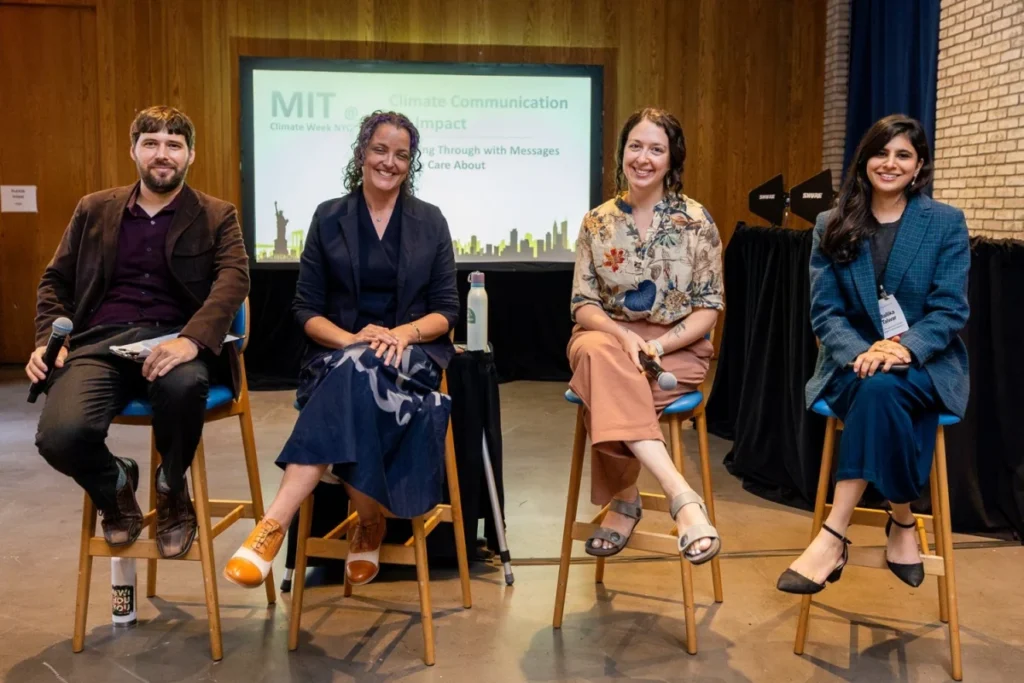
Utilizing multiple spaces at the Dream Downtown Hotel in Manhattan’s Chelsea neighborhood, MIT’s coalition attracted more than 700 attendees for events that ranged from intimate private conversations to expansive workshops and panel presentations. These sessions delved into some of the most pressing and technically challenging aspects of climate mitigation and adaptation.
The Future of Data Centers: Technologies to Change the Paradigm
One of the larger and most impactful sessions was "The Future of Data Centers: Technologies to Change the Paradigm." Data centers, the unseen backbone of the digital economy, are at a critical juncture. Their burgeoning energy consumption and associated environmental footprint—including significant water usage for cooling—present a paradox: while enabling advancements like AI crucial for climate solutions, they also contribute substantially to global emissions. Current estimates suggest data centers account for 1-2% of global electricity consumption, a figure projected to rise dramatically with the proliferation of AI, cloud computing, and IoT devices. This session, convened by Gang Chen, the Carl Richard Soderberg Professor of Power Engineering and faculty director of the Climate Project at MIT, brought together experts from research and industry to tackle these interconnected technical, operational, economic, and community constraints.
Professor Chen, who leads the Data Centers of the Future frontier for the MIT Climate Project, emphasized the transformative potential of technology: "Technology can’t solve all the challenges we’re facing with data centers, but technology has a significant role to play in shaping a future role that is more sustainable and better for the communities that are home to these facilities." Discussions centered on innovations such as advanced liquid cooling systems, integration with renewable energy sources, waste heat recovery for district heating, and AI-driven optimization of power usage effectiveness (PUE). The dialogue underscored the necessity of cross-sector collaboration to develop and deploy solutions that not only reduce energy demand but also integrate data centers more harmoniously into local energy grids and communities. This session highlighted that sustainable digital infrastructure is not merely an operational concern but a strategic imperative for a climate-resilient future.
Next-Generation Super Pollutant Solutions: Challenges and Opportunities
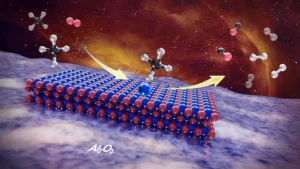
Another critical workshop, "Next-Generation Super Pollutant Solutions: Challenges and Opportunities," hosted by Jesse Kroll, a faculty director and lead for the Super Pollutants frontier for the MIT Climate Project, convened speakers from organizations like the Environmental Defense Fund, Spark Climate Solutions, and various MIT labs. Super pollutants, such as methane, hydrofluorocarbons (HFCs), black carbon, and tropospheric ozone, are potent greenhouse gases that, despite having shorter atmospheric lifespans than carbon dioxide, account for nearly half of all global anthropogenic warming to date. For instance, methane is over 80 times more potent than CO2 over a 20-year period.
The workshop focused on the concept of super pollutant mitigation as an "emergency brake" to decrease peak warming in our lifetimes, offering immediate climate benefits. However, a significant fraction of these emissions remains hard to abate with current technologies. Professor Kroll, the Peter de Florez Professor in the Department of Civil and Environmental Engineering, articulated the challenge: "Super pollutant mitigation is getting a lot of attention as an ’emergency brake’ for near-term climate warming. But a huge fraction of our super pollutant emissions simply cannot be mitigated with current technologies and approaches. Our session focused on the innovation – technical and otherwise – needed to tackle these hard-to-abate pollutants." Discussions ranged from novel catalytic converters for industrial emissions to advanced refrigeration technologies and strategies for reducing agricultural methane. The economic benefits of tackling super pollutants, including lower health-care costs and increased productivity, were also highlighted, emphasizing the need for cross-disciplinary teams to develop and advance these next-generation solutions.
Rethinking the Climate Innovation Pipeline with the Bezos Earth Fund
A cornerstone of MIT’s engagement was the event co-hosted with the Bezos Earth Fund, which critically examined the climate innovation pipeline. A major impediment to climate action is the challenge of transitioning breakthrough technologies from the laboratory to real-world impact at scale. This "valley of death" often results from a lack of patient capital, specialized testing infrastructure, validation pathways, and demonstration projects. The event brought together a distinguished panel of MIT faculty and alumni spinout leaders—Asegun Henry, Seonghoon Woo, Ariel Furst, and Assil Halimi—moderated by Ray Rothrock, a venture capitalist and life member of the MIT Corporation.
The panel explored the crucial period between a promising scientific invention and its commercial deployment, a journey that often requires substantial early-stage science and engineering research, robust validation, and significant investment before market readiness. Evelyn Wang, in conversation with Tom Taylor, president and CEO of the Bezos Earth Fund, underscored this challenge: "A breakthrough in the lab is not yet impact in the world. For climate and energy technologies, we need to think about the entire journey – from discovery and invention through validation, commercialization, and deployment – and build better pathways through the gaps along the way." This discussion illuminated the need for new financial models, enhanced public-private partnerships, and a more integrated ecosystem to de-risk and accelerate the scaling of critical climate technologies. The implications are profound: a more efficient innovation pipeline means faster deployment of solutions for decarbonization, adaptation, and resilience, which is essential given the accelerating pace of climate change.
MIT’s Broader Vision: Tapping into the Global Nexus for Scalable Solutions
The pervasive theme across all MIT sessions at Climate Week NYC was the imperative for solutions to be not only scientifically sound but also large in magnitude, technically feasible, and contextually realistic. MIT’s participation reflected its institutional philosophy that complex global challenges require comprehensive, interdisciplinary approaches. Evelyn Wang’s statement encapsulates this ethos: "The MIT Climate Project is a whole-of-MIT mobilization, but no single institution can deliver the climate solutions the world needs – from reducing greenhouse gas emissions to adapting to a changing climate and building more-resilient communities and systems." She further emphasized, "Climate Week New York is important because it convenes the range of stakeholders and sectors that must work together to confront these challenges. When we connect the MIT community with this global network, we uncover powerful possibilities to strengthen not only our own efforts, but the world’s capacity for change."
This sentiment was echoed in discussions about implementation and adoption. Claire Walsh, global director of policy and communications at MIT’s Abdul Latif Jameel Poverty Action Lab (J-PAL), highlighted a crucial often-overlooked aspect: "Even when a technology is low-cost, it doesn’t mean it will diffuse naturally or get widely adopted. Frontier technologies are often more expensive to start, so that means it’s even more important for scientists and engineers to think about end user adoption, and their incentives and constraints, from the start." This perspective is vital for ensuring that technological breakthroughs translate into equitable and effective real-world impact, particularly in developing economies where context-specific challenges and adoption barriers can be significant.
Broader Impact and Implications
MIT’s substantial engagement at Climate Week NYC underscores several critical implications for global climate action. Firstly, it reaffirms the indispensable role of leading research institutions in not only generating scientific knowledge but also in convening stakeholders and catalyzing action. By bringing together diverse voices and expertise, MIT facilitates the cross-pollination of ideas essential for complex problem-solving. Secondly, the focus on specific "frontiers" like data centers and super pollutants highlights the need for targeted, high-impact solutions that can yield measurable results in the near term, complementing longer-term decarbonization efforts. These areas represent significant opportunities for rapid emission reductions and technological advancements.
Thirdly, the emphasis on the innovation pipeline and the "valley of death" in climate tech funding points to a systemic challenge that requires coordinated effort from government, industry, academia, and philanthropy. Bridging this gap is paramount for accelerating the deployment of nascent technologies that hold the key to a sustainable future. Finally, MIT’s presence reinforces the notion that effective climate action demands a holistic approach—integrating technological innovation with sound policy, sustainable business practices, and a deep understanding of human behavior and societal needs. The connections forged at events like Climate Week NYC are vital for translating academic excellence into tangible progress on a global scale, providing a powerful impetus for a more sustainable and resilient world. The institution’s continued commitment to this global network is a testament to its belief in collaborative action as the most potent force against the unfolding climate crisis.