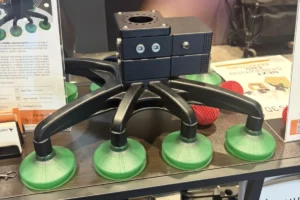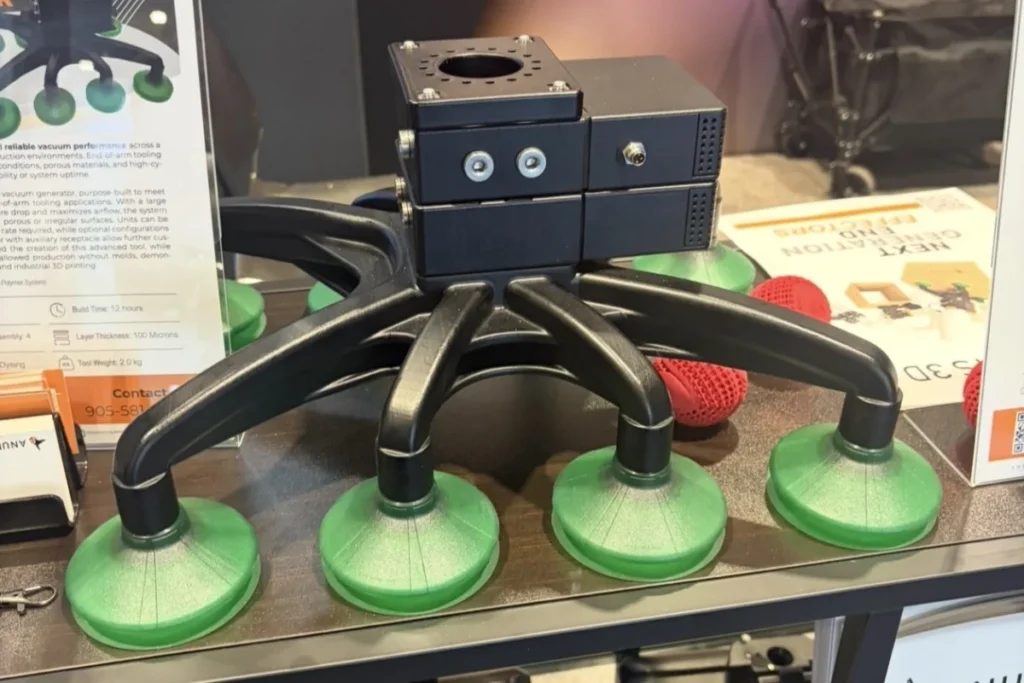
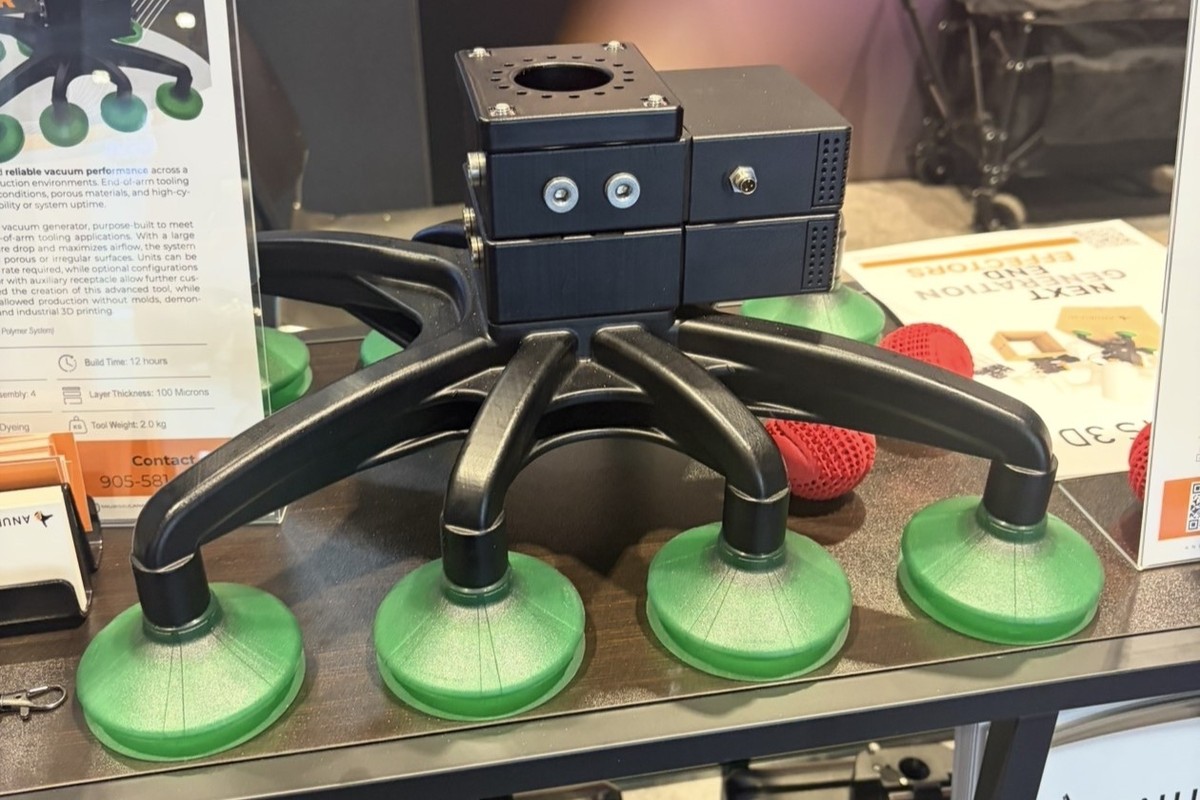
The rapidly evolving landscape of industrial automation is increasingly being shaped by the innovative capabilities of additive manufacturing (AM), also known as 3D printing. A prime example of this synergy was prominently displayed at Automate 2026, where the body of the Vac Stac modular vacuum generator, a high-performance vacuum gripper designed for robotic palletizing and end-of-arm tooling applications, was showcased. This sophisticated component, manufactured by Anubis 3D, a specialist in custom end-of-arm tooling, highlights how AM is revolutionizing the design, production, and performance of critical industrial hardware.
A Breakthrough in Gripper Design: The Vac Stac and its AM Genesis
The Vac Stac represents a significant advancement in vacuum gripper technology. Its body, comprised of four individual components, was entirely 3D printed using PA2200, a high-performance polyamide material renowned for its strength, durability, and suitability for demanding industrial environments. The printing process itself was conducted using an EOS selective laser sintering (SLS) polymer system, a leading additive manufacturing technology. This sophisticated process allowed for the entire body to be fabricated in an impressive 12-hour timeframe, a testament to the speed and efficiency that AM can bring to production cycles. In contrast, the Vac Stac’s suction cups were manufactured using traditional machining methods, demonstrating a hybrid approach that leverages the strengths of both AM and subtractive manufacturing.
The decision to utilize additive manufacturing for the Vac Stac’s body was driven by the inherent design freedom it offers. This freedom enabled Anubis 3D to incorporate a large cross-section opening within the generator’s structure. This design element is not merely aesthetic; it plays a crucial role in optimizing the vacuum generator’s performance. By minimizing pressure drop and maximizing airflow, this enlarged opening ensures a more efficient and consistent vacuum, even when dealing with challenging materials. This is particularly beneficial for applications involving porous or irregularly shaped surfaces, where maintaining a strong and stable vacuum can be difficult with conventional designs. The ability to create such complex internal geometries without the constraints of traditional manufacturing methods is a key advantage of additive manufacturing.
Automate 2026: A Nexus of Innovation in Robotics and Manufacturing
Automate 2026, the event where the Vac Stac was featured, serves as North America’s premier showcase for automation technology. Held annually, this event brings together leading manufacturers, integrators, and end-users from across the automation spectrum. It is a crucial platform for unveiling new technologies, fostering collaborations, and demonstrating the practical applications of cutting-edge solutions. The presence of the Vac Stac at Automate 2026 underscored the growing trend of integrating advanced manufacturing techniques, such as additive manufacturing, into the core of industrial automation systems. This year’s event, in particular, was marked by a strong emphasis on intelligent automation, collaborative robotics, and the role of AM in creating more agile and customized manufacturing solutions.
The timeline leading up to the display of the Vac Stac at Automate 2026 likely involved extensive research and development by Anubis 3D. The initial conceptualization of a high-performance vacuum gripper would have been followed by design iterations, where the advantages of AM were explored to overcome limitations of traditional manufacturing. The selection of PA2200 material would have been based on rigorous testing to ensure it met the demanding performance requirements for palletizing and end-of-arm tooling. The partnership with EOS, a recognized leader in industrial 3D printing solutions, signifies a commitment to utilizing state-of-the-art technology for production. The 12-hour print time suggests a streamlined production process, likely optimized through extensive experience with SLS technology and material processing.
Supporting Data: The Impact of AM on Production Efficiency and Performance
The choice of additive manufacturing for components like the Vac Stac body is supported by a growing body of data demonstrating its benefits.
- Reduced Lead Times: Traditional manufacturing often involves lengthy lead times for tooling and mold creation. For instance, the creation of injection molds for plastic parts can take weeks or even months. AM, particularly SLS, eliminates this need for tooling, allowing for rapid prototyping and production. The 12-hour print time for the Vac Stac body is a direct illustration of this advantage, enabling quicker iteration and faster deployment of solutions.
- Enhanced Design Freedom and Part Complexity: AM technologies excel at producing complex geometries that are impossible or prohibitively expensive to manufacture using subtractive methods. This allows engineers to create lighter, stronger, and more functional parts. The large internal cross-section in the Vac Stac, designed to optimize airflow, is a prime example of this capability. Studies by various manufacturing research institutions have shown that AM can enable designs that are up to 30% lighter while maintaining or even improving structural integrity.
- Material Innovation: The development and application of advanced polymer powders like PA2200 are critical to the success of AM in industrial applications. PA2200 offers excellent mechanical properties, including high tensile strength, impact resistance, and chemical resistance, making it suitable for demanding environments. The continued innovation in AM materials is expanding the range of applications and performance capabilities of 3D printed parts.
- Cost-Effectiveness for Low to Medium Volumes: While the initial investment in AM equipment can be substantial, for low to medium production volumes, it can be significantly more cost-effective than traditional methods. The absence of tooling costs and the ability to produce parts on-demand reduce overall manufacturing expenses. This is particularly relevant for specialized tooling and customized components like end-of-arm tooling.
Broader Impact and Implications: The Intertwined Future of Automation and AM
The successful application of additive manufacturing in creating components for industrial automation, as exemplified by the Vac Stac, signals a profound shift in manufacturing paradigms.
- Democratization of Manufacturing: AM is lowering the barrier to entry for specialized manufacturing. Companies of all sizes can now produce complex, customized parts without the need for extensive capital investment in traditional machinery and tooling. This fosters greater innovation and allows for more agile responses to market demands.
- Customization and Personalization: The ability to easily customize designs at the component level is a significant advantage. For end-of-arm tooling, this means that grippers can be precisely tailored to the specific objects being handled, optimizing efficiency and minimizing damage. This level of customization was previously only feasible for very high-volume production runs.
- Supply Chain Resilience: On-demand production enabled by AM can contribute to more resilient supply chains. Instead of relying on long lead times from distant suppliers, manufacturers can produce critical parts locally and quickly, reducing vulnerability to disruptions.
- Sustainability: While the energy consumption of AM processes is a subject of ongoing research, the ability to optimize part designs for weight reduction and the potential for localized production can contribute to a more sustainable manufacturing ecosystem. Furthermore, the reduction in material waste compared to subtractive manufacturing is a notable environmental benefit.
Official Responses and Industry Sentiment (Inferred)
While direct quotes from Anubis 3D or EOS regarding the Vac Stac at Automate 2026 were not provided in the initial content, the industry’s general sentiment regarding the integration of AM in automation is overwhelmingly positive. Representatives from automation solution providers and AM manufacturers often express enthusiasm for the synergistic potential.
A spokesperson for a leading automation integrator might comment, "The advancements seen in components like the Vac Stac are precisely what drives the industry forward. Additive manufacturing is not just a prototyping tool anymore; it’s a fundamental manufacturing process that enables us to deliver more efficient, more adaptable, and more cost-effective robotic solutions for our clients. The ability to create complex internal structures that optimize performance is a game-changer."
Similarly, an executive from an AM equipment manufacturer would likely emphasize the collaborative nature of innovation: "Our partnership with companies like Anubis 3D is crucial. By providing them with advanced SLS technology, we empower them to push the boundaries of what’s possible in end-of-arm tooling. The Vac Stac is a perfect illustration of how our materials and machines can translate into tangible performance improvements and accelerated production cycles for critical industrial applications."
The Road Ahead: Continued Integration and Innovation
The Vac Stac modular vacuum generator body is more than just a product; it represents a tangible step in the ongoing convergence of additive manufacturing and industrial automation. As AM technologies continue to mature, materials become more advanced, and production processes become more refined, we can expect to see an even greater integration of 3D printed components in the core of robotic systems and automated manufacturing lines. The ability to rapidly design, produce, and customize high-performance parts will undoubtedly fuel further innovation, leading to more intelligent, efficient, and adaptable industrial operations across a wide range of sectors. The journey from concept to production, exemplified by the Vac Stac, showcases a future where manufacturing is more agile, more intelligent, and more responsive than ever before.