The development of complex robotic systems has long been a formidable challenge for engineers, often hampered by the arduous task of creating bespoke communication frameworks for every new project. This inefficiency, akin to "reinventing the wheel" for each robot, consumed invaluable time and resources that could otherwise be dedicated to core robotic functionalities. Before the advent of standardized solutions, a team of a dozen engineers tasked with building a humanoid robot, where one engineer manages sensors, another locomotion, and another arms, would face immense difficulties in ensuring seamless interaction between these disparate components. The necessity of a unified communication protocol became glaringly obvious in scenarios requiring data exchange between, for instance, head-mounted cameras and motion sensors feeding raw data to a central processing core, which then computes arm and leg movements that, in turn, influence the robot’s overall stability.

The Genesis of Robotic Standardization
The paradigm began to shift in 2006, when two visionary Ph.D. students at Stanford’s Salisbury Robotics Lab, Eric Berger and Keenan Wyrobek, embarked on a mission to address this fragmentation. Their pioneering work led to the creation of the Robot Operating System (ROS), an innovative framework designed to standardize the often-chaotic communication landscape among diverse robot components. Their efforts quickly garnered attention, particularly from Scott Hassan, the founder of the influential Willow Garage incubator. Hassan recognized the transformative potential of ROS and invited Berger and Wyrobek to further develop their framework within Willow Garage’s supportive ecosystem.

Over the subsequent three years, the team at Willow Garage meticulously refined ROS, transforming it into the foundational software framework for the PR2 robot. The PR2, a sophisticated successor to Stanford’s earlier PR1, served as a crucial testbed, pushing the boundaries of what ROS could achieve in orchestrating complex robotic behaviors in real-world environments. This period marked a pivotal moment in robotics, laying the groundwork for a more collaborative and efficient development future.
Understanding ROS 2: Middleware, Not an OS

Despite its name, ROS is not a conventional operating system like Windows, macOS, or Linux. It does not directly control hardware or manage low-level kernel functions such as process scheduling and memory allocation. Instead, ROS functions as a robust middleware framework, typically built atop an existing operating system (most commonly Linux, particularly Ubuntu). Its primary role is to facilitate inter-process communication within a distributed robotic system and provide a rich collection of computational libraries. This distinction is crucial: ROS 2 leverages the underlying operating system for its fundamental operations while offering a higher-level abstraction layer for robotic applications. A prime example of its utility is the Transform Library 2 (TF2), which simplifies complex coordinate frame transformations, a common challenge in robotics.
The inherent design of ROS 2, requiring a full operating system and thriving in multiprocessing environments, means it is not ideally suited for minimalist, single-purpose robots, such as basic vacuum cleaners or simple maze-solving bots. Its true value emerges in scenarios demanding scalability, where numerous complex components must operate in concert. In such intricate systems, ROS 2 can drastically reduce development time and mitigate the frustrations associated with custom communication schemes, saving potentially hundreds of hours of engineering effort.

The Evolution to ROS 2: Addressing Next-Generation Challenges
The initial iteration of ROS, while groundbreaking, eventually encountered technical limitations within its underlying messaging layers, particularly concerning real-time performance, security, and multi-robot system capabilities. Recognizing the need for a more robust and future-proof architecture, the ROS team initiated the development of ROS 2 in 2014. This ambitious undertaking aimed to re-architect the core components, addressing the shortcomings of ROS 1 and incorporating modern software engineering principles.

The transition from ROS 1 to ROS 2 culminated in a significant milestone: ROS 1 reached its official end-of-life (EOL) status on May 31, 2025. This declaration signifies that ROS 1 will no longer receive official updates, security patches, or community support, firmly establishing ROS 2 as the sole supported standard for new robotic development. This strategic shift underscores the maturity and comprehensive capabilities of ROS 2, making it the indispensable platform for contemporary robotics.
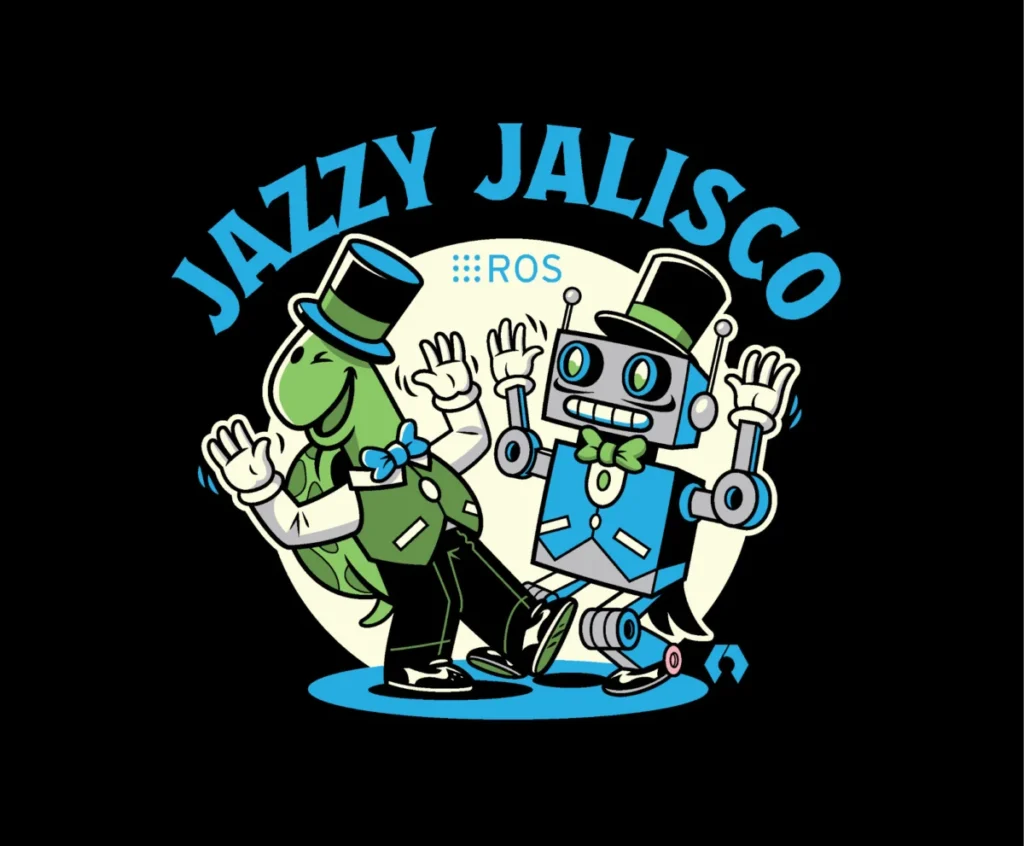
ROS 2 maintains a consistent release cycle, typically introducing a new distribution annually. Each distribution is a versioned collection of ROS packages, much like Linux distributions, and is given a whimsical, alliterative name, often featuring a turtle and progressing through the alphabet. While the latest release is Kilted Kaiju (May 2025), developers frequently opt for Long-Term Support (LTS) distributions like Jazzy Jalisco, which boasts support until 2029, offering enhanced stability and reliability for commercial and long-term projects. Each ROS distribution is meticulously pinned to specific operating system versions—Jazzy Jalisco, for example, officially supports Ubuntu 24.04 and Windows 10 (with Visual Studio 2019)—to ensure compatibility and optimal performance of its myriad underlying libraries.

Core Communication Paradigms: Topics and Services
At the heart of ROS 2’s power lie its fundamental communication mechanisms: nodes, topics, and services. These elements enable the modular, distributed architecture that allows complex robots to function.

Nodes: Modular Computation Units
In ROS 2, applications are logically segmented into nodes, which are independent computational processes. Each node is designed to handle a specific task, such as reading sensor data, executing complex algorithms, or controlling actuators like motors. Crucially, nodes operate autonomously within their own runtime environments and can communicate seamlessly with other nodes using standardized techniques. This modularity is a cornerstone of ROS 2, allowing for distributed development, easier debugging, and enhanced reusability of code.
Nodes exhibit remarkable language agnosticism. Out of the box, ROS 2 provides robust client libraries for Python (rclpy) and C++ (rclcpp), but the ecosystem supports numerous community-developed languages, including Ada, C, Java, .NET (e.g., C#), Node.js (JavaScript), Rust, and Flutter (Dart). This interoperability means a C++ node responsible for high-speed motor control can effortlessly communicate with a Python node managing complex computer vision tasks, leveraging the strengths of each language. C++ is typically favored for performance-critical low-level drivers and processes, while Python offers rapid prototyping and seamless integration with advanced AI/ML frameworks like OpenCV, PyTorch, and TensorFlow.

ROS 2 heavily relies on object-oriented programming principles. Individual nodes are typically implemented as subclasses of the generic Node class, inheriting its essential properties and functionalities. Publishers and subscribers, or clients and servers, are then instantiated as objects within these custom node classes, allowing a single node to manage multiple communication interfaces.
Topics: The Publish/Subscribe Model
The topic communication method utilizes a publish/subscribe messaging model, ideal for asynchronous, one-to-many data transmission. In this paradigm, a publisher node broadcasts data to a named topic, and the underlying ROS 2 system ensures that this message is delivered to all subscriber nodes listening on that specific topic. This mechanism is particularly well-suited for continuous data streams, such as real-time sensor readings (e.g., lidar scans, camera feeds, IMU data) or periodic status updates.

For instance, a sensor node might publish temperature readings to a /robot/temperature topic. Any number of other nodes – perhaps a display node, a logging node, or a thermal management node – can subscribe to /robot/temperature and receive these updates simultaneously without needing to know the publisher’s identity or location. This decoupling enhances system flexibility and robustness.
Services: The Client/Server Request/Response Model
While topics excel at broadcasting continuous data, the service communication method addresses scenarios requiring a synchronous, request-response interaction between nodes. This client/server model involves a server node that waits to receive incoming requests and a client node that sends a request to a specific server, subsequently awaiting a response.

Services are invaluable for operations that demand a direct, one-time interaction, such as setting a configuration parameter, triggering a specific action, or requesting a single data point. For example, a navigation client node might send a request to a motion server node to "move forward by 1 meter." The motion server would then execute the command and, upon completion, send a response back to the client indicating success or failure. This ensures that the client knows precisely when its request has been fulfilled.
Each service defines a specific interface, specifying the structure of both the request and response messages. ROS 2 provides several standard interfaces (e.g., AddTwoInts for adding two integers), and developers can also define custom interfaces tailored to their specific application needs. This structured approach guarantees that clients and servers understand the data they are exchanging.

A Glimpse into ROS 2 Development: Setting Up the Environment
Engaging with ROS 2 typically begins with setting up a suitable development environment. While a direct Ubuntu installation on a physical machine or single-board computer (like a Raspberry Pi, often used for edge robotics) is common for real-world robot deployment, a Docker container offers a convenient, cross-platform solution for learning and prototyping. Docker encapsulates an entire operating system and all necessary ROS 2 packages, ensuring a consistent environment regardless of the host OS (macOS, Windows, Linux).

A typical workflow involves:
- Docker Setup: Installing Docker Desktop on the host machine.
- Image Building: Downloading a pre-configured ROS 2 Docker image, such as one based on Ubuntu 24.04 with a graphical interface (e.g., XFCE Ubuntu webtop via KasmVNC). This image provides the Jazzy Jalisco distribution of ROS 2.
- Container Execution: Running the Docker image, mapping ports for VNC access (e.g.,
localhost:3000) and potentially SSH, and mounting a local workspace directory to persist code changes. - Integrated Development: Utilizing tools like VS Code, often pre-configured within the Docker image, to write and manage ROS 2 code.
Within this environment, the concept of a workspace is central. A workspace is a directory structure where ROS 2 packages are stored, built, and installed. It typically contains src/ for source code, build/ for intermediate artifacts, install/ for compiled libraries and executables, and log/ for build logs.

Creating and Building a ROS Package
The fundamental unit of code organization in ROS 2 is the package. Developers create packages (e.g., my_first_pkg) within the workspace’s src/ directory, specifying the build type (e.g., ament_python for Python nodes). Each package contains essential metadata in its package.xml file, known as the package manifest. This XML file declares dependencies (e.g., rclpy), authorship, licensing, and version information, enabling the ROS build system to manage package requirements.
For Python packages, the setup.py file is critical. It defines the entry points for the package’s executables, mapping Python functions (e.g., main()) within specific source files (e.g., my_publisher.py) to callable ROS nodes (e.g., my_publisher). This configuration allows ROS 2 to locate and launch the desired node when commanded.

Once the package structure and code are in place, the colcon build tool is used to compile and install the package. colcon is the standard build system for ROS 2, managing dependencies and orchestrating the build process across multiple packages within a workspace.
Running and Visualizing Nodes
After building, nodes can be launched using the ros2 run command. To facilitate debugging and understanding communication flows, ROS 2 provides powerful visualization tools like rqt_graph. This graphical interface dynamically displays the relationships between active nodes and the topics connecting them, offering an invaluable visual aid for monitoring complex robotic applications. While rqt_graph effectively visualizes topics, service interactions are typically inferred from node activity rather than being explicitly drawn as connecting lines, reflecting their request-response nature.

The Mighty Middleware: Broader Impact and Implications
The widespread adoption of ROS 2 across both academia and industry underscores its profound impact on the robotics landscape. Organizations like Open Robotics play a crucial role in stewarding its development, ensuring its continued evolution and robustness.

Commercial Applications: ROS 2 powers a growing array of commercial robots. Giants like Amazon leverage ROS 2 in some of their sophisticated warehouse automation systems, facilitating efficient material handling and logistics. Companies like Avidbots employ ROS 2 in their commercial-grade autonomous floor cleaners, demonstrating its capability in navigating and performing tasks in dynamic human environments. Omron’s TM manipulator arms also integrate ROS 2, showcasing its utility in industrial automation and collaborative robotics. These adoptions highlight ROS 2’s strengths in interoperability, access to a vast library of algorithms, and a mature developer community, all of which accelerate product development and deployment.
Academic and Research Impact: In academic settings, ROS 2 has become an indispensable tool for research and education. Its open-source nature fosters collaboration, allowing researchers to share code, algorithms, and experimental setups easily. The framework’s modularity facilitates rapid prototyping of novel robotic concepts, from advanced locomotion systems to sophisticated human-robot interaction interfaces.

Future Outlook: The future of ROS 2 appears bright, with continuous enhancements focusing on crucial areas such as real-time performance, enhanced security features, and improved support for multi-robot systems and cloud robotics. The ongoing integration with cutting-edge artificial intelligence and machine learning frameworks is further expanding its capabilities, positioning ROS 2 at the forefront of innovation in robotics. While the learning curve can be steep for newcomers and resource requirements can be substantial for very complex projects, ROS 2’s comprehensive toolkit, vibrant community, and commitment to open standards continue to democratize access to advanced robotics development, making sophisticated robotic solutions more attainable for developers worldwide.