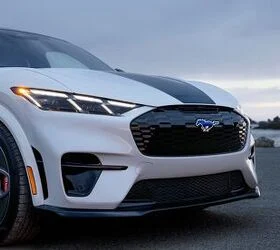
A class-action lawsuit has been filed against Ford Motor Company in Michigan, alleging that the automaker owes refunds to customers who were charged higher vehicle prices due to tariffs, while the company is set to receive billions in government tariff refunds. The lawsuit, filed on June 9th, centers on a Ford Mustang Mach-E owner from San Diego, California, who claims he paid inflated prices for his vehicle, including increased destination fees and a higher Manufacturer’s Suggested Retail Price (MSRP), as a direct consequence of the tariffs.
The legal filing, as reported by The Detroit News, states, "If Ford retains the (tariff refunds) while also retaining the tariff-related price increases paid by consumers, Ford will receive a double recovery and unjust windfall." This assertion forms the crux of the legal challenge, suggesting that Ford would unfairly profit by keeping both the tariff-related price hikes passed onto consumers and the subsequent government refunds designed to offset those very costs.
Background: The Tariffs and Their Ripple Effect
The origins of this legal dispute can be traced back to policies enacted by the Trump administration. In an effort to incentivize domestic manufacturing and reduce reliance on foreign supply chains, the U.S. government imposed significant tariffs on imported vehicles and parts. A key measure was the 25% tariff applied to imported vehicles and components, which began in April 2025.
While the executive branch possessed the authority to implement such tariffs under the International Emergency Economic Powers Act (IEEPA) of 1977, legal challenges ensued. Ultimately, federal courts, and subsequently the Supreme Court, determined that the administration had overstepped its bounds in certain applications of these tariffs. This led to court-ordered reimbursements for companies that had incurred additional costs due to these importation fees.
The automotive sector was particularly impacted by these tariff policies, with individual automakers anticipating substantial refunds, ranging from hundreds of millions to billions of dollars. Ford, for instance, is reportedly in line to receive an estimated $1.3 billion in tariff rebates.
The Core of the Lawsuit: Passing Costs and Pocketing Refunds
The central argument of the class-action lawsuit is that automakers, including Ford, did not absorb the cost of these tariffs. Instead, they preemptively raised vehicle prices to mitigate the financial impact on their bottom line. Many manufacturers openly announced price increases, citing the new tariffs as the reason. This strategy, the lawsuit contends, means that customers have already paid for the tariffs through higher sticker prices and other associated fees.
Jason Bullock, the plaintiff in the case, alleges that his Mustang Mach-E qualified for recompense due to being subject to higher import fees. The suit implies that Ford’s pricing strategy ensured that the cost of these tariffs was directly borne by consumers, even before the refunds were a certainty. The legal team argues that by retaining both the price increases from customers and the forthcoming government refunds, Ford would be engaging in an "unjust windfall."
This situation has generated considerable public frustration. Taxpayers are essentially funding the refunds that automakers may then use to retain profits previously generated by charging customers more. The fairness of this scenario is being widely debated, particularly given the automotive industry’s generally strong profitability in recent years.
Economic Context and Consumer Impact
The imposition of tariffs and subsequent price hikes have had a tangible effect on the automotive market. Reports from sources like Kelly Blue Book indicated that car prices could increase by as much as $6,000 on vehicles priced under $40,000, with other estimates ranging from $2,000 to $10,000 depending on the vehicle. These figures, while seemingly substantial, are not entirely divorced from the broader trend of rising vehicle costs.
Since 2019, the average new vehicle price has reportedly increased by approximately 30%. In the first quarter of 2026 alone, prices jumped by over $1,300. This inflationary pressure, exacerbated by tariffs, has made vehicle ownership increasingly expensive for consumers.
The lawsuit highlights a critical point: automakers often spread the cost of increased overhead across their entire vehicle lineup rather than solely burdening a single model. This means that even if a specific vehicle component was subject to tariffs, the price increase for consumers might not be directly proportional but rather a more generalized upward adjustment.
Legal Complexities and Potential Outcomes
The legal battle ahead is likely to be complex, with several factors influencing the outcome. Ford’s legal department is expected to argue that despite receiving refunds, the company continues to face significant financial pressures from ongoing tariffs and the volatile nature of global supply chains.
The lawsuit’s success may hinge on the ability to definitively prove how much of the tariff-related cost was directly passed on to consumers and whether Ford’s retention of both the price increases and the refunds constitutes unjust enrichment. The discovery phase of the lawsuit will be crucial in shedding light on the nebulous financial flows between the automaker, its suppliers, and its customers.
Furthermore, the legal landscape surrounding tariffs is not entirely settled. While some tariffs were deemed unlawful under IEEPA, others may have remained in place, deemed to be outside the scope of that particular ruling. Additionally, the ongoing reliance of the automotive industry on global supply chains means that indirect tariff impacts can be difficult to untangle.
Broader Implications for the Auto Industry and Consumers
This class-action lawsuit against Ford is not an isolated incident. Similar legal actions have been initiated against other retailers and manufacturers of consumer goods that have faced tariff-related cost increases and subsequent government refunds. The automotive sector, however, stands out due to the scale of both the tariffs and the potential refunds involved.
The implications of this case extend beyond Ford and its customers. It raises broader questions about corporate responsibility, the impact of government trade policies on consumers, and the transparency of pricing mechanisms within large industries. If the plaintiff prevails, it could set a precedent for other automakers and manufacturers to re-evaluate their pricing strategies and refund policies in light of government tariff adjustments.
The case also underscores the vulnerability of consumers in an increasingly complex global economy. When government policies create financial burdens, the question of who ultimately shoulders that cost—corporations or consumers—becomes a matter of significant public interest and, as seen here, legal contention. The outcome of this lawsuit could have a lasting impact on how consumers are protected from what they perceive as unfair business practices arising from trade disputes and government interventions. The court’s decision will be closely watched by industry stakeholders, consumer advocacy groups, and the general public alike.