A groundbreaking development in materials science promises to usher in a new era of microscopic robotics and advanced medical interventions. Engineers at the Massachusetts Institute of Technology (MIT), in collaboration with researchers from the École Polytechnique Fédérale de Lausanne (EPFL) in Switzerland and the University of Cincinnati, have unveiled a novel soft magnetic hydrogel capable of forming intricate, magnetically activated three-dimensional structures at the microscale. This innovative material, detailed in a recent publication in the journal Matter, opens doors to the creation of highly sophisticated, remotely controlled microscopic devices with potential applications ranging from targeted drug delivery to minimally invasive surgical procedures.
The genesis of this breakthrough lies in the challenge of imbuing microscopic structures with precise magnetic responsiveness while maintaining their delicate architectural integrity. Traditional methods of creating magnetic micro-objects often involve mixing magnetic nanoparticles directly into printable resins. However, these metallic particles can interfere with the high-resolution printing processes, scattering light and compromising the structural strength of the final product. The MIT-led team has overcome this hurdle through an ingenious post-fabrication magnetic infusion technique, enabling them to design and construct complex, deformable micro-architectures with unprecedented control over their magnetic properties.
The Science Behind the Microscopic Marvel
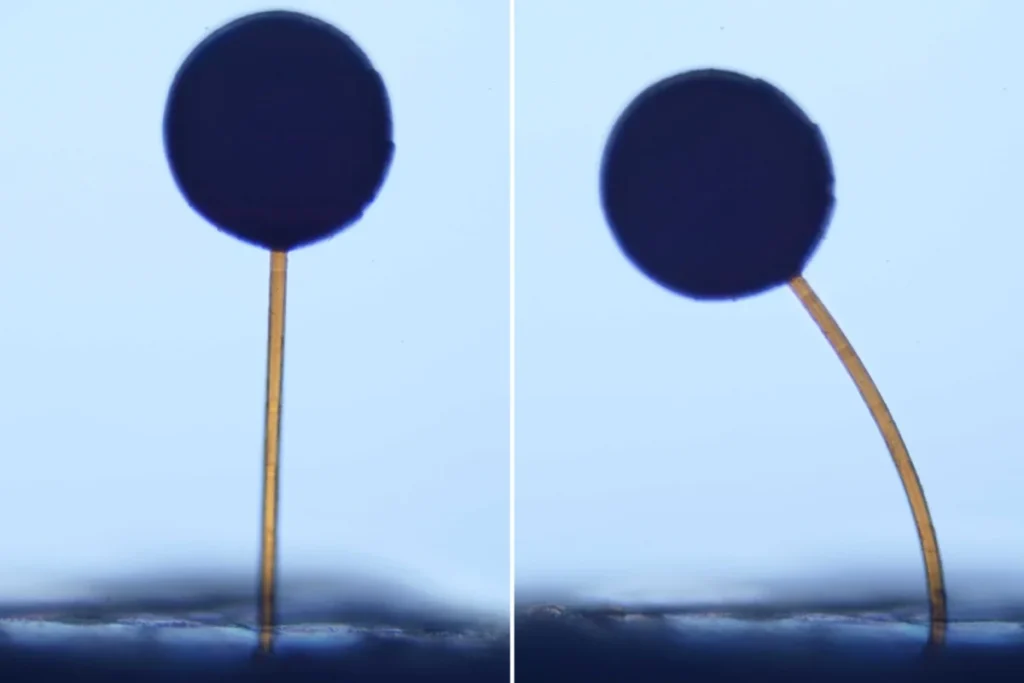
At the heart of this innovation is a sophisticated hydrogel material that, when manipulated with an external magnetic field, can exhibit dynamic and complex behaviors. The researchers have demonstrated this capability through the creation of "lollipop grippers" – microscopic structures, each smaller than a grain of sand, that can transition from a passive state to an active, grasping configuration in response to a magnetic stimulus. These lollipop-like formations, when suspended in a liquid medium, can be observed under a microscope. Upon the introduction of a small magnet, these structures instantaneously snap together, mimicking the action of a Venus flytrap, thus transforming from inert components into functional robotic grippers.
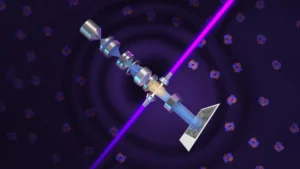
This remarkable transformation is a direct result of the material’s unique composition and the fabrication process. The team’s method begins with conventional high-resolution 3D printing, specifically two-photon lithography, to create intricate polymer gel microstructures. This process utilizes a focused laser beam to solidify a liquid resin layer by layer, allowing for the creation of highly detailed designs at the micron scale. Crucially, this initial printing stage does not incorporate any magnetic particles, thus avoiding the aforementioned interference issues that plague traditional magnetic micro-fabrication.
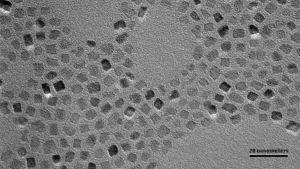
Following the initial printing, the gel structures undergo a two-step infusion process. First, the printed gel is immersed in a solution containing iron ions. The porous nature of the hydrogel allows it to absorb these ions. Subsequently, the iron-infused structure is dipped into a second solution containing hydroxide ions. Within the gel matrix, the absorbed iron ions react with the hydroxide ions to form iron-oxide nanoparticles. These nanoparticles, distributed throughout the hydrogel, impart the material with its magnetic responsiveness.
Precision Control and Design Freedom
A key advancement of this new method is the ability to precisely control the magnetic properties of individual features within a single microscopic structure. The researchers discovered that by carefully adjusting the laser power during the initial 3D printing phase, they could influence the cross-linking density of the polymer gel. A more tightly cross-linked gel, a result of higher laser power, can accommodate fewer magnetic particles. This allows the scientists to dictate, with micron-scale precision, the degree of magnetism in different parts of a micro-structure. This granular control over magnetic properties unlocks a new level of design freedom for creating multifunctional microscopic devices.
"We can now make a soft, intricate 3D architecture with components that can move and deform in complex ways within the same microscopic structure," stated Carlos Portela, the Robert N. Noyce Career Development Associate Professor of Mechanical Engineering at MIT and a lead author on the study. "For soft microscopic robotics, or stimuli-responsive matter, that could be a game-changing capability."
The implications of this "programmable" material are far-reaching. Unlike simpler magnetic micro-swimmers that are often just a solid mass of magnetic particles, the new hydrogel allows for the creation of elaborate, deformable architectures. This means that microscopic robots fabricated from this material could perform more nuanced maneuvers, manipulate individual components, and execute complex tasks with a level of dexterity previously unattainable at this scale.
A Chronology of Innovation
The development of this magnetic hydrogel represents a culmination of years of research into metamaterials and programmable matter at MIT. Professor Portela’s group has a well-established track record in engineering materials with extraordinary properties, including those exhibiting exceptional toughness, elasticity, and responsiveness to various stimuli like sound, light, and electric fields. This latest project builds upon that foundation, focusing specifically on magnetic actuation due to its inherent advantages.
"With a magnetically responsive material, we have control at a distance and the response is instantaneous," explained Andrew Chen, a co-lead author and graduate student involved in the research. "We don’t have to wait for a slow chemical reaction or physical process, and we can manipulate the material without touching it." This immediate and remote controllability is a significant factor driving the interest in magnetic actuation for microscopic applications.
The journey to this publication involved extensive experimentation and refinement of the fabrication process. Researchers first explored direct incorporation of magnetic particles into resins, encountering the limitations of light scattering and structural compromise. The subsequent development of the two-step infusion technique, as detailed in the Matter publication, marked a critical turning point. This iterative process of problem-solving and innovation, involving a dedicated team of graduate students and international collaborators, ultimately led to the successful demonstration of complex magnetic micro-architectures.
Demonstrations of Advanced Capabilities
To showcase the versatility of their new material, the researchers engineered two compelling demonstrations: the aforementioned lollipop grippers and a magnetically responsive bistable switch. The lollipop grippers, with their ability to mimic grasping motions, illustrate the potential for microscopic manipulators. These could, for instance, be guided through the bloodstream by an external magnet to collect tissue samples for biopsy or to precisely deliver therapeutic agents to specific cells. The ability to tune the magnetism of individual components within the gripper allows for sophisticated gripping strategies, enabling delicate manipulation of microscopic targets.
The bistable switch further highlights the material’s potential in microfluidic devices and other miniaturized systems. This particular demonstration involved a millimeter-long rectangle of the polymer gel with four tiny, oar-like magnetic structures attached to each side. Each oar measured approximately 8 microns in thickness, comparable to the size of a red blood cell. When an external magnet was applied to one end of the rectangle, these oars would flip towards the magnet, pulling the rectangle along and locking it into a new position. Applying the magnet to the opposite side would reverse the process, effectively acting as a microscopic magnetic valve.
"We think this is a new kind of bistable mechanism that could be used, for instance, in a microfluidic device, as a magnetic valve to open or shut some flow," Professor Portela elaborated. "For now, we’ve figured out how to fabricate magnetic complex architectures at the microscale and also spatially tune their properties. That opens up a lot of interesting ideas for soft miniature robots going forward."
Broader Impact and Future Implications
The development of these magnetically responsive soft hydrogels has profound implications for several scientific and technological fields. In medicine, the potential for "magno-bots" is particularly exciting. Imagine microscopic robots, guided by external magnets, navigating the human body to perform delicate surgical tasks, clear blockages in blood vessels, or deliver drugs with unprecedented precision, thereby minimizing side effects and maximizing therapeutic efficacy. This could revolutionize treatments for a wide range of conditions, from cancer to cardiovascular diseases.
Beyond medicine, these materials could find applications in micro-assembly, where tiny robots could be used to construct complex micro-electronic components or sensors. In environmental science, such micro-robots could be deployed to clean up microscopic pollutants or collect environmental samples from hard-to-reach locations. The ability to create intricate, deformable structures that respond to external magnetic fields also opens up avenues for developing novel types of soft actuators and sensors for robotics and wearable technology.
The interdisciplinary nature of this research, bringing together expertise in materials science, mechanical engineering, and nanotechnology, underscores the collaborative spirit driving scientific progress. The study’s co-authors include graduate students Rachel Sun and Andrew Chen from MIT, along with Yiming Ji and Daryl Yee from EPFL, and Eric Stewart from the University of Cincinnati, demonstrating a truly international effort.
While the current research focuses on proof-of-concept demonstrations, the underlying principles and fabrication techniques are highly scalable. The team’s ability to precisely control magnetic properties at the microscale suggests that future iterations of this technology could lead to even more sophisticated and autonomous microscopic robotic systems. The ongoing research at MIT, supported in part by the National Science Foundation and the MathWorks seed grant program, and conducted within the advanced facilities of MIT.nano, indicates a strong commitment to advancing this transformative technology.
The successful development of these magnetically activated soft hydrogels marks a significant leap forward in the field of micro-robotics. The ability to engineer complex, deformable structures with precise magnetic control at the micron scale opens a new frontier in designing intelligent microscopic machines, promising to reshape industries and improve human health in the years to come.