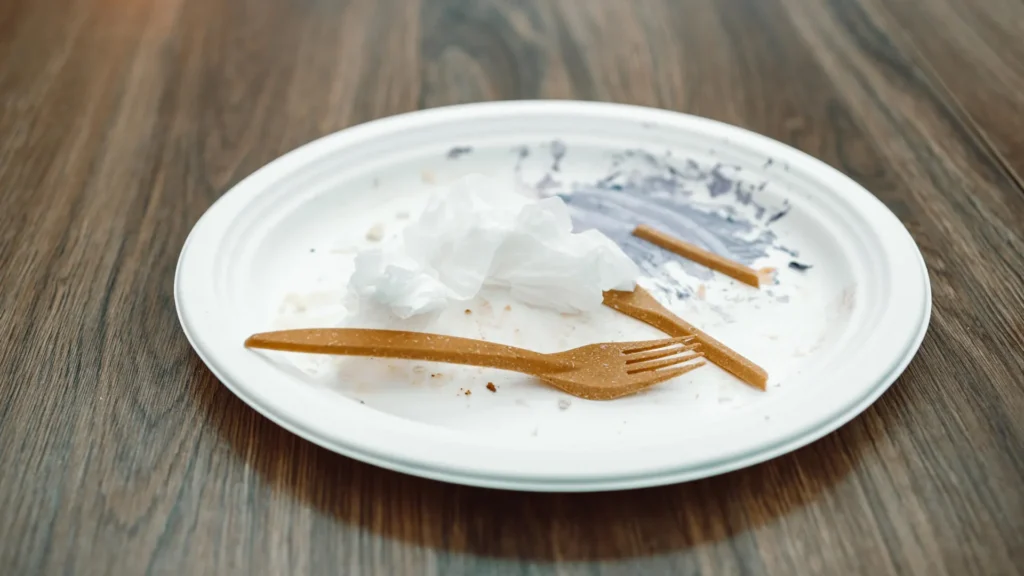
The paradox of modern material science lies in the durability of plastic. Designed to be resilient, versatile, and inexpensive, synthetic polymers have become the backbone of global commerce and daily life. However, this same durability ensures that a plastic bag used for mere minutes can persist in the environment for centuries. Addressing this systemic misalignment between product lifespan and material longevity, researchers have developed a groundbreaking class of "living plastics." These materials are engineered with built-in biological mechanisms that allow them to self-destruct upon command, potentially transforming the future of waste management and environmental remediation.
In a study recently published in the journal ACS Applied Polymer Materials, a team of scientists led by Zhuojun Dai, Jin Geng, and Dianpeng Qi introduced a novel version of living plastic that achieves total decomposition within six days. Unlike traditional biodegradable plastics that often fragment into harmful microplastics, this bio-hybrid material breaks down completely into its constituent monomers. The breakthrough represents a significant shift from passive recycling to active, programmable degradation, integrating the disposal phase directly into the material’s life cycle.
The Global Context of Plastic Pollution and the Search for Solutions
To understand the significance of this development, one must consider the scale of the global plastic crisis. According to data from the United Nations Environment Programme (UNEP), the world produces approximately 400 million tonnes of plastic waste each year. Of all the plastic ever manufactured, only an estimated 9% has been recycled, while 12% has been incinerated. The remainder accumulates in landfills or leaks into the natural environment, where it undergoes mechanical and UV-driven degradation into microplastics—particles smaller than five millimeters that have been detected in the deepest ocean trenches, the highest mountain peaks, and even human blood and placental tissue.
Current "biodegradable" plastics, such as polylactic acid (PLA), often require industrial composting facilities with specific high-temperature and high-moisture conditions to break down effectively. When these materials end up in the ocean or a standard landfill, they often persist just as long as conventional plastics. The "living plastic" approach bypasses these limitations by embedding the "recycling plant"—in the form of microbial spores—directly into the plastic itself.
The Engineering of Living Plastics: A Biological Blueprint
The core innovation of the research lies in the use of Bacillus subtilis, a common soil bacterium known for its ability to form endospores. These spores are highly resilient, dormant structures capable of surviving extreme heat, radiation, and desiccation. This resilience is critical because the manufacturing of plastic involves high temperatures and mechanical stress that would kill most active bacteria.
The research team engineered B. subtilis to produce a specific "dual-enzyme" system designed for maximum efficiency. Previous iterations of living plastics often relied on a single enzyme, which frequently resulted in incomplete degradation. In the new study, the researchers utilized a synergistic approach:
- The Endocutting Enzyme: The first engineered enzyme acts like a pair of molecular scissors, cutting the long, tangled polymer chains of the plastic at random internal points. This process rapidly reduces the material’s molecular weight and structural integrity.
- The Exocutting Enzyme: The second enzyme works from the exposed ends of these newly shortened fragments. It systematically "eats" the polymer from the tips, breaking the fragments down into individual monomers—the basic chemical building blocks of the plastic.
By using this two-pronged attack, the researchers ensured that the plastic would not merely crumble into smaller pieces (microplastics) but would instead return to a molecular state that can be naturally processed by the environment or reclaimed for new plastic production.
Experimental Success: From Durability to Disappearance
For their experiments, the team combined these dormant spores with polycaprolactone (PCL). PCL is a biodegradable polyester widely used in specialized applications, including 3D printing filaments and biomedical devices like surgical sutures. During the fabrication process, the spores were mixed into the polymer melt.
One of the primary concerns with adding biological agents to structural materials is the potential loss of mechanical strength. However, the study found that the finished living plastic maintained mechanical properties—such as tensile strength and flexibility—comparable to standard PCL films. This suggests that the embedded spores do not compromise the material’s utility during its functional life.
The degradation process was triggered by placing the plastic in a nutrient-rich broth heated to 122 degrees Fahrenheit (50 degrees Celsius). This specific temperature serves as a "thermal trigger" that signals the spores to germinate and return to an active vegetative state. Once activated, the bacteria began secreting the dual-enzyme cocktail. The results were definitive: within six days, the plastic film had vanished, leaving no visible residue or microplastic fragments.
Case Study: The Self-Destructing Wearable Device
To demonstrate the practical utility of the material, the researchers developed a wearable plastic electrode. Wearable electronics represent a fast-growing sector of the "e-waste" problem, as they often contain a mix of polymers and conductive elements that are difficult to separate and recycle.
The living plastic electrode functioned effectively as a sensor, maintaining its electrical and structural properties during use. However, once the "disposal" phase was initiated via the activation of the embedded microbes, the device fully degraded within two weeks. This proof-of-concept suggests that living plastics could be utilized for short-term medical implants, temporary environmental sensors, or consumer electronics designed with a "planned obsolescence" that is environmentally responsible.
Analysis of Implications and Future Development
The implications of this research extend far beyond the laboratory. If scaled, living plastics could fundamentally alter the economics of the circular economy.
1. Elimination of Microplastics: One of the most significant environmental benefits is the prevention of microplastic formation. By ensuring the polymer is reduced to monomers, the technology eliminates the risk of persistent synthetic particles entering the food chain.
2. Decentralized Waste Management: Traditional recycling requires complex sorting and transportation infrastructure. Living plastics carry their own disposal mechanism, potentially allowing for "at-source" degradation in specialized bins or controlled environments, reducing the carbon footprint associated with waste logistics.
3. Expansion to Other Polymers: While the study focused on PCL, the researchers noted that the general strategy of embedding spore-based enzyme systems could be adapted for more common, and more problematic, plastics. Polyethylene (PE) and Polyethylene terephthalate (PET), which constitute the bulk of single-use packaging, are current targets for future research. Engineering microbes to produce enzymes like PETase—which specifically targets the bonds in plastic bottles—could bring this technology to the mainstream.
4. Environmental Activation: A key goal for the research team moving forward is to develop activation triggers that do not require high temperatures or specific nutrient broths. "The team now hopes to develop a method that activates the bacterial spores in water," the study noted. Given that millions of tonnes of plastic enter the oceans annually, a material that begins to self-degrade upon contact with seawater would be a revolutionary tool in combating marine pollution.
Challenges and Considerations
Despite the promising results, several hurdles remain before living plastics become a commercial reality. The first is the cost of production. Engineering specialized bacteria and integrating them into polymer production lines is currently more expensive than producing virgin plastic from petrochemicals. Economic incentives, such as carbon taxes or extended producer responsibility (EPR) laws, may be necessary to bridge this price gap.
Furthermore, there are regulatory and safety considerations regarding the release of engineered microbes into the environment. While B. subtilis is generally recognized as safe (GRAS), the widespread use of genetically modified organisms (GMOs) in consumer products will require rigorous environmental impact assessments to ensure that the enzymes do not interfere with natural ecosystems.
Conclusion
The work of Zhuojun Dai and his colleagues provides a glimpse into a future where the materials we use are as temporary as the tasks they perform. By embedding life into the inanimate, science is moving toward a model of "biological circularity."
The realization that traditional plastics persist for centuries while their applications are short-lived has sparked a necessary evolution in material design. As this technology matures, the "living" aspect of these plastics will turn durability from a liability into a programmable feature, ensuring that the convenience of the modern world does not come at the cost of the planet’s long-term health.
The research was supported by a coalition of major scientific bodies, including the National Key Research and Development Program of China and the National Natural Science Foundation of China, signaling a high level of institutional commitment to solving the plastic crisis through synthetic biology. As the global community looks toward the 2025 goals for plastic waste reduction, living plastics stand out as a sophisticated, science-driven solution to one of the most pressing environmental challenges of our time.