The global aviation industry is poised to descend upon Farnborough, England, for its highly anticipated biannual airshow, a pivotal event that this year will place an unprecedented emphasis on defense capabilities, alongside a burgeoning showcase of advanced air mobility. Organizers are anticipating a record-breaking attendance of 120,000 visitors between July 20-24, a testament to the show’s growing significance. To accommodate this surge, an additional 5,000 square meters of exhibition space has been integrated into the sprawling pavilions, reflecting a significant shift in the event’s traditional demographic.
Historically, the Farnborough Airshow has maintained a roughly 60-40 split between aerospace and defense exhibitors. However, this year’s iteration marks a dramatic recalibration, with a notable influx of military participants pushing the balance to an even 50-50. This strategic pivot is not merely a commercial decision but a direct response to the evolving geopolitical landscape.
"It’s a clear reflection of what’s going on in the world," commented Georgia Ward, a spokeswoman for the event. "We do move with what’s going on around us." The heightened global military tensions since the last Farnborough Airshow in 2024 had already signaled an increased focus on defense. However, the unexpected cancellation of the Royal International Air Tattoo (RIAT), a prestigious air show typically held just prior to Farnborough, has inadvertently amplified this trend. The absence of RIAT means that many defense-related announcements and demonstrations that would have occurred there are now expected to find their platform at Farnborough.
Ward further elaborated that since the RIAT cancellation, the Farnborough Airshow has observed a marked increase in media registrations and a higher number of planned high-level delegation attendances, underscoring the event’s elevated importance in the defense sector. Beyond the traditional aerospace and defense sectors, Farnborough is also set to make history by hosting advanced air mobility (AAM) flights for the first time, with demonstrations scheduled by prominent players such as the English firm Vertical Aerospace and Vermont-based BETA Technologies. This dual focus on cutting-edge military technology and sustainable future aviation signals the multifaceted nature of the modern aerospace industry.
Defense Takes Center Stage Amidst Geopolitical Realignment
The confluence of global events has undeniably elevated defense to the forefront of the Farnborough Airshow agenda. The ongoing conflict in the Middle East, which has unfortunately impacted access to the Royal Air Force’s Fairford base and led to the cancellation of RIAT, has redirected significant attention and resources towards Farnborough. Aerospace and defense industry analyst Sash Tusa predicts that this shift will see Farnborough become the primary venue for crucial defense-sector announcements.
"Announcements that would have happened at RIAT are now expected to occur at Farnborough," Tusa stated. A prime example of this redirected focus is the anticipated signing ceremony for the £8.6 billion in funding allocated by the United Kingdom to the Global Combat Air Programme (GCAP). GCAP represents a collaborative effort between the UK, Italy, and Japan, aimed at developing a sixth-generation fighter jet. This funding is a critical component of the long-delayed U.K. Defence Investment Plan, which was officially unveiled on June 30th. The plan outlines a substantial £15 billion (approximately $20 billion USD) increase in military spending on equipment and services, with the explicit goal of transitioning the nation’s armed forces to a state of "warfighting readiness."
The signing ceremony for the GCAP funding at Farnborough serves as a powerful illustration of both the show’s heightened importance within the defense sphere and the continued financial commitment to this ambitious program. Adding further weight to the defense narrative, POLITICO reported this week that Canada is potentially joining the GCAP initiative, with an announcement anticipated on July 21st, further solidifying the program’s international collaboration.
"The fact that the Defence Investment Plan has more or less fully funded that from the U.K. side is tremendously important," Tusa emphasized. "A month ago, there was real concern that if the U.K. did not properly fund [GCAP], it might go the way of SCAF," he added, referencing the faltering European fighter jet program, a stark reminder of the challenges inherent in large-scale multinational defense projects.
The skies over Farnborough will also feature a formidable display of aerial power. Boeing is scheduled to exhibit its MQ-28 Ghost Bat, a collaborative combat aircraft, signaling advancements in autonomous aerial systems. Furthermore, a U.S. Air Force F-35A Lightning II fighter will conduct its sole European flying display of the year at the show, a significant draw for aviation enthusiasts and defense professionals alike, according to show organizers. This concentrated presence of advanced military hardware and strategic programs underscores the global imperative for enhanced defense capabilities in the current climate.
In a notable trend reflecting the broader evolution of the industry, emerging technologies are also set to command a greater presence. Organizers highlighted that 22% of exhibitors are first-time attendees, representing a diverse range of sectors including artificial intelligence and drone technology. This integration of cutting-edge innovation within the defense context points to a future where advanced technology plays an increasingly critical role in military operations.
Electric Air Taxis Usher in a New Era of Advanced Air Mobility
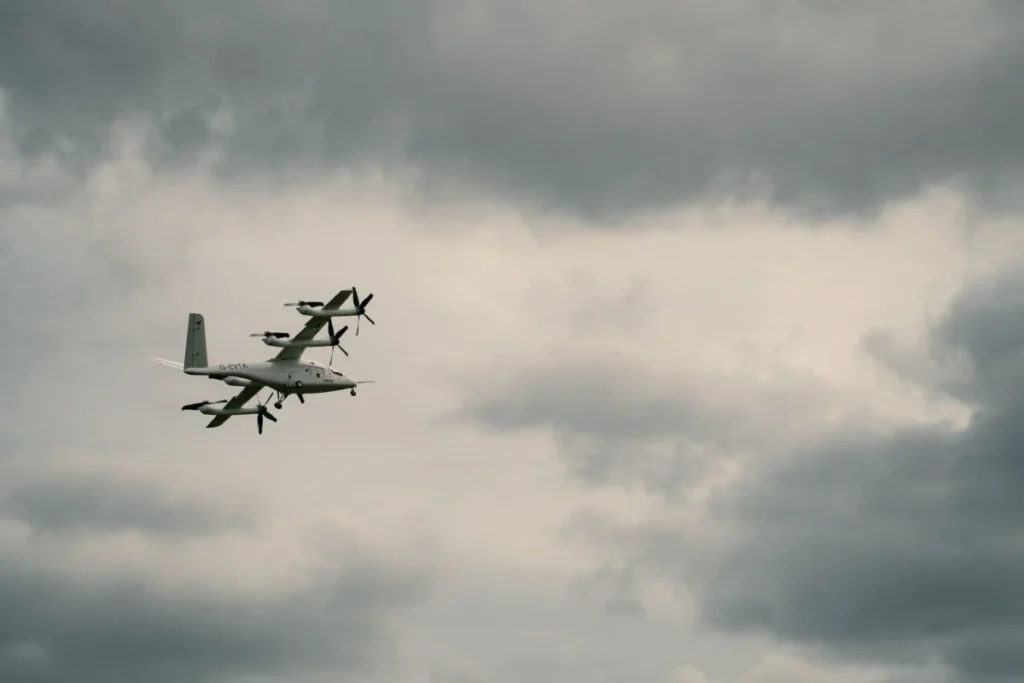
For enthusiasts and industry professionals tracking the rapid development of advanced air mobility, Farnborough 2026 will offer a unique glimpse into the future of passenger transport. The show will feature two distinct flying displays from pioneers in the electric vertical take-off and landing (eVTOL) and electric aircraft sectors. Vertical Aerospace is set to showcase its VX4, an eVTOL aircraft, in its inaugural flying display at a major commercial air show. Concurrently, BETA Technologies will demonstrate its ALIA CX300, an aircraft designed for conventional take-off and landing, highlighting different approaches to sustainable aviation.
A spokesperson for Vertical Aerospace confirmed the planned flight, noting it is "subject to the usual flight test conditions including weather." While BETA Technologies did not provide a comment, the planned demonstrations underscore their commitment to advancing electric aviation.
Stephan Baur, an analyst at Roland Berger, views this year’s show as a significant milestone for the nascent air taxi industry. Compared to the 2022 event, where these aircraft were first prominently featured, Baur observes a marked maturation. "At the time, the whole air taxi topic was ‘something special’," he recalled. "They were not very integrated in aerospace."
The intervening years have seen significant consolidation within the AAM sector. The folding of companies like Lilium and the acquisition of Volocopter by Chinese-owned Diamond Aircraft Industries, for instance, have reduced the number of players. However, Baur posits that this consolidation has ultimately strengthened the surviving entities, positioning them for more robust progress. "The survivors are in much better shape and moving forward," he stated.
While some prominent AAM companies, such as Volocopter and Boeing subsidiary Wisk, are opting to focus on intensive summer flight testing rather than exhibiting, their absence is offset by the continued engagement of other key players. Joby Aviation, for example, will facilitate shared helicopter flights to the show through its recent acquisition of Blade, while senior executives from Archer Aviation are scheduled to attend, signaling continued industry engagement and strategic planning.
Potential Airbus A220 Stretch Announcement Looms
Beyond the dominant defense narrative and the nascent AAM sector, industry watchers are keenly anticipating a potential announcement from Airbus regarding the development of a stretched version of its A220 aircraft. Demand from customers for a larger variant of the successful regional jet, which Airbus acquired from Bombardier in 2017, is reportedly growing.
A stretched A220 could accommodate approximately five additional rows of seats, increasing its capacity to around 180 passengers. This would effectively fill a significant gap in the market, bridging the capacity difference between existing regional jets and the current generation of single-aisle commercial airliners.
While Reuters reported in January that Airbus was exploring the initiation of pre-sales for such a model, a subsequent article in June suggested the plan was "in limbo." However, Airbus CEO Guillaume Faury recently indicated in an interview with Aviation Week that the development of a stretched A220 is a matter of "when, not if," though he clarified that "when’ is not today."
Despite this measured outlook from Airbus’s leadership, Tusa remains optimistic about the possibility of an announcement at Farnborough. "I am watching all of the press coverage being generated, and I think this is building up to launch," he commented. An Airbus spokesman acknowledged that a stretched A220 would be "a great addition to the market" and confirmed that the company is actively exploring all available options for its product portfolio. The unveiling of such a program at Farnborough would represent a significant development for the single-aisle aircraft market, potentially reshaping competitive dynamics and offering airlines greater flexibility in fleet planning.
The Farnborough Airshow 2026, therefore, promises to be a multifaceted event, reflecting the profound shifts occurring within the global aviation and defense industries. From the stark realities of heightened military tensions driving defense innovation to the hopeful advancements in sustainable air travel, the show serves as a critical barometer for the future of flight.