DETROIT – The automotive supplier industry is currently traversing one of its most turbulent periods, marked by a confluence of transformative shifts, economic pressures, and unprecedented uncertainty. Original Equipment Manufacturers (OEMs) are rapidly reconfiguring their powertrain platforms, signaling a decisive pivot towards electrification and diversified propulsion systems. Simultaneously, a significant majority of U.S. consumers grapple with the escalating unaffordability of new vehicles, dampening demand and adding another layer of complexity to an already challenging market. This intricate web of forces—encompassing trade and policy volatility, fluctuating vehicle demand, aggressive technological investment requirements, and relentless cost pressures—necessitates a fundamental re-evaluation of operational and strategic frameworks for suppliers striving for both immediate resilience and enduring survival.
The Shifting Automotive Landscape: A Confluence of Challenges
The automotive industry, historically a bedrock of global manufacturing, is undergoing a profound metamorphosis. At its core is the irreversible transition from internal combustion engine (ICE) vehicles to electric vehicles (EVs) and, in many cases, hybrid electric vehicles (HEVs) as an interim solution. This shift is not merely an evolutionary step but a revolutionary one, demanding colossal investments in research and development, retooling of manufacturing facilities, and a complete reimagining of the supply chain. Components that were central to ICE vehicles—such as engine blocks, transmissions, and exhaust systems—are becoming obsolete, while demand for new technologies like battery packs, electric motors, power electronics, and advanced software systems is skyrocketing. This seismic shift places immense pressure on traditional suppliers, many of whom have built their businesses around ICE technology for decades. The capital expenditure required to transition, coupled with the risk of stranded assets, presents an existential threat to those unable or unwilling to adapt.
Compounding this technological upheaval is the stark reality of consumer affordability. Recent surveys consistently indicate that a substantial portion of the American populace views new vehicles as prohibitively expensive. This sentiment is fueled by several factors: persistent inflation driving up production costs, rising interest rates making financing more costly, and the inherent premium associated with new, technologically advanced vehicles, particularly EVs. While government incentives for EVs exist, they often do not fully offset the higher upfront purchase price, especially in a macroeconomic environment characterized by wage stagnation relative to cost of living increases. This affordability crisis translates directly into volatile vehicle demand, forcing OEMs to adjust production schedules, which in turn creates unpredictable order books for suppliers.
Beyond market dynamics, geopolitical tensions and evolving trade policies introduce another layer of instability. Tariffs, trade disputes, and the growing impetus for regionalized supply chains (reshoring or nearshoring) challenge established global manufacturing networks. Suppliers, who often operate across multiple continents, must navigate a patchwork of regulations and potential disruptions, requiring increased flexibility and diversified manufacturing footprints. Furthermore, labor shortages across skilled trades and engineering disciplines, exacerbated by demographic shifts and the specialized nature of new automotive technologies, add significant operational strain and cost pressure.
Deloitte’s Strategic Framework for Supplier Survival
In response to this complex and often volatile operating environment, Deloitte Consulting LLP has released a comprehensive report outlining critical strategies for automotive suppliers. The study, spearheaded by lead author Jason Coffman, emphasizes that companies must move beyond incremental adjustments and embrace an adaptive operating model defined by sustained constraint and inherent flexibility. Coffman argues that merely reacting to immediate crises is insufficient; rather, a proactive, strategic approach is essential to balance short-term resilience with long-term optionality and survival.
"Companies must adapt an operating environment shaped by sustained constraint to remain flexible," states Coffman, underscoring the shift from periods of cyclical challenge to a new normal of continuous flux. The report identifies five pivotal strategies that suppliers must diligently consider and integrate into their core operations:
1. Designing for Resilience Across Supply Chains
The recent past has laid bare the vulnerabilities of lean, just-in-time supply chains, particularly during the COVID-19 pandemic and subsequent semiconductor shortages. These events crippled production globally, costing the industry hundreds of billions of dollars. Coffman emphasizes that designing for resilience is no longer a luxury but a fundamental requirement. This strategy involves a multi-pronged approach to mitigate risks associated with trade shifts, demand uncertainty, and supplier disruptions.
- Diversifying Sourcing: Moving away from single-source reliance to a multi-source strategy, ideally across different geographic regions, reduces the impact of localized disruptions (e.g., natural disasters, geopolitical events, labor strikes) on component availability. This could involve establishing partnerships with suppliers in different countries or even within the same country but in distinct regions.
- Enabling Cross-Plant Production: Investing in the flexibility to shift production of critical components between different manufacturing sites within a company’s own network. This requires standardized processes, transferable tooling, and a skilled workforce capable of adapting to varied production lines. Such agility allows a company to reroute production in response to disruptions at a single plant, ensuring continuity.
- Strengthening Scenario-Based Planning: Moving beyond traditional risk assessments to dynamic, scenario-based planning that models various potential disruptions—from major economic downturns and geopolitical conflicts to cyberattacks and extreme weather events. This involves developing contingency plans, identifying alternative logistics routes, and pre-negotiating emergency contracts with backup suppliers. Digital twin technology and advanced analytics can play a crucial role in simulating these scenarios and optimizing responses.
- Regionalization and Nearshoring: While "rapid reshoring" may not be universally practical or cost-effective, a strategic move towards regionalized supply chains can enhance resilience. This involves establishing manufacturing hubs closer to end markets or integrating supply chains within specific economic blocs (e.g., North America, Europe, Asia) to reduce transit times, tariffs, and exposure to distant geopolitical risks. This shift, while requiring upfront investment, can significantly de-risk future operations.
The implications of failing to build supply chain resilience are severe: production halts, inability to meet OEM demands, loss of market share, and severe financial penalties. Conversely, resilient suppliers gain a competitive advantage, becoming preferred partners for OEMs seeking stability in an unstable world.
2. Building Digitally Integrated, Productivity-Driven Operations
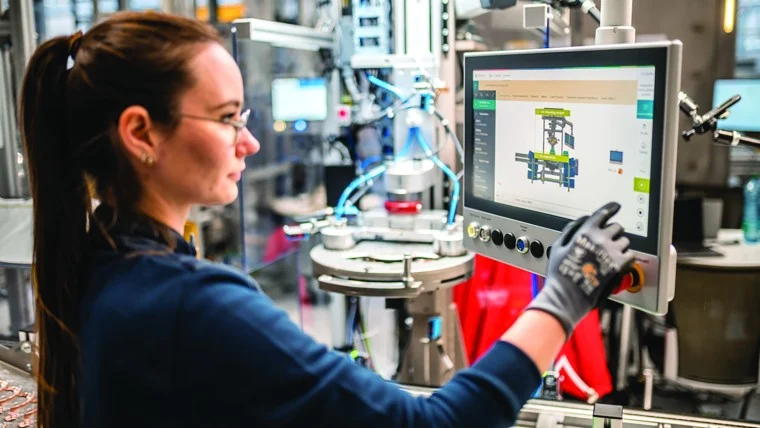
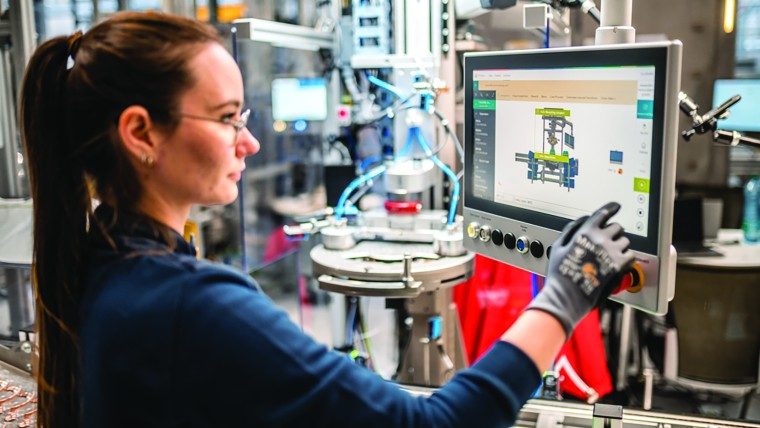
In an era defined by labor constraints, rising costs, and the need for speed, digital transformation is paramount. Suppliers must leverage technology to enhance productivity, optimize resource utilization, and mitigate the impact of workforce challenges. This strategy is about creating an intelligent, interconnected operational ecosystem.
- Workforce Capability Alignment: Investing in upskilling and reskilling programs for employees to operate new digital tools, automated systems, and data analytics platforms. This includes training in areas like robotics, artificial intelligence (AI), machine learning, and industrial IoT (IIoT). Addressing the talent gap is crucial for realizing the full potential of digital investments.
- Data Integration: Breaking down data silos across different departments (production, logistics, quality control, R&D) to create a unified data backbone. This enables real-time visibility into operations, facilitates predictive analytics, and supports data-driven decision-making. Cloud-based platforms and enterprise resource planning (ERP) systems are central to this integration.
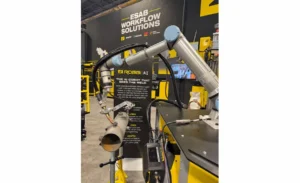
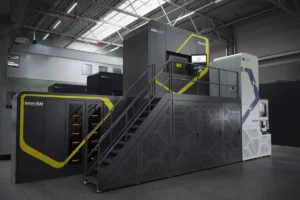
- Operational Digitization: Implementing advanced automation, robotics, AI-driven quality control, and predictive maintenance systems on the factory floor. This reduces reliance on manual labor for repetitive or hazardous tasks, improves precision and consistency, minimizes downtime through proactive maintenance, and optimizes energy consumption. Smart factories, powered by IIoT, become more efficient, agile, and responsive to changing demands.
The benefits extend beyond productivity. Digitally integrated operations offer enhanced traceability, crucial for managing recalls and ensuring regulatory compliance. They also provide the agility to quickly reconfigure production lines for new products or adjust to demand fluctuations. Suppliers who lag in this area risk higher operational costs, lower quality, and an inability to compete with more agile, tech-forward rivals.
3. Aligning Product and Platform Strategy with Evolving Demand
The rapid shift in powertrain platforms, particularly the OEM rebalancing towards hybrid expansion and multi-powertrain flexibility, requires suppliers to be equally agile in their product development. This strategy focuses on adapting product portfolios to meet changing OEM requirements while preserving capital efficiency.
- Modular Platforms: Developing components and systems that can be easily adapted or integrated into various vehicle platforms, regardless of their propulsion type (ICE, HEV, BEV). This involves designing for interchangeability and scalability, reducing the need for entirely new designs for each OEM model.
- Propulsion-Agnostic Systems: Concentrating investment in technologies that are not tied to a specific powertrain, such as advanced driver-assistance systems (ADAS), infotainment systems, interior components, lightweight materials, and cybersecurity solutions. These areas represent growth opportunities irrespective of the powertrain revolution.
- Strategic Partnerships and Joint Ventures: Collaborating with OEMs or other suppliers to co-develop new technologies or share the financial burden and risk of transitioning product lines. This can accelerate innovation and market entry while diversifying risk.
- Portfolio Rationalization: Critically evaluating existing product lines and divesting from those tied exclusively to declining ICE technologies, while aggressively investing in components for new energy vehicles (NEVs) and future mobility solutions. This requires a disciplined approach to capital allocation and a clear vision for future market needs.
Suppliers who remain solely focused on legacy ICE components face declining revenue streams and eventual obsolescence. By aligning with modular and propulsion-agnostic strategies, they can manage demand uncertainty more effectively, optimize R&D spending, and maintain a competitive edge as the industry evolves.
4. Competing Through Differentiated Systems and Intellectual Property
As the boundaries between suppliers and OEMs increasingly blur—with OEMs bringing more component production in-house or demanding greater integration—suppliers must carve out a unique competitive advantage. This strategy centers on building and leveraging proprietary technology and system-level integration capabilities that are difficult for competitors, including OEMs themselves, to replicate.
- Concentrating Investment in Differentiated Technologies: Focusing R&D efforts on niche, high-value components or systems where the supplier can achieve technological leadership. This could include specialized battery components, advanced power electronics, innovative sensor technologies for autonomous driving, or unique thermal management systems for EVs.
- Proprietary Intellectual Property (IP): Aggressively pursuing patents, trademarks, and trade secrets to protect innovations. A strong IP portfolio not only creates a barrier to entry for competitors but also enhances a supplier’s negotiating power with OEMs and can generate licensing revenue.
- System-Level Integration Capabilities: Moving beyond supplying individual components to offering integrated modules or complete sub-systems. This requires deep engineering expertise, software development capabilities, and the ability to manage complex interfaces. For instance, instead of just supplying individual sensors, a supplier might offer a fully integrated ADAS module with proprietary algorithms.
- Value-Added Services: Differentiating through advanced engineering support, rapid prototyping, and sophisticated testing capabilities that go beyond standard component delivery.
In a market where many components are becoming commoditized, differentiation through IP and integrated systems becomes crucial for maintaining profit margins and strategic relevance. Suppliers who fail to innovate and protect their intellectual assets risk being relegated to commodity suppliers with dwindling leverage.
5. Institutionalizing Capital Discipline as Structural Governance
The volatile nature of the automotive market, coupled with the immense capital requirements for transformation, makes rigorous capital management indispensable. This strategy advocates for embedding strict financial discipline into every aspect of portfolio decision-making, ensuring that investments generate adequate returns and that the company can absorb market shocks without compromising long-term competitiveness.
- Hardwiring Capital Rigor into Portfolio Decisions: Implementing robust financial analysis, including thorough return on investment (ROI) assessments, payback period calculations, and risk-adjusted capital budgeting for all major projects. This ensures that capital is allocated to initiatives with the highest strategic value and financial viability.
- Strategic Divestments: Proactively identifying and divesting non-core assets or product lines that no longer align with the company’s long-term strategy or fail to meet financial performance targets. This frees up capital for reinvestment in growth areas and streamlines operations.
- Optimizing Working Capital: Efficiently managing inventory, accounts receivable, and accounts payable to maximize cash flow. This includes implementing advanced inventory management systems, negotiating favorable payment terms with customers and suppliers, and leveraging supply chain finance solutions.
- Maintaining a Strong Balance Sheet: Prioritizing debt reduction and maintaining healthy cash reserves to provide a buffer against economic downturns or unexpected investment needs. This financial prudence allows companies to weather storms and seize opportunities when they arise.
- Strategic Partnerships for Shared Investment: As noted previously, collaborating with other entities can distribute the financial burden and risk of large capital projects, particularly in R&D for new technologies.
"Suppliers that hardwire capital rigor into portfolio decisions may be better positioned to absorb volatility without sacrificing long-term competitiveness," Coffman asserts. Without stringent capital discipline, companies risk overextending themselves, making poor investment choices, and ultimately running out of the financial flexibility needed to navigate the industry’s transformative currents.
The Broader Implications for the Automotive Ecosystem
The strategies outlined by Deloitte are not merely recommendations for individual suppliers; their widespread adoption has profound implications for the entire automotive ecosystem. OEMs benefit from a more resilient and innovative supply base, reducing their own risks of production halts and accelerating their transition to new vehicle architectures. Consumers, while facing initial affordability challenges, will ultimately benefit from more technologically advanced, safer, and potentially more diverse vehicle options as suppliers innovate. Labor markets will see a continued shift in skill requirements, necessitating ongoing investment in education and training programs to prepare the workforce for the jobs of tomorrow.
The shift also signifies a potential realignment of power within the industry. Suppliers who successfully differentiate through IP and system integration may gain greater leverage with OEMs, moving from being mere component providers to strategic technology partners. Conversely, those unable to adapt risk consolidation, acquisition, or failure, leading to a more concentrated and potentially less diverse supplier landscape.
Industry Reactions and Future Outlook
While the challenges are significant, the sentiment among many industry experts is one of cautious optimism, provided suppliers embrace radical change. The consensus reinforces Coffman’s emphasis on flexibility. "Rather than pursuing rapid reshoring or large-scale relocation, many suppliers appear to be focusing on preserving optionality, maintaining the ability to adjust production, rebalance sourcing and respond to localized disruptions as conditions evolve," Coffman adds. This highlights a nuanced approach where agility and adaptability are prioritized over rigid, large-scale shifts.
In essence, flexibility itself has emerged as a strategic asset, enabling suppliers to absorb market shocks without overcommitting precious capital or capacity. The future of automotive suppliers will be defined not by their ability to predict every twist and turn, but by their inherent capacity to adapt, innovate, and strategically allocate resources in an ever-evolving landscape. Those who master these five strategies will not only survive the current storm but will likely emerge stronger, more resilient, and better positioned to thrive in the automotive industry of tomorrow.