The European Astro Pi Challenge has successfully concluded its landmark tenth anniversary year, seeing an unprecedented 25,707 young participants from across the continent run their custom computer code on the International Space Station (ISS). This milestone marks a decade of cooperation between the European Space Agency (ESA) and the Raspberry Pi Foundation, a partnership that has revolutionized STEM (Science, Technology, Engineering, and Mathematics) education by providing students with direct access to orbital hardware. As the 2024/2025 cycle reaches its final stage, participating teams and their mentors have begun receiving official certificates and raw data sets, documenting the exact moment and geographic location of the ISS when their specific programs were executed 400 kilometers above the Earth’s surface.
The Astro Pi Challenge was established to bridge the gap between classroom theory and real-world scientific application. By utilizing the Raspberry Pi—a low-cost, high-performance credit-card-sized computer—the program allows students to conduct experiments in a microgravity environment. This year’s record-breaking participation highlights the growing demand for digital literacy and space-based education. The initiative is implemented at a national level by the European Space Education Resource Offices (ESEROs), ensuring that the opportunity reaches a diverse demographic of students, teachers, and volunteers across ESA member states.
A Legacy of Orbital Computing: From Principia to the Present
The history of the Astro Pi Challenge is deeply intertwined with the evolution of consumer computing and modern space exploration. The project first gained international prominence in 2015 during the "Principia" mission of ESA astronaut Tim Peake. At that time, two specially flight-hardened Raspberry Pi computers, nicknamed "Ed" and "Izzy," were launched to the ISS. These units were equipped with a "Sense HAT" (Hardware Attached on Top), featuring a suite of sensors capable of measuring temperature, humidity, pressure, and orientation, alongside an 8×8 LED matrix for visual output.
Over the last decade, the hardware has undergone significant upgrades to keep pace with technological advancements. In late 2021, a new generation of Astro Pi units was deployed to the station, powered by Raspberry Pi 4 Model B computers. These upgraded units boast significantly more processing power, increased RAM, and the addition of Raspberry Pi High Quality Cameras, which allow for high-resolution Earth observation and more complex data analysis. The 10th-anniversary figures—comprising over 25,000 participants—represent a massive scaling of the program from its humble beginnings, reflecting the successful integration of coding into European school curricula.
Mission Zero: Fostering Creativity through Art in Orbit
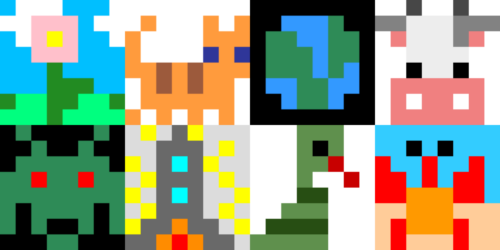
The 2024/2025 challenge was divided into two distinct tiers: Mission Zero and Mission Space Lab. Mission Zero, designed as an entry-level program for participants up to age 19, focuses on the intersection of art and technology. This year, 24,408 participants contributed to the creation of 17,170 individual programs. The objective was for students to write a simple Python script that displayed nature-inspired pixel art on the Astro Pi’s LED matrix for the astronauts on board.
A key technical requirement for this year’s Mission Zero was the integration of live sensor data. Participants were tasked with using the Astro Pi’s color sensor to detect the ambient lighting conditions within the ISS and use that data to set the background colors of their artwork. This requirement ensured that every piece of art was dynamic and responsive to the environment of the space station. The resulting gallery of pixel art has been compiled into an interactive digital mosaic, allowing teams to locate their specific contributions within a massive collaborative work of "orbital art." This mission serves as a critical first step for many students, demystifying the process of sending commands to a spacecraft and fostering a sense of connection to the international space community.
Mission Space Lab: Professional-Grade Science and the Blue Shift Mystery
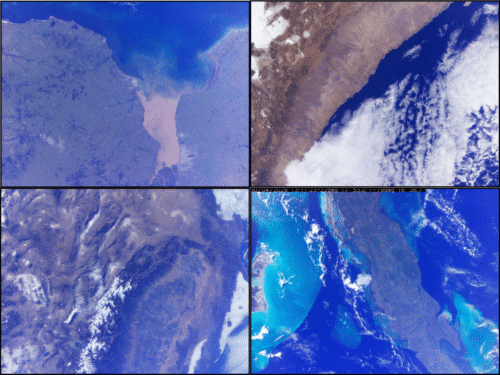
For more advanced students, Mission Space Lab offered the "Flight Status" challenge, where teams were required to design and execute a scientific experiment. This year, 387 teams, comprising 1,299 young programmers, successfully met the rigorous requirements to have their Python programs run on the ISS. The primary objective for most teams was to calculate the orbital speed of the ISS using the Raspberry Pi High Quality Camera and a series of sensors.
By capturing sequential images of the Earth’s surface and utilizing computer vision techniques to track geographic features, students were able to apply mathematical formulas to determine the station’s velocity—approximately 7.66 kilometers per second. However, the mission yielded more than just expected data; it provided a lesson in the unpredictability of real-world physics.
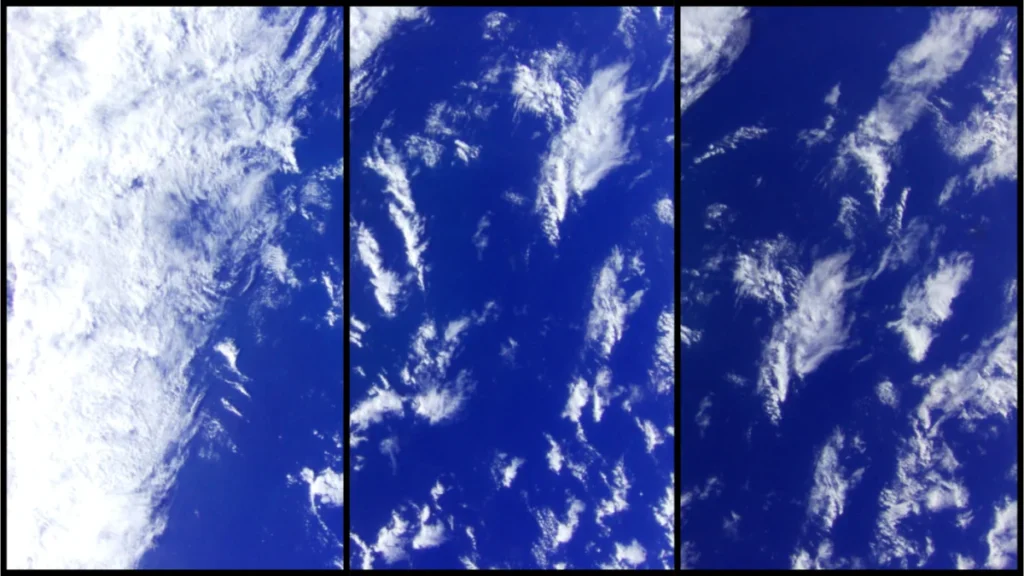
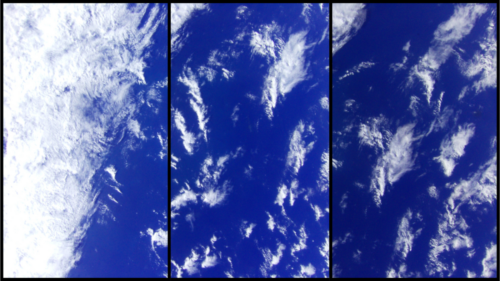
During the analysis of the returned data, researchers and participants noticed an unusual phenomenon: the color balance in several images of the ocean was shifting toward an intense, bright blue. Upon investigation, it was determined that the camera’s white balance algorithm was being influenced by "blue shift." This occurs at the "terminator line"—the boundary between day and night—where the spectrum of light compresses as the Earth rotates toward the camera at dawn. This discovery served as a profound educational moment, demonstrating how environmental factors in orbit can interfere with digital sensors and requiring students to adjust their data interpretation—a common challenge in professional astrophysics and satellite Earth observation.
Community Outreach and the Mission for Inclusivity
A central pillar of the tenth-anniversary celebrations was the expansion of outreach efforts to underserved communities. Organizers recognized that while the challenge is open to all, barriers to entry such as lack of equipment or specialized teacher training can limit participation in certain regions. To combat this, the Raspberry Pi Foundation and ESA ESEROs launched a series of targeted initiatives in the United Kingdom and Ireland.
Throughout the year, representatives visited schools, local coding clubs, and regional science festivals to provide hands-on demonstrations. Specialized training sessions were conducted for teachers and volunteers, equipping them with the tools to mentor Astro Pi teams effectively. By focusing on communities that traditionally have lower engagement with space science, the program aims to diversify the future pipeline of aerospace engineers and computer scientists. The success of these efforts is reflected in the record-breaking participation numbers, which include a higher percentage of first-time participating schools than in previous cycles.
Official Recognition and the 2025/26 Ambassador
The distribution of certificates marks the formal conclusion of the annual cycle, providing students with a tangible link to their work in space. Each certificate is personalized with the "metadata" of the team’s code execution, including the ISS’s latitude, longitude, and timestamp. This level of detail emphasizes the authenticity of the experience, reinforcing the fact that the code was not merely simulated, but actually processed in the vacuum of space.
Adding to the prestige of this year’s event was a special message from ESA Astronaut Sophie Adenot, who has been named the Astro Pi Ambassador for the 2025/26 cycle. In her address to the participants, Adenot emphasized the importance of curiosity and technical proficiency in the modern era of space exploration. As a member of the 2022 ESA astronaut class, Adenot represents the next generation of European space travelers, serving as a relatable role model for the students currently participating in the challenge.
Implications for STEM Education and the Global Workforce
The long-term implications of the Astro Pi Challenge extend far beyond the classroom. As the global economy becomes increasingly reliant on satellite technology, data analysis, and software development, initiatives like Astro Pi are essential for economic competitiveness. By engaging children as young as six in Mission Zero and challenging teenagers in Mission Space Lab, the program builds a foundation of "computational thinking"—the ability to solve complex problems through logic and algorithmic design.
Furthermore, the Astro Pi Challenge highlights the importance of international cooperation. The program involves students from across Europe and beyond, working with hardware developed in the UK and deployed on a multinational space station. This collaborative spirit mirrors the reality of the modern space industry, where large-scale projects like the Artemis program or the James Webb Space Telescope require the coordination of thousands of experts from different nations and disciplines.
Future Outlook: The Journey Continues
As the 2024/25 "Art in Orbit" and "Speed of Light" missions conclude, preparations are already underway for the next decade of the Astro Pi Challenge. The organizers have signaled that future iterations will continue to push the boundaries of what is possible with edge computing in space. Potential future themes may include the use of Artificial Intelligence (AI) and Machine Learning (ML) on the Astro Pi units to automate the identification of environmental changes on Earth, such as deforestation or melting polar ice caps.
The European Astro Pi Challenge has proven that space is no longer the exclusive domain of government agencies and billionaire-backed corporations. Through the power of accessible hardware and open-source software, a student in a small village can now contribute to the scientific discourse occurring on the International Space Station. As the program enters its second decade, the message to the next generation of "space travelers" remains clear: the journey into the stars begins with a single line of code. The curiosity sparked by a pixel art flower or a blue-shifted image of the Atlantic Ocean may very well lead to the next great breakthrough in our understanding of the universe.