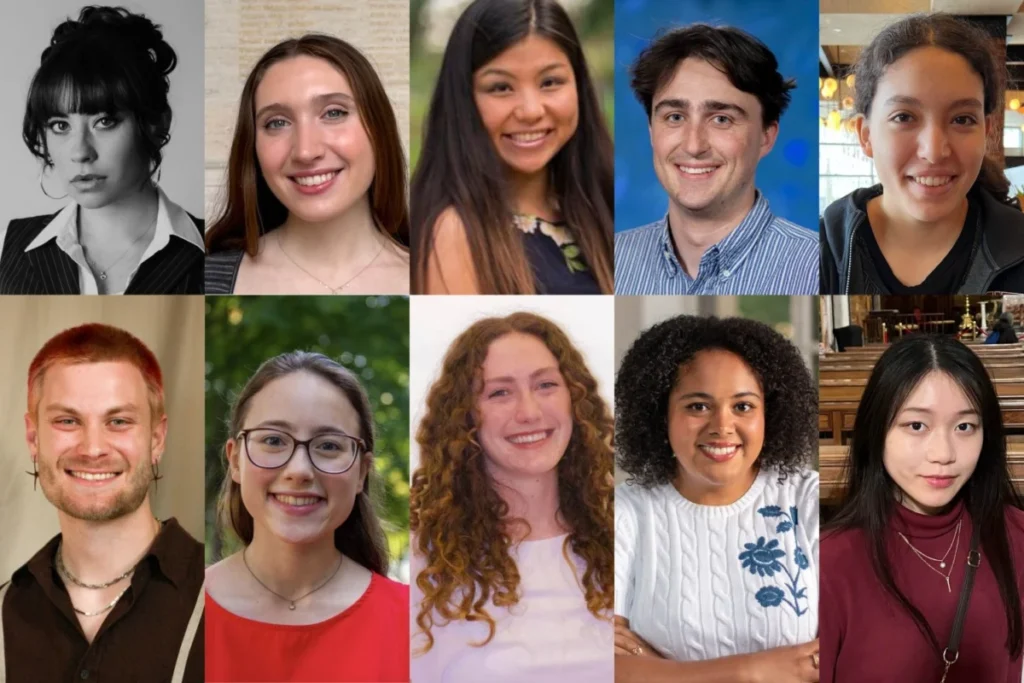
Eleven affiliates of the Massachusetts Institute of Technology, spanning a diverse cohort of undergraduates, graduate students, and alumni, have accepted Fulbright grants to embark on international research and teaching assignments for the upcoming academic year. This latest group of scholars underscores the institute’s continued dominance in the realm of global academic exchange, particularly within the fields of science, technology, engineering, and mathematics (STEM). The Fulbright U.S. Student Program, which is funded by the U.S. Department of State through annual congressional appropriations, remains one of the most competitive and prestigious fellowship programs in the world.
In the most recent application cycle, 17 of MIT’s 30 applicants were selected for awards, representing a success rate of nearly 57 percent. While 11 individuals have formally accepted their grants, five others declined the opportunity to pursue alternative academic or professional paths, and one student remains in the final decision-making process. This high rate of selection recently led the Fulbright Program to name MIT the nation’s No. 1 "Top Producing Institution" among special focus STEM universities, a distinction that highlights the institute’s commitment to fostering global perspectives alongside technical excellence.
A Legacy of International Cooperation and Scientific Diplomacy
The Fulbright Program was established in 1946 under legislation introduced by Senator J. William Fulbright. Its primary mission is to increase mutual understanding between the people of the United States and the people of other countries. For MIT affiliates, this mission translates into "science diplomacy," where technical expertise is used as a bridge to form international partnerships. The program currently operates in over 140 countries, offering year-long opportunities for American citizens to conduct independent research, pursue graduate degrees, or provide English language instruction.
The 2024-2025 cohort from MIT represents a broad spectrum of disciplines, from geophysics and mechanical engineering to science writing and neurobiology. These scholars will be stationed in countries as varied as Iceland, Brazil, South Korea, and Senegal, reflecting the global reach of the MIT community.
Advancing Healthcare and Biotechnology on a Global Scale
Several MIT Fulbright recipients are focusing their international tenures on the intersection of biology, medicine, and technology. Stella Gassman, a graduate in biological engineering with a concentration in women’s and gender studies, will relocate to the University of Copenhagen in Denmark. Her research will focus on microbiology, specifically building upon her previous work regarding the vaginal microbiome and mucosal membranes. Gassman’s trajectory at MIT was marked by a commitment to the human context of science, having worked at clinical trial sites in South Africa and volunteering in emergency departments. Her move to Denmark aims to bridge the gap between laboratory discovery and clinical impact.
In a similar vein, Claire Underwood, a chemical-biological engineering major, will conduct research at the University of Minho in Guimarães, Portugal. Underwood’s project involves high-throughput fabrication techniques for cell-embedded microtissues, a field with significant implications for drug discovery and the development of biomimetic systems. Having previously focused on lipid nanoparticle drug delivery for cancer treatment at MIT, her work in Portugal represents a continuation of her efforts to refine how therapeutic agents interact with human biology.
In Switzerland, Josephine Wang will join the NeuroAI Lab at EPFL in Lausanne. A computer science graduate, Wang’s research will explore the architectural similarities between brain-inspired language models and cortical organization. By investigating how functional clusters within AI models respond to targeted disruptions, she hopes to gain deeper insights into the computational nature of human language and behavior.
Engineering for Sustainability and Climate Resilience
The Fulbright program also serves as a platform for MIT engineers to address the pressing challenges of climate change and infrastructure resilience. Bryan Sperry, who holds dual degrees in physics and mechanical engineering, will travel to Brazil to collaborate with the Cenergia Lab at the Federal University of Rio de Janeiro. His research focuses on enhancing the climate resilience and energy equity of urban power grids. This work is particularly relevant as cities globally face increasing threats from extreme weather events and aging infrastructure.
In Sweden, Sophie Thompson will apply her background in chemical engineering to the textile industry. Working at the Swedish School of Textiles in Borås, she will test the performance of recycled carbon fiber composites. Thompson’s work addresses the critical need for sustainable materials in manufacturing, building on her previous internships at textile recycling startups and her research into prosthetic socket materials for low-resource environments.
Innovations in Robotics and Physics
The Fulbright U.S.-Korea Presidential STEM Initiative Award has been granted to Lilia Ould-Hammou, a mechanical engineering major. She will conduct research at Seoul National University’s Wearable Robotics Laboratory, focusing on adaptive exosuit control for balance recovery. This research has the potential to revolutionize assistive technologies for individuals with mobility impairments. Ould-Hammou’s work in South Korea will also allow her to integrate her technical research with an exploration of the nation’s cultural and linguistic heritage.
In Romania, Sophie Vulpe will work at the Extreme Light Infrastructure-Nuclear Physics (ELI-NP) institute. A physics and mathematics major, Vulpe will develop data-processing algorithms for a new monoenergetic gamma ray spectrometer. This work involves high-level computational physics and experimental design, contributing to the global understanding of nuclear structures and black hole dynamics.
Earth Sciences and Arctic Research
The Arctic region is a focal point for two MIT Fulbright recipients who received the Iceland-National Science Foundation (NSF) Arctic Research Award. Chen Li, a graduate of the System Design and Management program, will investigate the application of artificial intelligence and systems thinking to support the health and well-being of Arctic communities. Her work seeks to leverage large language models and statistical methods to address the unique logistical and social challenges faced by remote northern populations.
Liam Moser, who recently completed a PhD in geophysics through the MIT-WHOI Joint Program, will also head to Iceland. Based at Reykjavík University, Moser will utilize earthquake recordings to study the dynamics of the Hengill volcano and its associated geothermal areas. His research into subduction zones and tectonic dynamics is critical for understanding seismic hazards and optimizing geothermal energy extraction, a vital resource for Iceland’s economy.
Science Communication and Education
Beyond laboratory research, the Fulbright program emphasizes the importance of communication and education. Jessica Chomik-Morales, who earned a master’s in science writing, will travel to Spain to research the "science of science communication" at Universitat Pompeu Fabra’s Center for Brain and Cognition. Her project explores how narrative structures in science writing influence public trust and comprehension. As the creator of a Spanish-language neuroscience podcast, Chomik-Morales is a leading voice in making scientific discourse more inclusive and accessible.
On the pedagogical side, Alexandra Coston, a senior in architecture and design, will serve as an English teaching assistant in Senegal. Her placement highlights the Fulbright Program’s commitment to cultural exchange through education, allowing scholars to contribute to the linguistic and academic development of host communities while gaining firsthand experience in different social and cultural environments.
The Selection Process and Institutional Support
The success of MIT affiliates in the Fulbright competition is attributed in part to the robust support system provided by the institute. The Distinguished Fellowships office within Career Advising and Professional Development (CAPD) plays a pivotal role in guiding students through the rigorous application process. Julia Mongo, the Fulbright program advisor, works closely with applicants to refine their research proposals and personal statements, ensuring they align with the program’s mission of mutual understanding.
The application process typically begins a year in advance, requiring students to secure affiliations with host institutions abroad and undergo a series of internal and national reviews. The fact that MIT continues to produce a high number of successful candidates speaks to the caliber of the students’ research and their ability to articulate the global significance of their work.
Broader Implications for the MIT Community
The departure of these 11 scholars for their respective host countries marks a significant moment for MIT’s international footprint. As these affiliates engage in high-level research and teaching, they serve as ambassadors for American innovation and the MIT ethos of "Mens et Manus" (Mind and Hand). The knowledge and cultural insights they bring back upon their return will inevitably enrich the MIT campus and the broader scientific community.
Furthermore, the diversity of the projects—ranging from AI-driven healthcare in the Arctic to sustainable textiles in Scandinavia—illustrates how the Fulbright Program enables young researchers to tackle complex, multifaceted problems that require international collaboration. In an era where global challenges such as climate change, pandemics, and technological ethics transcend borders, the work of these Fulbright scholars represents a vital investment in the future of international stability and progress.
The 11 MIT affiliates will begin their grants in the coming months, joining a global network of Fulbright alumni that includes 62 Nobel Prize winners, 89 Pulitzer Prize recipients, and 41 heads of state or government. Their contributions over the next year will continue the long-standing tradition of academic excellence and international service that defines the Fulbright legacy.