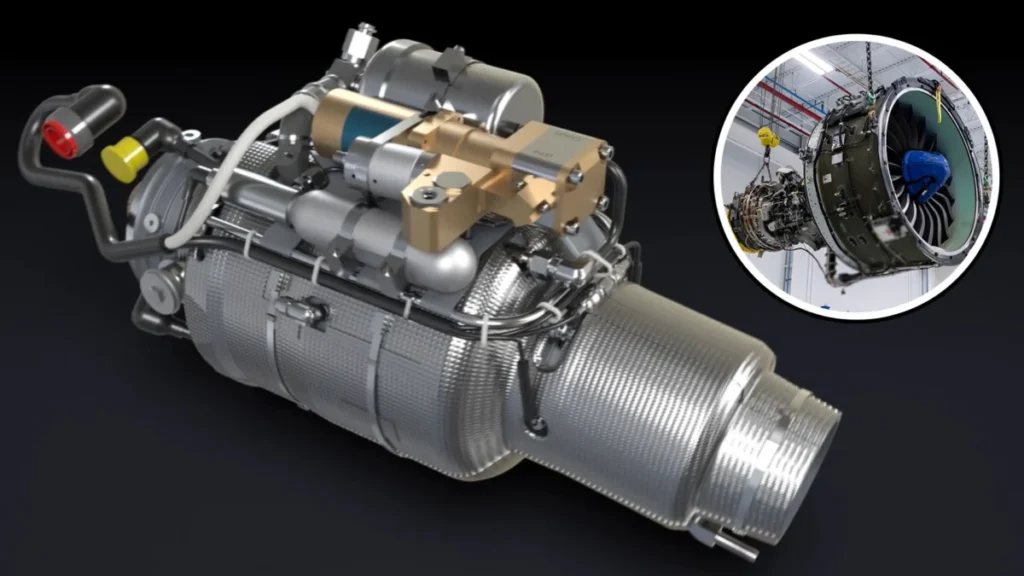
Pratt & Whitney, a prominent RTX business unit, has achieved a significant milestone in advanced manufacturing, successfully completing demonstration testing of an additively manufactured variant of its TJ150 turbojet engine. This pivotal validation underscores a transformative production methodology poised to significantly accelerate the manufacturing of expendable propulsion systems, a critical capability as global demand for cruise missiles and sophisticated autonomous weapons continues its steep ascent. The announcement, strategically made ahead of the prestigious Farnborough International Airshow, highlighted that nearly 60% of the engine’s volume now comprises 3D-printed components. Engineers meticulously evaluated the performance of this printed hardware under rigorous operating conditions, confirming its resilience against the intense thermal and mechanical stresses anticipated during operational missions. This achievement not only marks a technological leap for Pratt & Whitney but also signals a broader shift in the defense industrial landscape towards more agile, efficient, and scalable manufacturing processes.
The Strategic Imperative for Rapid Engine Production
The operational context for the TJ150 engine fundamentally differs from that of traditional reusable aircraft engines, which are designed for decades of service life and require extensive maintenance and overhaul cycles. The TJ150 is engineered to power expendable systems, meaning its operational lifespan typically spans mere minutes to a few hours. This distinct design philosophy liberates manufacturers to prioritize rapid production, simplified assembly, and substantially lower manufacturing costs, without compromising the stringent performance requirements crucial for mission success. In an era characterized by evolving geopolitical complexities and the increasing prevalence of high-intensity conflicts, the ability to rapidly produce and deploy such systems has become a paramount strategic necessity.
Pratt & Whitney’s embrace of additive manufacturing (AM) is a direct response to these evolving demands, offering a compelling pathway to achieve these ambitious goals. By leveraging AM, the company aims to drastically reduce the total number of individual parts required for an engine, thereby shortening overall production timelines and enhancing the ease with which output can be scaled to meet fluctuating demands. Jill Albertelli, President of Military Engines at Pratt & Whitney, emphasized this strategic advantage, stating, "For expendable engines like the TJ150, where missions can last minutes or hours, simplifying the design and scaling production quickly is essential to meeting rising demand." Her remarks underscore the fundamental shift in manufacturing philosophy driven by the unique requirements of expendable platforms. She further noted that additive manufacturing empowers the company to transition new engine designs from initial conceptualization to full operational capability with unprecedented speed, a crucial factor in maintaining technological superiority. The insights gleaned from the TJ150 program are not confined to this specific engine; Pratt & Whitney is strategically applying these valuable lessons to future propulsion initiatives, including its advanced Valox engine family, signaling a long-term commitment to integrating AM across its product portfolio.
Additive Manufacturing: A Catalyst for Design and Production Innovation
The integration of additive manufacturing into the TJ150 program represents a calculated and progressive evolution. Initially, engineers likely began by printing less critical components to build confidence and gather data. Over time, as processes matured and material science advanced, the scope of AM application steadily expanded. A notable achievement in this progression involved the consolidation of more than 50 individual hot-section components – traditionally complex and difficult to manufacture parts – into a mere handful of printed assemblies. This significant reduction in component count not only simplifies the overall assembly process but also inherently reduces the number of potential failure points, thereby enhancing reliability. The team also undertook and successfully completed rigorous testing of a 3D-printed rotating turbine wheel, a highly critical component subjected to extreme rotational speeds and temperatures, before its full integration into the latest engine configuration. This methodical approach to qualifying and integrating AM parts highlights the company’s commitment to ensuring performance and safety standards are met.
Additive manufacturing, often referred to as 3D printing, transforms digital designs into physical objects by adding material layer by layer. For aerospace applications, this typically involves high-performance metal alloys such as nickel-based superalloys or titanium, processed using techniques like powder bed fusion (e.g., Selective Laser Melting) or directed energy deposition. These methods offer unparalleled design freedom, allowing for the creation of intricate internal geometries, optimized cooling channels, and lightweight lattice structures that are impossible to produce with conventional manufacturing techniques. This capability is particularly beneficial for complex engine components operating under extreme conditions, where every gram of weight and every degree of cooling efficiency can significantly impact performance.
Beyond design advantages, AM directly addresses the challenges of traditional manufacturing supply chains. Instead of sourcing dozens of distinct components from various suppliers, a single integrated part can be printed in-house or by a specialized AM facility. This simplification reduces lead times, mitigates supply chain risks, and offers greater flexibility in responding to production surges or design modifications. The ability to produce complex parts on demand, without the need for expensive and time-consuming tooling, is a game-changer for programs requiring rapid iteration and scalable production.
The TJ150: Powering the Next Generation of Missile Systems
The TJ150 stands as a testament to efficient engineering, characterized by its compact turbojet design that delivers over 150 pounds of thrust. Its operational efficiency at high altitudes, combined with its small form factor, makes it an ideal propulsion system for a diverse array of cruise missiles and other autonomous platforms. In these applications, critical design parameters such as weight, overall packaging dimensions, and fuel efficiency directly dictate the system’s operational range and payload capacity. Optimizing these factors is paramount for maximizing mission effectiveness.
The engine has already established a significant footprint in the defense sector, currently supporting multiple missile applications, with Pratt & Whitney having delivered more than 2,700 units to customers globally. Its inherently modular design further enhances its appeal, allowing production to scale efficiently as defense programs transition from the development phase into higher-rate manufacturing. This modularity is crucial for meeting the dynamic procurement needs of modern defense forces, which often require rapid adjustments to production volumes in response to evolving strategic requirements.
The strategic importance of this capability was underscored in March when Pratt & Whitney secured a follow-on contract from Leidos Dynetics to supply TJ150 engines for the AGM-190A small cruise missile. This award not only reinforced the engine’s pivotal role within a critical defense program but also mirrored the escalating demand across the broader defense sector for compact, high-performance propulsion systems capable of powering the next generation of precision-guided munitions and unmanned aerial systems. Analysts frequently point to global events, such as ongoing conflicts and heightened geopolitical tensions, as primary drivers for this surge in demand, prompting defense ministries worldwide to invest heavily in advanced missile capabilities.
Pratt & Whitney has explicitly stated that additive manufacturing is a cornerstone of its long-term production strategy for the TJ150. Beyond the immediate benefits of reducing component counts and simplifying assembly, the AM approach broadens supply chain options, significantly speeds up manufacturing cycles, and provides unparalleled flexibility when it comes to increasing output. The successful demonstration testing of the 3D-printed engine unequivocally confirms its ability to meet stringent operational requirements while simultaneously supporting a faster and more scalable manufacturing model, which is vital for future missile propulsion systems. This strategic pivot positions Pratt & Whitney at the forefront of defense manufacturing innovation, ready to meet the evolving demands of a rapidly changing global security landscape.
Broader Implications for the Defense Industrial Base
The successful demonstration of the 3D-printed TJ150 engine carries profound implications, extending far beyond Pratt & Whitney’s immediate product lines. This achievement serves as a powerful validation for the transformative potential of additive manufacturing across the entire defense industrial base.
Firstly, it signals a significant step towards enhanced supply chain resilience. Traditional aerospace manufacturing relies on complex global supply chains involving hundreds, if not thousands, of specialized suppliers for individual components. This intricate web can be vulnerable to disruptions caused by geopolitical events, natural disasters, or economic fluctuations. By consolidating multiple parts into a single 3D-printed component and potentially bringing more manufacturing in-house or to regional AM hubs, companies like Pratt & Whitney can drastically reduce their exposure to these risks. This shift fosters a more robust and secure domestic manufacturing capability, a priority for many nations concerned with national security and strategic autonomy.
Secondly, the emphasis on accelerated production and scalability addresses a critical challenge facing modern defense procurement. In dynamic conflict environments, the ability to rapidly replenish expended munitions and deploy new systems can be a decisive factor. Conventional manufacturing processes, with their long lead times for tooling, casting, and machining, often struggle to surge production quickly. Additive manufacturing, by contrast, can rapidly scale output by simply increasing the number of printers or shifting production to other AM facilities, offering an agility previously unattainable. This capability aligns perfectly with the concept of "attritable" systems – cost-effective, high-volume assets that can be risked in combat without significant economic or industrial burden.
Thirdly, this development underscores the advancement in material science and qualification standards for additive manufacturing. For years, one of the primary hurdles for AM in critical aerospace applications was the rigorous process of qualifying new materials and validating the performance of printed parts to the same exacting standards as conventionally manufactured components. The successful testing of hot-section components and a rotating turbine wheel demonstrates that these challenges are being systematically overcome, paving the way for wider adoption across other critical engine parts and systems. This progress will likely spur further investment in AM research and development across the aerospace and defense sectors, accelerating innovation.
Finally, the lessons learned from the TJ150 program are not isolated. Pratt & Whitney’s intention to apply these insights to future propulsion projects, such as the Valox engine family, indicates a strategic, long-term commitment to integrating AM into its core manufacturing processes. This suggests that additive manufacturing is not merely a niche solution for expendable systems but a foundational technology that will influence the design, development, and production of a broader range of aerospace propulsion systems, potentially even informing aspects of next-generation reusable engines where weight and performance optimization remain paramount.
Industry analysts and defense strategists are likely to view this achievement as a testament to the ongoing transformation of the defense industrial base. Experts might suggest that this move by Pratt & Whitney exemplifies how leading defense contractors are embracing disruptive technologies to meet the challenges of 21st-century warfare. It’s a clear signal that the future of defense manufacturing will be characterized by greater automation, digital integration, and an unparalleled ability to rapidly innovate and adapt. While challenges remain, particularly in workforce development to manage these advanced manufacturing processes and in establishing comprehensive qualification frameworks across the industry, the trajectory is clear: additive manufacturing is set to redefine how propulsion systems are conceived, designed, and brought to life. This milestone solidifies Pratt & Whitney’s position as a leader in this critical technological frontier, poised to deliver innovative solutions that will shape the future of defense capabilities.