A groundbreaking study led by physicists at the Massachusetts Institute of Technology (MIT) and several European institutions has introduced a sophisticated method to search for the elusive presence of dark matter using gravitational waves. By analyzing the ripples in spacetime generated by colliding black holes, the research team has identified a potential "imprint" of dark matter in a previously recorded signal, designated GW190728. This development marks a significant shift in the search for dark matter, moving beyond traditional particle detectors to utilize the universe’s most violent astrophysical events as natural laboratories.
The research, published in the journal Physical Review Letters, suggests that while most black hole mergers occur in the near-vacuum of space, some may take place within dense environments of dark matter. If a binary black hole system—two black holes orbiting one another—spirals through such a medium, the dark matter should exert a subtle but detectable influence on the gravitational waves emitted during the final stages of the merger. While the researchers emphasize that this does not yet constitute a definitive discovery of dark matter, the methodology provides a vital screening tool for future observations as gravitational-wave astronomy enters a new era of precision.
The Invisible Majority: Contextualizing the Dark Matter Mystery
Dark matter remains one of the most profound mysteries in modern physics. Despite accounting for approximately 85 percent of all matter in the universe, it has never been directly observed. It does not emit, absorb, or reflect light, making it invisible to traditional telescopes across the entire electromagnetic spectrum. Its existence is inferred solely through its gravitational effects on visible matter, such as the rotation curves of galaxies and the gravitational lensing of light from distant clusters.
Physicists have proposed various candidates for dark matter, ranging from Weakly Interacting Massive Particles (WIMPs) to extremely light particles known as "light scalars." These scalar particles are theorized to have masses many orders of magnitude smaller than that of an electron. According to quantum field theory, such light particles would behave more like waves than individual billiard-ball-like particles when interacting with massive objects like black holes.
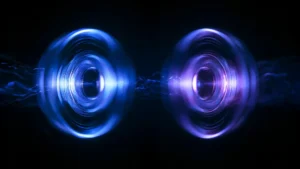
The MIT-led study focuses specifically on these light scalar particles. When these waves of dark matter encounter a rapidly rotating black hole, a process known as "superradiance" can occur. In this scenario, the black hole’s rotational energy is transferred to the surrounding dark matter field, causing the density of the dark matter to increase exponentially. This creates a "dark matter cloud" or "boson cloud" around the black hole, which would then interfere with the orbital mechanics of a binary system.
The Mechanism of Superradiance and Dynamical Friction
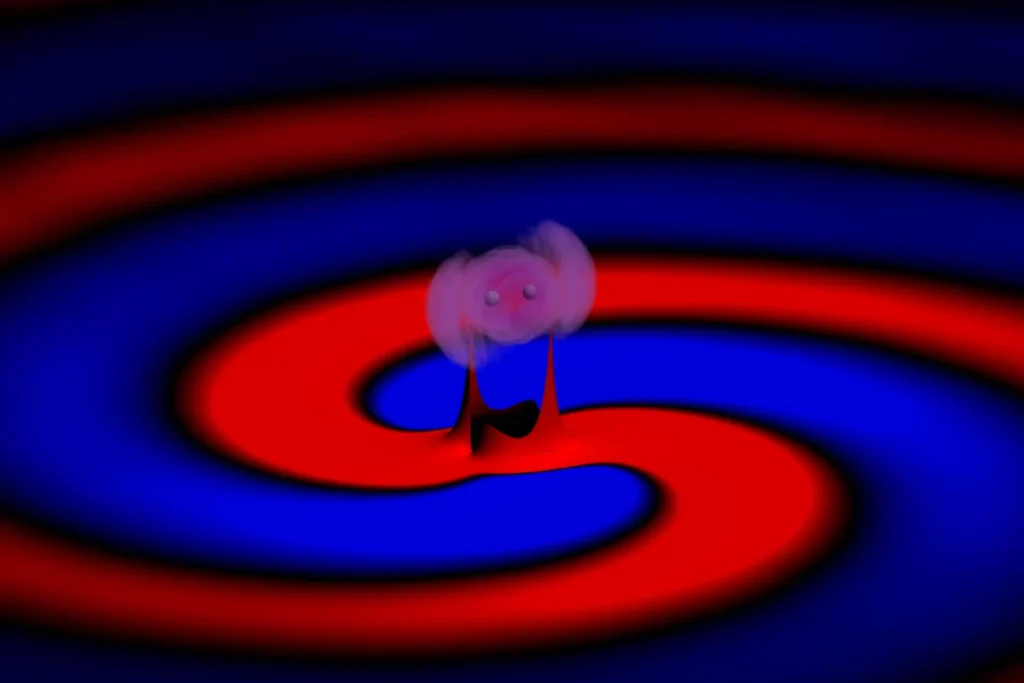
The core of the researchers’ prediction lies in how a dense cloud of dark matter would affect the "chirp" of a gravitational wave. As two black holes orbit each other, they lose energy by emitting gravitational waves, causing them to spiral inward. If this process occurs within a dense dark matter cloud, the black holes experience additional resistance known as "dynamical friction."
This friction acts as a drag force, slightly altering the speed at which the black holes approach one another. Furthermore, the presence of the dark matter cloud changes the total mass and gravitational potential of the system. These factors combined create a unique "imprint" on the gravitational waveform—the specific pattern of frequency and amplitude increases that detectors on Earth record.
To identify these imprints, the research team, including Josu Aurrekoetxea of MIT, Soumen Roy of the Université Catholique de Louvain, and colleagues from the University of Amsterdam, Queen Mary University of London, and Oxford University, developed complex numerical simulations. These simulations modeled black hole binaries across a wide range of masses, spins, and dark matter densities to predict exactly how a signal would deviate from a vacuum-based merger.
A Chronology of Gravitational Wave Detection
The search for these imprints relied on data provided by the LIGO-Virgo-KAGRA (LVK) collaboration. The timeline of this field is relatively short but remarkably productive:
- 2015: The first direct detection of gravitational waves (GW150914) by the Laser Interferometer Gravitational-Wave Observatory (LIGO), confirming a major prediction of Albert Einstein’s General Theory of Relativity.
- 2017: The first detection of a neutron star merger (GW170817), ushering in the era of multi-messenger astronomy.
- 2019: The detection of GW190728 during LIGO’s third observing run (O3). This signal originated from a binary system with a total mass approximately 20 times that of the Sun.
- 2024: The publication of the MIT-led study, which re-analyzed O3 data using the new dark matter waveform models.
The LVK network has now recorded over 100 confirmed gravitational-wave events. For their study, the MIT researchers selected 28 of the highest-quality signals to ensure that any detected deviations were not the result of background noise or instrumental artifacts.
Analyzing the Data: The Case of GW190728
Of the 28 clear signals analyzed, the researchers found that 27 were perfectly consistent with mergers occurring in a vacuum. This was expected, as the majority of black holes are thought to reside in regions where dark matter density is insufficient to leave a measurable mark. However, the event recorded on July 28, 2019—GW190728—stood out.
The statistical analysis of GW190728 showed a "preference" for the dark matter model over the vacuum model. In scientific terms, this means the observed waveform matched the predictions for a merger within a dense dark matter environment better than it matched the standard model for empty space.
"The statistical significance of this is not high enough to claim a detection of dark matter," cautioned Josu Aurrekoetxea. However, he noted the importance of the finding: "Without waveform models like ours, we could be detecting black hole mergers in dark matter environments, but systematically classifying them as having occurred in vacuum."
This suggests that current estimates of black hole properties—such as their masses and distances—might be slightly skewed if scientists assume every merger happens in a vacuum when, in fact, some are interacting with dark matter.
Supporting Data and Technical Framework
The researchers’ model utilized Bayesian inference to compare the likelihood of the two scenarios (vacuum vs. dark matter). The "light scalar" dark matter they modeled is particularly interesting because it predicts a specific type of interference. Because these particles are so light, their De Broglie wavelength is comparable to the size of the black hole itself, leading to wave-like interference patterns in the gravitational signal.
Key parameters in their simulation included:
- Mass Ratio: The relative size of the two colliding black holes.
- Spin Magnitude: The rotational speed of the primary black hole, which dictates the strength of the superradiance effect.
- Dark Matter Density: The concentration of the hypothetical "cloud" surrounding the binary.
The model demonstrated that if the dark matter is dense enough, it effectively saps orbital energy from the binary, causing the black holes to merge faster than they would otherwise. This "acceleration" of the merger process shifts the phase of the gravitational waves, a change that the MIT team’s model is specifically designed to detect.
Reactions and Broader Scientific Implications
The broader scientific community has viewed the study as a vital step toward "Precision Gravitational Wave Astronomy." By providing a mathematical framework to account for environmental effects, the researchers have given the LVK collaboration a new lens through which to view future data.
Co-author Rodrigo Vicente highlighted the potential for scaling this research, stating that using black holes as probes would allow scientists to "probe dark matter at scales much smaller than ever before." Traditionally, dark matter is studied on the scale of entire galaxies (kiloparsecs). Gravitational waves allow for the study of dark matter on the scale of black hole event horizons (kilometers), providing a much higher resolution of its local behavior.
The implications for "new physics" are substantial. If a dark matter imprint is eventually confirmed with high statistical significance (typically a "5-sigma" threshold), it would not only prove the existence of dark matter but also reveal its fundamental nature—specifically, whether it consists of light scalar particles like axions.
Future Outlook: The O4 Run and Beyond
The timing of this study is particularly relevant as the LVK network is currently in its fourth observing run (O4), which features upgraded sensitivity and a higher rate of detections. With more frequent and clearer signals, the probability of finding a merger within a dense dark matter region increases.
Furthermore, future missions like the Laser Interferometer Space Antenna (LISA), a space-based gravitational wave detector led by the European Space Agency and NASA, will be able to detect much lower-frequency gravitational waves. These lower frequencies are produced by supermassive black holes and long-duration inspirals, providing even more time for dark matter to leave a detectable imprint on the signal.
As the global network of observatories expands to include the Einstein Telescope in Europe and Cosmic Explorer in the United States, the ability to screen for dark matter will become a standard part of gravitational-wave analysis. The work by the MIT and European teams ensures that when the "ghost" of dark matter finally reveals itself, scientists will have the tools ready to recognize its signature.
In conclusion, while the mystery of dark matter remains unsolved, the development of dark-matter-aware waveforms represents a significant leap forward. By acknowledging that the "vacuum" of space may be filled with invisible matter, physicists are finally beginning to hear the full symphony of the cosmos, including the notes played by its most silent participants.