The Genesis of a Universal Debugging Tool
The ESP32 Bit Pirate was born from the frequent challenges faced by developers when interacting with unknown or undocumented hardware. In the process of developing or debugging electronic systems, engineers often encounter a "black box" scenario—a chip, sensor, or memory module that requires immediate, low-level communication to verify its functionality or identify its communication protocol. Historically, this required writing dedicated test scripts or utilizing expensive, proprietary logic analyzers and bus sniffers.
Geo’s solution leverages the high-speed processing and peripheral flexibility of the ESP32-S3 microcontroller to create a bridge between a computer (or a handheld interface) and the target hardware. By providing a standardized interface for sending raw transactions, scanning buses, and dumping memory, the ESP32 Bit Pirate eliminates the friction of the "setup phase" in hardware hacking. The creator noted that the project emerged from a practical necessity to validate hardware quickly and reverse-engineer protocols without the overhead of a dedicated development environment for every new peripheral.
Technical Foundations: The Legacy of the Bus Pirate
To understand the significance of the ESP32 Bit Pirate, one must look at its spiritual predecessor: the Bus Pirate. Originally developed by Ian Lesnet of Dangerous Prototypes, the Bus Pirate became a staple of the maker and security communities in the late 2000s. It was one of the first open-source tools that allowed a user to "talk" to a chip via a serial terminal, supporting protocols like I2C, SPI, and UART.
While the original Bus Pirate was revolutionary, modern hardware demands higher speeds, more memory, and better connectivity. The ESP32-S3, which serves as the primary target for the Bit Pirate firmware, offers significant upgrades over the microcontrollers of a decade ago. With a dual-core Xtensa LX7 processor running at up to 240 MHz, integrated Wi-Fi and Bluetooth, and a highly flexible GPIO (General Purpose Input/Output) matrix, the ESP32-S3 is uniquely suited to emulate a wide variety of hardware interfaces in real-time.

Key Features and Supported Protocols
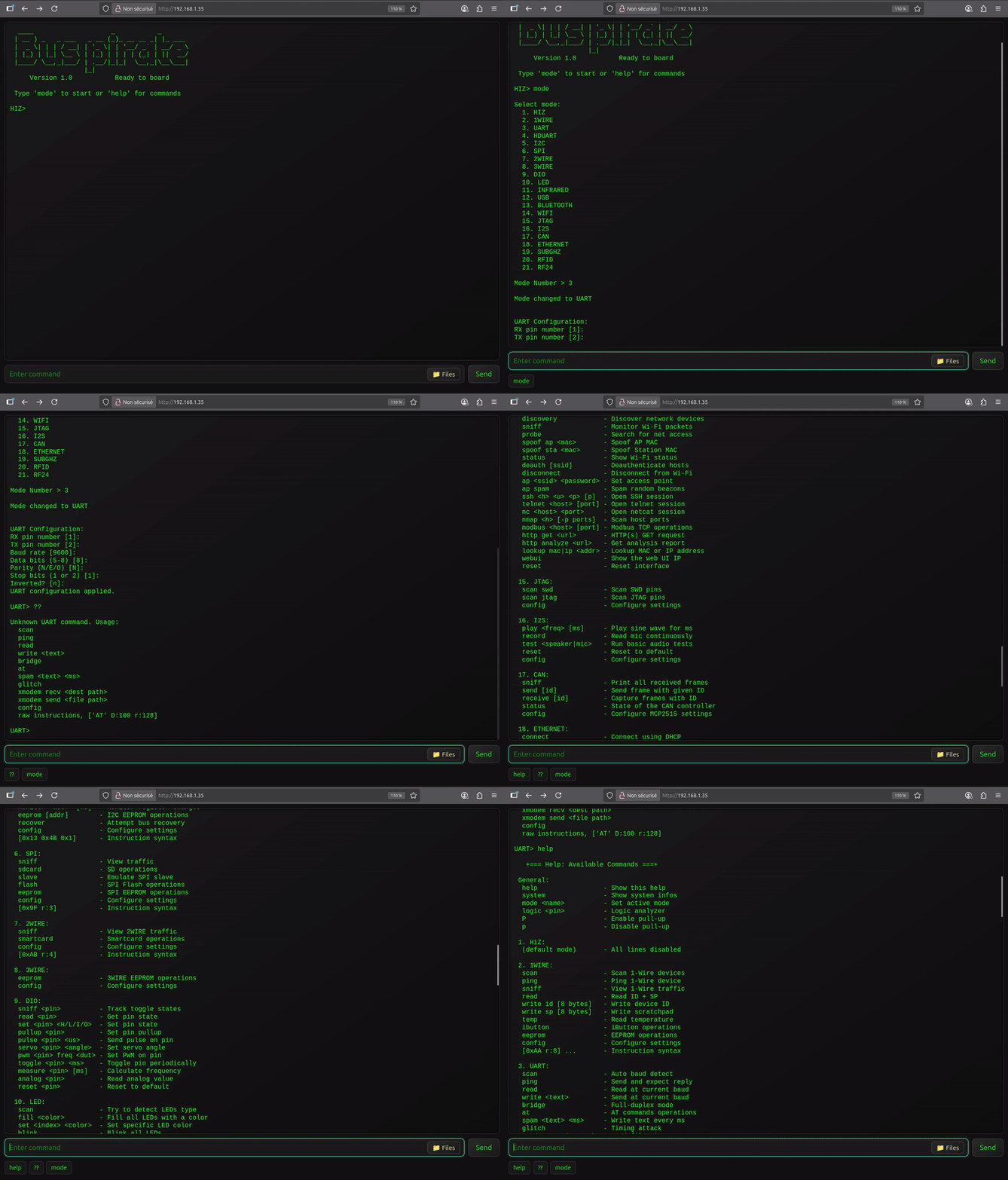
The ESP32 Bit Pirate is designed to be a versatile multi-tool. Its primary function is to act as a bridge between the user and various serial communication protocols. These include:
- I2C (Inter-Integrated Circuit): A common two-wire protocol used for sensors and small peripherals. The Bit Pirate can scan the entire I2C address space to identify connected devices, read from specific registers, and write configuration data.
- SPI (Serial Peripheral Interface): A higher-speed four-wire protocol often used for flash memory and displays. The tool allows for raw data transfers and can be used to "dump" the contents of SPI flash chips, a critical step in firmware analysis and reverse engineering.
- UART (Universal Asynchronous Receiver-Transmitter): The standard for serial console access. The Bit Pirate can act as a high-speed USB-to-Serial adapter with the added benefit of being able to sniff existing traffic between two other devices.
- Infrared and Sub-GHz: Depending on the hardware used, the firmware can also interact with wireless protocols, making it a valuable tool for testing remote controls or IoT devices.
The utility of the Bit Pirate extends to "unknown" hardware. If a developer finds a sensor on a PCB but does not know its address or protocol, the Bit Pirate can be used to probe the pins and observe the response, effectively mapping out the hardware’s digital footprint.
Portability and Hardware Integration
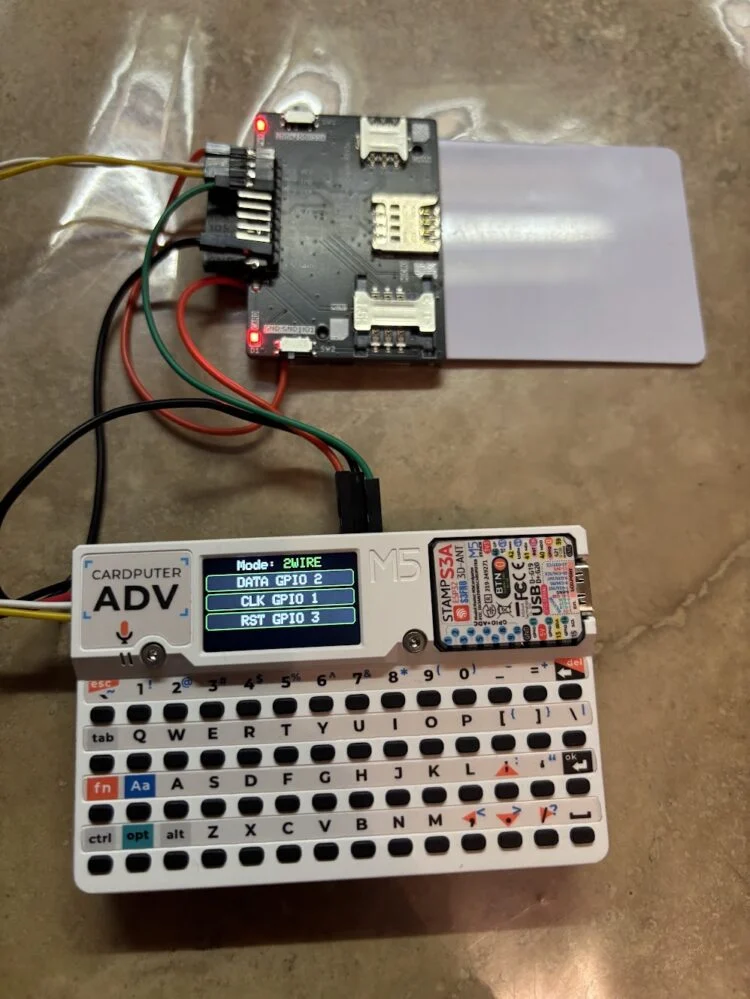
One of the most striking features of the ESP32 Bit Pirate is its compatibility with a wide range of hardware, most notably the M5Stack Cardputer. The Cardputer is a pocket-sized device that includes an ESP32-S3, a small TFT screen, and a physical QWERTY keyboard. By running the Bit Pirate firmware on this device, the user gains a completely standalone hardware hacking terminal.
This portability is a game-changer for field technicians and security auditors. Instead of tethering a laptop to a target device via a series of cables and adapters, a user can simply connect the Cardputer directly to the target’s pins and perform debugging tasks using the built-in screen and keyboard. For those using standard dev kits, the tool is typically accessed via a serial terminal on a PC, providing a clean and intuitive command-line interface (CLI) for hardware exploration.
The Role of the ESP32-S3 in Modern Prototyping
The choice of the ESP32-S3 as the platform for the Bit Pirate is not coincidental. Since its release by Espressif Systems, the S3 variant has become the gold standard for high-performance IoT development. According to industry data, the ESP32 series has seen an exponential growth in adoption, with millions of units shipped annually. Its success is driven by its low cost (often under $5 USD for a full development board) and its robust software ecosystem, including support for the Arduino IDE, MicroPython, and the ESP-IDF (IoT Development Framework).

The ESP32-S3 specifically introduced features that are vital for a tool like the Bit Pirate, such as native USB support. This allows the board to appear as a standard serial port or even a human interface device (HID) to a computer, simplifying the connection process and increasing data throughput for memory-intensive tasks like dumping large flash chips.
Educational and Professional Implications
Beyond its utility for experienced engineers, the ESP32 Bit Pirate serves as a powerful educational tool. For students learning about digital electronics, the ability to see a live "conversation" between a microcontroller and a sensor is invaluable. The project is documented with a focus on accessibility, ensuring that even those new to hardware debugging can follow the logic of bus scanning and register manipulation.
In a professional setting, the Bit Pirate addresses the "rapid prototyping" needs of modern startups. In the early stages of product development, engineers often need to test multiple sensors from different manufacturers to see which one best fits their requirements. Writing a full driver for each candidate sensor is time-consuming. With the Bit Pirate, an engineer can verify the performance and data output of a sensor in minutes, significantly shortening the development cycle.
Chronology of Development and Open Source Contribution
The development of the ESP32 Bit Pirate follows a classic open-source trajectory. Geo initially developed the core firmware to solve personal workflow bottlenecks. After recognizing the broader utility of the tool, the project was moved to GitHub, where it has begun to attract contributions from the wider maker community.
- Phase 1: Conceptualization. Identification of the need for a modern, ESP32-based alternative to legacy bus tools.
- Phase 2: Core Protocol Implementation. Development of the basic I2C and SPI scanning engines.
- Phase 3: Hardware Abstraction. Adapting the code to run on various form factors, including the M5 Cardputer and LilyGo T-Display modules.
- Phase 4: Community Release. Making the source code public and providing pre-compiled binaries for easy installation.
The project remains in active development, with future updates expected to include more advanced protocol support, such as CAN bus (widely used in automotive applications) and 1-Wire.
Expert Analysis: The Democratization of Hardware Security
Security analysts suggest that tools like the ESP32 Bit Pirate contribute to the "democratization" of hardware security. In the past, the ability to extract firmware from a device or intercept bus traffic was limited to those with expensive laboratory equipment. Today, with a $20 development board and open-source firmware, almost anyone can perform a security audit on a consumer device.
While this lowers the barrier for "white hat" researchers to find and report vulnerabilities, it also highlights the need for manufacturers to implement better hardware-level security, such as encrypted flash memory and disabled debug ports. The Bit Pirate is a neutral tool, but its existence underscores the reality that "security through obscurity" is no longer a viable strategy in an era of accessible high-performance debugging tools.
Conclusion and Future Outlook
The ESP32 Bit Pirate is more than just a firmware set; it is a testament to the power of the modern maker movement and the versatility of the ESP32 ecosystem. By consolidating multiple expensive bench tools into a single, portable, and open-source package, Geo has provided a significant service to the global community of developers and tinkerers.
As hardware becomes more complex and interconnected, the demand for intuitive, low-level debugging tools will only continue to grow. Whether it is used to fix a broken household appliance, develop a new IoT product, or teach the next generation of engineers, the ESP32 Bit Pirate is poised to become an essential part of the modern electronic toolkit. Those interested in exploring the project or contributing to its development can find the full source code and documentation on the official GitHub repository, where the project continues to evolve through community feedback and iterative design.