Backyard Brains, a company renowned for its innovative approaches to democratizing neuroscience education, has unveiled SpikerBot, a groundbreaking robot designed to introduce students and enthusiasts to the intricacies of neural networks through an intuitive, code-free programming interface. This pioneering device aims to transform how individuals learn about engineering and the human brain, making complex biological principles accessible and engaging from an early age. Co-Founder & CEO Greg Gage and Designer Alex Hatch highlighted SpikerBot’s unique ability to foster lifelike robotic behaviors using virtual neurons, bypassing the traditional hurdles of computer logic and extensive coding. The project, which has garnered significant attention on its Kickstarter campaign, represents a pivotal step in bridging the long-standing educational gap in neuroscience.
The genesis of SpikerBot stems from a critical observation regarding the current state of neuroscience education. As Gage and Hatch elucidated, students typically encounter the basic functions of a single neuron in elementary school, but the comprehensive study of how millions of neurons interact to create complex behaviors is often deferred until higher education, typically at the collegiate level. This creates a substantial chasm in understanding, akin to learning about a transistor without any intermediate knowledge before diving into advanced programming languages like Python. Backyard Brains’ mission with SpikerBot is to bridge this gap, combating what they term "neuroscience illiteracy" by providing a hands-on, experiential learning platform that allows users to explore the fundamental building blocks of intelligence.

At the heart of SpikerBot’s innovation is its revolutionary programming language, which eschews conventional text-based code and if-then statements in favor of a visual, neuron-centric approach. The accompanying app allows users to construct "sketches" entirely from virtual neurons and synapses, effectively designing a brain circuit on screen. As the creators proudly state, "there’s no code, no LLMs, just neurons, synapses, and behavior emerging from a circuit a kid designed." This philosophy draws inspiration from Valentino Braitenberg’s seminal work, Vehicles, which posits that complex, seemingly intelligent behaviors can emerge from remarkably simple sensor-motor connections. SpikerBot embodies this principle, allowing the robot to respond directly to its onboard sensors, resulting in dynamic, lifelike behaviors that feel organic and intuitive.
This paradigm shift in programming offers several compelling advantages for learners. Instead of grappling with abstract syntax and debugging lines of code, users visually connect and configure neurons and axons, much like arranging cables on a patch synthesizer. This "whole picture" approach provides an immediate, holistic understanding of the circuit’s function. The learning curve is dramatically flattened, enabling beginners to achieve complex behaviors that would typically be challenging for novice roboticists. For instance, creating a creature that chases objects can be accomplished with as few as two neurons. Conversely, tasks that are trivial for traditional computer logic, such as counting in binary, become intricate webs of neural connections, offering a unique perspective on the differences between biological and silicon-based computation. This intuitive, natural approach is anticipated to sustain user engagement significantly longer than conventional robotics kits that demand a foundational understanding of computer science before any "dog-like" behaviors can be programmed.
A cornerstone of SpikerBot’s design is its commitment to instant feedback and iterative experimentation. Every modification made within the app – whether changing a neuron from excitatory to inhibitory or altering a synaptic connection – manifests immediately in the robot’s behavior. There is no compilation time, no lengthy upload process; changes are reflected at the pace of thought and experimentation, fostering a dynamic learning environment that encourages curiosity and rapid prototyping. This seamless interaction between virtual design and physical manifestation is a testament to the extensive development and refinement poured into the app, ensuring a polished and engaging user experience from the outset.

Beyond merely creating lifelike movements, SpikerBot is meticulously grounded in scientific pedagogy. The platform is designed to teach genuine neuroscience principles, such as recurrent pairs, lateral inhibition, and the mechanics of working memory. Its development benefited from rigorous feedback from both child educators and professional neuroscientists, ensuring that the learning journey is both accurate and age-appropriate. The app includes a comprehensive library of sample brain models, allowing users to deconstruct, edit, and learn from established neural patterns. Furthermore, SpikerBot supports peripherals, including Backyard Brains’ existing Spiker:bit board, which enables users to control their neural-networked robot using real-time muscle signals from their own bodies, blurring the lines between human biology and machine intelligence.
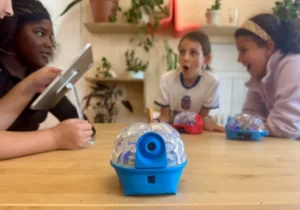
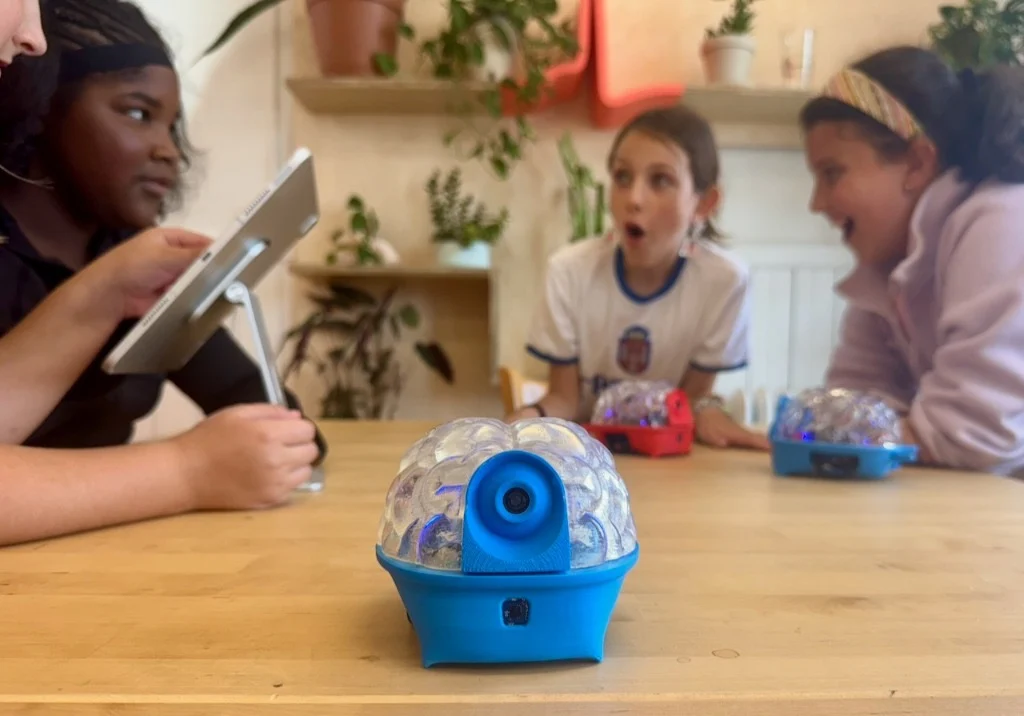
The physical embodiment of this educational innovation is the SpikerBot itself – a distinctively brain-shaped robot, echoing Backyard Brains’ logo. This chassis is not merely decorative; it is packed with an array of sensors, including a camera, microphone, and a distance sensor, allowing it to perceive and react to its environment in a sophisticated manner. Its lights and sounds are also crafted to mimic natural biological responses, with lights fading in and out like bioluminescent cells and sound effects designed to be charming and quirky rather than purely mechanical. For added customization, the robot features connection points that support 3D-printed attachments, empowering owners to imbue their SpikerBot with a unique personality and form factor, from a waddling creature to a dragon-like entity.
The broader societal implications of SpikerBot extend far beyond traditional STEM applications. With approximately one in five individuals experiencing a neurological condition, fostering a shared language and foundational understanding of brain patterns is crucial. SpikerBot offers a tangible way to grasp how various neurological conditions might manifest, demystifying the brain’s complex operations. By enabling users to actively build and observe neural circuits, the robot provides an accessible entry point into understanding the mechanisms of thought, perception, and behavior, potentially inspiring a new generation of neuroscientists and empathetic citizens.

Backyard Brains has also demonstrated a commendable commitment to the long-term viability and accessibility of SpikerBot. The accompanying app is freely available and operates without requiring cloud-based authentication, ensuring user autonomy and privacy. The robot itself is powered by easily swappable AA batteries, a deliberate choice over non-replaceable lithium cells, addressing concerns about product longevity and environmental impact. To further support sustainable usage, Backyard Brains offers its own custom, high-performance NiMh AA batteries, promoting rechargeability. This forward-thinking design philosophy underscores the company’s dedication to creating educational tools that are robust, accessible, and enduring.
The SpikerBot Kickstarter campaign, which concludes on June 14, has offered early supporters the opportunity to acquire the robot for $219, a significant discount from its eventual retail price of $299. Given Backyard Brains’ proven track record of successfully delivering innovative educational projects through crowdfunding, there is considerable confidence in the SpikerBot’s eventual rollout. The team emphasizes that while a wealth of features and capabilities are already integrated, a significant portion of SpikerBot’s future evolution will be shaped by its user community. As Alex Hatch aptly noted, "a lot we haven’t seen because you guys haven’t built anything yet," highlighting the open-ended potential for creativity and discovery that SpikerBot promises to unlock. This collaborative approach ensures that SpikerBot will continue to evolve, driven by the collective ingenuity of its users, further cementing its role as a transformative tool in neuroscience and robotics education.