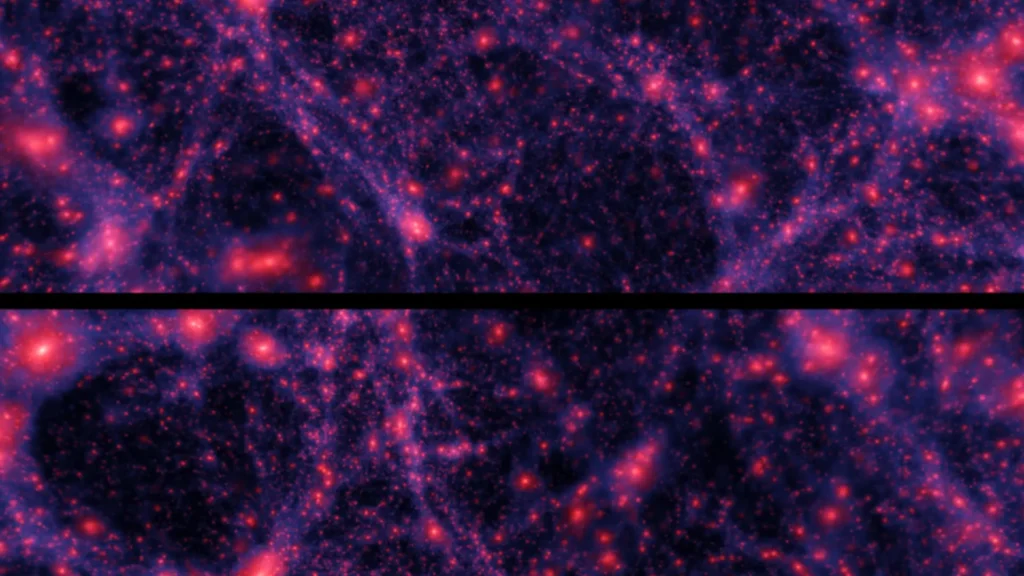
The quest to decode the fundamental laws of the universe has entered a new era where the processing power of artificial intelligence is as critical as the mirrors of a telescope. New research published in the Journal of Cosmology and Astroparticle Physics (JCAP) reveals that a sophisticated machine learning technique known as transfer learning can accelerate the search for "new physics" by a factor of ten, significantly reducing the staggering computational costs associated with modern cosmology. However, the study also issues a vital warning: the very knowledge that makes AI efficient can occasionally act as a blindfold, causing the system to misidentify novel physical phenomena as familiar patterns. This phenomenon, termed "negative transfer," represents a significant hurdle for scientists attempting to move beyond the current understanding of the cosmos.
The Foundation: The Standard Model and Its Limitations
To understand the significance of this research, one must first look at the current cornerstone of cosmology: the $Lambda$CDM model. This framework, which stands for Lambda Cold Dark Matter, has been remarkably successful in explaining the large-scale structure of the universe. It accounts for the Cosmic Microwave Background (CMB)—the afterglow of the Big Bang—as well as the observed expansion of the universe and the complex web-like distribution of galaxies.
Despite its success, $Lambda$CDM is increasingly viewed by the scientific community as an incomplete "effective theory" rather than a final explanation. It relies on two mysterious components: dark energy (represented by the Greek letter Lambda), which drives the accelerated expansion of the universe, and dark matter, which provides the gravitational "glue" that holds galaxies together. Neither has been directly detected in a laboratory. Furthermore, recent "tensions" in cosmological data—discrepancies between how fast the universe is expanding according to local measurements versus predictions from the early universe—suggest that the standard model may be fraying at the edges.
To find what lies beyond, researchers explore theories involving massive neutrinos, modified gravity (which suggests Einstein’s General Relativity might need adjustments on cosmic scales), and evolving dark energy. Testing these theories requires comparing theoretical predictions against real-world observations. However, because the universe is a complex, non-linear system, these predictions can only be generated through massive computer simulations that track millions of particles over billions of years.
The Computational Bottleneck in Modern Cosmology
The primary obstacle in the search for new physics is the sheer cost of computation. A single high-resolution simulation of a "virtual universe" can require hundreds of thousands of CPU hours on some of the world’s most powerful supercomputers. To perform a robust statistical analysis, researchers often need thousands of such simulations, each varying slightly in its physical parameters.
As cosmological surveys like the European Space Agency’s Euclid mission and the Vera C. Rubin Observatory begin to produce petabytes of high-precision data, the "simulation bottleneck" has become a crisis. If the theoretical models cannot keep pace with the data, the discovery of new physics will be delayed by decades. This is where the Princeton University and Flatiron Institute research team, led by undergraduate researcher Veena Krishnaraj and cosmologist Adrian Bayer, intervened.
Transfer Learning: A Methodological Shortcut
The researchers turned to transfer learning, a branch of machine learning that mirrors the way humans learn. In traditional machine learning, a model starts from scratch, having no prior knowledge of the task. In transfer learning, a model is first "pretrained" on a large, general dataset before being "fine-tuned" on a smaller, more specific dataset.
In the context of this study, the "general dataset" consisted of simulations based on the well-understood $Lambda$CDM model. These simulations are relatively "cheap" to produce because the physics is established and the computational parameters are optimized. Once the AI had learned the basic relationships between matter distribution and gravitational clustering from these standard simulations, the researchers introduced it to more complex, "expensive" simulations that included new physics, such as the influence of massive neutrinos.
"It’s basically a shortcut," explained Adrian Bayer. "Usually people train the AI directly on the most computationally expensive simulations. What we do instead is first use simpler and less expensive $Lambda$CDM simulations to give the AI an idea of what’s happening, and only afterward move to the more complex models."
The analogy used by the team is educational: a medical student does not begin their education by performing complex neurosurgery. They first study basic biology and anatomy from standard textbooks. By the time they reach specialized surgical training, they already have a foundational framework that allows them to learn the new, complex skills much faster.
Quantifying the Gains: A Tenfold Increase in Efficiency
The results of the study were highly encouraging regarding the efficiency of the transfer learning approach. The researchers found that by pretraining the neural networks on the standard $Lambda$CDM model, they could achieve the same level of accuracy in predicting the outcomes of "new physics" models using significantly less data.
Specifically, the study demonstrated that transfer learning could reduce the required number of expensive simulations by more than a factor of ten. In practical terms, this means a research project that would normally take a year of supercomputer time could potentially be completed in just over a month. This efficiency does not just save time; it democratizes the field, allowing smaller research institutions with limited computing budgets to contribute to the search for the fundamental laws of nature.
The Dark Side of Expertise: The Risk of Negative Transfer
While the efficiency gains were substantial, the study also uncovered a subtle and dangerous side effect: negative transfer. This occurs when the information learned during the pretraining phase interferes with the AI’s ability to learn the new task correctly.
In the world of physics, this is often caused by "degeneracies." A degeneracy occurs when two different physical processes produce nearly identical effects in the observable data. The researchers highlighted a specific example involving massive neutrinos and a parameter known as $sigma_8$ (sigma-eight).
The $sigma_8$ parameter measures the "clumpiness" of matter in the universe. Massive neutrinos, because they move at high speeds, tend to smooth out this clumpiness, acting as a "hot" component of dark matter. When the AI was pretrained on $Lambda$CDM, it became highly sensitive to changes in $sigma_8$. When it was subsequently asked to identify the effects of massive neutrinos, the AI frequently "misdiagnosed" the signal, attributing the smoothing effect of the neutrinos to a change in the $sigma_8$ parameter it had already mastered.
"The negative transfer is not random," said lead author Veena Krishnaraj. "It is driven by underlying physical degeneracies in the model." Because the signatures of neutrino mass and matter clustering are so similar, the AI’s "prior knowledge" of the standard model acted as a prejudice, leading it to interpret new phenomena through the lens of old theories.
Chronology and Context: The Evolution of AI in Astronomy
The use of AI in astronomy is not new, but its application has evolved through several distinct phases:
- Classification Phase (2010s): Early AI applications focused on categorizing objects. Projects like Galaxy Zoo used crowdsourcing, which eventually transitioned into automated neural networks to classify millions of galaxy shapes.
- Parameter Estimation Phase (2015-2020): AI began to be used to estimate physical parameters, such as the mass of a galaxy or the redshift of a star, more quickly than traditional statistical methods.
- The Simulation Emulation Phase (2020-Present): This is the current frontier. AI is now used to "emulate" or mimic full-scale physical simulations, allowing researchers to explore millions of "what-if" scenarios in seconds.
The Princeton-Flatiron study represents a critical step in this third phase. By introducing transfer learning, the researchers are attempting to bridge the gap between "known physics" and "unknown physics," acknowledging that we cannot simply discard everything we know about the universe when searching for something new.
Expert Analysis and Implications for the Scientific Method
The discovery of negative transfer has profound implications for how AI is integrated into the scientific method. It suggests that while AI can be a powerful tool for acceleration, it cannot yet be a "black box" that operates without human oversight.
Physicists must now develop strategies to "de-bias" their AI models. This might involve specifically training the AI to look for the subtle differences that break degeneracies, or developing hybrid models that combine the speed of transfer learning with the rigorous checks of traditional physics-based algorithms.
Furthermore, the study highlights a philosophical shift in cosmology. For decades, the goal was to find a single model that fit all data. Now, as the data becomes more precise, the challenge is distinguishing between multiple models that all fit the data equally well. The "prejudice" of an AI is, in many ways, a reflection of the "priors" that human scientists use in Bayesian statistics—the assumptions we make before we even look at the data.
The Path Toward Real-World Observations
To date, the research has been conducted using synthetic data—universes created inside a computer. The next and most crucial step is applying these transfer learning models to real-world astronomical observations.
The timing is critical. Over the next decade, the Vera C. Rubin Observatory’s Legacy Survey of Space and Time (LSST) will map the southern sky every few nights, creating a 10-year "movie" of the universe. Simultaneously, the Euclid satellite will map the shapes and positions of billions of galaxies across more than a third of the sky. These missions are specifically designed to look for the "new physics" that the Princeton team is investigating: the nature of dark energy and the mass of neutrinos.
If the transfer learning techniques can be successfully refined to mitigate negative transfer, they will likely become the primary tools for analyzing this tidal wave of data. The ability to distinguish between a slightly different version of the standard model and a revolutionary new law of physics will determine whether the 2020s go down in history as the decade we finally understood the "dark" side of our universe.
Conclusion: A Balanced Approach to Discovery
The research by Krishnaraj, Bayer, and their colleagues serves as both a roadmap and a cautionary tale. It proves that the "foundation model" approach—the same logic that allows Large Language Models like GPT-4 to understand human speech—can be applied to the cosmos to unlock massive gains in efficiency.
However, the universe is more unforgiving than human language. In language, a "close enough" answer is often sufficient; in physics, the difference between two nearly identical signals can be the difference between a Nobel Prize-winning discovery and a statistical error. As cosmology moves into its most data-rich era yet, the success of the field will depend on the ability of researchers to harness the speed of AI while maintaining the rigorous skepticism that has always defined scientific inquiry. The "shortcut" of transfer learning is open, but scientists must navigate it with a careful eye on the map of known physics, ensuring they don’t mistake a new horizon for a reflection of the road they’ve already traveled.