WINDSOR, Ontario, Canada – A former janitor, James Harris, 37, accused of orchestrating an explosion at the Stellantis assembly plant in Windsor in 2021, allegedly in protest against COVID-19 vaccine mandates, was acquitted of all charges on July 20, bringing to a close a high-profile case that underscored the volatile atmosphere surrounding pandemic-era workplace policies. The verdict, delivered by Superior Court Justice Bruce Thomas, concluded a trial that began in April, where Harris faced two criminal counts related to the blast that occurred nearly five years ago at a critical industrial facility.
The Acquittal and Immediate Aftermath
Justice Thomas’s decision hinged on the prosecution’s inability to meet the rigorous burden of proof required for a criminal conviction in Canada, particularly given that the case relied entirely on circumstantial evidence. In his detailed ruling, Justice Thomas articulated, “The unsatisfactory evidence regarding the proposed explosive device may well be enough to support an acquittal. However, the circumstantial case as a whole, which includes the comments of Harris [to co-workers], does not convince me that the only reasonable inference to be drawn from the evidence is the guilt of the accused.” This statement underscores the fundamental principle of Canadian justice that guilt must be proven beyond a reasonable doubt, and where multiple reasonable inferences can be drawn from circumstantial evidence, an acquittal is mandated.
Upon hearing the verdict, James Harris was visibly overcome with emotion, breaking into tears as the weight of the two-year legal battle lifted. His family members, present in the courtroom, reacted with audible relief, some clapping and exclaiming “amen,” a testament to the emotional toll the proceedings had taken. Harris’s lawyer, Ben Strickland, expressed profound satisfaction with the outcome, stating, “Mr. Harris has professed his innocence since the beginning, so we’re really glad to see that justice was served today. The system was able to work through it, and Mr. Harris can now move forward with his life.” This sentiment reflects the defense’s consistent position throughout the trial and the relief that their client’s insistence on his innocence had been vindicated by the court. The acquittal allows Harris to begin rebuilding his life after the significant disruption and public scrutiny caused by the charges.
Chronology of Events: The 2021 Incident
The incident that led to these charges unfolded shortly after 4 p.m. on November 4, 2021. As thousands of workers were commencing their afternoon shifts at the sprawling Stellantis Windsor Assembly Plant, a crucial hub for minivan production, an explosion occurred within the facility. While no individuals sustained serious physical injuries, the blast prompted an immediate and extensive evacuation of the entire plant, a massive undertaking involving thousands of employees and bringing production to a halt. The swift response prioritized worker safety and facility integrity, but the disruption highlighted the severity of the event.
Emergency services, including Windsor Police and the Fire Department, quickly converged on the scene. Initial reports were vague, but the scale of the evacuation signaled a significant incident. Investigators from various agencies, including bomb disposal units, were deployed to meticulously search the vast plant for clues, determine the nature of the explosion, and ensure the safety of the site before workers could eventually return. The initial assessment confirmed an explosion had indeed taken place, but the cause and origin remained elusive in the immediate aftermath, fueling speculation and concern within the community and among the plant’s workforce.
The Investigation and Charges
The subsequent investigation by law enforcement, particularly the Windsor Police Service, became a complex and protracted affair. Prosecutors alleged that James Harris, then a janitor employed at the plant, was responsible for the explosion. They posited that Harris had constructed and placed an improvised explosive device, which detonated with a timer inside a second-floor storage section situated above the main assembly line. The alleged motive presented by the prosecution was Harris’s vehement opposition to Stellantis’s then-newly implemented COVID-19 vaccine mandate.
Stellantis, like many large corporations across Canada and globally, had announced a strict policy requiring all employees to be fully vaccinated by January 1, 2022. For employees like Harris who reportedly opposed vaccination, this mandate posed a direct threat to their employment. Prosecutors argued that Harris, fearing job loss due to his refusal to comply with the mandate, was motivated to cause disruption or damage as an act of protest or revenge. The charges against Harris were severe: intentionally causing an explosion likely to cause serious bodily harm or serious property damage, and disregard for human life by intentionally or recklessly causing damage by fire or explosion. These charges reflected the potential danger of the incident and the serious legal ramifications for such acts.
Investigators pointed to specific items recovered from the scene as evidence of a bomb: a smashed industrial tote and an egg timer connected to an extension cord. These items formed the physical core of the prosecution’s argument that an explosive device had been rigged. However, during the trial, Justice Thomas critically evaluated this evidence, noting a "complete lack of hard evidence" definitively linking these items to an actual explosion. Crucially, no explosive substance or accelerant was ever found at the scene, and investigators were unable to pinpoint the exact origin point of the explosion. This absence of definitive forensic evidence proved to be a critical weakness in the Crown’s case.
The Trial: Prosecution and Defense Arguments
The trial, which commenced in April, saw the prosecution endeavor to weave a narrative of guilt based on circumstantial links. They presented Harris’s alleged anti-mandate comments to co-workers as evidence of motive, coupled with the recovered items – the egg timer and tote – as the purported components of the device. The Crown argued that when these pieces of evidence were considered together, they led to the inescapable conclusion that Harris was the perpetrator. They aimed to demonstrate that the only reasonable inference to be drawn from the assembled facts was Harris’s guilt.
The defense, led by Ben Strickland, meticulously challenged every aspect of the prosecution’s case. They focused heavily on the lack of direct physical evidence connecting Harris to the explosion or even confirming that an explosive device, as alleged, was the cause of the blast. Strickland highlighted the absence of explosive residue, the inability to identify an exact blast origin, and the general unreliability of circumstantial evidence when it doesn’t preclude other reasonable explanations. The defense argued that while Harris may have expressed dissatisfaction with vaccine mandates – a common sentiment among some at the time – this did not constitute proof of criminal intent or action. They emphasized that the items found could have been present for reasons unrelated to an explosive device, and that the "explosion" itself might have been a less sinister, albeit still concerning, industrial incident or malfunction, not a deliberate act of sabotage. The defense’s strategy successfully introduced reasonable doubt, which is the cornerstone of an acquittal in a criminal trial.
Legal Standards: The Burden of Proof
Justice Thomas’s decision serves as a powerful reminder of the high bar set for the prosecution in Canadian criminal law. The principle of "beyond a reasonable doubt" means that the evidence presented must be so convincing that there is no other logical explanation for the facts except that the accused committed the crime. When a case relies solely on circumstantial evidence – indirect evidence that allows for inferences to be made – the court must be satisfied that those inferences are the only reasonable ones that can be drawn. If there are other reasonable explanations for the circumstantial evidence that are consistent with innocence, then reasonable doubt exists, and the accused must be acquitted.
In this instance, the lack of definitive forensic evidence (no explosive residue, no clear blast point) combined with the ambiguity surrounding the alleged "device" (an egg timer and an industrial tote) meant that the prosecution could not definitively prove that an actual bomb had caused the damage, let alone that Harris was responsible for it. The judge’s reference to the "unsatisfactory evidence regarding the proposed explosive device" suggests that even the existence of an actual bomb was not conclusively proven. This legal nuance is critical: it’s not enough to show that the accused might have done it; the evidence must lead inexorably to the conclusion that they did do it.
Context of Vaccine Mandates and Workplace Tensions
The Stellantis plant incident occurred during a period of intense public and workplace debate surrounding COVID-19 vaccine mandates. In late 2021, as governments and private corporations sought to control the spread of the virus and ensure workplace safety, mandatory vaccination policies became widespread. These mandates, while supported by public health officials and many segments of society, also faced significant opposition from individuals citing personal freedoms, religious beliefs, or skepticism about the vaccines.
For large industrial employers like Stellantis, implementing such a mandate was a complex logistical and human resources challenge. Companies had to balance public health directives, employee rights, union negotiations, and the need to maintain operational continuity. The threat of job loss for non-compliance was a significant source of anxiety and frustration for many workers, leading to protests, legal challenges, and heightened tensions in workplaces across the country. The Windsor Assembly Plant, with its large workforce and critical role in the local economy, was not immune to these pressures. The alleged motive behind the explosion, rooted in opposition to the vaccine mandate, reflects the charged atmosphere of the time and the deep divisions it created.
Stellantis Windsor: A Local Economic Pillar
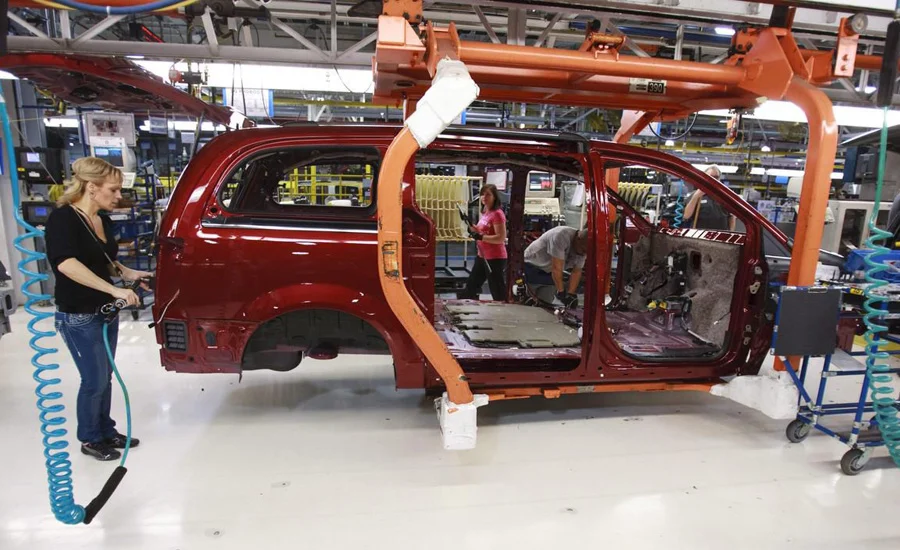
The Stellantis Windsor Assembly Plant is not merely a factory; it is an economic cornerstone for the city of Windsor and the surrounding region. Employing thousands of people, the plant has been a vital part of Canada’s automotive sector for decades, currently producing the popular Chrysler Pacifica, Pacifica Hybrid, and Grand Caravan minivans. Any disruption to its operations, whether due to an explosion, a strike, or a global pandemic, has significant ripple effects on the local economy, from supply chain partners to ancillary businesses.
The 2021 evacuation, though resulting in no serious injuries, caused an immediate cessation of production and necessitated extensive safety checks, incurring considerable costs and demonstrating the vulnerability of such critical infrastructure. Workplace security and employee safety are paramount concerns for Stellantis, and incidents like this necessitate thorough reviews of existing protocols, emergency response plans, and internal communication strategies.
Reactions and Broader Implications
The acquittal of James Harris will undoubtedly prompt varied reactions. For Harris and his family, it marks the end of a harrowing chapter and an opportunity to move forward, albeit with the stigma of the initial accusation. For legal observers, the case serves as a crucial example of the Canadian legal system’s commitment to the presumption of innocence and the stringent requirements for proving guilt beyond a reasonable doubt, particularly in cases based on circumstantial evidence. It reinforces that while suspicion may exist, it is insufficient for conviction.
From a broader societal perspective, the incident and subsequent trial highlight the lingering sensitivities and divisions stemming from the COVID-19 pandemic and the policies implemented to combat it. While vaccine mandates are largely a relic of the past, the tensions they generated within workplaces and communities left a lasting impact. The case underscores the importance of robust security measures in industrial settings and the need for clear communication channels to address employee concerns, particularly during periods of significant policy change or societal stress.
For Stellantis, while the immediate threat of a saboteur within its ranks has been addressed through the legal process, the incident serves as a stark reminder of the challenges in maintaining a secure and cohesive workplace environment, especially when external societal pressures spill into the professional sphere. The company would have already undertaken internal reviews following the incident to enhance security protocols and employee relations strategies.
Ultimately, James Harris’s acquittal closes a complex and emotionally charged chapter. It reaffirms the legal principle that mere suspicion or a compelling narrative, without concrete and irrefutable proof, cannot override the fundamental right to be presumed innocent until proven guilty beyond a reasonable doubt. The case will likely be remembered as a significant legal proceeding born out of the unique and often contentious circumstances of the COVID-19 pandemic era.