Scientists at the Los Alamos National Laboratory have pioneered a sophisticated method for controlling quantum systems that allows their evolution to appear consistent with time moving backward rather than forward. This research, recently detailed in the journal Physical Review X, introduces a suite of quantum control protocols designed to manipulate the "arrow of time"—the fundamental principle that physical processes in the macroscopic world proceed in a singular, irreversible direction. By reshaping how quantum systems interact with their environment and observers, the researchers have demonstrated that it is possible to suppress the natural emergence of temporal directionality or even reverse its apparent flow. This breakthrough does not merely represent a theoretical curiosity; it provides a framework for developing novel quantum measurement engines capable of extracting energy from the very act of observation, potentially revolutionizing how we power and prepare quantum states in future computing architectures.
The Quantum Foundations of Temporal Symmetry
In the realm of classical physics, the distinction between the past and the future is stark. A dropped glass shatters, and heat flows from a hot coffee cup into the cooler air—processes that never spontaneously reverse. This irreversibility is codified in the Second Law of Thermodynamics, which states that the total entropy, or disorder, of an isolated system must always increase over time. However, at the microscopic level where quantum mechanics reigns, the fundamental laws of physics are surprisingly indifferent to the direction of time.
"Unlike phenomena we observe around us, at the microscopic level most fundamental laws of physics see forward and backward movement in time as physically possible," explained Luis Pedro García-Pintos, a physicist at Los Alamos National Laboratory and a lead author of the study. He noted that the equations governing quantum particles, such as the Schrödinger equation, are mathematically symmetrical under time reversal. If one were to take a film of a single subatomic particle interacting and play it in reverse, the resulting motion would still obey the laws of physics. The challenge for scientists has always been the transition from this microscopic symmetry to the macroscopic "arrow of time" that governs the universe.
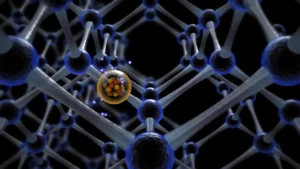
The Los Alamos team’s research focuses on the "stochastic trajectories" of quantum systems. In quantum mechanics, a system like a group of qubits (the basic units of quantum information) does not follow a single, deterministic path. Instead, it exists in a cloud of probabilities until it is measured. The act of measurement is traditionally what "sets" the arrow of time, as it forces the system to collapse into a specific state, creating a point of no return that distinguishes the "before" from the "after."
Engineering Time-Reversed Stochastic Trajectories
To bypass the traditional constraints of temporal flow, the researchers developed a sophisticated control mechanism that utilizes both measurement and real-time feedback. In a standard quantum measurement, the observer gains information but also introduces a "back-action" or disturbance that pushes the system toward higher entropy. The new protocols involve the design of a "control Hamiltonian"—a mathematical description of the total energy and external forces acting on the system—which is carefully synchronized with these measurements.
By applying a precisely planned sequence of electromagnetic fields and pulses, the researchers can effectively "cancel out" the disturbances caused by observation. This feedback loop allows the system to follow paths that, statistically speaking, look as though they are unfolding in reverse. This is not a literal reversal of time in the sense of science fiction, but rather a high-precision manipulation of the system’s state evolution. The team demonstrated that by adjusting the control Hamiltonian, they could generate quantum trajectories that appear stretched, blurred, or completely inverted relative to the natural arrow of time.
This ability to "overcorrect" the natural progression of a quantum state allows for the creation of synthetic environments where the usual rules of thermodynamic decay are suspended. For quantum computing, this level of control is essential. Qubits are notoriously fragile, prone to "decoherence" where they lose their quantum properties due to interaction with their surroundings. The ability to effectively "rewind" or stabilize a system’s trajectory could lead to more robust error-correction methods and more stable quantum memory.
A Modern Manifestation of Maxwell’s Demon
The theoretical backbone of this research draws heavily from one of the most famous thought experiments in the history of science: Maxwell’s Demon. Proposed by James Clerk Maxwell in 1867, the "demon" is a hypothetical entity that sits at a door between two chambers of gas. By opening and closing the door to allow only fast-moving (hot) particles into one chamber and slow-moving (cold) particles into the other, the demon could theoretically decrease entropy without doing any work, seemingly violating the Second Law of Thermodynamics.
In the 20th century, physicists like Leo Szilard and Rolf Landauer resolved this paradox by showing that the demon must expend energy to process and erase the information it gathers about the particles. The Los Alamos team has essentially created a quantum version of this demon. Their "demon" is the feedback control system that uses information gathered from quantum measurements to steer the system into lower-entropy states.
"The tools we’ve constructed can manipulate the perceived arrow of time, leading to surprising, novel ways to control quantum systems," García-Pintos said. By treating information as a physical resource, the researchers can "sort" quantum states in a way that mimics the demon’s behavior, effectively reversing the system’s natural tendency toward disorder.
The Measurement Engine: Harvesting Energy from Observation
One of the most tangible outcomes of this research is the conceptualization and demonstration of a "measurement engine." In classical engineering, an engine requires a temperature gradient—a hot source and a cold sink—to perform work. In the quantum realm, the Los Alamos team has shown that the act of measurement itself can serve as a thermodynamic resource.
When a quantum system is measured, energy is exchanged. By using their time-reversal protocols, the researchers can ensure that this energy is not simply lost as heat but is instead captured. This "monitoring process" can be harnessed to drive other quantum processes or to charge a "quantum battery."
This represents a paradigm shift in how we view the observer’s role in physics. Instead of measurement being a passive or destructive act, it becomes a source of utility. The measurement engine could potentially power microscopic sensors or maintain the operational temperature of a quantum processor without the need for traditional external power sources. This capability is particularly relevant for the development of "autonomous" quantum devices that must operate in isolation at near-absolute zero temperatures.
Chronology and Experimental Roadmap
The journey toward this breakthrough has been built on a decade of intensifying research into quantum thermodynamics.
- 2010s: Early theoretical work at institutions like Los Alamos and the University of Oxford began exploring the link between information theory and the Second Law of Thermodynamics in the quantum regime.
- 2019-2021: Experimentalists began using superconducting qubits to demonstrate simple versions of Maxwell’s Demon, proving that information could be converted into work at the subatomic scale.
- 2023: The Los Alamos team focused on the specific problem of the "arrow of time," seeking a way to not just observe but actively reshape the temporal trajectory of a multi-qubit system.
- 2024: The publication in Physical Review X provides the formal protocols for the control Hamiltonian and the measurement engine.
Looking forward, the research team plans to move from theoretical modeling to rigorous experimental validation. They intend to implement these Hamiltonian-based measurement processes using superconducting qubits—the same technology currently used by industry leaders like IBM and Google. Superconducting circuits are ideal for this because they allow for extremely rapid feedback loops and high-efficiency detection, both of which are required to outpace the natural decoherence of quantum states.
Broader Implications and Scientific Analysis
The implications of being able to manipulate the arrow of time extend far beyond the laboratory. In the field of quantum chemistry, these protocols could be used to prepare specific, highly sensitive molecular states that are otherwise impossible to maintain. By "freezing" or reversing the temporal evolution of a chemical reaction at the quantum level, scientists could gain unprecedented insights into the fundamental mechanisms of bonding and energy transfer.
Furthermore, the research challenges our philosophical understanding of time. If the arrow of time can be manipulated or reversed at the microscopic level through information and feedback, it suggests that "time" as we experience it is an emergent property of complexity rather than a fundamental constraint of the universe’s building blocks.
From a practical standpoint, the development of improved quantum state preparation protocols is perhaps the most immediate benefit. Current quantum computers struggle with "initialization"—the process of setting qubits to a specific starting state. Using the Los Alamos protocols, researchers could "steer" qubits into the desired state with much higher fidelity, reducing the error rates that currently plague quantum computations.
The work is supported by a broad coalition of scientific bodies, including the U.S. Department of Energy’s Office of Science, the Advanced Scientific Computing Research program, and the National Science Foundation. This level of institutional support underscores the perceived importance of quantum control for the next generation of American technological infrastructure.
As the team moves toward experimental demonstrations, the scientific community will be watching closely. If the "quantum demon" can be successfully scaled, the boundary between information and energy will continue to blur, opening the door to a new era of thermodynamic engineering where the flow of time itself becomes a variable that can be tuned, stretched, and harnessed.