Black holes have long occupied a space in the popular imagination as cosmic vacuum cleaners or mysterious, bottomless voids reminiscent of the surreal rabbit holes in Lewis Carroll’s fiction. However, modern astrophysics paints a far more complex and violent picture. Rather than being "nothing," a black hole is arguably the ultimate "something"—a region where matter is packed so densely that its gravitational pull prevents even light from escaping. Far from being dormant drains, these objects are the most powerful engines in the cosmos, actively gathering the surrounding fabric of space and time and generating gargantuan disks of superheated matter that whirl at relativistic speeds before crossing the event horizon.
In recent years, the field of black hole physics has undergone a paradigm shift. As astronomers have deployed a more sophisticated global network of telescopes, they have moved from capturing static snapshots to recording dynamic, high-definition behavior. Leading this charge is Erin Kara, an associate professor of physics at the Massachusetts Institute of Technology (MIT) and a member of the Kavli Institute for Astrophysics and Space Research. Kara’s work focuses on the "heartbeat" of galaxies: supermassive black holes. These ultradense giants, which reside at the centers of nearly all large galaxies, are now understood to be the primary architects of galactic evolution, influencing the birth of stars and the distribution of matter across billions of light-years.
The Dynamic Nature of the Invisible
For decades, the observation of black holes was limited by the sporadic nature of telescope availability. "It used to be that we didn’t have eyes on systems all the time," explains Professor Kara. This lack of continuous monitoring led to the assumption that black hole activity occurred on vast, glacial timescales. However, the latest data suggests otherwise. "Now we’re seeing that they can turn on and off at rates that are much faster than we ever thought possible," Kara notes.
This newfound volatility includes observations of matter being consumed at unprecedented speeds. Astronomers are witnessing stars being "whipped around" and trapped within a black hole’s accretion disk—a swirling ring of gas and dust that acts as a staging ground before the final plunge. Kara’s research aims to bridge the gap between these extreme physical processes and the broader formation of galaxies like our own Milky Way. By studying the "reverberations" of light near the event horizon, she is effectively mapping the geography of the most inaccessible places in the universe.
A Chronology of Discovery: From Medicine to the Cosmos
The path to the forefront of astrophysics was not a linear one for Kara. Raised in Bethlehem, Pennsylvania, she was the youngest of four in a family dedicated to healthcare; her mother was a nurse and her father a physician. Initially, Kara intended to follow this domestic tradition, enrolling as a premed student at Barnard College of Columbia University.
Her trajectory changed during her freshman year when she enrolled in an introductory physics course. The subject’s ability to provide fundamental, ground-level explanations for the universe—from the subatomic to the galactic—proved more compelling than the biological sciences. Under the mentorship of astronomer Reshmi Mukherjee, Kara was invited to participate in a summer internship in 2008, a pivotal year for high-energy astrophysics.
In June 2008, NASA launched the Fermi Gamma-Ray Space Telescope. Its mission was to survey the sky for gamma rays, the highest-energy form of radiation produced by the universe’s most violent events. Mukherjee tasked Kara with investigating two unidentified gamma-ray signals. The young researcher soon confirmed that these signals originated from quasars—extremely distant and active supermassive black holes. This early success solidified her commitment to the field. "I love that about astronomy," Kara reflects. "There are so many unanswered questions, and even early on in your career, you can make an impact."
Navigating the Academic Landscape
Kara’s journey through higher education also highlights the shifting dynamics of gender in STEM. At Barnard, an all-women’s institution, she found a supportive and intimate environment for her early physics studies. However, as she transitioned to upper-level courses at Columbia University, she entered a larger, co-educational cohort where she initially felt a dip in confidence.
"I went to Columbia and all of a sudden felt like I couldn’t do this," Kara says, noting the outward confidence of her male peers. However, her academic performance soon matched and exceeded the standard, providing her with the self-assurance that she belonged at the highest levels of the discipline. This experience has informed her current role as a mentor at MIT, where she advocates for inclusive environments in high-level research.
The Science of X-ray Reverberation Mapping
After completing her undergraduate studies, Kara moved to the University of Cambridge’s Institute of Astronomy. It was here, during her PhD candidacy, that she began specializing in a technique known as X-ray reverberation mapping.
The concept is analogous to sonar or the echolocation used by bats. Around a black hole, there is a region called the corona—a "crown" of high-energy electrons that generates intense X-ray radiation. This radiation travels outward, some of it hitting the accretion disk and "echoing" back. By measuring the time delay between the initial X-ray burst and its reflection off the disk, scientists can calculate the distance and geometry of the environment surrounding the black hole.
In 2009, Kara’s advisor, Andy Fabian, identified the first evidence of these X-ray echoes. Kara spent her doctoral years mining archival data, discovering that these signals were far more common than previously thought. This work has allowed physicists to "see" the immediate vicinity of a black hole—a region only a few times larger than the event horizon itself—despite it being millions of light-years away.
Overcoming Orbital Obstacles: The Hitomi and NICER Missions
Kara’s postdoctoral career involved significant challenges and forced pivots. Working at the University of Maryland and NASA’s Goddard Space Flight Center, she was prepared to analyze data from the Hitomi satellite, a Japanese Aerospace Exploration Agency (JAXA) mission. However, just 40 days after its 2016 launch, Hitomi suffered a catastrophic failure of its attitude control system, causing the satellite to spin apart.
Despite the disaster, Hitomi managed to transmit one crucial observation of the Perseus galaxy cluster. This single data point proved that the mission’s core technology—a microcalorimeter capable of detecting minute temperature changes from X-ray photons—was revolutionary. This technology was later integrated into the X-ray Imaging and Spectroscopy Mission (XRISM), which launched successfully in 2023 and is currently being led in part by Kara.
Following the loss of Hitomi, Kara pivoted to the Neutron Star Interior Composition Explorer (NICER). Launched in 2017 and mounted on the International Space Station, NICER provided high-precision timing of X-rays. This allowed Kara to study Tidal Disruption Events (TDEs)—catastrophic occurrences where a black hole’s tidal forces shred a star that wanders too close, resulting in a brilliant flare of radiation that reveals the black hole’s presence in a previously dark galaxy.
Implications for Galactic Evolution and Future Frontiers
The significance of Kara’s research extends far beyond the study of black holes as isolated objects. Astronomers now recognize a profound correlation between the mass of a central supermassive black hole and the total mass of its host galaxy. This suggests a "feedback" mechanism where the energy emitted by a black hole during its active phases regulates star formation by heating or ejecting the gas necessary for new stars to form.
"For reasons we don’t fully understand, the distribution of stars and gas and dust in a galaxy is dictated in part by the supermassive black hole at its center," Kara notes. "Our sun is one of those stars. It’s all intertwined."
Looking ahead, Kara is preparing for a new era of multi-messenger astronomy. She is involved in the upcoming Ultraviolet Transient Astronomy Satellite (ULTRASAT) and the Laser Interferometer Space Antenna (LISA). While current telescopes observe light, LISA will detect gravitational waves—ripples in the fabric of spacetime—caused by the collision of supermassive black holes. This will allow researchers to "hear" the universe in a way that was never before possible.
The Intersection of Science and Art
Kara’s work also transcends the purely analytical. In 2022, she collaborated with MIT music anthropologists and educators to create "sonifications" of black hole data. By translating the X-ray echoes of a black hole into audible frequencies, the team created a haunting, otherworldly soundscape. For Kara, a musician who plays the violin and sings, this project was a way to make the abstract physics of the vacuum more tangible to the public.
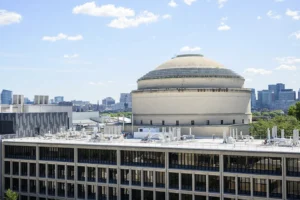
As Kara continues her tenure at MIT—a university with a storied history in X-ray astronomy dating back to pioneers like Bruno Rossi—her focus remains on the "open puzzles" of the deep universe. Her work serves as a reminder that black holes are not merely points of destruction, but are fundamental components of the cosmic order, essential to understanding why galaxies, stars, and ultimately, humans, exist at all. By capturing the echoes of the abyss, Kara and her team are illuminating the darkest corners of our reality, one X-ray at a time.