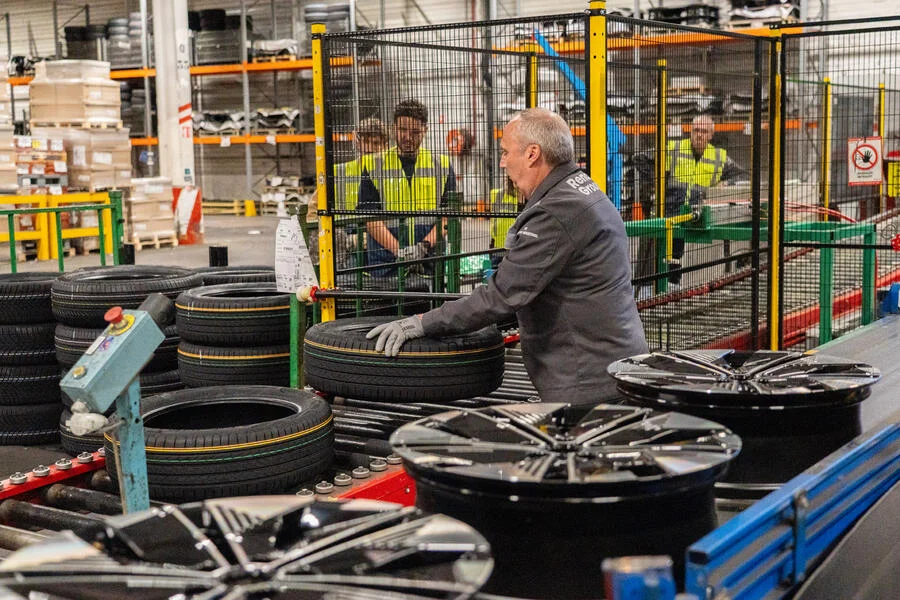
The automotive industry, a sector long defined by human ingenuity and manual dexterity, is undergoing a profound transformation. At the forefront of this evolution is the integration of advanced robotics and artificial intelligence, promising to redefine manufacturing processes, enhance efficiency, and improve worker conditions. Renault’s Douai factory in northern France has become a focal point for this technological shift, as the French automaker is currently piloting an autonomous robot designed to tackle physically demanding tasks on its assembly lines. This initiative represents a significant step towards a more automated and potentially more sustainable future for car production.
The robot in question, affectionately nicknamed "Baby Seal" by some of the factory’s human workforce due to its perceived handling capabilities and the nature of the task it’s designed to assist with, is an example of collaborative robotics, or "cobots." Unlike traditional industrial robots that operate in caged-off zones, cobots are engineered to work safely alongside human employees, sharing workspaces and performing tasks that are either repetitive, ergonomically challenging, or pose potential health risks. The specific application at Douai involves the handling of components that, while not literally baby seals, are described as having a weight and shape that makes prolonged manual manipulation arduous and potentially injurious for human workers.
The Challenge of Ergonomics in Automotive Manufacturing
The automotive assembly line is a complex ecosystem where precision, speed, and endurance are paramount. For decades, human workers have been the backbone of this industry, performing intricate assembly tasks, fitting components, and ensuring the quality of every vehicle that rolls off the line. However, the repetitive nature of many assembly line jobs, coupled with the need to lift, twist, and maneuver components, can lead to chronic musculoskeletal disorders (MSDs). These injuries, including carpal tunnel syndrome, back strain, and tendonitis, are a significant concern for both employee well-being and overall productivity.
According to the U.S. Bureau of Labor Statistics, non-fatal occupational injuries and illnesses in the manufacturing sector consistently rank high, with MSDs being a prevalent issue. The financial and human cost of these injuries is substantial, impacting healthcare expenses, worker compensation claims, and lost workdays. This reality has driven a continuous search for solutions that can mitigate these risks. While automation has long been a feature of car manufacturing, the advent of advanced cobots offers a more nuanced approach, aiming to augment human capabilities rather than replace them entirely, particularly in scenarios where human dexterity and judgment are still valuable.
The Douai Factory: A Hub of Innovation
Renault’s Douai plant, established in 1970, has a rich history of producing iconic vehicles for the brand, including models like the Renault 5 and the Espace. In recent years, the factory has been strategically positioned as a key production site for Renault’s electric vehicle (EV) strategy, with a focus on manufacturing the Megane E-Tech Electric. This shift towards electric mobility also necessitates an adaptation of production processes. The components for EVs, while different from their internal combustion engine counterparts, still present their own set of ergonomic challenges.
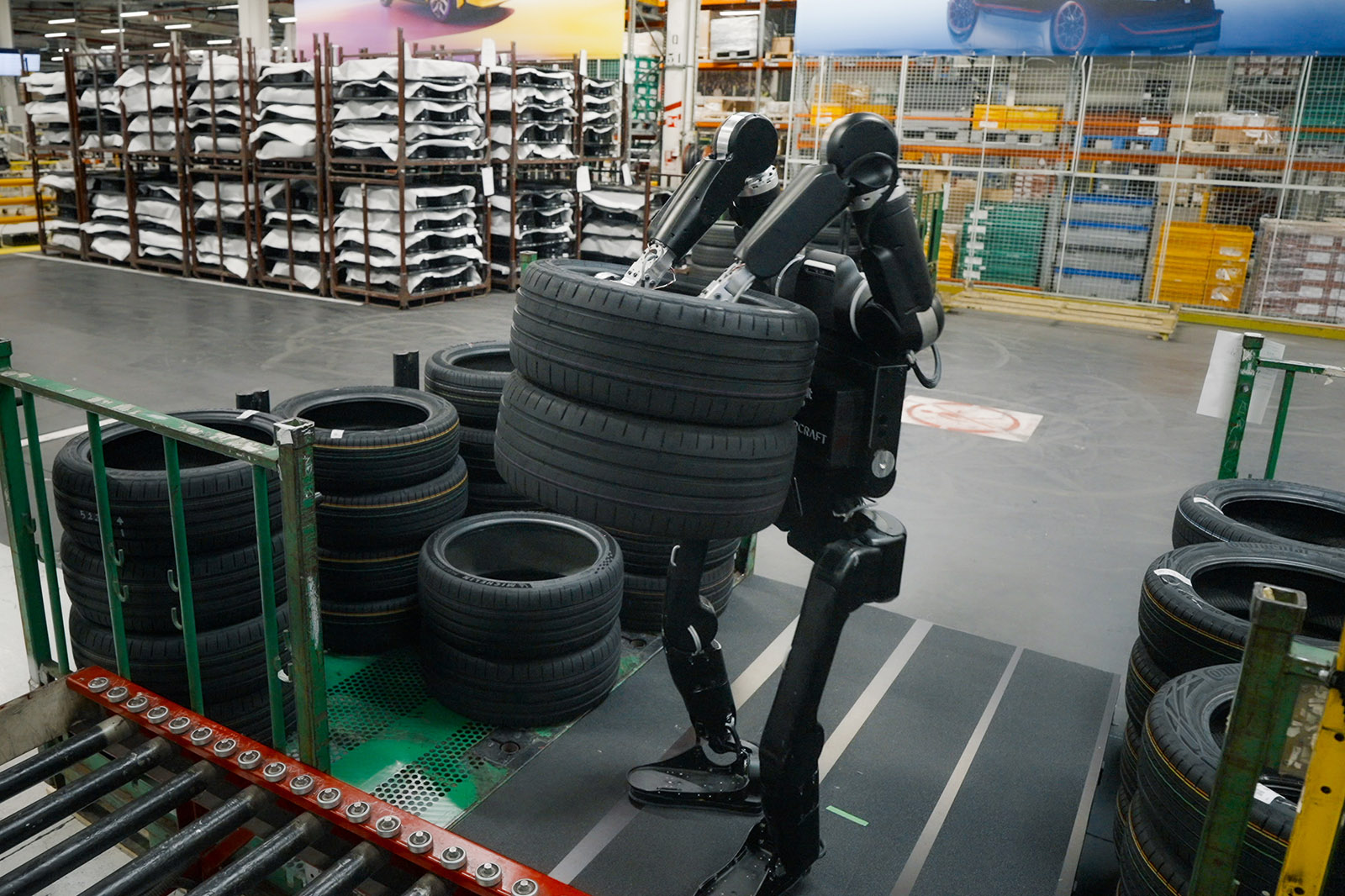
The trial of the autonomous robot at Douai is not an isolated incident but part of a broader industry trend towards smart manufacturing and Industry 4.0 principles. These principles emphasize the use of digital technologies, data analytics, and automation to create more flexible, efficient, and intelligent production systems. Renault’s investment in such trials signals its commitment to staying competitive in a rapidly evolving automotive landscape.
The "Baby Seal" Robot: Design and Functionality
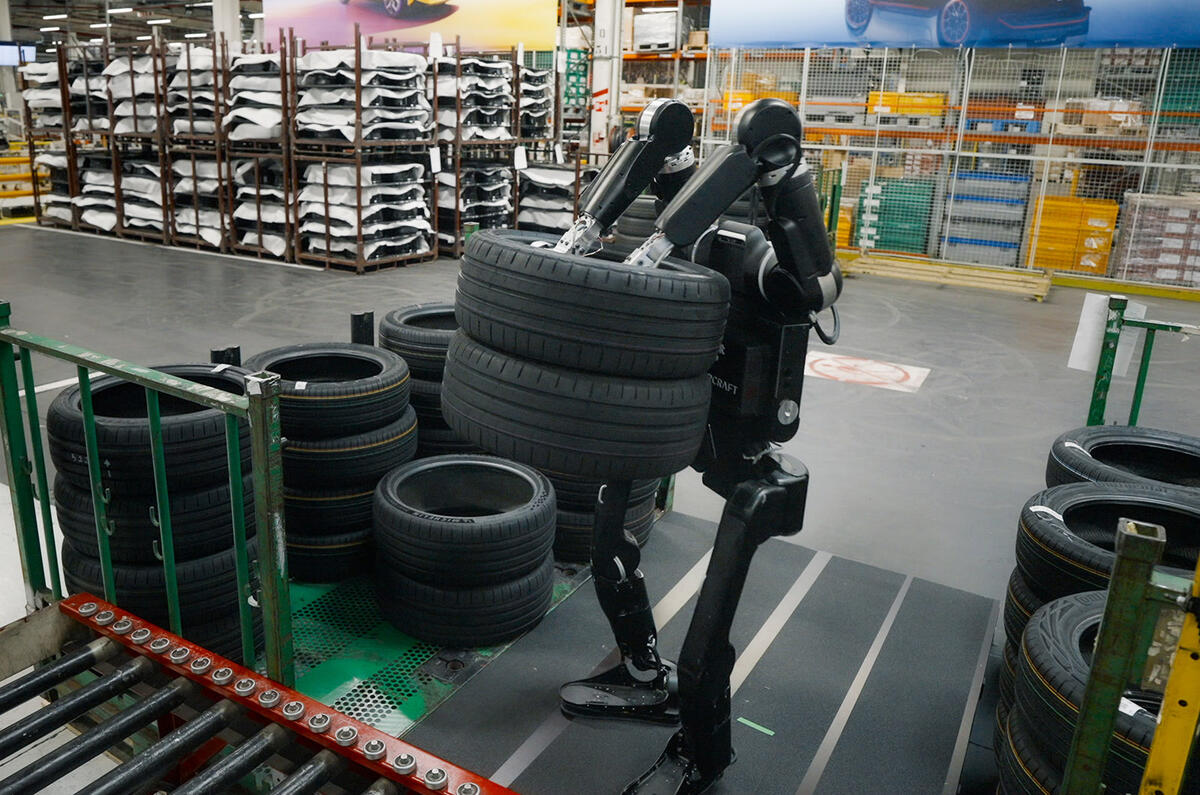
While specific technical details of the robot are proprietary, the description of its task—lifting and placing a 40kg component—suggests a robotic arm equipped with sophisticated grippers and a robust lifting capacity. The analogy to handling a "baby seal" highlights the difficulty of grasping and maneuvering a somewhat irregularly shaped and weighty object repeatedly over extended periods. Such tasks are precisely where human workers are most susceptible to strain and fatigue.
The autonomous nature of the robot implies that it can operate with a degree of independence, receiving components from a designated area and precisely placing them onto the conveyor belt or into the next stage of the assembly process. This requires advanced sensing capabilities, including vision systems to identify and orient components, as well as sophisticated motion control to execute precise movements without collision. The "collaborative" aspect means it is programmed to operate with safety protocols that allow it to halt or adjust its movement if a human worker enters its immediate vicinity, ensuring a safe working environment.
Chronology of Integration and Trial
The decision to trial this specific robot at the Douai factory would have followed a rigorous evaluation process. This likely involved:
- Needs Assessment (Early 2023): Identifying specific assembly line tasks that posed significant ergonomic risks or bottlenecks. This would have involved input from production engineers, line supervisors, and crucially, the workers themselves. The 40kg component handling task would have been flagged as a prime candidate.
- Robot Selection and Design (Mid-2023): Researching and selecting a robotic system capable of meeting the identified requirements. This might have involved partnerships with specialized robotics companies or internal development. The design would focus on the payload capacity, reach, dexterity of grippers, and safety features.
- Initial Programming and Simulation (Late 2023): Developing the robot’s operational program. This would involve mapping out the precise movements, speeds, and interaction points with the production line and human workers. Extensive simulations would be conducted to ensure accuracy and safety.
- On-Site Installation and Testing (Early 2024): The physical installation of the robot at the Douai plant. This would be followed by rigorous testing in a controlled environment before integrating it into the live production line.
- Pilot Trial and Data Collection (Ongoing): The current phase, where the robot is actively participating in the production process. During this period, extensive data would be collected on its performance, reliability, cycle times, energy consumption, and most importantly, its impact on worker safety and productivity. Feedback from the human workforce is also crucial during this phase.
Supporting Data and Industry Benchmarks
The automotive industry is increasingly embracing automation. According to the International Federation of Robotics (IFR), the global automotive industry remains one of the largest users of industrial robots. In 2022, the IFR reported that the operational stock of robots in the automotive sector reached approximately 1.3 million units worldwide. While this figure includes traditional robots, the growth of cobot installations is a significant trend within this broader statistic.
Cobots offer distinct advantages:
- Reduced Investment: Generally less expensive to acquire and install than traditional industrial robots.
- Flexibility: Can be easily reprogrammed and redeployed to different tasks or production lines.
- Smaller Footprint: Require less space and can often be integrated into existing layouts without major modifications.
- Enhanced Collaboration: Facilitate a human-robot partnership, leveraging the strengths of both.
The specific component being handled at Douai, weighing 40kg, is a significant load for manual handling. Guidelines from occupational health and safety organizations often recommend limits for manual lifting that are considerably lower than this, especially when performed repeatedly or in awkward postures. For instance, the Health and Safety Executive (HSE) in the UK suggests that for repetitive lifting, loads should ideally be below 15kg, and even for less frequent tasks, loads above 25kg require careful risk assessment and control measures. The introduction of a robot for such a task directly addresses these ergonomic concerns.
Official Responses and Inferred Statements
While direct quotes from Renault executives regarding this specific trial were not provided in the initial context, it is reasonable to infer their strategic objectives. A spokesperson for Renault would likely emphasize the company’s commitment to:
- Worker Well-being: "Our priority is the health and safety of our employees. This initiative is designed to alleviate the physical strain of certain repetitive and heavy lifting tasks, thereby reducing the risk of injuries and improving the overall working environment."
- Operational Efficiency: "By automating these specific, ergonomically challenging tasks, we aim to enhance the efficiency and consistency of our production processes. This allows our skilled workforce to focus on more complex, value-added activities that require human judgment and dexterity."
- Technological Advancement: "Renault is at the forefront of innovation in automotive manufacturing. This trial is a crucial part of our ongoing strategy to integrate cutting-edge technologies, including advanced robotics and AI, to build the cars of the future."
- Future-Proofing Production: "As we transition towards electric mobility and more sophisticated vehicle architectures, embracing advanced automation is essential to maintain our competitive edge and adapt to the evolving demands of the industry."
The workers themselves, while potentially apprehensive about any form of automation, are likely to express a mixed sentiment. Those performing the tasks currently would likely welcome the relief from physical strain. Others might voice concerns about job security, though Renault’s emphasis on "collaborative" robotics suggests a focus on augmentation rather than outright replacement. Feedback mechanisms and retraining programs would be crucial for managing this transition.
Broader Impact and Implications
The trial at Renault’s Douai factory has several significant implications for the automotive industry and beyond:
- Setting Precedents: Successful implementation of such cobots can serve as a blueprint for other automotive manufacturers, encouraging wider adoption of similar technologies to improve working conditions and efficiency.
- Evolution of the Workforce: The role of the human worker on the factory floor will likely evolve. Instead of performing physically demanding tasks, employees might transition to roles such as robot supervisors, maintenance technicians, quality control specialists, or operators of more complex machinery. This necessitates a focus on upskilling and reskilling the existing workforce.
- Increased Productivity and Quality: By ensuring consistent and precise component placement, the robot can contribute to reduced errors, fewer defects, and ultimately, a higher quality end product. This can also lead to faster production cycles.
- Sustainability: While not explicitly mentioned, automation can indirectly contribute to sustainability by optimizing material usage and reducing waste caused by errors or inefficiencies. Furthermore, by improving worker well-being, it can lead to a more stable and experienced workforce, contributing to long-term operational sustainability.
- Economic Competitiveness: In a globalized market, manufacturers are constantly seeking ways to reduce costs and improve output. Advanced automation, when implemented effectively, can be a key driver of economic competitiveness.
The "baby seal" robot at Renault’s Douai factory is more than just a piece of machinery; it represents a pivotal moment in the ongoing narrative of human-robot collaboration in industrial settings. As this trial progresses, the automotive world will be watching closely to see how this technological integration shapes the future of manufacturing, worker well-being, and the very definition of the modern assembly line. The challenges of adapting to such changes are considerable, but the potential benefits in terms of safety, efficiency, and innovation are equally profound.