Pompeii, Italy – The vibrant, intricate frescoes of ancient Roman Pompeii, once shattered into countless fragments and buried for nearly two millennia, are now on the precipice of a remarkable second life. This potential rebirth is thanks to a pioneering robotic assembly system, meticulously designed to assist archaeologists in one of their most painstaking and time-consuming tasks: the restoration of fragmented artifacts. This ambitious endeavor, developed under the EU-funded RePAIR (Reconstructing the Past Artificial Intelligence and Robotics) project, promises to fundamentally transform the field of archaeological conservation, offering a glimpse into a future where advanced technology works in concert with human expertise to safeguard our shared cultural heritage.
The RePAIR technology represents a significant leap forward, seamlessly integrating cutting-edge image recognition, sophisticated AI-driven puzzle-solving algorithms, and ultra-precise robotic manipulators. This synergy is engineered to dramatically accelerate traditionally slow, laborious, and often frustrating restoration work. The project tackles the monumental challenge of piecing together fragments of art and history, a task that has historically demanded immense patience, highly specialized skills, and countless hours of manual effort. By automating much of this process, RePAIR aims not only to speed up restoration but also to enhance accuracy and minimize the risk of further damage to these irreplaceable relics.
The Unveiling of RePAIR: A New Era in Archaeological Restoration
The core of the RePAIR system lies in its ability to analyze and reconstruct fragmented artworks with a precision and speed unattainable by human hands alone. Marcello Pelillo, Ph.D., a professor of computer science at the University of Venice and the coordinator of the robotic project, eloquently describes the complexity of the task: "It’s like you buy four or five jigsaw puzzles. You mix everything together, then you throw away the boxes and try to solve four or five puzzles at the same time." This analogy underscores the immense scale and inherent difficulty, particularly given that archaeologists often lack a complete reference image of the original fresco.
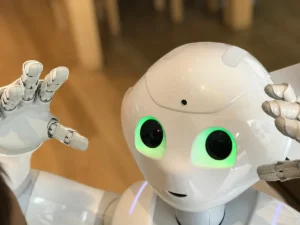
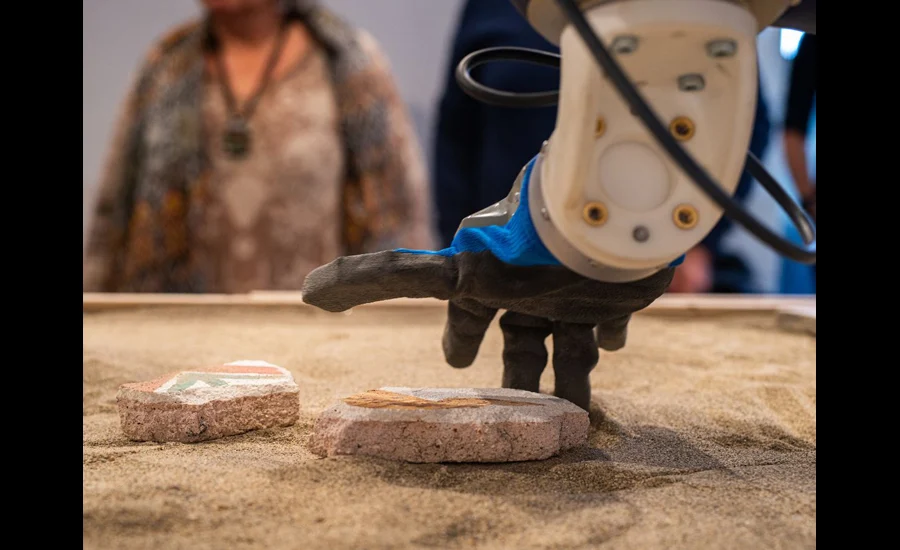
The system is comprised of two highly advanced robotic arms, each fitted with soft, flexible hands. These hands are available in various sizes, specifically designed to grip and manipulate delicate fragments without causing any damage to their fragile, often painted, surfaces. Complementing these robotic manipulators are sophisticated vision systems that meticulously identify and categorize individual fragments. The true intellectual power of the system resides in the algorithms developed by experts in artificial intelligence and machine learning. These algorithms are tasked with the daunting challenge of reconstructing the frescoes, matching not only shapes and contours but also subtle variations in colors and patterns that might be imperceptible to the human eye. The process is akin to solving a colossal jigsaw puzzle, albeit one with the added complexities of missing pieces, faded imagery, and the absence of a guiding picture.
The operational workflow begins with the acquisition and digitization of high-resolution images of each individual fragment. Once digitized, the RePAIR system initiates its puzzle-solving process. Crucially, this is not an entirely autonomous operation; the system is designed to engage continuously with human archaeologists. These experts provide invaluable input, identifying potential errors, offering suggestions based on their historical and artistic knowledge, and validating proposed matches. If the system identifies a confident match between fragments, it then directs the robotic arms to precisely position and assemble them in their designated locations, incrementally bringing the ancient artwork back to life.
Pompeii: A City Frozen in Time, A Legacy in Fragments
To fully appreciate the significance of the RePAIR project, one must understand the context of Pompeii itself. Located near Naples in southern Italy, Pompeii was once a vibrant, thriving Roman city, a bustling port and agricultural hub. Its prosperity, however, was tragically interrupted on October 24, A.D. 79, when the nearby Mount Vesuvius erupted with cataclysmic force. The city and its surrounding countryside, including Herculaneum and Stabiae, were engulfed by a torrent of volcanic ash, pumice, and pyroclastic flows. This catastrophic event killed thousands of people, burying them in situ, but paradoxically, the same volcanic material that brought destruction also served as an extraordinary preservative.
The thick layers of ash and pumice solidified, creating an airtight seal that protected Pompeii from the elements for centuries. This unique preservation allowed for an unparalleled glimpse into Roman life, providing a snapshot of daily routines, social structures, architectural styles, and artistic expressions. The city’s streets, houses, shops, temples, and public buildings remained largely intact beneath the volcanic shroud. Today, Pompeii is a UNESCO World Heritage site and one of the most visited archaeological parks in the world, drawing millions of tourists and scholars annually. Its unearthing, beginning in the mid-18th century, profoundly influenced European art, architecture, and historical understanding, sparking the Neoclassical movement.
Among the most treasured items recovered from Pompeii are the original frescoes that adorned the interiors of homes, villas, and businesses. These wall paintings, often covering entire rooms, served not only as decoration but also as windows into the beliefs, myths, and daily lives of the Roman elite and common citizens alike. While some frescoes have remained remarkably preserved on the walls where they were painted, many others, particularly those from collapsed structures or damaged during early, less careful excavations, exist today only in a fragmentary state. The goal of archaeologists has always been to reassemble these shattered paintings, restoring them to their former glory and allowing future generations to appreciate their beauty and historical narrative.
The Intricate Art of Roman Fresco Painting
Roman frescoes were an integral part of interior design, transforming mundane walls into vibrant tapestries of color and narrative. The technique, known as buon fresco, involved painting directly onto wet plaster. As the plaster dried, the pigments would chemically bond with it, creating durable and long-lasting artwork. Roman painters were masters of illusion, using perspective, shading, and vibrant pigments to create depth and realism.
Scholars categorize Pompeian wall paintings into four distinct styles, each reflecting evolving artistic trends from the 2nd century B.C. to A.D. 79:
- First Style (Incrustation Style): Mimicked colored marble blocks, often with stucco relief.
- Second Style (Architectural Style): Created illusionistic windows with elaborate landscapes, architectural vistas, and mythological scenes.
- Third Style (Ornate Style): Characterized by delicate, linear designs, often with small central vignettes, and a focus on elegance rather than grand illusion.
- Fourth Style (Intricate Style): A hybrid, combining elements of all previous styles, often featuring crowded compositions, mythological scenes, and architectural fantasies.
These frescoes depicted a vast array of subjects: gods and goddesses, heroic myths, daily life scenes, portraits, still lifes, and intricate floral and geometric patterns. They offer invaluable insights into Roman religion, literature, social customs, and aesthetic tastes. The sheer volume and quality of these paintings make Pompeii an unparalleled resource for studying Roman art. However, their fragmentation due to structural collapse, seismic activity preceding the eruption, and early excavation methods has meant that much of this rich visual history remains inaccessible or only partially understood.
The Herculean Task of Manual Restoration
Historically, the restoration of fragmented frescoes has been an intensely manual, time-consuming, and highly specialized endeavor. Conservators and archaeologists would painstakingly sift through thousands of small, often indistinguishable pieces, attempting to match them by eye, based on subtle cues like color variations, brushstrokes, or fragment shapes. This process could take years, even decades, for a single large fresco.
The challenges are manifold:
- Sheer Volume: The number of fragments from a collapsed wall could easily run into the tens of thousands.
- Lack of Reference: Unlike a modern jigsaw puzzle, there is rarely a complete image of the original fresco. Restorers must deduce the original composition from fragments, comparative art, or textual descriptions.
- Fragility: The fragments are incredibly delicate, often covered in layers of dirt, calcification, or previous restoration attempts. Manual handling carries a constant risk of further damage.
- Fading and Discoloration: Over centuries, colors can fade, pigments can oxidize, and surfaces can become discolored, making pattern matching extremely difficult.
- Missing Pieces: It is rare to find all fragments of a fresco, leaving gaps in the reconstructed artwork.
- Subjectivity: Human interpretation plays a significant role, which, while valuable, can also lead to inconsistencies or prolonged debates among experts.
- Cost and Labor: The immense human labor required translates into significant financial costs, limiting the number of frescoes that can be restored.
The traditional approach, while yielding remarkable results in many cases, is simply not scalable to the vast quantities of fragmented material still awaiting restoration at Pompeii and other ancient sites globally. This limitation has left countless fragments in storage, awaiting a technology that could unlock their secrets more efficiently.
How the RePAIR System Works: A Symphony of Silicon and Soft Robotics
The RePAIR system is designed to overcome these traditional barriers by creating a sophisticated feedback loop between advanced hardware and intelligent software.
- Fragment Acquisition and Digitization: The first step involves carefully collecting and preparing the fragments. Each piece is then high-resolution scanned or photographed, creating a precise digital twin. This digital data captures not only the surface imagery (colors, patterns) but also the three-dimensional shape and thickness of each fragment.
- Vision Systems and Initial Sorting: Advanced machine vision systems process these digital images. They can automatically identify key features, such as edges, textures, and color palettes, grouping similar fragments and flagging unique ones. This initial sorting dramatically reduces the search space for the AI.
- AI-Driven Puzzle Solving: At the heart of RePAIR are its machine learning algorithms. These algorithms are trained on vast datasets of existing frescoes and archaeological fragments. They learn to recognize patterns, predict continuations of lines or shapes, and match fragments based on a multitude of parameters simultaneously—color, texture, curvature, and even microscopic details of the brushstrokes. The AI can process millions of potential combinations in a fraction of the time a human would take, proposing plausible connections.
- Human-in-the-Loop Validation: This is a crucial aspect of the RePAIR project. The system does not operate in isolation. When the AI identifies a potential match, it presents its findings to human archaeologists and conservators. These experts, leveraging their deep contextual knowledge of Roman art, history, and restoration techniques, can confirm or reject the AI’s suggestions. They can also provide feedback, guiding the AI toward more accurate solutions or identifying specific areas for further analysis. This collaborative approach ensures that the historical and artistic integrity of the frescoes is maintained.
- Robotic Manipulation and Assembly: Once a match is validated by human experts, the robotic arms spring into action. Equipped with their soft, custom-designed grippers, they carefully pick up the designated fragments. Using precise spatial mapping and navigation, the robots then position the fragments in their correct locations, assembling them with sub-millimeter accuracy. The delicate nature of the fragments necessitates extremely gentle handling, which the robotic arms are specifically programmed to provide.
This iterative process of scanning, AI analysis, human validation, and robotic assembly allows for a systematic and efficient reconstruction of frescoes, piece by delicate piece.
A Chronology of Preservation and Innovation
- A.D. 79: Mount Vesuvius erupts, burying Pompeii and preserving its art and architecture.
- 1748: Formal excavations begin, marking the rediscovery of Pompeii. Early methods often prioritized artifact retrieval over in-situ preservation, leading to some damage.
- 18th-20th Century: Ongoing archaeological work uncovers vast sections of the city. Manual restoration of frescoes begins, a slow and painstaking process.
- Late 20th-Early 21st Century: Growing awareness of the need for advanced conservation techniques. Digital documentation of archaeological sites becomes more common.
- Circa 2017-2018 (Inferred): Conception of the RePAIR project, driven by the recognition of the scale of fragmented frescoes and the potential of emerging AI and robotics technologies.
- 2019-Present: Development and testing of the RePAIR robotic assembly system under EU funding (likely Horizon 2020 or Horizon Europe framework, which supports research and innovation for cultural heritage). Collaboration between computer scientists, robotics engineers, and archaeologists from various European institutions.
- Future: Full-scale deployment at Pompeii and potential adaptation for other archaeological sites facing similar fragmentation challenges.
Voices from the Field: Experts Weigh In
The development of the RePAIR project has garnered considerable enthusiasm from the archaeological and conservation communities. Dr. Pelillo, beyond his technical description, envisions a future where such technology democratizes access to historical knowledge. "This isn’t about replacing human archaeologists," he might infer, "but empowering them. Imagine how many frescoes we could restore, how much more we could learn about Roman life, if we could accelerate this fundamental step."
Officials at the Pompeii Archaeological Park, grappling with the immense task of preserving one of the world’s most significant heritage sites, likely view RePAIR as a critical tool. "Pompeii faces unique challenges," a representative might state. "The sheer volume of material, the constant threat of decay, and the need for sustainable conservation. Projects like RePAIR offer innovative solutions, allowing us to safeguard these priceless treasures for generations to come, while also freeing our human conservators to focus on the most complex and nuanced artistic interpretations."
Archaeologists who have dedicated their lives to painstaking manual restoration express a mix of relief and anticipation. "The meticulous process of piecing together fragments by hand is incredibly rewarding," one might suggest, "but also immensely draining. If AI and robotics can handle the initial, highly repetitive matching, it would allow us to dedicate our expertise to the deeper historical analysis, contextualization, and the more intricate final touches that only a human eye can discern." The collaborative nature of RePAIR, with human validation at its core, is particularly reassuring, ensuring that technology serves as an assistant, not a replacement for human judgment.
From the European Union’s perspective, funding projects like RePAIR aligns with broader strategic goals of promoting technological innovation, fostering interdisciplinary research, and preserving Europe’s rich cultural heritage. "Investing in advanced technology for cultural heritage is an investment in our collective identity and future," an EU spokesperson might emphasize. "RePAIR demonstrates how cutting-edge research can directly contribute to solving real-world challenges, safeguarding precious artifacts, and making history more accessible and understandable for everyone."
Broader Implications: Reshaping Cultural Heritage Conservation Globally
The implications of the RePAIR project extend far beyond the ancient walls of Pompeii. This robotic assembly system represents a paradigm shift in how cultural heritage restoration can be approached globally.
- Revolutionizing Restoration Methodologies: The success of RePAIR could pave the way for similar automated or semi-automated systems at other archaeological sites. Fragmented artifacts—from ancient pottery and mosaics to cuneiform tablets and papyri—could all benefit from AI-driven reconstruction. This would enable the restoration of vast quantities of material currently deemed too time-consuming or expensive to process manually.
- Enhanced Accuracy and Objectivity: AI’s ability to analyze minute details and compare countless fragments simultaneously can lead to more accurate reconstructions, potentially revealing connections that might be overlooked by the human eye. The process is also inherently more objective, reducing potential biases in interpretation during the initial matching phase.
- Preservation of Delicate Artifacts: The use of soft robotics and precise manipulation reduces the risk of further damage to extremely fragile fragments, a constant concern with manual handling. This is particularly crucial for artifacts that have already endured centuries of degradation.
- Economic Efficiency and Scalability: While initial development costs are significant, the long-term efficiency of robotic systems could lead to substantial cost savings. It allows for the processing of a far greater volume of material, making large-scale restoration projects more feasible and economically viable.
- New Research Opportunities: By rapidly reconstructing frescoes, scholars gain access to complete artworks much faster, opening new avenues for art historical research, iconographic studies, and understanding Roman daily life. It also allows for the creation of comprehensive digital archives of reconstructed artifacts, facilitating global collaboration.
- Human-Robot Collaboration Models: RePAIR showcases a powerful model of human-robot collaboration, where machines handle repetitive, high-volume tasks, while human experts provide critical oversight, contextual knowledge, and decision-making. This model can be replicated in various fields requiring both precision and expert judgment.
- Public Engagement and Accessibility: Restored frescoes can be exhibited, digitized, and made accessible to a wider public, fostering a deeper appreciation for cultural heritage and inspiring future generations of archaeologists and scientists.
Challenges and Future Horizons
Despite its immense promise, the RePAIR project, like any pioneering technology, faces challenges. Initial setup costs for such advanced robotic systems can be high. Each archaeological site and type of artifact presents unique characteristics, requiring system adaptability and further calibration. The integration of human expertise remains paramount, necessitating continuous training and collaboration between technologists and conservators. Ensuring the long-term maintenance and upgradeability of the system will also be crucial.
Looking ahead, the RePAIR project offers a compelling vision for the future of cultural heritage preservation. Its success at Pompeii could catalyze a global movement towards integrating advanced robotics and artificial intelligence into archaeological practices. We might soon see fleets of specialized robots working alongside human experts, not just restoring frescoes, but also reassembling pottery, reconstructing ancient texts, and preserving delicate artifacts from across civilizations. This blend of ancient history and cutting-edge technology promises to unlock untold stories from our past, ensuring that the echoes of civilizations long gone can resonate clearly for centuries to come. The fragments of Pompeii, once thought lost to time, are now poised to become testaments to human ingenuity, both ancient and modern.