MTU Aero Engines, a leading global manufacturer of aircraft engines, has announced significant advancements in its groundbreaking Flying Fuel Cell (FFC) project, marking a pivotal moment in the quest for sustainable air travel. The company has successfully completed rigorous testing of central hydrogen and air supply systems, moving its innovative propulsion concept closer to real-world application. These achievements underscore a growing momentum in the aviation industry towards decarbonization, with hydrogen-electric propulsion emerging as a frontrunner for future aircraft generations, particularly in the regional sector.
The successful validation of these critical subsystems means that MTU is now poised to enter the next crucial phase: the integrated testing of demonstrator units. This progression represents not just a technical triumph for MTU but a beacon of hope for an industry grappling with its environmental footprint and committed to achieving net-zero emissions by mid-century. The FFC system promises virtually emissions-free flight, producing only water vapor as a byproduct, thereby eliminating carbon dioxide (CO2), nitrogen oxides (NOx), and particulate matter, which are major contributors to climate change and air pollution.
The Core of Flying Fuel Cell Technology: A Deep Dive
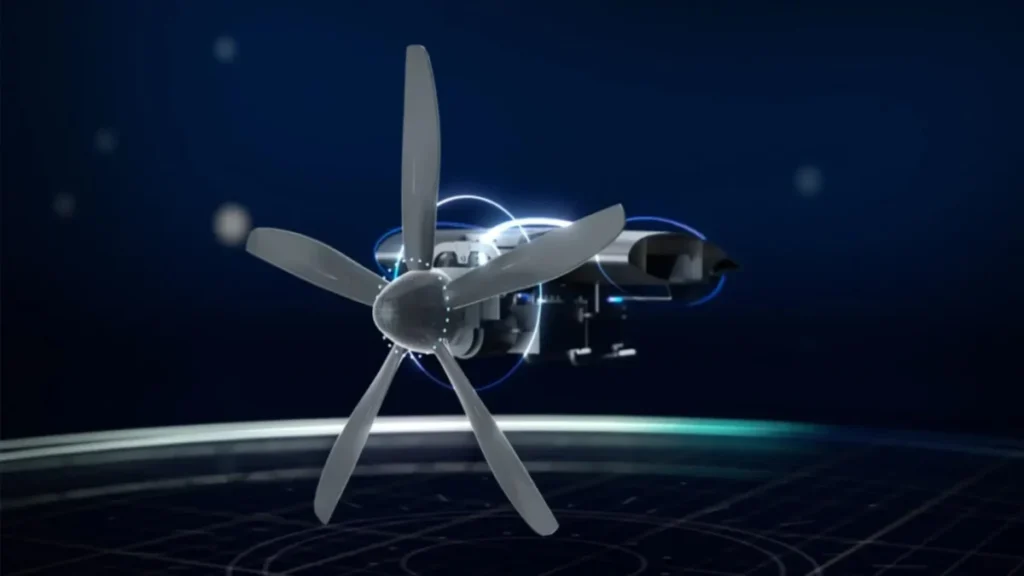
At its heart, the Flying Fuel Cell (FFC) is MTU Aero Engines’ proprietary fuel-cell propulsion concept designed to harness the immense energy potential of hydrogen. The fundamental principle is an electrochemical reaction: hydrogen and oxygen (sourced from the ambient air) combine within a fuel cell stack, generating electrical energy and water. This electrical energy is then fed into a highly efficient electric motor, which in turn drives a propeller via a gearbox. This direct conversion of chemical energy into electrical energy bypasses combustion, making the process inherently cleaner and often more efficient than traditional jet engines.
Unlike conventional turbofan or turboprop engines that burn fossil fuels, the FFC system leverages hydrogen as its energy carrier. While the technology builds on decades of fuel cell research, its application in aviation presents unique challenges and opportunities. The energy density of hydrogen, especially in its liquid form (LH2), offers a compelling alternative to batteries for longer-range electric flight, as batteries quickly become prohibitively heavy for anything beyond very short hops. MTU’s approach focuses on a holistic integration of the fuel cell stacks, the hydrogen storage and supply, the air management system, and the electric motor, all optimized for the demanding conditions of flight.
Validation Milestones: Proving the System’s Readiness
The recent announcements from MTU detail critical successes in validating key components of the FFC system. The company confirmed the triumphant completion of tests for both the liquid Hydrogen Fuel System and the subsequent Fuel Cell Hydrogen System, which is responsible for supplying gaseous hydrogen to the fuel cell stacks. These systems are vital for safely and efficiently managing hydrogen, which, despite its environmental benefits, presents challenges due to its low density and cryogenic storage requirements when liquid. Ensuring precise control over hydrogen flow, pressure, and temperature is paramount for both performance and safety.
In parallel, MTto successfully completed comprehensive tests of the air supply systems. These systems are crucial for feeding the necessary oxygen to the fuel cell reaction and managing thermal loads, which can be substantial in high-power fuel cell operations. The validation of key performance and regulation models for these systems at MTU’s Munich facility signifies that the theoretical designs hold up under practical conditions. This phase involved rigorous simulations and physical tests to ensure that the subsystems perform optimally across various operational scenarios, mimicking the dynamic environment of flight. The successful passage of this supply system phase now allows MTU to concentrate on the complex interactions of the integrated FFC system.
Charting the Course: Integrated Demonstrators and Future Testing
With the individual supply systems now validated, MTU is transitioning to the next ambitious stage: building and testing integrated demonstrators. The company is actively constructing its first close-to-production 350-kilowatt fuel cell stack. This stack, representing a significant power output, will be a central element in a full-system demonstrator. The purpose of this demonstrator is multifaceted: to thoroughly evaluate the complex interplay between all components—the fuel cell stacks, hydrogen supply, air management, electric motor, and control functions—under conditions that simulate actual flight.
The goal is to gain invaluable insights into the overall system’s performance, efficiency, and reliability. This phase will involve extensive testing in controlled environments, progressively simulating more realistic flight profiles and environmental conditions. Data gathered from these integrated tests will be instrumental in refining the design, optimizing control algorithms, and identifying any potential bottlenecks or areas for improvement. This iterative process of testing and refinement is standard in aerospace development and is essential for ensuring that the final propulsion system meets the stringent safety and performance requirements for commercial aviation. The knowledge acquired here will directly inform the development of future aircraft propulsion systems, laying the groundwork for scaling up the technology to larger aircraft and longer ranges.
Strategic Alliances and Regulatory Foundations: The European Drive for Clean Aviation
MTU’s pioneering work is not occurring in isolation but is deeply embedded within a broader European collaborative framework aimed at accelerating sustainable aviation. A key enabler is the European clean aviation research project HEROPS (Hydrogen-Electric Zero Emission Propulsion System). This initiative, part of the Clean Aviation Joint Undertaking – a public-private partnership between the European Commission and the European aeronautics industry – plays a significant role in realizing the FFC concept. Through HEROPS, MTU collaborates with various partners to develop technologies for a hydrogen-driven powertrain specifically targeting regional airplanes, with an ambitious operational target date of 2035. The centerpiece of this collaboration is a 1.8-megawatt system, currently under development and simulation at MTU in Munich, which represents a substantial leap in power output towards practical aircraft applications.
Beyond technological development, MTU is also proactively addressing the crucial aspect of certification. For five years, the company has been working closely with the European Union Aviation Safety Agency (EASA). This partnership is vital for developing the foundational regulatory groundwork required for certifying flying fuel cells. By integrating regulatory requirements early in the development process, MTU aims to streamline future type certification, avoiding costly delays and ensuring that the FFC system is designed from the outset to meet the highest safety and operational standards. This foresight highlights a mature approach to innovation, recognizing that technological breakthroughs must be accompanied by robust safety protocols and regulatory acceptance to achieve widespread adoption.
Dr. Stefan Weber, MTU’s Senior Vice President Engineering and Technology, articulated the profound significance of these achievements: “Our ambitious goal is to pave the way for a newly developed, safe, reliable, and economical propulsion system that will contribute to climate-neutral aviation.” He underscored the initiative as a “crucial milestone” towards the first hydrogen-powered propulsion system and hailed it as “true European technology leadership.” These statements reflect a shared vision across the European aerospace sector to lead the global charge in sustainable aviation.
The Broader Context: Decarbonizing Global Aviation
The aviation industry is under immense pressure to reduce its environmental impact. Air travel currently accounts for approximately 2-3% of global CO2 emissions, a figure projected to rise with increasing demand for air travel. International bodies like the International Civil Aviation Organization (ICAO) and industry associations such as the International Air Transport Association (IATA) have committed to ambitious targets, including achieving net-zero carbon emissions by 2050. This goal necessitates a radical transformation of aircraft propulsion technologies, airport infrastructure, and operational practices.
Hydrogen-electric propulsion, as exemplified by MTU’s FFC, offers a compelling pathway to achieve these targets, particularly for regional aircraft, which typically operate shorter routes (e.g., up to 1,000-2,000 km) and carry fewer passengers (50-100). This segment is often considered the ideal entry point for novel propulsion technologies due to its lower energy demands compared to long-haul flights. While sustainable aviation fuels (SAFs) are a vital near-term solution for existing fleets, hydrogen offers the potential for true zero direct emissions at the point of use, especially when produced using renewable energy sources (green hydrogen).
The challenges, however, are substantial. Hydrogen storage, whether as cryogenic liquid hydrogen (LH2) or highly compressed gaseous hydrogen (GH2), requires significantly more volume than conventional jet fuel for equivalent energy content. This necessitates fundamental redesigns of aircraft fuselages and wing structures. Furthermore, a global infrastructure for producing, transporting, storing, and refueling hydrogen at airports needs to be developed, a monumental undertaking that requires coordinated investment from governments, energy companies, and aviation stakeholders. Safety standards for handling hydrogen, which is highly flammable, must also be meticulously developed and implemented.
Implications and Future Outlook
The progress made by MTU Aero Engines carries profound implications for the future of regional air travel. A successful deployment of the FFC system could transform the economic and environmental landscape of short-to-medium-haul flights. Passengers could experience quieter, cleaner flights, while airlines could benefit from reduced fuel costs (if green hydrogen becomes economically viable) and compliance with increasingly stringent environmental regulations. This could also stimulate job creation in green technology, manufacturing, and infrastructure development.
The success of the FFC project could serve as a blueprint for scaling up hydrogen-electric propulsion to larger aircraft types in the long run. While regional aircraft are the immediate target, the foundational technologies and operational insights gained from projects like FFC will be invaluable for developing hydrogen solutions for narrow-body and eventually wide-body aircraft, potentially revolutionizing the entire commercial aviation sector.
However, the journey ahead remains complex. After the integrated demonstrator phase, the next steps will involve flight testing, further optimization for aerodynamic integration, and continuous collaboration with EASA for eventual type certification. The economic viability of green hydrogen production and the establishment of a robust global hydrogen supply chain will also be critical determinants of the FFC’s ultimate success and widespread adoption.
In conclusion, MTU Aero Engines’ Flying Fuel Cell™ represents a significant leap forward in the pursuit of climate-neutral aviation. With successful supply system validation, the imminent integrated demonstrator testing, robust industry partnerships under initiatives like HEROPS, and proactive engagement with EASA on certification, MTU is firmly positioning itself at the forefront of the hydrogen-electric revolution in aerospace. This concerted effort underscores a global commitment to sustainable flight, promising a greener, cleaner future for air travel that moves beyond aspiration to tangible reality.