Venus, long shrouded in a veil of mystery and perceived geological slumber, is stirring. For decades, scientists painted a picture of a static, scorched world, its surface a frozen testament to a cataclysmic past, devoid of the dynamic processes that shape our own planet. Surface temperatures soar to a blistering 462 degrees Celsius (864 degrees Fahrenheit), and the absence of liquid oceans has historically led to the conclusion that Venus was geologically inert. However, a groundbreaking new study, leveraging advanced 3D computer modeling, is fundamentally challenging this long-held assumption, providing compelling evidence that Venus’s immense rift valleys are not ancient relics but potentially much younger features, indicative of a still-active and dynamic interior.
This paradigm-shifting research, published in the prestigious journal Nature Geoscience, stems from the work of a team at ETH Zurich, led by Professor Taras Gerya of the Department of Earth and Planetary Sciences. The study’s lead author, Xi Yang, conducted this pivotal research during his Master’s studies under Gerya’s guidance. Their sophisticated simulations have illuminated the complex geological processes at play on Venus, suggesting that the planet’s crust is far from settled and may be undergoing significant tectonic shifts, possibly even accompanied by active volcanism.
Unveiling Venus’s Gigantic Scars: The Rift Valleys
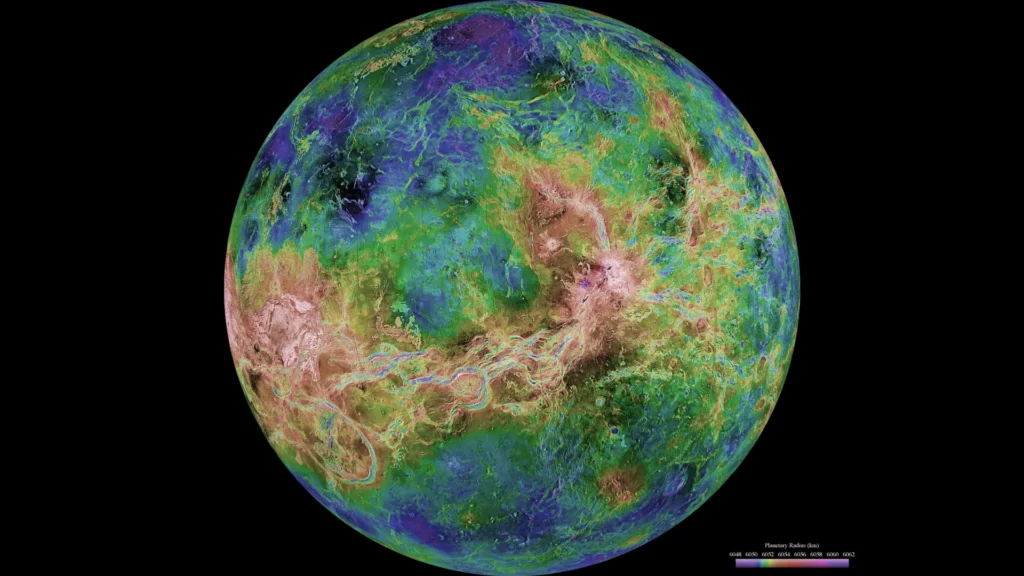
Venus boasts some of the most colossal geological features in the solar system: its rift valleys. These are vast depressions in the planet’s crust, often thousands of kilometers long, where the surface has been pulled apart. On Earth, similar formations like the East African Rift Valley are well-known indicators of tectonic activity, where continents are slowly drifting apart. However, the scale of Venus’s rift valleys is staggering, with some stretching for up to an astonishing 10,000 kilometers (approximately 6,200 miles). This sheer immensity has always hinted at powerful geological forces, but the timing and nature of their formation remained a significant enigma.
Historically, the prevailing scientific consensus posited that these vast rifts were ancient features, formed perhaps more than 100 million years ago. This view painted Venus as a planet that had largely cooled down and stabilized after its initial formation and volcanic outbursts. The absence of plate tectonics, as observed on Earth, further contributed to this perception of geological inactivity. Yet, the persistent presence of these immense scar-like structures has been a constant puzzle, prompting ongoing investigations into their origins and implications.
The ETH Zurich Breakthrough: 3D Simulations Rewrite the Narrative
The ETH Zurich study represents a significant leap forward by employing the first high-resolution, three-dimensional computer simulations specifically designed to model Venusian rifts. Previous modeling efforts were often two-dimensional and relied on simplified assumptions about the behavior of planetary materials under extreme conditions. The new approach by Yang and Gerya’s team provides a more nuanced and realistic depiction of how Venus’s thick, scorching crust stretches, deforms, and ultimately relaxes over geological timescales.
These advanced simulations have yielded crucial insights into the characteristics of young rift valleys. The models demonstrate that as a rift forms and the crust pulls apart, broad, elevated ridges, known as rift flanks, develop along its sides. These prominent features are indicative of recent or ongoing tectonic activity. The simulations suggest that these rift flanks emerge while the rifting process is actively widening the valley or shortly after the movement ceases.
Furthermore, the simulations have recalibrated our understanding of the speed at which Venusian rifts can spread. According to the model, these massive geological structures can widen at a rate of approximately 3 to 10 centimeters (1 to 4 inches) per year. While this might seem slow in human terms, it represents a considerable geological pace, especially when considering the vast scale of these features. This rate of widening suggests a more dynamic subsurface and mantle convection than previously entertained for Venus.
The Fading Footprints of Tectonic Activity
A critical aspect of the new research focuses on the eventual fate of these rift flanks. The simulations reveal that once the tectonic movement driving the rifting slows down or stops, these elevated rift flanks begin to flatten out relatively quickly. As a rift system matures and the crust slowly relaxes after being stretched, its ridges become lower, broader, and less sharply defined. This process of relaxation and subsidence is distinct from the erosional forces that shape Earth’s landscapes. On Venus, the absence of significant liquid water and widespread erosion means that the geological history is more directly preserved, allowing for the observation of these subtle relaxation processes.
The implications of this finding are profound. The ETH Zurich team observed that the wide, elevated rift flanks predicted by their simulations bear a striking resemblance to features observed in images captured by NASA’s Magellan probe during its pioneering mission in the 1990s. The Magellan spacecraft, which orbited Venus from 1990 to 1994, utilized radar to penetrate the planet’s dense atmosphere, mapping its surface in unprecedented detail. The close correlation between the simulated young rift structures and the actual observed topography strengthens the argument that some of Venus’s most prominent rift valleys are indeed geologically recent, perhaps forming within the last tens of millions of years, rather than hundreds of millions.
By integrating the results from their sophisticated computer models with the wealth of observational data from the Magellan mission, the researchers have concluded that Venus possesses a more active and dynamic interior than scientists had previously assumed. Professor Gerya stated, “The results help us to better assess the tectonic activity on Venus.” This statement encapsulates the fundamental shift in understanding that this research heralds.
Guiding the Next Wave of Venus Exploration
The groundbreaking simulations developed by the ETH Zurich team hold immense practical value for future Venus exploration. By providing a clearer understanding of the geological processes that create and modify rift valleys, the model can assist scientists in identifying specific regions on Venus that are most likely to exhibit ongoing geological activity. These areas could then be designated as priority targets for upcoming missions, aiming to detect definitive signs of active tectonics, volcanism, or even seismic activity.
The implications of this research extend beyond our solar system. By improving our understanding of how rocky planets form and evolve, particularly those with thick atmospheres and intense surface conditions like Venus, scientists hope to develop more effective methods for detecting and studying rocky exoplanets beyond our solar system. The ability to interpret geological signatures on distant worlds is crucial for the search for extraterrestrial life and the broader quest to understand planetary habitability.
A New Era of Venusian Discovery
The scientific community’s renewed interest in Venus is palpable, fueled by the increasing likelihood of active geological processes. Both NASA and the European Space Agency (ESA) are on the cusp of launching several ambitious missions to investigate Earth’s enigmatic neighbor. These missions are poised to unravel many of the planet’s enduring mysteries.
Among these vital endeavors is ESA’s EnVision mission, scheduled for launch in the early 2030s. ETH geophysics professors Paul Tackley and Taras Gerya, along with their international collaborators, are actively contributing to the EnVision mission. Their teams are instrumental in developing advanced instruments that will be deployed on the Venus orbiter to conduct detailed examinations of the planet’s surface. EnVision promises to delve into Venus’s geological history, atmospheric composition, and internal structure with an unprecedented level of detail, potentially providing direct confirmation of ongoing geological activity.
The combined efforts of advanced modeling and upcoming observational missions are set to revolutionize our understanding of Venus. From its searing surface to its deep interior, the "Morning Star" may soon reveal itself to be not a geologically dead world, but a planet with a living, breathing, and perhaps even volcanic heart. The insights gained from studying Venus’s dynamic nature will undoubtedly offer invaluable perspectives on the evolution of rocky planets across the cosmos. The era of Venusian discovery is dawning, and the evidence suggests that this once-dormant world is far more alive than we ever imagined.