The United States is set to embark on a new era of space exploration and resource management with the upcoming launch of the first spacecraft designed to robotically service satellites in geosynchronous orbit. Northrop Grumman announced this week that the groundbreaking Mission Robotic Vehicle (MRV), integrated with the Robotic Servicing of Geosynchronous Satellites (RSGS) payload, is scheduled to lift off from Cape Canaveral Space Force Station in Florida on July 21st. This ambitious undertaking, a culmination of nearly a decade of development and a significant public-private partnership, promises to revolutionize satellite longevity and operational capabilities in one of Earth’s most critical orbital regions.
The 4,400-kilogram spacecraft represents a monumental leap forward in on-orbit servicing technology. It is the product of the Defense Advanced Research Projects Agency’s (DARPA) RSGS program, a visionary initiative aimed at establishing robust capabilities for extending the lifespan of expensive, high-value satellites. This program, a testament to a collaborative spirit between government innovation and private sector expertise, has partnered with Northrop Grumman’s subsidiary, SpaceLogistics, to bring this complex mission to fruition. The primary objective is to enable refueling, repairs, and other essential maintenance for satellites that are currently considered difficult or impossible to service, thereby maximizing their operational life and return on investment.
"This is really a unique and first-of-its-kind spacecraft," Cassie Wong, Northrop Grumman’s director of logistics and servicing, stated in a mid-June interview, underscoring the unprecedented nature of the MRV-RSGS mission. Her sentiment is echoed by program officials who foresee a future where satellite servicing becomes a routine aspect of space operations, akin to maintenance and repair services on Earth.
The financial investment in this pioneering endeavor reflects its strategic importance. DARPA has allocated $420 million to the RSGS program, a substantial commitment to developing the foundational technologies required for such advanced in-orbit operations. While Northrop Grumman has not disclosed the precise figures of its own contributions, Wong indicated that the company has invested "hundreds of millions into servicing technology" over the past two decades, highlighting a sustained dedication to advancing space logistics. This significant financial outlay underscores the perceived value and potential impact of operationalizing satellite servicing.
The Mission Robotic Vehicle: A Dexterous New Operator in Space
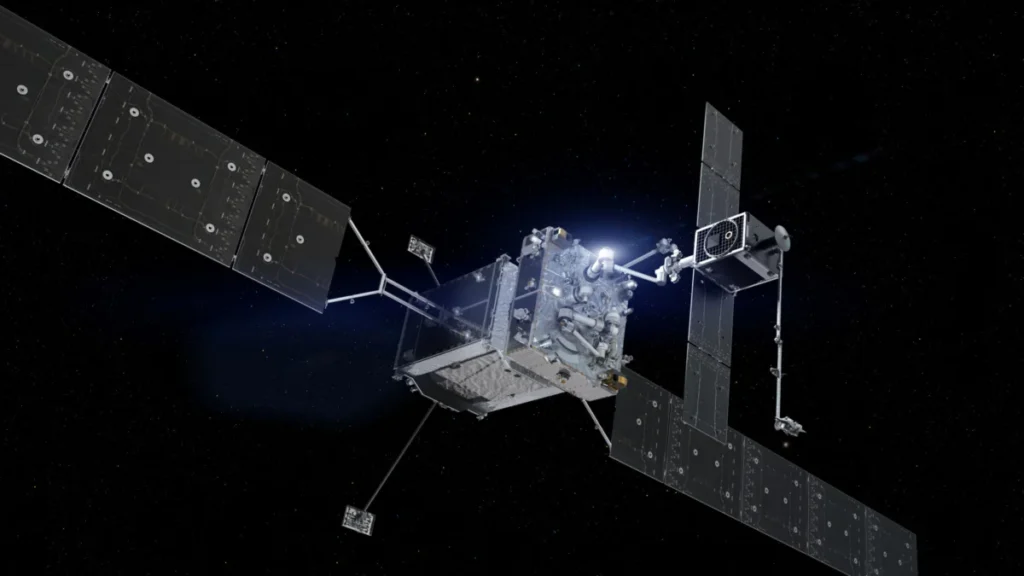
At the heart of this mission is the SpaceLogistics MRV, a sophisticated platform equipped with two exceptionally dexterous robotic arms. These arms, described by James Shoemaker, DARPA’s RSGS program manager, as "very dexterous," are the key to the vehicle’s servicing capabilities. Designed with intricate movements and precise control, they are engineered to perform a range of complex tasks that were previously confined to theoretical discussions.
The MRV, along with its RSGS payload, will be launched aboard a SpaceX Falcon 9 rocket. This launch vehicle will also carry three specialized fuel "jet packs" developed by Northrop Grumman. The journey to geosynchronous orbit, a demanding celestial destination approximately 35,786 kilometers (22,236 miles) above the Earth’s equator, is anticipated to take approximately 14 months. This extended transit time is necessary to gradually achieve the correct orbital parameters and to allow for system checks and calibrations during the journey.
Upon arrival in geosynchronous orbit (GEO), the cargo van-sized MRV will commence its primary mission. Utilizing its 3-meter-long robotic arms, it will carefully capture and install the mini fridge-sized fuel packs. The initial servicing operations will focus on two commercial satellites: one owned by SES, a leading satellite operator based in Luxembourg, and another from Optus, an Australian telecommunications company. The installation of these fuel packs is expected to significantly extend the operational life of these satellites, allowing them to continue providing vital communication and data services for years to come.
Northrop Grumman has remained tight-lipped regarding the specific plans for the third fuel pack and any subsequent MRV activities, suggesting a strategic flexibility and potential for broader applications beyond the initial mission objectives.
Capabilities Beyond Refueling: A Vision for Comprehensive Satellite Care
The MRV’s capabilities extend far beyond simple refueling. Cassie Wong elaborated on the versatility of the robotic arms, stating they will be able to "inspect satellites, [conduct] repairs, add additional auxiliary payloads or power to satellites." She further emphasized the expansive potential, noting, "it’s just [up] to our imagination." This open-ended potential suggests that the MRV could evolve into a multi-purpose space utility vehicle, capable of adapting to unforeseen needs and emerging technological advancements in orbit.
The ability to launch new tools into orbit for specialized missions after the MRV is already deployed further amplifies its adaptability. This modular approach to servicing ensures that the platform remains relevant and capable of addressing a wide spectrum of future challenges and opportunities in space.
A critical design feature of the robotic arms is their ability to operate on satellites that were not originally designed for servicing. This includes the "current generation of GEO satellites," according to Shoemaker. This required DARPA, in collaboration with the U.S. Naval Research Laboratory, to develop robotics with "a little more complexity, a little more capability" to overcome the inherent challenges of interacting with unprepared spacecraft. This capability is crucial for servicing the vast existing constellation of satellites in GEO, many of which lack standardized docking ports or servicing interfaces.
Overcoming Challenges: From Robotics to Zero-G Operations
The development of the robotic arms was identified as the most significant technical hurdle prior to launch. However, Shoemaker acknowledged that the most challenging aspect post-launch will be "actually operating in zero-G." The nuances of manipulating objects in a microgravity environment, where there is no inherent gravitational pull to provide stability, require highly sophisticated control systems and meticulous operational procedures.
To mitigate the risks associated with zero-gravity operations, ground operators will adopt a methodical "baby steps" approach. Shoemaker explained that initial interactions with the satellite will involve a series of small, controlled movements to calibrate the robotic system and ensure that its responses are predictable and accurate. If any deviations are detected, adjustments to the controller gains will be made to fine-tune the system’s performance.
In preparation for these delicate maneuvers, the ground team will engage in continuous rehearsals and testing of the robotic systems and installation procedures while the MRV-RSGS spacecraft is en route to geosynchronous orbit. These simulations will leverage data from previous Northrop Grumman servicing missions and extensive ground testing of the MRV-RSGS itself, aiming to build a comprehensive understanding of the system’s behavior in space.
A New Dawn for Space Operations: From Demo to Operational System
While Northrop Grumman will own and operate the MRV-RSGS spacecraft, DARPA will maintain a supervisory role during the initial servicing operations. "DARPA will kind of look over the shoulder while they do their first servicing," Shoemaker remarked, emphasizing a transitional phase where DARPA will ensure the successful execution of its program objectives. Following the completion of the demonstration mission’s objectives, DARPA will formally hand over the reins to Northrop Grumman, with the company obligated to provide data on all subsequent servicing missions.
The MRV-RSGS spacecraft is designed with an intended operational life of 10 years, a testament to its robust engineering and the program’s focus on creating a sustainable, long-term capability. Shoemaker noted that, unlike many previous DARPA programs that focus on pure technological demonstration, "this is closer to being an operational system than just a tech demo." This distinction is significant, indicating a mature and ready-to-deploy solution for a critical gap in space infrastructure.
"This is kind of the first step for expanding the scope of what you can do in orbit," Shoemaker concluded, painting a vivid picture of a future where the capabilities in space are no longer limited by the initial deployment of a satellite but can be continuously enhanced and adapted through on-orbit servicing.
Broader Implications and Future Prospects
The successful deployment and operation of the MRV-RSGS will have profound implications for the future of space utilization.
Economic Benefits: The ability to extend the life of satellites can significantly reduce the cost of space operations. Instead of launching entirely new, expensive satellites to replace aging ones, operators can opt for servicing missions, leading to substantial savings. This cost-effectiveness could make space more accessible for a wider range of commercial and scientific endeavors.
Space Sustainability: By enabling repairs and upgrades, on-orbit servicing can contribute to a more sustainable use of space. It can help reduce the accumulation of space debris by keeping satellites operational for longer periods and potentially allowing for de-orbiting of defunct satellites in a controlled manner.
Enhanced Mission Capabilities: The potential for adding auxiliary payloads or power sources to existing satellites opens up new possibilities for mission enhancement. Satellites could be upgraded with new sensors, communication equipment, or power systems, allowing them to perform advanced scientific research or provide enhanced services without requiring a full replacement.
National Security: For military and intelligence applications, the ability to service and maintain critical satellites in orbit is of paramount importance. This technology can ensure the continued availability of vital communication, surveillance, and navigation assets, bolstering national security.
Technological Advancement: The RSGS program itself represents a significant leap in robotics, artificial intelligence, and space systems engineering. The technologies developed for this mission could find applications in other areas of space exploration, including asteroid mining, lunar base construction, and interplanetary missions.
The launch of the MRV-RSGS on July 21st marks not just the deployment of a new spacecraft, but the dawn of a new era in space. It signifies a shift from a disposable model of satellite deployment to a sustainable, service-oriented approach, promising to unlock unprecedented capabilities and opportunities in Earth’s orbit and beyond. The success of this mission will undoubtedly pave the way for further innovation in space logistics and lay the groundwork for a more robust and dynamic future in space exploration and utilization.