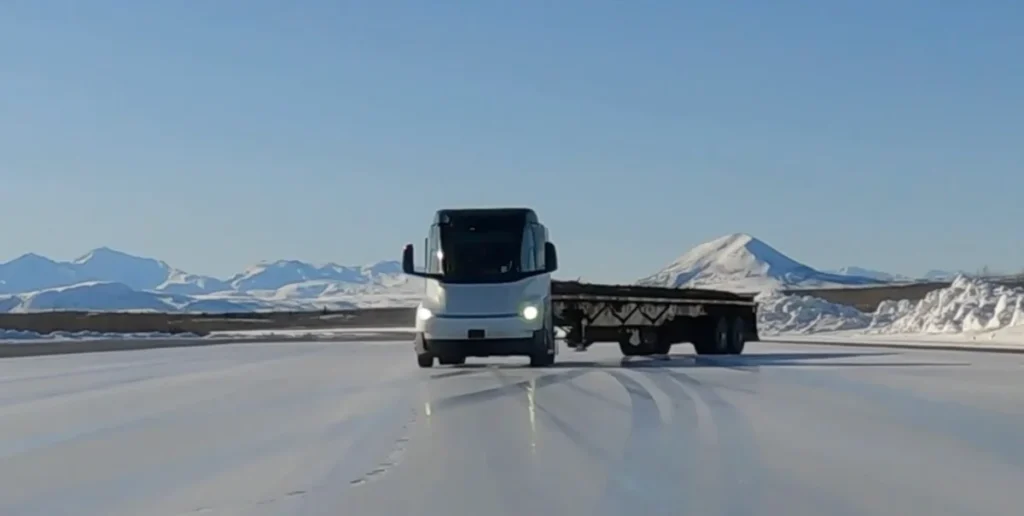
During Tesla’s second-quarter 2026 earnings call on July 22nd, CEO Elon Musk offered a new projection for the widespread implementation of self-driving capabilities on the company’s electric semi-trailer trucks, stating, "We expect to get self-driving working on the Tesla Semi probably around the end of this year or early next year." This announcement, made in response to an inquiry from LightShed analyst Walter Piecyk, immediately drew attention due to Tesla’s long and often unfulfilled track record with autonomous driving technology.
Musk framed the development of an autonomous Tesla Semi as a crucial solution to the ongoing labor shortage in the trucking industry, a sector vital to the American economy. He stated, "There just aren’t enough people around who want to drive trucks, which are crucial for transport throughout America." He further elaborated that equipping the Semi with self-driving technology would enhance safety and comfort for truck drivers, potentially making the profession more appealing. However, this assertion presents a logical inconsistency: if the goal is to alleviate a shortage of human drivers, a fully autonomous vehicle that eliminates the need for a driver would seem counterintuitive, at least in the short term. This suggests that Musk’s vision for the Semi’s autonomy leans towards full Level 4 or Level 5 automation, where human intervention is minimal or unnecessary for operation.
Despite the optimistic timeline presented for the Semi, Musk also acknowledged that Tesla’s immediate focus for its self-driving development efforts remains on its high-volume consumer vehicles, namely the Model 3, Model Y, and the Cybercab. He indicated that Semi autonomy would be "taking a bit of a backseat for the next six months or so." This statement further tempers expectations, implying that the "end of this year or early next year" target is contingent on a renewed focus after this six-month period, pushing the practical realization of autonomous Semis further into the future.
A Pattern of Missed Self-Driving Milestones

The latest projection for the Tesla Semi’s autonomous capabilities arrives against a backdrop of numerous missed self-driving deadlines by Tesla and Elon Musk. An analysis of Musk’s past predictions, including data tracked by platforms like MuskOmeter, reveals a consistent pattern of overpromising and underdelivering on autonomous driving technology. Historically, Musk has provided ambitious timelines for Full Self-Driving (FSD) capabilities and robotaxi deployment, many of which have not materialized as predicted.
Since 2013, Tesla and Musk have announced approximately ten self-driving and robotaxi-related deadlines, with every single one that has passed its due date being missed. Notable examples include a much-publicized claim in October 2016 that a Tesla would be capable of driving itself from Los Angeles to New York by the end of 2017. This ambitious goal, nine years later, remains unachieved. Further into the future, Musk declared in late 2019 that FSD would be "feature complete" by the end of that year. In 2020, a bold promise was made to have one million robotaxis operating on public roads. By July 2020, Musk expressed "100% confidence" that Tesla would achieve Level 5 autonomy within the following year. More recently, in late 2025, the promise was for a robotaxi service covering half the U.S. population by December. As recently as January 2026, it was suggested that Europe and China would approve FSD within the subsequent month. The current live promise for consumer vehicles is unsupervised FSD in Q4 2026, a claim Musk reiterated in May 2026 and which has been extensively scrutinized. If Tesla’s "Musk time" for self-driving historically translates to delays of nearly a decade, then widespread autonomous operation of the Semi might not be a reality until the mid-to-late 2030s.
The Tesla Semi’s Autonomy Journey: A Winding Road
The ambition for an autonomous Tesla Semi is not a new development; it has been part of the truck’s narrative since its initial unveiling. In November 2017, Tesla showcased the Semi with "Enhanced Autopilot" capabilities, including a demonstration of a convoy mode where trucks would follow each other autonomously on highways. At that time, production was slated to commence in 2019.
However, the Semi’s production timeline experienced significant delays, pushing the start date first to 2020, then 2021, and finally 2022. The first deliveries of a handful of trucks to PepsiCo at the end of 2022 were notable. Interestingly, during the delivery event, Tesla made no mention of Autopilot or self-driving features, and the previously advertised convoy mode quietly disappeared from the company’s website. This omission fueled speculation that the autonomous capabilities were either not ready or had been de-emphasized.
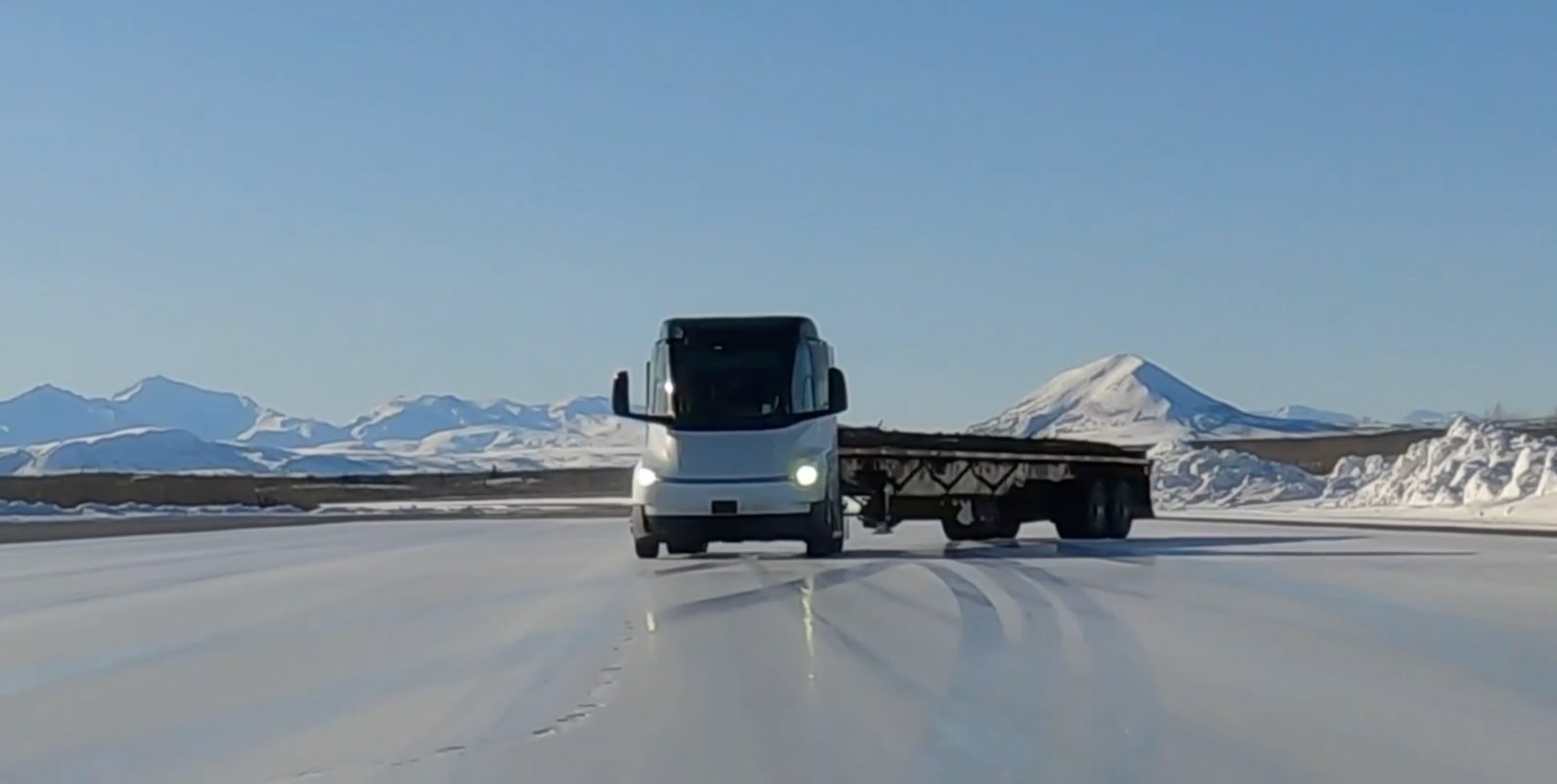
The first Tesla Semi to roll off the company’s high-volume production line at Giga Nevada, a facility designed for an annual output of 50,000 trucks, was completed in April 2026. Despite this milestone, Tesla has indicated to investors that the Semi will represent a "very small percentage" of its total vehicle fleet by the end of 2026, suggesting that scaling production and widespread deployment remain significant challenges.
Industry Perspective on Autonomous Trucking
The broader landscape of autonomous trucking offers a contrasting perspective to Tesla’s approach. Companies actively engaged in driverless freight operations, such as Aurora, are demonstrating tangible progress. Aurora has been hauling freight on Texas highways without a human driver in the cab, achieving over 250,000 driverless miles in March 2026 alone and targeting the deployment of more than 200 autonomous trucks within the current year. These companies focus on the practicalities of autonomous operation, not on framing it as a comfort feature for existing drivers.
In contrast, Tesla’s unsupervised miles logged in its robotaxi service in Texas, a more controlled, lower-speed, and geo-fenced environment, are considerably lower, totaling only 380,000 miles over a year of testing. This limited operational scope and the cautious approach to expanding speed and geographic boundaries raise questions about Tesla’s readiness for the demands of long-haul, high-speed trucking.
Electrek’s Analysis and Implications

The framing of the autonomous Semi as a solution to the trucker shortage, especially after Tesla previously removed all mentions of autonomy from its Semi marketing materials in 2022, raises questions about the company’s strategic messaging. The shift from promoting the Semi as a vehicle for human drivers to highlighting its driverless capabilities, while simultaneously claiming it will improve comfort for the driver it aims to replace, appears to be a tactical adjustment.
The practical implications of Musk’s latest Semi autonomy projection are significant. Given Tesla’s history with self-driving technology, a one-year timeline for such a complex system, particularly one that has been deprioritized for the next six months, should be viewed with considerable skepticism. The operational realities of long-haul trucking, with its varied weather conditions, complex road networks, and the need for robust safety protocols, present formidable challenges for any autonomous system.
The recent earnings call suggests that the discussion around Semi autonomy might be more of a response to analyst inquiries than a concrete product development roadmap. The focus on high-volume consumer vehicles for immediate self-driving advancements, while pushing Semi autonomy to a more distant horizon, indicates a prioritization of resources. It is likely that the development and widespread deployment of truly autonomous Tesla Semis will require further significant technological advancements and a more sustained period of rigorous testing and validation, extending well beyond the end of 2026 or early 2027. The trucking industry, and the drivers within it, will likely be waiting for a considerable time before driverless Tesla Semis become a widespread reality.
The intermittent nature of Tesla’s public statements on autonomous trucking, coupled with its past performance, suggests that the current projection for the Semi’s self-driving capabilities should be interpreted not as a firm delivery date, but rather as an indication of evolving priorities and long-term aspirations. The industry will be closely watching whether Tesla can bridge the gap between its ambitious pronouncements and the tangible, safe, and reliable deployment of autonomous trucking technology on public roads.