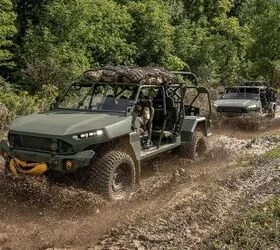
General Motors’ dedicated military vehicle division, GM Defense, has publicly announced its collaboration with the U.S. government to develop the latest iteration of its tactical truck, a move that underscores the automaker’s sustained commitment to fulfilling the military’s evolving mobility requirements. This initiative is not an isolated development for GM, as the establishment of GM Defense itself signaled a strategic intent to address the unique and demanding needs of defense applications. However, the landscape of military vehicle procurement has recently seen a significant new entrant: Ford Motor Company. In a notable development, Ford has signaled its intent to compete for a substantial contract to develop approximately 600 new tactical trucks for the U.S. Army.
Ford’s Strategic Re-entry into Military Vehicle Contracts
According to reporting from The Wall Street Journal, the "Blue Oval" manufacturer is preparing to submit three distinct prototype vehicles for evaluation by the U.S. Department of the Army. This represents a significant re-engagement by Ford in the realm of military vehicle development, a sector where the company boasts a rich and historically significant legacy. Ford’s involvement in defense manufacturing is far from a nascent endeavor. The company played a crucial role during World War II, notably by producing B-24 Liberator bombers at its Ypsilanti, Michigan, plant. Even more pertinent to the current tactical truck program, Ford was instrumental in the development and production of the original Jeep, a ubiquitous and iconic military vehicle that served reliably for decades and became synonymous with Allied forces.
The contemporary context of this competition between automotive giants carries considerable weight. The era of the "Big Three" American automakers—General Motors, Ford, and Chrysler—has always been characterized by intense rivalry, not only in the civilian market but also in securing lucrative government contracts. Each manufacturer brings a unique set of engineering strengths, manufacturing capabilities, and historical precedents to the table. When considering the critical task of equipping the nation’s soldiers with the most advanced and capable tactical vehicles, the decision of which entity will ultimately prevail carries significant implications for national security, technological advancement, and the future of American industrial capacity.
GM Defense: A Focused Approach to Military Mobility
GM Defense, established as a subsidiary of General Motors, operates with a clear mandate: to leverage GM’s extensive automotive engineering, manufacturing, and supply chain expertise for defense applications. The division’s focus on tactical trucks, such as the Chevrolet Colorado ZH2, a hydrogen fuel cell electric vehicle developed in partnership with the U.S. Army, demonstrates a forward-thinking approach to military mobility. These programs are not merely about producing robust trucks; they are about integrating advanced technologies, such as electric powertrains, advanced materials, and sophisticated communication systems, to meet the evolving demands of modern warfare.
The development of new tactical trucks is a complex undertaking. It requires a deep understanding of military operational requirements, including survivability, off-road mobility, payload capacity, fuel efficiency, and ease of maintenance in austere environments. GM Defense’s work on its current tactical truck program, in collaboration with the U.S. government, suggests a meticulous process of research, development, and testing. This often involves close consultation with military personnel to ensure that the vehicles meet stringent performance benchmarks and can withstand the rigors of deployment.
Ford’s Historical Contributions and Modern Ambitions
Ford’s historical connection to military vehicles is undeniable. The company’s production of the original Jeep during World War II cemented its reputation as a reliable defense contractor. The Jeep, known for its versatility and ruggedness, became an indispensable tool for reconnaissance, transport, and a multitude of other roles. This experience provided Ford with invaluable insights into the specific design and engineering principles required for military-grade vehicles.
The company’s current pursuit of the tactical truck contract signals a strategic desire to recapture a significant share of the military vehicle market. By submitting three distinct prototypes, Ford is likely showcasing a range of design philosophies and technological approaches, aiming to demonstrate its comprehensive capabilities and adaptability. This strategy could involve variations in powertrain options, chassis configurations, or specialized equipment packages, all designed to appeal to different branches or operational needs within the U.S. Army.
The Competitive Landscape and Program Scope
The U.S. Army’s requirement for approximately 600 new tactical trucks represents a substantial procurement. Such programs are not only critical for modernizing the military’s fleet but also for stimulating domestic manufacturing and technological innovation. The competition between GM Defense and Ford highlights the ongoing strategic importance of the automotive sector to national defense.
The selection process for such a contract is typically rigorous and multifaceted. It involves evaluating not only the technical merits of the proposed vehicles but also factors such as production capacity, cost-effectiveness, lifecycle support, and the manufacturer’s ability to adapt to future technological advancements. The U.S. Department of the Army will undoubtedly subject each prototype to extensive testing under various simulated combat and operational conditions.
Broader Implications for the Defense Industry and Automotive Sector
The renewed focus on tactical vehicle development by both GM and Ford has several broader implications. Firstly, it underscores the continued reliance of the U.S. military on American industrial capabilities. Secondly, it signifies an ongoing evolution in military vehicle technology, with a likely emphasis on factors such as fuel efficiency, reduced logistical footprints, and potentially alternative propulsion systems, areas where GM Defense has already shown interest with its hydrogen fuel cell initiatives.
For the automotive industry, these contracts represent significant opportunities for revenue generation, job creation, and the advancement of automotive technologies that can often trickle down to civilian applications. The intense competition is likely to spur innovation, pushing both companies to develop vehicles that are not only durable and reliable but also incorporate cutting-edge technologies.
The historical weight of these two automotive titans entering this competitive arena cannot be overstated. The "Big Three" have long been pillars of American industry, and their participation in defense programs is a testament to their enduring relevance. As the U.S. Army seeks to equip its soldiers with the most advanced and effective mobility solutions, the ensuing competition between GM Defense and Ford is set to be a closely watched development, with potential ramifications reaching far beyond the immediate procurement of tactical trucks. The outcome will not only shape the future of the Army’s ground fleet but also reflect the ongoing synergy between American industry and national defense.