The landscape of hardware development and embedded systems engineering is undergoing a significant shift as the boundaries between consumer-grade microcontrollers and professional-grade laboratory equipment continue to blur. At the center of this transformation is the ESP32 Bit Pirate, a versatile firmware suite developed by a creator known as Geo. Designed to transform standard ESP32-S3 development boards and handheld devices into sophisticated multi-protocol debugging tools, the project draws heavy inspiration from the legendary Bus Pirate, an open-source hardware hacking tool that has been a staple of engineering benches for over a decade. By leveraging the high-speed processing and integrated peripherals of the ESP32-S3, the Bit Pirate project offers a modern, portable, and highly accessible alternative for interacting with electronic components at a low level.
The primary objective of the ESP32 Bit Pirate is to provide a "Swiss Army knife" for hardware debugging. In the traditional development workflow, engineers often find themselves at a crossroads when a specific sensor or peripheral fails to communicate as expected. Diagnosing these issues usually requires either the use of expensive logic analyzers or the time-consuming process of writing custom test code for every new component. The Bit Pirate bypasses these hurdles by allowing users to send raw transactions, scan communication buses, dump memory contents, and reverse-engineer proprietary protocols directly through a terminal interface or a built-in screen and keyboard.
Technical Architecture and Hardware Compatibility
The ESP32 Bit Pirate is built specifically to capitalize on the advanced features of the ESP32-S3, a System-on-Chip (SoC) from Espressif Systems. Unlike its predecessors, the S3 variant includes native USB Support (USB OTG), which is crucial for creating high-speed, low-latency links between the debugging tool and a host computer. The SoC features a dual-core Xtensa® 32-bit LX7 processor capable of running at up to 240 MHz, providing the computational overhead necessary to handle complex timing requirements for protocols like SPI (Serial Peripheral Interface), I2C (Inter-Integrated Circuit), and UART (Universal Asynchronous Receiver-Transmitter).

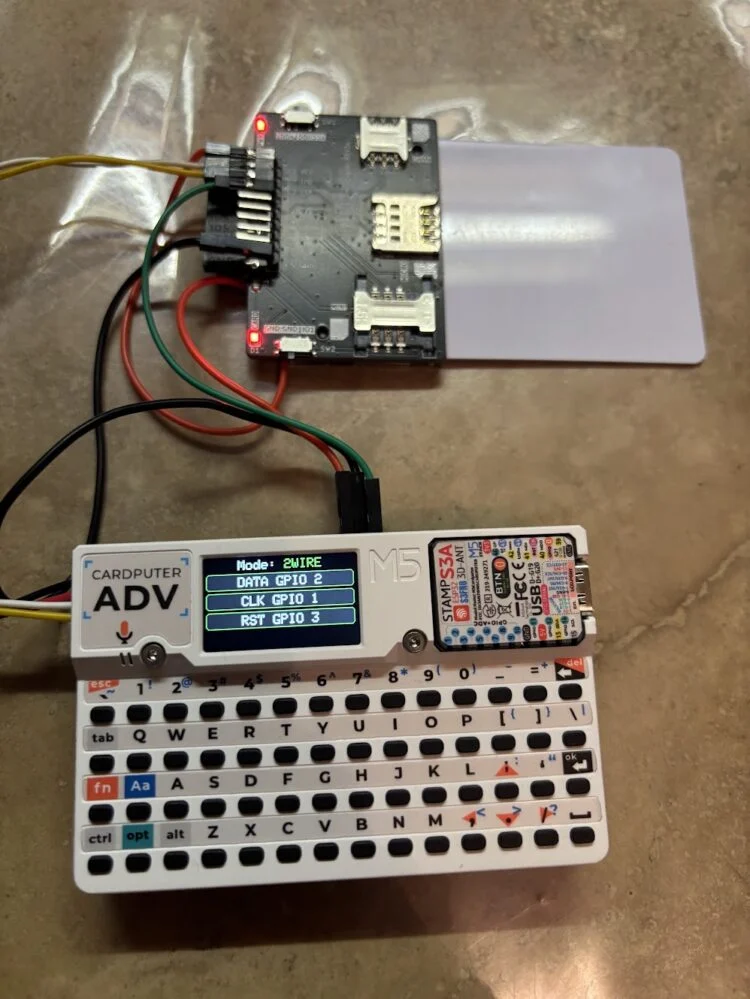
One of the most compelling aspects of the project is its broad hardware compatibility. While it can run on a standard ESP32-S3 development kit connected to a PC via a serial terminal, it truly excels when deployed on integrated "hacker" devices such as the M5Stack Cardputer. The Cardputer, which features a full QWERTY keyboard, a 1.14-inch TFT screen, and a built-in battery, allows the Bit Pirate to function as a truly standalone bench tool. This portability is transformative for field technicians and security researchers who may need to debug hardware in environments where a laptop is impractical. Beyond the Cardputer, the firmware is designed to be adaptable to various LilyGo and M5Stack modules, ensuring that a wide range of makers can utilize existing hardware to build their own debugging suites.
A Legacy of Open-Source Debugging
To understand the significance of the ESP32 Bit Pirate, one must look at the history of its spiritual predecessor, the Bus Pirate. Originally created by Ian Lesnet of Dangerous Prototypes, the Bus Pirate revolutionized the hobbyist electronics world by providing a simple, scriptable interface for talking to chips. Before its arrival, interacting with a new I2C sensor required an Arduino and a specific library. With the Bus Pirate, a user could simply type commands into a terminal to see how a chip responded.
The ESP32 Bit Pirate takes this concept into the current era. While the original Bus Pirate used a PIC microcontroller with limited speed and memory, the ESP32-S3 offers vastly more resources. This allows for higher clock speeds on the SPI bus, larger data buffers for memory dumps, and the potential for wireless debugging via the ESP32’s integrated Wi-Fi and Bluetooth stacks. The project represents a natural evolution of the "Pirate" philosophy: making hardware exploration as frictionless as possible through open-source software.
Functionality and Use Cases
The utility of the ESP32 Bit Pirate is best demonstrated through its application in real-world debugging scenarios. Geo, the project’s creator, emphasizes that the tool was born out of a practical necessity for interacting with "unknown" hardware. When an engineer encounters a sensor with no datasheet or a legacy board with unidentified communication pins, the Bit Pirate serves as the first line of inquiry.

- Bus Scanning: One of the most common tasks in hardware hacking is identifying the addresses of devices on an I2C bus. The Bit Pirate can automatically scan the entire address range, reporting back which addresses acknowledge a ping. This immediately confirms whether the hardware is powered and correctly wired.
- Register Manipulation: For developers working on driver development, the ability to manually read from and write to specific registers is invaluable. The Bit Pirate allows for the manual entry of hex values, enabling the user to toggle bits and observe the physical results on the hardware in real-time.
- Memory Dumping: SPI flash chips are ubiquitous in modern electronics, often storing the firmware for everything from routers to smart light bulbs. The Bit Pirate can be used to read the entire contents of these chips, which is a critical step in security auditing and reverse engineering.
- Protocol Translation: The tool can act as a bridge between a computer and a device, translating high-level commands into the specific voltage levels and timing sequences required by protocols like 1-Wire, MIDI, or infrared remote control signals.
Accessibility and Educational Impact
While the term "hardware debugging" often implies a high level of expertise, the ESP32 Bit Pirate is designed with an emphasis on accessibility. The documentation is structured to guide beginners through the process of connecting wires and interpreting signals. This educational focus is a deliberate choice by the developer to lower the barrier to entry for the next generation of engineers.
In academic settings, the cost of equipping every student with a professional logic analyzer or an oscilloscope can be prohibitive. However, ESP32-S3 boards are available for as little as $10 to $15. By installing the Bit Pirate firmware, students gain access to a tool that teaches them the fundamentals of digital communication without the need for an expensive lab setup. It encourages a "hands-on" approach to learning, where students can experiment with signals and see the immediate impact of their actions.
Market Implications and the Rise of "All-in-One" Tools
The emergence of the ESP32 Bit Pirate reflects a broader trend in the electronics industry toward multifunctional, handheld hacking and development tools. Devices like the Flipper Zero have recently captured the public imagination by combining various radio and hardware interfaces into a single, pocket-sized device. The ESP32 Bit Pirate follows a similar trajectory but focuses more heavily on the "bench tool" aspect of electronics.
As microcontrollers become more powerful, the need for dedicated, single-purpose hardware tools is diminishing. The industry is seeing a consolidation of functionality where a single chip can act as a Wi-Fi sniffer, a Bluetooth controller, and a logic analyzer simultaneously. This democratization of hardware tools has significant implications for the "Right to Repair" movement. When consumers and independent repair shops have access to low-cost tools that can diagnose board-level failures, the lifespan of electronic products can be extended, and the reliance on proprietary manufacturer-only repair services is reduced.
Future Development and Community Integration
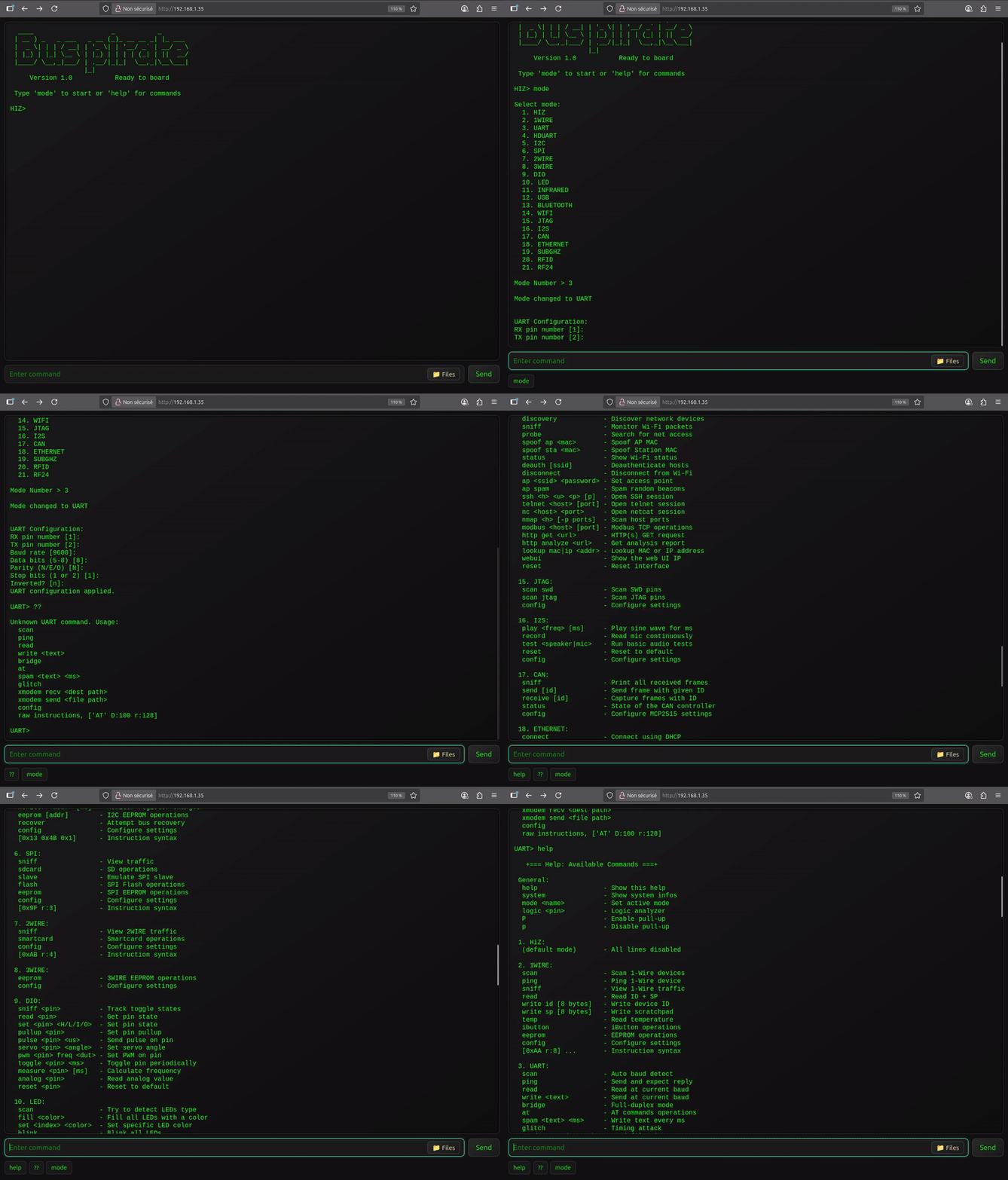
The ESP32 Bit Pirate is hosted as an open-source project on GitHub, allowing the community to contribute to its growth. Potential future updates may include support for the CAN bus (Controller Area Network), which is essential for automotive diagnostics, and the integration of a web-based interface. A web UI would allow users to visualize signal waveforms in a browser window, effectively turning the ESP32 into a basic oscilloscope or logic analyzer with a graphical display.
The developer, Geo, envisions the tool being used by a diverse group ranging from professional embedded developers to hobbyist makers. "I see it being used by embedded developers, hardware hackers, reverse engineers, students, and makers who need a flexible, accessible, and intuitive tool for exploring electronics and debugging boards," Geo stated. This inclusive vision ensures that the project will continue to evolve based on the needs of its users.
In conclusion, the ESP32 Bit Pirate is more than just a firmware update; it is a testament to the power of the modern open-source movement. By repurposing affordable, mass-produced silicon into high-utility diagnostic equipment, it empowers individuals to peer into the "black box" of modern electronics. As the project matures and more protocols are added to its repertoire, it is poised to become an essential component of every engineer’s toolkit, proving that sometimes the best tools are the ones you build yourself from the boards already on your desk.